Loading this page…

Loading this page…
Sailing club
Connells Point Sailing Club is a volunteer-run dinghy club based at Donnelly Park, Connells Point on the Georges River (Sydney). The club runs family-friendly Saturday afternoon racing in spring and summer, supports a broad youth pathway centred on Optimists, and hosts fleets including Lasers, Sabres, Mirrors, Herons, Pacers and Weta trimarans. The clubhouse offers grass rigging areas, extensive boat storage and an active social and canteen program.
About
Connells Point Sailing Club is a volunteer-run dinghy club based at Donnelly Park, Connells Point on the Georges River (Sydney). The club runs family-friendly Saturday afternoon racing in spring and summer, supports a broad youth pathway centred on Optimists, and hosts fleets including Lasers, Sabres, Mirrors, Herons, Pacers and Weta trimarans. The clubhouse offers grass rigging areas, extensive boat storage and an active social and canteen program.
Service area: Donnelly Park / Georges River, Connells Point (southern Sydney)
Keep exploring
On a bend of the Georges River between Tom Uglys Bridge and Oatley, Connells Point Sailing Club has been sending dinghies out on Saturday afternoons for 87 years. It is a family-based, volunteer-run racing club in the classic Sydney mould — the kind of place whose own history dwells affectionately on stories of "heroic sailing days, 'rapid learning episodes' and embarrassing incidents on the water".
The breadth of the fleet is the first thing a visitor notices. Racing each Saturday from September to April — briefing at 1:15pm, starts at 2pm — the club fields Lasers across their full, Radial and 4.7 rigs, plus Sabres, Weta trimarans, Optimists, Mirrors, Herons and Pacers, with an Open division that welcomes anything else that floats. The Sabre fleet alone is sailed by members from 14 to 80 years of age, a span that says plenty about who this club is for. Races run about an hour and a half to two hours with safety boat cover on the water.
The club's junior energy centres on the Optimist, and it has form here: an Optimist regatta in 2016 and team-racing and training events like the 2017 Opti TT punctuate the photo galleries. That investment recently paid off at the top level, when Hayley Roberts crewed Bob to victory in the 58th International Mirror Class National Championship in Tasmania in January 2026 — a national title for a club that measures its fleet in dozens, not hundreds. Everything at Donnelly Park, from the clubhouse to the rescue craft and training boats, has been funded the old way: rack fees, memberships, the canteen and social functions.
What stands out about Connells Point's junior program is how quickly it hands kids real racing. Junior Start Sailing courses cater to children from eight to fifteen, running from September onwards with all equipment provided and no experience needed, all under qualified Australian Sailing instructors. The syllabus covers the fundamentals — terminology, launching and returning, capsize recovery — but the pathway doesn't stop at competence: intermediate and confident sailors step straight into the club's afternoon racing, briefing at 1:15pm for a 2pm start, on the same day and the same water where they trained.
The training fleet has been refreshed with an eye to families. The club recently purchased two Pacer dinghies — sturdy 3.8-metre sloops that suit both instruction and parent-and-child sailing — and reports they're proving popular. They slot into a broader set of club-supported classes that lets a graduate pick a direction: single-handed in a Sabre or one of the Laser rigs, two-up in a Mirror or Heron, or three-sailed excitement in a Weta trimaran.
Programs for late teenagers and adults are available on request through the club's contact form rather than as fixed courses — a pragmatic arrangement for a volunteer club that matches instruction to demand. The junior end, though, is fully systematic, and the Optimist program has real depth: the club ran an Optimist regatta in 2016 and has staged team-racing and training events since, tapping into a class whose national fleet has quadrupled since 2007 by the club's own class notes. Sailors who come through that pipeline are racing nationals before they're out of school — the Roberts Mirror title is the proof.
Donnelly Park, off Kyle Parade in Connells Point, gives the club a settled and practical base on the Georges River: a clubhouse with good facilities, extensive boat storage and generous grass rigging areas right beside the water. Launching is off the grass — single-handers like Sabres go down on beach trolleys — and the whole operation sits within a riverside suburban park in Sydney's south.
The sailing water is the reach of the Georges River between Tom Uglys Bridge and Oatley, and the club's own history is frank about what sailors must master there: wind bending around the headlands and bays, powerful tides, and shallow sandbars waiting for the inattentive. It is tactical, thinking-person's water — the kind of river sailing that produces skilful racers because every leg is a puzzle of shifts, current and depth. A Saturday course here teaches more about wind behaviour than a season on open water.
The Georges River setting also shapes the club's character. This is estuarine, suburban Sydney sailing — bridges overhead, parkland on the banks, families rigging on grass while the canteen fires up. The club has occupied its current position since 1965, when it was allocated the land, and held its first meeting in the new clubhouse in 1966; members extended the building themselves in 1984 to improve boat storage and meeting space. The result is a venue that feels owned in every sense — built, paid for and maintained by the people who sail from it, and geared to one purpose: getting boats off the grass and onto the river in time for a 2pm Saturday start.
The inaugural meeting was held in 1938, and by the 1940/41 season the club was racing formally with eight boats on the Georges River. In the early days every boat was a VJ-class skiff, and the VJ remained the dominant class until 1956. Members originally sailed straight out of backyard river access — Connells Point being the sort of peninsula suburb where plenty of houses back onto the water — until 1950, when a fund was established to buy a clubhouse and a £50 timber hut was acquired.
The classes that followed read like a survey of Australian dinghy sailing — Gwen 12s, Moths, Pelicans, Herons, NS14s, Lasers, Sabres, Flying 11s, Mirrors, Manly Juniors, Skyriders, Optimists — all raced under the club's burgee over the decades. The VJ era produced the club's first widely known sailor in Rex Bray, a top competitor of the 1960s whose VJs carried the name King Gee, and who ordered the first flaired-bow VJ hull Don Fairbrother built.
A turning point came in 1965, when the club received an allocation of land at its present Donnelly Park position; the first meeting there followed in 1966, and members extended the building in 1984 to add boat storage and meeting space. Everything since — clubhouse, rescue craft, start boat, the training fleet — has been paid for principally through rack fees, memberships, the canteen and social functions.
The club celebrated 75 years in 2013 with a reunion drawing members from across the decades, and its history records success at State and National titles, in Olympic campaigns and at World Championships. The most recent addition to that honour roll came in January 2026, when Hayley Roberts crewed Bob with Damian Carey to win the 58th International Mirror Class National Championship at Wynyard, Tasmania — six firsts and three seconds.
Adelaide’s metropolitan coast fronts the eastern side of Gulf St Vincent and mixes short, sheltered bay sailing around Holdfast Bay and the Patawalonga with more exposed, open-water sailing north toward Outer Harbour and along the Le Fevre Peninsula. The area suits a wide range of activity — sheltered day sails, club and trailer-sailer racing, short coastal cruising into the Fleurieu and Yorke Peninsula, and launch-and-home-port racing — but demands local knowledge about shipping channels, tidal flows in the Port River/Outer Harbour approaches, and seasonal wind patterns.

Late spring to summer is usually the best time for beginners to start learning to sail in Tasmania because the weather is generally warmer, days are longer and conditions are often more settled. Expect lighter to moderate winds with regular afternoon sea breees in summer, while spring and autumn bring more changeable and sometimes stronger conditions; winter is colder, wetter and typically windier with more fronts and swell.
Explore →
Look for a friendly club with beginner-focused training, accessible facilities and boats, a supportive community, clear safety practices, and opportunities to progress at your own pace.
Explore →
Expect light to moderate, thermally-driven sea breezes in summer with afternoon strengthening; more changeable and often stronger winds with frontal systems in autumn and spring; and the windiest, roughest conditions in winter when cold fronts and sou’westers are most frequent. Gulf St Vincent is more sheltered than the exposed coast but can still produce steep chop and sudden changes near Adelaide and headlands.
Explore →
Expect very different seasonal systems across Western Australia: the south‑west (Perth to Albany) has a strong summer afternoon sea breeze (the “Fremantle Doctor”) and winter westerly fronts, while northern WA follows a wet/dry monsoonal cycle with strong seasonal onshore winds, thunderstorms and cyclone risk in the wet season. Local headlands, estuaries and tidal flows often change what you actually feel on the water, so learn the local timing and sheltered venues first.
Explore →
A practical guide for new sailors on picking the right Australian sailing club: training, boat access, racing, social fit, costs and the key questions to ask before joining.
Explore →Practical guide for recreational sailors planning passage on the Hawkesbury River: how to plan around tides, choose anchorages, read local conditions and prepare the boat and crew for a safe, comfortable trip.
Explore →A practical guide for recreational sailors planning visits to Albany and King George Sound. Covers the main anchorage areas, typical local weather patterns, tidal and current considerations, navigational hazards, on-the-water etiquette and a pre-departure checklist to help you plan a safe passage and enjoyable stopover
Explore →A practical guide for recreational sailors planning day sails or short cruises around Batemans Bay, Broulee and the Clyde River. Covers local conditions, safe approaches, anchorages, launching, tides, common hazards, and checklists for trip planning and on-water decisions.
Explore →Burke Yachtsman Gear Bag 40L - Shop Now Zip Pay | Tamar Marine Skip to content 59 – 63 Holbrook Street, Invermay Online Shop Open 24/7 Products search Contact us 1300 MARINE $ 0.00 0 Cart Burke Yachtsman Gear Bag 40L $ 79.90 Colour Choose an option Black Blue Black Blue Clear - Burke Yachtsman Gear Bag 40L quantity + Add to cart Enquire about this product SKU BAGB-Y24/BLACK* Category Bags - Sail & Gear A Burke classic and customer favourite, the Yachtsman’s Gear Bag is built tough to handle wet, salty conditions while keeping your gear dry and protected. Made from double coated waterproof…
Explore →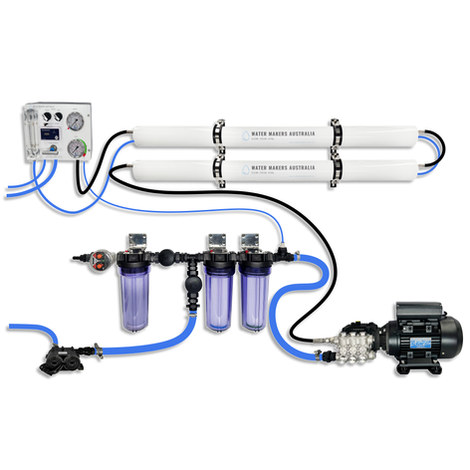
A two-membrane modular watermaker with 140 L/h nominal output, aimed at families and liveaboards that want more water per run.
Explore →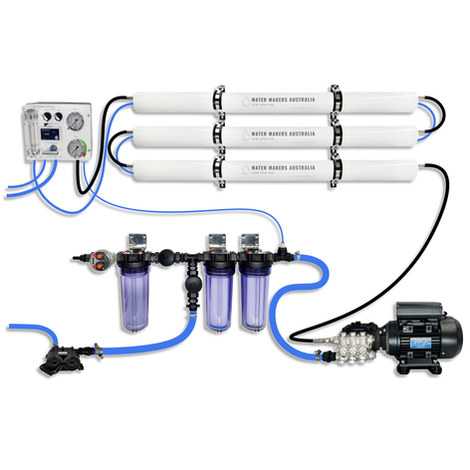
A three-membrane modular watermaker with 200 L/h nominal output and up to 240 L/h family-level marketing, for larger crews and heavy use.
Explore →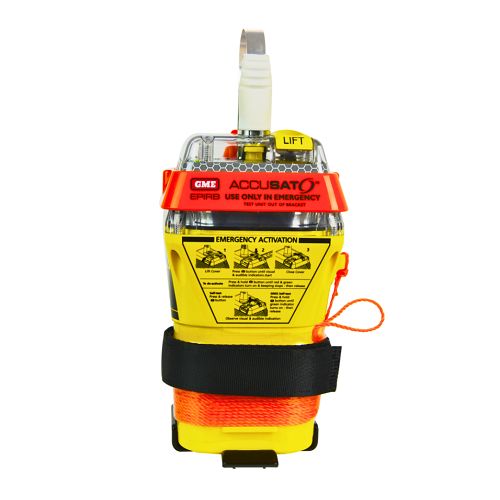
A 10‑year battery EPIRB with integrated GNSS (supports GPS and Galileo), infrared strobe and 121.5 MHz homing signal. Approved for worldwide COSPAS‑SARSAT operation.
Explore →