Loading this page…

Loading this page…
Sailing club
Double Bay Sailing Club is a volunteer-run, one-design ILCA (Laser) dinghy racing club based at a historic timber clubhouse in Steyne Park, Double Bay. The club runs large, highly active ILCA fleets on Sydney Harbour with regular Saturday summer racing, midweek twilight sprints and a winter Sunday series. DBSC focuses on competitive one-design racing and race coaching rather than beginner sail-training.
About
Double Bay Sailing Club is a volunteer-run, one-design ILCA (Laser) dinghy racing club based at a historic timber clubhouse in Steyne Park, Double Bay. The club runs large, highly active ILCA fleets on Sydney Harbour with regular Saturday summer racing, midweek twilight sprints and a winter Sunday series. DBSC focuses on competitive one-design racing and race coaching rather than beginner sail-training.
Service area: Double Bay / Sydney Harbour
Keep exploring
Double Bay Sailing Club is a volunteer-run sailing club based at 79 Bay Street, Double Bay (Sydney Harbour). The club focuses on ILCA / Laser dinghy sailing and hosts a large active fleet (50+ sailors weekly) across seasonal race programs (Saturday afternoons, Wednesday/Thursday evenings and winter Sunday mornings). The club runs regular training and coaching programs, supports member safety with dedicated support boats, and provides membership and event information via its clubhouse and website.
Double Bay doesn't teach people to sail — it teaches them to race, and that distinction is the program. The Learn To Race course is built for sailors aged 15 and up who already have sailing experience: on-water and shore-side sessions spanning boat handling, rigging, sail trim, tactics and race management, coached by ILCA sailors with national and international regatta experience behind them.
Sessions run at 9:00am on the second and fourth Saturday of each month from September to April; training itself is free, club ILCA boat hire is $30, and participants take a temporary SailPass membership. Head Coach Martin White leads the program. Beginners with no experience are pointed toward external recognised sailing schools — a deliberate, honest positioning of DBSC as a racing club rather than a learn-to-sail school.
Around that core offering sits a coaching ecosystem for active racers. On Thursday evenings through daylight saving, subscribers get a windward/leeward course and an on-water coach; informal Wednesday and Thursday twilight sprint races on the harbour's permanent markers keep racecraft sharp from 5:30pm. Experienced visiting ILCA sailors can hire a club boat and race three times before membership is required — a try-before-you-join pathway pitched at the already-converted.
There is no Tackers program, no junior fleet and no Sailability arm, and the club makes no apology for it: the pathway here begins at fifteen and aims squarely at the start line. What that focus buys is depth — coaching delivered by sailors who race at the pointy end of national and world championships, in the same one-design boats, on the same water, every week. For an adult sailor whose goal is competitive one-design racing rather than a certificate, there are few more direct routes in the country.
The clubhouse is a piece of Sydney sailing heritage in its own right: a historic timber building in Steyne Park, Double Bay, built partly over the water and listed by the National Trust among Australia's historic structures since 2009. The Double Bay ferry wharf stands directly adjacent, and the club leans into low-impact access — ferry to the door, train to Edgecliff then a fifteen-minute walk, the 328 bus to Steyne Park, and limited street parking for those who must drive. There's even a suggested walking route from Bondi through Cooper Park, forty-five minutes on foot.
Racing happens on Sydney Harbour off Double Bay — big-water, big-consequence sailing in full view of the city. Saturday afternoons feature two 45-minute races back to back, starting at 1pm in August and 2pm from September through April, with three support boats on station and a compulsory pre-race safety briefing a full hour before the first gun. That safety regime matters here: this is a busy commercial and recreational waterway where ferry lanes, mooring fields and harbour traffic frame every beat and run. Midweek twilight racing uses the harbour's permanent markers, and the winter Sunday series keeps the fleet together through the off-season months of May to July.
The harbour setting gives Double Bay racing a texture no enclosed waterway can match — shifting pressure off the points, tide to read, and a racecourse that doubles as one of the most recognisable pieces of water on earth. For a one-design fleet where boat speed and decision-making are everything, it's a demanding, endlessly interesting arena, and the fifty-odd boats that turn up weekly suggest the members wouldn't trade it.
The club was established on 13 July 1956, but its roots run into the postwar beach culture of Double Bay, where local kids pestered the crews of 18-footers like AJAX and MISS PEPSI for rides. Early boats lived in Piggins boatshed at the bottom of Beach Street, a Rose Bay boatshed and suburban backyards, and a precursor body, The Pioneer Boating Club, met in Piggin's shed. Founding families included the Messengers, Piggins, Leys, Slights and Backhouses.
Getting a clubhouse built took years of lobbying: the Maritime Services Board granted permission to build over the water, Woollahra Council approved park access after pressure from councillor Dutchie Backhouse and supporter Theo Kelly, despite some resident resistance. The founders funded the build through £20 debentures plus bank finance, and tragedy touched the campaign — Ross Piggin and Patricia Ley both died suddenly during the approval period. Work began in August 1958, and noted 18-foot skipper Bill Monkhouse completed the building for £7,000; it opened officially on 5 April 1959, with members racing Vaucluse Juniors on Sundays.
The VJ years were golden. Charlie Messenger's trawler would tow strings of VJs — eight or ten at a time — to regattas at Greenwich, Drummoyne, Northbridge and Middle Harbour, and DBSC hosted the 1962–63 Vee Jay and Vee Ess Commonwealth/Australian Championships. Ron Young introduced the Laser in the early 1980s, and the class gradually displaced the Leaders and Herons to become the club's only boat.
Mark Bethwaite — world champion in J24s, Solings and Laser Masters, 1983 Australian Yachtsman of the Year — joined in 1999 and as Commodore delivered the clubhouse expansion. Sally Gordon, overall winner of the 2000 Rolex Sydney Hobart and one of the club's first female members, died in the 2009 Flinders Islet tragedy. On 30 May 2021 the club hosted the ILCA class's 50th anniversary, a world-record parade of more than 200 dinghies from the Opera House to South Head.
Bathurst Harbour (Port Davey system), in south‑west Tasmania, is a vast, almost land‑locked estuarine harbour inside the Southwest National Park and World Heritage Area. It offers a remote, sheltered anchoring environment protected from the Roaring Forties, but demands careful planning, an awareness of marine‑reserve rules, and a willingness to operate in shallow, tannin‑stained waters. Best suited to experienced coastal cruisers and small expedition yachts prepared for self‑sufficiency, Bathurst Harbour is more a place to linger and explore on foot and by tender than a port of call for busy,

Tasmania has a mix of state marine parks, local harbour bylaws and environmental protections that affect where and how you anchor—so check the specific area’s rules before you go, aim to use designated anchorages or soft seabeds, and follow standard anchoring and biosecurity good practice.
Explore →
Expect very different seasonal systems across Western Australia: the south‑west (Perth to Albany) has a strong summer afternoon sea breeze (the “Fremantle Doctor”) and winter westerly fronts, while northern WA follows a wet/dry monsoonal cycle with strong seasonal onshore winds, thunderstorms and cyclone risk in the wet season. Local headlands, estuaries and tidal flows often change what you actually feel on the water, so learn the local timing and sheltered venues first.
Explore →
Look for a friendly club with beginner-focused training, accessible facilities and boats, a supportive community, clear safety practices, and opportunities to progress at your own pace.
Explore →
Late spring to summer is usually the best time for beginners to start learning to sail in Tasmania because the weather is generally warmer, days are longer and conditions are often more settled. Expect lighter to moderate winds with regular afternoon sea breees in summer, while spring and autumn bring more changeable and sometimes stronger conditions; winter is colder, wetter and typically windier with more fronts and swell.
Explore →
A practical guide for new sailors on picking the right Australian sailing club: training, boat access, racing, social fit, costs and the key questions to ask before joining.
Explore →A practical, step‑by‑step guide for recreational sailors on Sydney Harbour covering navigation, local weather and tides, safe anchoring, berthing, common routes, rules of the road, and useful checklists tailored to Australian conditions.
Explore →Practical guide for recreational sailors planning a coastal cruise from Sydney north to the Queensland border. Covers route options, weather and tidal considerations, planning checklists, common hazards, anchorages and practical examples for a safe, enjoyable trip.
Explore →
A practical guide to the safety equipment commonly carried on recreational sailing boats in Australia: lifejackets, EPIRBs/PLBs, flares, radios, fire extinguishers, liferafts, jacklines, first-aid and how state requirements influence what you must carry.
Explore →Burke Yachtsman Gear Bag 40L - Shop Now Zip Pay | Tamar Marine Skip to content 59 – 63 Holbrook Street, Invermay Online Shop Open 24/7 Products search Contact us 1300 MARINE $ 0.00 0 Cart Burke Yachtsman Gear Bag 40L $ 79.90 Colour Choose an option Black Blue Black Blue Clear - Burke Yachtsman Gear Bag 40L quantity + Add to cart Enquire about this product SKU BAGB-Y24/BLACK* Category Bags - Sail & Gear A Burke classic and customer favourite, the Yachtsman’s Gear Bag is built tough to handle wet, salty conditions while keeping your gear dry and protected. Made from double coated waterproof…
Explore →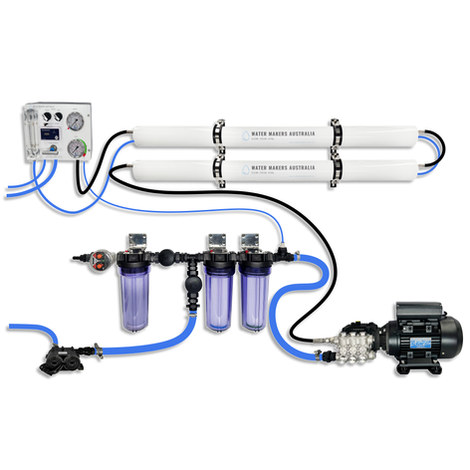
A two-membrane modular watermaker with 140 L/h nominal output, aimed at families and liveaboards that want more water per run.
Explore →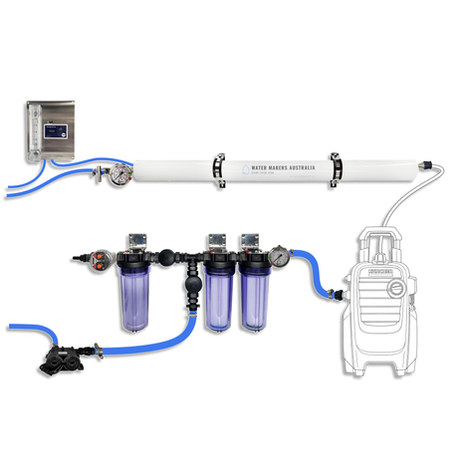
A one-membrane modular marine watermaker with 80 L/h nominal output, remote stainless control panel, standard consumables and direct Australian support.
Explore →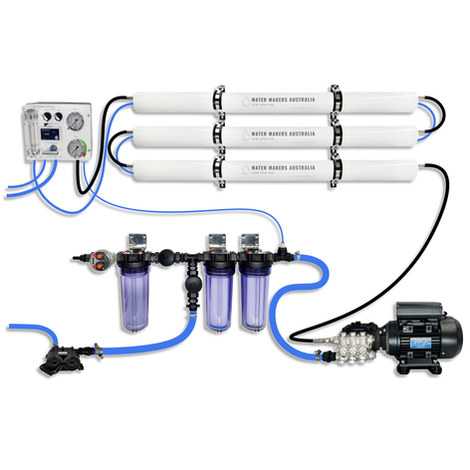
A three-membrane modular watermaker with 200 L/h nominal output and up to 240 L/h family-level marketing, for larger crews and heavy use.
Explore →