Loading this page…

Loading this page…
Sailing club
Georges River Sailing Club is a waterfront club on Sanoni Ave, Sandringham (Botany Bay) offering membership-based sailing activities alongside substantial hospitality and events facilities. The club promotes its sailing heritage and waterfront views and also markets dining venues (Porta Dining and a Sports Bar), regular live entertainment and community events, and function spaces for weddings, corporate events and private celebrations. On-site parking and phone contact are listed on the site.
About
Georges River Sailing Club is a waterfront club on Sanoni Ave, Sandringham (Botany Bay) offering membership-based sailing activities alongside substantial hospitality and events facilities. The club promotes its sailing heritage and waterfront views and also markets dining venues (Porta Dining and a Sports Bar), regular live entertainment and community events, and function spaces for weddings, corporate events and private celebrations. On-site parking and phone contact are listed on the site.
Service area: Sandringham, NSW (Botany Bay)
Keep exploring
Georges River Sailing Club is a waterfront club on Sanoni Ave, Sandringham (Botany Bay) offering membership-based sailing activities alongside substantial hospitality and events facilities. The club promotes its sailing heritage and waterfront views and also markets dining venues (Porta Dining and a Sports Bar), regular live entertainment and community events, and function spaces for weddings, corporate events and private celebrations. On-site parking and phone contact are listed on the site.
What distinguishes Georges River's junior setup is its delivery partnership: Tackers is run in conjunction with NB Sailsports, the Sydney sailing retailer, giving the program professional equipment depth alongside Australian Sailing qualified instructors. Children aged seven to twelve learn in plastic Optimists through the standard Tackers 1-2-3 sequence — Having Fun, Tricks and Techniques, Sailing Fast — in school-holiday intensives and Sunday-morning blocks through spring and summer. No membership, experience or gear is required, and free Discover Sailing taster sessions run for the same age group.
The pathway after Tackers is unusually well mapped. Graduates enter Green Fleet introductory racing, then club racing proper, with fibreglass Optimists available to lease by the term — a smart halfway step before a family commits to buying a boat. Teenagers have their own tracks through Adventure Squads and Learn to Race Squads, and travelling juniors compete at local regattas together under the "TEAM GRSC" banner, which builds the kind of peer group that keeps kids in the sport.
Adults aren't an afterthought. Learn-to-sail courses for the fifteen-and-over bracket run on Saturday mornings through spring, taught by accredited Australian Sailing instructors, and the calendar also lists holiday camps, Optimist race training, youth coaching, powerboat courses and a schools program with Scots College. As an accredited Discover Sailing Centre, the club feeds every one of those streams into weekend racing on Botany Bay — and, for the keen, toward the state championship regattas it has hosted for the RS Aero class and, back in 2018, an East Coast Championship for invited classes.
The clubhouse stands on Sanoni Avenue at Sandringham, on the western shore of Botany Bay close to where the Georges River meets it — about eighteen kilometres south of the city centre, within Bayside Council. It's a different sailing theatre to the harbour clubs: broad, open bay water with views across to Towra Point and Woolooware Bay, and a fetch long enough to build a proper chop. Competitors at the RS Aero NSW State Championships hosted here noted waves kicked up by the run-out tide, a reminder that tide and sea breeze interact on this bay in ways that reward local knowledge.
Typical summer racing conditions, judging by regatta reports, are light-to-medium east-south-easterly sea breezes around twelve to fifteen knots — friendly for learners yet tactical enough for championship fleets. Formal racing runs Saturdays and Sundays from September through May, with casual sailing and training all year and twilight sailing on Wednesdays while the evenings stay light.
The setting is generous. The beach stretches between Dolls Point and Sandringham Bay with the club sitting right on the foreshore; Peter Depena Reserve alongside provides picnic space and free parking, handy for regatta days. The rebuilt venue adds serious function capacity — the Horizon Room, which seats up to 250, plus the Waterview and Parkview rooms, the Mediterranean-styled Porta Dining brasserie, cocktail and sports bars, and a louvred semi-outdoor dining area — all of it looking over the race course. Few Sydney dinghy clubs can offer parents a coffee and that view while their kids sail Tackers on the same patch of water.
Georges River 16ft Sailing Club was established in 1927, focused from the outset on 16ft skiff racing on Botany Bay. It wasn't the first sailing outfit on this shoreline — an earlier St George Sailing and Motor Boat Club had run 14ft dinghy championships here in the early 1900s — but it was the one that lasted, becoming a fixture of local life in Sandringham for close to a hundred years.
The skiff years left a deep mark in the record books. Georges River boats won the Botany Bay Championship, the Stuart Shield, again and again: 'Burrawang' took the first club win in 1932-33, Ken Minter claimed the shield four times between 1954 and 1965, Phil Singleton won aboard 'Julie' and twice with 'Roulette', and the honour roll runs through Don Barnett, Frank Maloney, Dennis Tanko and others right up to the mid-2000s. Over the decades the club broadened well beyond skiffs into the multi-class dinghy program it runs today, while the clubhouse grew into a social and recreational hub for the district.
A structural turning point came on 1 November 2022, when GRSC amalgamated with Club Central, the hospitality arm of the Illawarra Catholic Club Group (since renamed Alt. Hospitality Group); members moved into a new Sailing Club membership class with access to the Hurstville and Menai venues as well. The waterfront function rooms were refurbished in late 2023, then in early 2025 the club closed temporarily for what trade press called the most extensive renovation in its history — a $10 million rebuild designed by Loucas Architects, reopening in late September 2025.
With the centenary due in 2027, Alt. Hospitality CEO Paul Richardson framed the works as securing the club as "a true jewel of the bay" for its hundredth birthday.
A practical, harbour-focused cruising guide to Trial Bay on the New South Wales Mid North Coast. The guide describes the bay’s sheltered and exposed zones, headlands and islands, local seasonal wind and swell patterns, principal sailing areas and recommended anchorages, shore facilities around South West Rocks and Arakoon, navigation and arrival considerations, specific hazards such as the Macleay River entrance, sand movement and reefs, local marine park and heritage restrictions, and three realistic sailing experiences ranging from sheltered family daysails to multi-day island circuits. It’s

Pick a protected bay, estuary or river reach where you can rig, launch and arrive on calm water within a short, sheltered transit; choose a site with a good ramp or jetty, clear recovery options and a nearby sailing club, marina or commercial operator for local knowledge and help.
Explore →
Late spring to summer is usually the best time for beginners to start learning to sail in Tasmania because the weather is generally warmer, days are longer and conditions are often more settled. Expect lighter to moderate winds with regular afternoon sea breees in summer, while spring and autumn bring more changeable and sometimes stronger conditions; winter is colder, wetter and typically windier with more fronts and swell.
Explore →
Look for a friendly club with beginner-focused training, accessible facilities and boats, a supportive community, clear safety practices, and opportunities to progress at your own pace.
Explore →
Expect very different seasonal systems across Western Australia: the south‑west (Perth to Albany) has a strong summer afternoon sea breeze (the “Fremantle Doctor”) and winter westerly fronts, while northern WA follows a wet/dry monsoonal cycle with strong seasonal onshore winds, thunderstorms and cyclone risk in the wet season. Local headlands, estuaries and tidal flows often change what you actually feel on the water, so learn the local timing and sheltered venues first.
Explore →A practical guide for recreational sailors planning day sails or short cruises around Batemans Bay, Broulee and the Clyde River. Covers local conditions, safe approaches, anchorages, launching, tides, common hazards, and checklists for trip planning and on-water decisions.
Explore →A practical guide for recreational sailors planning passages to, from or around Eden and Twofold Bay. Covers sheltered anchorages, shore facilities, local weather and tidal considerations, preparing for Bass Strait conditions and a focused equipment and safety checklist.
Explore →Practical guide for recreational sailors planning passage on the Hawkesbury River: how to plan around tides, choose anchorages, read local conditions and prepare the boat and crew for a safe, comfortable trip.
Explore →
A practical guide for new sailors on picking the right Australian sailing club: training, boat access, racing, social fit, costs and the key questions to ask before joining.
Explore →Burke Yachtsman Gear Bag 40L - Shop Now Zip Pay | Tamar Marine Skip to content 59 – 63 Holbrook Street, Invermay Online Shop Open 24/7 Products search Contact us 1300 MARINE $ 0.00 0 Cart Burke Yachtsman Gear Bag 40L $ 79.90 Colour Choose an option Black Blue Black Blue Clear - Burke Yachtsman Gear Bag 40L quantity + Add to cart Enquire about this product SKU BAGB-Y24/BLACK* Category Bags - Sail & Gear A Burke classic and customer favourite, the Yachtsman’s Gear Bag is built tough to handle wet, salty conditions while keeping your gear dry and protected. Made from double coated waterproof…
Explore →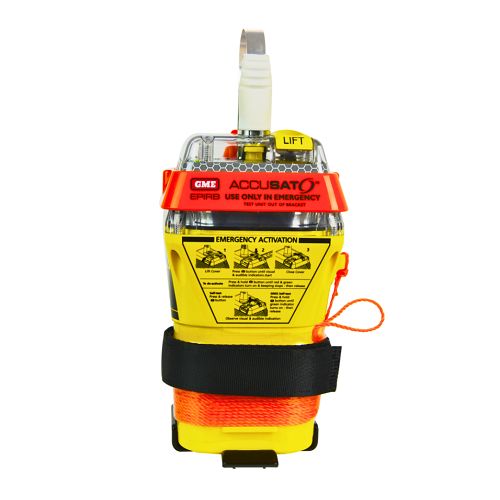
A 10‑year battery EPIRB with integrated GNSS (supports GPS and Galileo), infrared strobe and 121.5 MHz homing signal. Approved for worldwide COSPAS‑SARSAT operation.
Explore →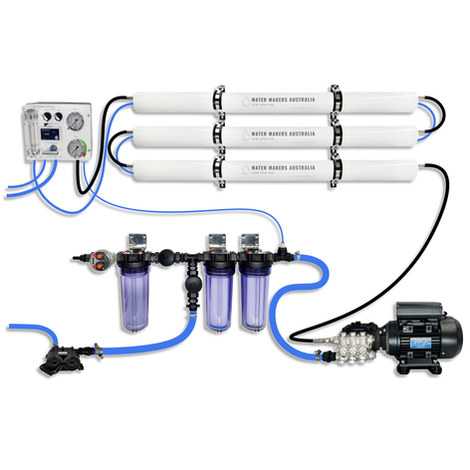
A three-membrane modular watermaker with 200 L/h nominal output and up to 240 L/h family-level marketing, for larger crews and heavy use.
Explore →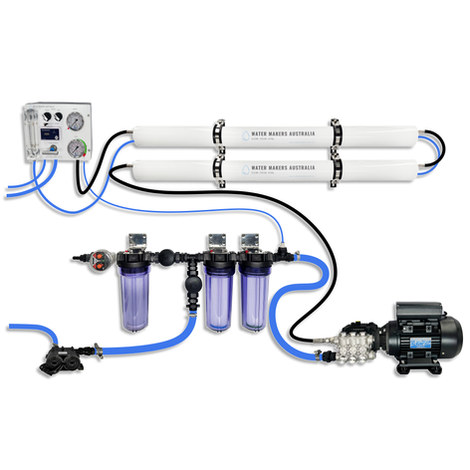
A two-membrane modular watermaker with 140 L/h nominal output, aimed at families and liveaboards that want more water per run.
Explore →