Loading this page…

Loading this page…
Sailing club
Founded in 1854 at Goolwa on the Murray, Goolwa Regatta Yacht Club claims the title of Australia's oldest continuously operating yacht club, a pedigree that goes back almost to the town's beginnings.
About
Founded in 1854 at Goolwa on the Murray, Goolwa Regatta Yacht Club claims the title of Australia's oldest continuously operating yacht club, a pedigree that goes back almost to the town's beginnings.
Service area: Goolwa, South Australia
Keep exploring
One winter evening in August 1854, eight men met for dinner at the Goolwa Hotel to organise a party — marking the first anniversary of the day the local shipyard's first cargo vessel was launched. From that dinner, the club traces its origin, and on the strength of a formation as the Goolwa Regatta Club some time before August 1854 it claims the title of Australia's oldest continuously operating yacht club — a claim repeated by Australian Sailing but belonging to the club itself. Its letterhead carries the words "FOUNDED 1854".
Whatever the title's precise standing, the pedigree is remarkable: the club existed within eighteen years of European settlement establishing the Province of South Australia, and its founding purpose was to run an annual regatta pitting Goolwa's fishing fleet against the whalers of Victor Harbor. Today the club sits at 112 Barrage Road in the old river port near the Murray's mouth, affiliated with Australian Sailing in the middle of the state's fee bands, with a marina accommodating 106 boats to 12 metres and a boat ramp that can launch or retrieve two vessels at once.
Recognition keeps coming: it collected the Category B Club of the Year title at the 2024 South Australian Sailing Awards and went on as an SA finalist at the national awards, then figured among the 2025 Clubs SA community award finalists in the Small Club of the Year category. Inside, a licensed bar, lounge and showers serve members, while the dining room caters for seventy seated guests and casual functions for more than two hundred. Fiona Pitcairn manages the office.
Modified boats and lift facilities tell you this club takes access seriously. Goolwa Regatta Yacht Club opens the sport to sailors with disabilities through its Sailability program, bringing the lower Murray within reach of people most sailing clubs never serve. Its accredited training runs under the Australian Sailing National Keelboat Program and spans sailing, power boat and radio training — an unusual trio that reflects the mixed fleet the club actually sails.
The club's work on female participation has become a reference point for the sport: in 2018, then Commodore Louise Edwards and colleagues opened a review of women's sailing at the club after the 2017 Australian Sailing census found women made up just 29.7 per cent of racing sailors. From that review grew a suite of SheSails activities: a keelboat course and helm training program for women, a women's helm race, and a network connecting the club's women sailors.
The inaugural women's helm race alone attracted 24 entries across three divisions, fifteen of them helmed by women. Younger sailors are served through team sailing: the club brought the South Australian schools team sailing state titles to Goolwa across 12 to 14 April 2025, then hosted the Australian School Team Sailing Nationals from 16 to 20 July of the same year, a double few regional venues attempt. Radio-controlled yacht racing runs alongside the full-sized program, giving the club a competitive heartbeat even when crews stay ashore.
Development is taken seriously at the organisational level too — on 31 May 2025 the club was the venue for Australian Sailing's South Australian Sailing Summit, hosting the state's club development conversation in Goolwa. For a club of its fee band, the breadth of pathways on offer — disability access, women's sailing, schools competition, keelboat instruction — is by any measure ambitious.
Rivers make different sailors of people, and the lower Murray has been making them here for more than 170 years. Racing takes place on the river channel itself, on the South Lake, upstream along the Murray and out into Lake Alexandrina — shallow waters where the tide pushes in from the Coorong and where lifting keels and centreboards are not a preference but a necessity.
The club's weekly rhythm revolves around Friday twilight racing: every week in summer, with briefing at half past five and a six o'clock start, and monthly through winter an hour earlier, routinely drawing between twenty-five and thirty boats. Weekend racing is scheduled the year round, in formats ranging from point-to-point and out-and-return courses to around-the-buoys racing.
The fleets tell the story of the place: trailable yachts and sports boats share the start line with vintage riverboats — including the celebrated Restricted 21s — and off-the-beach classes including multihulls, while Flying Fifteens also race here, Goolwa being one of only three South Australian clubs with the class. Trailer-sailers and lifting-keel yachts dominate the club register, with traditional wooden riverboats and power boats also strongly represented. January transforms the river.
Goolwa Regatta Week, launched in 2012 with strong community backing, fills the month with the Milang–Goolwa Freshwater Classic — described in Australian Sailing's coverage as the state's foremost freshwater contest — plus vintage yacht racing, a Marina Challenge at Coorong Quays on Hindmarsh Island and a dash-for-cash sprint. The summer pop-up festival called The Sailing Club, founded in 2016 by Sam Worrall-Thompson, took over the club from late December 2024 into early January 2025, fireworks on New Year's Eve included.
The regatta came first; the club grew around it. Goolwa's settlement was less than eighteen years old when the Goolwa Regatta Club formed, some time before August 1854, to organise an annual carnival of water sports between the town's fishing fleet and the whaling fleet based at nearby Victor Harbor. The founding moment the club celebrates is the gathering of eight gentlemen at the Goolwa Hotel on the night of 16 August 1854, planning festivities for the first anniversary of the first locally built cargo vessel's launching.
At its peak, the regatta drew thousands of spectators from across the colony and state to a program spanning sailing and rowing, swimming, power boat and paddle steamer racing, and novelty events. The twentieth century was less kind: interest faded after the Second World War, and the club might have vanished entirely had it not been revived in 1969 under the new name of Goolwa Regatta Yacht Club, expressly to serve the booming interest in sailing.
A second thread of the club's competitive identity was woven on 27 December 1966, when Esther, owned by Bill Appleby, met Edith, owned by Bill Ballard, in a match from Goolwa to Milang that became the Milang–Goolwa Freshwater Classic; Esther took the first two encounters, Edith the third. The club assumed the running of the Classic in 1974, and it remains the centrepiece of Regatta Week each January.
The sesquicentenary produced a written history, The First 150 Years, written by R.G.S. "Rob" Carless, a past commodore and life member who had belonged to the club for 42 years when it was published. In 2012 the club launched Goolwa Regatta Week, knitting a modern festival back onto what the club itself describes as the oldest continuous thread in Australian yachting.
Dangar Island sits in the lower Hawkesbury River close to Brooklyn and is one of Sydney’s small, boat‑access communities. From the water it reads as a wooded, low island with sandy foreshore, a public jetty and private moorings; its position at the mouth of Cowan Creek and close to the main river channel makes it an attractive short‑cruise destination for trailer sailors, runabouts and small cruisers but also one that requires careful local knowledge and respect for resident berths, ferry operations and tidal currents.

Look for a friendly club with beginner-focused training, accessible facilities and boats, a supportive community, clear safety practices, and opportunities to progress at your own pace.
Explore →
Carry wearable lifejackets (one per person that fits), a reliable means of distress communication, basic firefighting and bilge items, navigation lights and charts, plus sensible clothing, sun protection and drinking water. Exact legal requirements vary by state and vessel — check the relevant regulator before you go.
Explore →
Before your first sail in South Australian waters check the weather and tide, make sure the boat and safety equipment are fit for the trip, confirm local rules and any area-specific hazards, and tell someone your plan.
Explore →
Expect very different seasonal systems across Western Australia: the south‑west (Perth to Albany) has a strong summer afternoon sea breeze (the “Fremantle Doctor”) and winter westerly fronts, while northern WA follows a wet/dry monsoonal cycle with strong seasonal onshore winds, thunderstorms and cyclone risk in the wet season. Local headlands, estuaries and tidal flows often change what you actually feel on the water, so learn the local timing and sheltered venues first.
Explore →
A practical guide for new sailors on picking the right Australian sailing club: training, boat access, racing, social fit, costs and the key questions to ask before joining.
Explore →
A practical, Australia‑focused introduction to sailing: key terms, common boat types, basic manoeuvres, where to learn, licence and club options, and planning your first trips with safety and local conditions in mind.
Explore →A practical guide to the coastal weather systems that affect sailing along Western Australia's coast, focusing on the Fremantle Doctor, local sea breezes, and linked coastal phenomena. Explains how these systems form, when they tend to occur, how they influence boat handling and passage planning, common mistakes, and a
Explore →A concise, practical introduction to the essential parts of a recreational sailing boat for beginners in Australia. Covers hull, deck, rigging, sails, steering, below-decks spaces and safety equipment, with simple explanations, common mistakes and a pre-decast checklist to help new sailors communicate and get underway.
Explore →Burke Yachtsman Gear Bag 40L - Shop Now Zip Pay | Tamar Marine Skip to content 59 – 63 Holbrook Street, Invermay Online Shop Open 24/7 Products search Contact us 1300 MARINE $ 0.00 0 Cart Burke Yachtsman Gear Bag 40L $ 79.90 Colour Choose an option Black Blue Black Blue Clear - Burke Yachtsman Gear Bag 40L quantity + Add to cart Enquire about this product SKU BAGB-Y24/BLACK* Category Bags - Sail & Gear A Burke classic and customer favourite, the Yachtsman’s Gear Bag is built tough to handle wet, salty conditions while keeping your gear dry and protected. Made from double coated waterproof…
Explore →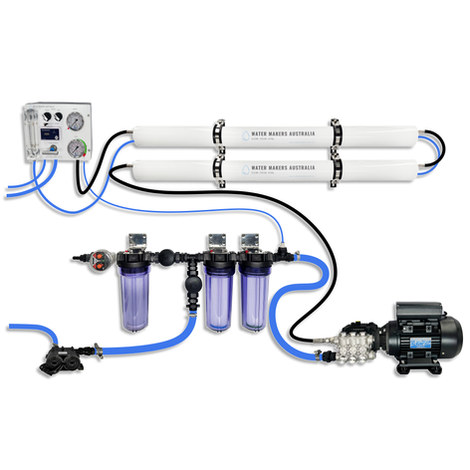
A two-membrane modular watermaker with 140 L/h nominal output, aimed at families and liveaboards that want more water per run.
Explore →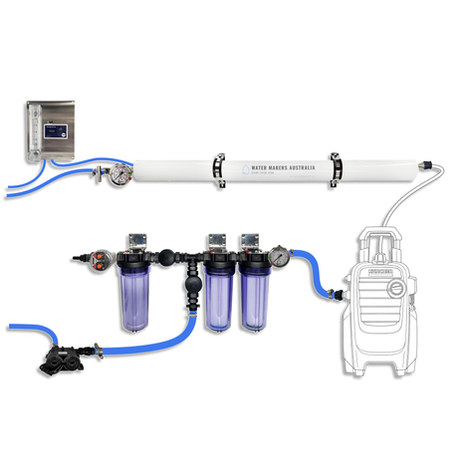
A one-membrane modular marine watermaker with 80 L/h nominal output, remote stainless control panel, standard consumables and direct Australian support.
Explore →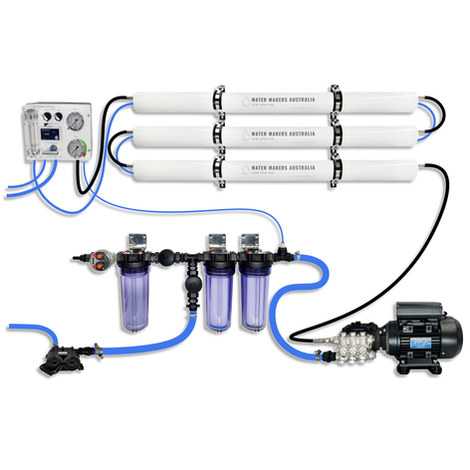
A three-membrane modular watermaker with 200 L/h nominal output and up to 240 L/h family-level marketing, for larger crews and heavy use.
Explore →