Loading this page…

Loading this page…
Sailing club
Gosford Sailing Club is a long-established waterfront sailing club on Brisbane Water at 28 Masons Parade, Gosford (NSW). Founded in 1932, the club runs a full sailing programme including keelboat and dinghy fleet racing, Wednesday twilight and Saturday racing, championship regattas, a comprehensive Sailing Academy with junior pathways and adult learn-to-sail options, Sailability and SheSails initiatives, and radio-controlled yacht racing. The venue also operates a protected marina, waterfront dining and function facilities.
About
Gosford Sailing Club is a long-established waterfront sailing club on Brisbane Water at 28 Masons Parade, Gosford (NSW). Founded in 1932, the club runs a full sailing programme including keelboat and dinghy fleet racing, Wednesday twilight and Saturday racing, championship regattas, a comprehensive Sailing Academy with junior pathways and adult learn-to-sail options, Sailability and SheSails initiatives, and radio-controlled yacht racing. The venue also operates a protected marina, waterfront dining and function facilities.
Service area: Brisbane Water / Gosford foreshore (Central Coast, NSW)
Keep exploring
Gosford Sailing Club is a waterfront sailing club in Gosford, NSW offering organised sailing programs, regattas and fleet racing, learn-to-sail courses and a sailing academy for juniors and adults. The club operates a marina with casual and permanent berths and runs social activities, events and functions including a restaurant and cafe on site.
The standout here is inclusion at scale. Sailability Gosford was established in 1995 as NSW's first program of its type, and it still supports around seventy participants each year with specialised equipment and a volunteer corps, alongside partnerships such as Saltwater Veterans. Add SheSails for women and a radio-controlled yacht program with an RC STEM stream, and the Sailing Academy reaches cohorts most clubs never touch.
The Academy holds Australian Sailing accreditation as a Discover Sailing Centre covering kids, teens and adults, and Australian Sailing reports it was recently ranked third in Australia for its keelboat programs. Adult newcomers can start with a Discover Sailing Experience or a "Try a Yacht" fleet day, then move into dinghy or keelboat learn-to-sail courses; there's even a Family Sailing Adventure stream for households that want to learn together.
The junior conveyor belt is conventional in shape but heavily resourced. Tackers 1 runs as a three-day school-holiday course for seven- to twelve-year-olds in Optimist trainers; Tackers 2 occupies Saturday mornings in Terms 1 and 4; Tackers 3 and Green Fleet introduce racing on Friday evenings; and the Junior Racing Fleet sails Saturday afternoons from September to April. After-school coaching through the Intermediate Fleet — subsidised fifty per cent for junior members — covers Open Skiff, Optimist, Sabot, RS Feva, Flying Eleven and Pacer sailors.
Teenagers follow the OutThere Sailing pathway, and an Interschool Sailing Program drawing students from five-plus local high schools along with home-schooled kids. From there, the club's championship regatta calendar gives young sailors genuine big-fleet experience on home water.
Brisbane Water is the venue, and it's a sailing ground of real variety — described in a commissioned club history as a patchwork of broad bays, winding creeks, deep channels and mangrove flats that empty into the Hawkesbury River's mouth, sixty kilometres north of Sydney. For sailors that translates into choice: sheltered creek reaches for novices, open bay water where the breeze fills in cleanly for championship courses, and enough room that the junior fleet and the Etchells rarely argue over the same patch.
The clubhouse at 28 Masons Parade sits directly on the foreshore, with those claimed 180-degree views over the water. A marina adjoins the club, supporting the keelboat and yacht fleets, while dinghy sailors work off the rigging areas at the front door. Inside, the venue runs at full licensed-club scale — the Range 33 restaurant, a Boatshed Cafe, brasserie, bar and gaming lounge — with function spaces handling weddings and corporate events overlooking the race area.
For a regional club, the practical upshot is a genuine all-week operation: squad training on weekday afternoons and evenings, twilight racing on Wednesdays, weekend club racing and regattas through the September-to-April season, and social sailing in the off months. Brisbane Water's enclosed nature keeps conditions manageable for training in most weather, while its size allows courses long enough to test experienced keelboat and skiff crews. It helps explain why state associations keep sending their championships here, and why the club is exploring still larger events, including a possible Tasar Nationals in 2027.
Gosford Sailing Club materialised in 1932 after a string of failed attempts to plant a lasting sailing club on Brisbane Water; earlier efforts between the 1890s and the 1920s had none survived a decade. The new club began as the Gosford Rowing, Sailing and Motor Club, its fleet just two 16-foot skiffs — then the most popular boat in the country — and it endured, a labour history account argues, in part because of a willingness to cater for whatever class happened to be popular.
It joined a much older sailing culture. Recorded competition on Brisbane Water dates to February 1842, when a regatta off Kincumber catered to rowing and sailing boats capped at twenty feet on the keel; by the 1850s Kincumber's annual regatta offered £8 first prizes for 12, 14 and 16-footers amid heavy gambling interest. The club's own folklore centres on figures like Joe Winter, designer of championship skiffs including O'Johnny, winner of the 1942 Australian 16ft Skiff Championship, and Marion Cail — war widow, sailor and race starter who became the club's sole accredited skiff umpire, officiating at championships state-wide.
When the junior fleet needed Sabots in the 1950s, members built five of them over a single weekend on president Len Walpole's front lawn.
That self-reliance peaked with the 1960s clubhouse: professionals laid the foundations, shell and first floor, then volunteers did the block work, wiring, plumbing and carpentry, with the opening reported in the Central Coast Express in March 1966. The club hosted the 1980-81 Australian 16ft Skiff Championship, and its three-day Easter regattas once drew boats by the hundred from as far away as Brisbane, with a hired ferry following the racing. In 1995 it founded NSW's first Sailability program; in 2022 it hosted the Allen Flying 11 Australian Championships. Dr Christine Cheater's commissioned history, built on club records and fourteen oral history interviews, preserves the lot.
Batemans Bay and the Clyde River form a classic NSW South Coast cruising region where a sheltered, tidal estuary meets a short, island‑dotted entrance to the Tasman Sea. It’s distinctive for easy access from Canberra, a mix of river and bay sailing, a compact marina and mooring network, and a river entrance (the Clyde River bar) that can change rapidly. The area suits day sails, weekend cruising, trailer‑boat exploration and sheltered coastal passages; offshore or long‑passage plans require careful timing and local knowledge. Preparation for tidal flow, variable southerly swells and shallow, s

A good float plan and a well-stocked emergency kit significantly improve your chances of a safe outcome when cruising remote parts of South Australia’s coastline. The float plan should give someone ashore all the information they need to find you and raise help if you don’t return; the emergency kit should allow you to stabilise the boat, care for injuries, signal for rescue and survive until help arrives.
Explore →
Follow the basic COLREGs: keep a proper lookout, maintain safe speed and steering to avoid collisions, know which vessel ‘gives way’ and which ‘stands on’, use correct lights and sound signals, and keep clear of restricted waters and traffic lanes. Check local harbour rules and AMSA guidance for specifics.
Explore →
Pick a protected bay, estuary or river reach where you can rig, launch and arrive on calm water within a short, sheltered transit; choose a site with a good ramp or jetty, clear recovery options and a nearby sailing club, marina or commercial operator for local knowledge and help.
Explore →
Reef as soon as the boat becomes hard to steer, uncomfortable, or when sails start flogging — reduce the mainsail first (to keep balance), then reduce headsail area; practise the reefing sequence and check sail trim and helm balance afterwards.
Explore →
A practical guide for new sailors on picking the right Australian sailing club: training, boat access, racing, social fit, costs and the key questions to ask before joining.
Explore →A practical guide for recreational sailors planning visits to Albany and King George Sound. Covers the main anchorage areas, typical local weather patterns, tidal and current considerations, navigational hazards, on-the-water etiquette and a pre-departure checklist to help you plan a safe passage and enjoyable stopover
Explore →
A practical, Australia-focused guide for planning and sailing around the Whitsunday Islands: weather and seasons, navigation and anchoring, moorings and parks, provisioning and charters, safety and common mistakes, plus checklists and next steps.
Explore →A practical guide for recreational sailors planning day sails or short cruises around Batemans Bay, Broulee and the Clyde River. Covers local conditions, safe approaches, anchorages, launching, tides, common hazards, and checklists for trip planning and on-water decisions.
Explore →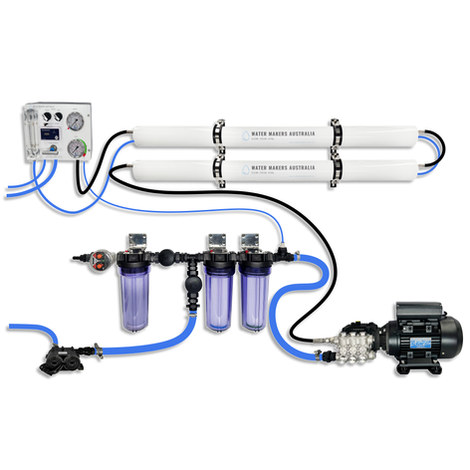
A two-membrane modular watermaker with 140 L/h nominal output, aimed at families and liveaboards that want more water per run.
Explore →Burke Yachtsman Gear Bag 40L - Shop Now Zip Pay | Tamar Marine Skip to content 59 – 63 Holbrook Street, Invermay Online Shop Open 24/7 Products search Contact us 1300 MARINE $ 0.00 0 Cart Burke Yachtsman Gear Bag 40L $ 79.90 Colour Choose an option Black Blue Black Blue Clear - Burke Yachtsman Gear Bag 40L quantity + Add to cart Enquire about this product SKU BAGB-Y24/BLACK* Category Bags - Sail & Gear A Burke classic and customer favourite, the Yachtsman’s Gear Bag is built tough to handle wet, salty conditions while keeping your gear dry and protected. Made from double coated waterproof…
Explore →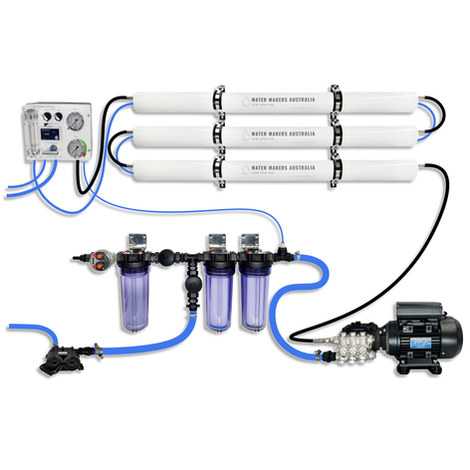
A three-membrane modular watermaker with 200 L/h nominal output and up to 240 L/h family-level marketing, for larger crews and heavy use.
Explore →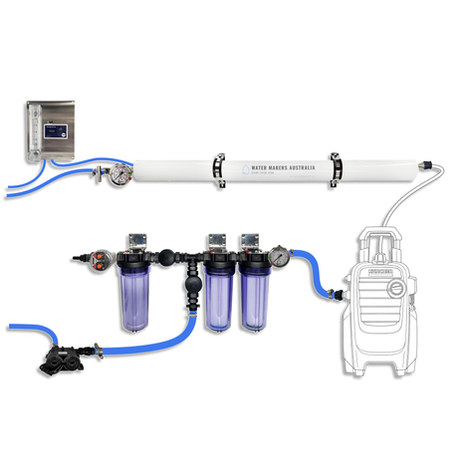
A one-membrane modular marine watermaker with 80 L/h nominal output, remote stainless control panel, standard consumables and direct Australian support.
Explore →