Loading this page…

Loading this page…
Sailing club
Great Lakes Sailing Club is an off-the-beach, family-oriented sailing club on the foreshore of Wallis Lake at Forster, New South Wales. The club centres on catamaran and dinghy sailing, runs a September–March season with regular Sunday social sailing, and hosts the long-running WildCat Regatta each October long weekend.
About
Great Lakes Sailing Club is an off-the-beach, family-oriented sailing club on the foreshore of Wallis Lake at Forster, New South Wales. The club centres on catamaran and dinghy sailing, runs a September–March season with regular Sunday social sailing, and hosts the long-running WildCat Regatta each October long weekend.
Service area: Forster — Wallis Lake (Great Lakes region), NSW
Keep exploring
Community sailing club based on the shores of Wallis Lake near Forster, NSW. The club (operating for more than 55 years) runs competitive racing including the Wild Cat Regatta, as well as social family sailing on Sundays. The sailing season is listed as running from September to March and the club describes activity year-round for some competitors. The club welcomes sailors of a range of ages and abilities and promotes social events and organised sailing programs.
Great Lakes is not structured like a big-city sailing academy, and it doesn't pretend to be. The club's public presence revolves around racing, social sailing and club events rather than formal learn-to-sail accreditation, so anyone chasing a certified Tackers or Discover Sailing course should confirm current offerings with the club directly — a third-party directory lists learn-to-sail courses, but the club's own material doesn't detail them. What the club clearly does offer is something many structured programs struggle to replicate: a low-pressure pathway in through social family sailing every Sunday, where newcomers learn by doing alongside experienced hands.
That matters more than it might sound. Off-the-beach catamaran sailing is one of the sport's most sociable entry points — two-up boats, forgiving shallow water, a beach to launch from and a rigging lawn full of people happy to help a beginner sort a mainsheet from a traveller line. At a club where camaraderie is stated as a core value, Sunday is the classroom.
For sailors who catch the racing bug, the development pathway runs through the club's competitive core. Competition sailors train year-round despite the September-to-March season, and the WildCat Regatta each October long weekend provides the annual test — three days of open-class catamaran racing that draws visiting trailers and turns the club grounds into a campsite.
Class regattas have come to Wallis Lake for decades, including a Laser-class Wallis Lake Regatta recorded back in January 1977, so young sailors stepping up from club racing inherit a venue with genuine championship pedigree. Inclusive sailing also has a regional foothold: Sailability NSW operates a Great Lakes branch serving the Forster-Wallis Lake area with supported recreational sailing for people with disability.
Wallis Lake is the whole proposition. A large, shallow coastal lake system beside the twin towns of Forster-Tuncurry in the Great Lakes region, it offers the kind of sailing water that off-the-beach catamarans were built for: broad reaches, sandy shores, and enough surface area for a full regatta fleet without the traffic of a harbour or the swell of the open coast. Shallow coastal lakes like this one reward sharp tactical sailing — sea breezes arrive reliably through the warmer months, and flat water lets lightweight cats hit serious pace on a reach.
The club's address, 4859 The Lakes Way, puts it right on the foreshore rather than in the town centre, and the layout reflects off-the-beach priorities: lawn for rigging, direct launching to the lake, and open space that converts into a campground when the WildCat Regatta comes around each October. That camping element is central to the club's character — the regatta is billed as blending competition with camping and community beside the lake, and at a $200 entry fee it stays firmly in the affordable, grass-roots tradition of country regattas.
Practicalities suit travelling sailors. The sailing season runs September through March, catching the warm months and the long summer evenings, and the Forster-Tuncurry area supplies accommodation, boat ramps and holiday infrastructure in spades for those who don't camp. The club keeps its community stitched together through an active social media presence, the main channel for news and event updates. For Sydney or Newcastle cat sailors, it's a straightforward drive north to a lake that has hosted visiting class regattas for nearly half a century.
Precise founding records are elusive, but the club's own account states it has been at the heart of the local sailing community for more than 55 years, which points to a founding around the late 1960s. It positioned itself from the outset as the modern custodian of a much older story, presenting the club as continuing a maritime tradition on Wallis Lake that reaches back to the early 1900s, when working sail and regatta craft shared these waters.
The lake's competitive pedigree predates the club in its current form. NSW/ACT Laser Association records show a Wallis Lake Regatta back in January 1977 — with Coffs Harbour Yacht Club organising that edition — evidence that class associations had already recognised the lake as quality championship water half a century ago. Regional coastal clubs frequently pooled regatta duties in that era, rotating events among venues with the space and breeze to handle them.
The clearest marker of the club's own timeline is the WildCat Regatta. The 2026 edition, run across the October long weekend from the third to the fifth, is billed as the 53rd running of the event, which places the first WildCat around 1973-74. Welcoming every off-the-beach catamaran class, it fused racing with lakeside camping from the start, and its longevity — over five decades of annual editions — says as much about the club's volunteer stamina as any trophy cabinet.
Around that anchor event the club has maintained its rhythm of Sunday family sailing and year-round training for the competitive fringe, featuring in Great Lakes community life along the way, including local press coverage of sailing programs for area kids. More than half a century on, the formula at The Lakes Way is unchanged: catamarans, camping, and a lake built for both.
Apollo Bay is a small working harbour on Victoria’s Great Ocean Road where sheltered inshore sailing meets the Southern Ocean. The character is a mix of protected harbour berths and an exposed open coast: pleasant day-sails and sheltered weekend cruising inside the bay, with demanding coastal passages immediately offshore where south‑westerly swell and strong winds from the Southern Ocean dominate. It suits coastal cruisers, trailer sailors who launch at the ramp, and experienced coastal sailors who understand bar and swell behaviour; it is not a casual open‑ocean anchorage for unprepared or

Do a seasonal inspection and servicing routine that focuses on hull and antifouling, through-hulls and seacocks, rigging and sails, engine and fuel systems, electricals and batteries, safety gear and bilge systems. Tailor exact tasks to your boat type, age and where you sail in South Australia, and follow manufacturer and marine service advice for anything technical.
Explore →
Expect very different seasonal systems across Western Australia: the south‑west (Perth to Albany) has a strong summer afternoon sea breeze (the “Fremantle Doctor”) and winter westerly fronts, while northern WA follows a wet/dry monsoonal cycle with strong seasonal onshore winds, thunderstorms and cyclone risk in the wet season. Local headlands, estuaries and tidal flows often change what you actually feel on the water, so learn the local timing and sheltered venues first.
Explore →
Pick a stable, simple, forgiving dinghy with a single sail or basic sloop rig, affordable handling and easy maintenance—ideally one with a local class or school nearby so you can access coaching and spare parts.
Explore →
Rig and de-rig a small dinghy by following a consistent, step-by-step sequence: prepare the boat on shore, fit spars and foils in a stable order, control sails and running rigging so lines don’t tangle, check fittings and safety gear, and reverse the process when coming ashore—always working with a partner when possible and staying aware of wind and tide.
Explore →A practical guide to preparing, planning and executing a recreational offshore passage along the New South Wales coast. Covers route selection, weather and tidal considerations, vessel and crew checks, safety equipment, communication, watchkeeping and common mistakes, with clear pre‑departure and underway checklists.
Explore →A practical guide for recreational sailors planning day sails or short cruises on Lake Macquarie. Covers the entrance, navigation considerations, popular anchorages, local weather and tide influences, mooring etiquette, safety checks and suggested itineraries around the lake.
Explore →Practical guide for recreational sailors planning passage on the Hawkesbury River: how to plan around tides, choose anchorages, read local conditions and prepare the boat and crew for a safe, comfortable trip.
Explore →
A practical guide for new sailors on picking the right Australian sailing club: training, boat access, racing, social fit, costs and the key questions to ask before joining.
Explore →Burke Yachtsman Gear Bag 40L - Shop Now Zip Pay | Tamar Marine Skip to content 59 – 63 Holbrook Street, Invermay Online Shop Open 24/7 Products search Contact us 1300 MARINE $ 0.00 0 Cart Burke Yachtsman Gear Bag 40L $ 79.90 Colour Choose an option Black Blue Black Blue Clear - Burke Yachtsman Gear Bag 40L quantity + Add to cart Enquire about this product SKU BAGB-Y24/BLACK* Category Bags - Sail & Gear A Burke classic and customer favourite, the Yachtsman’s Gear Bag is built tough to handle wet, salty conditions while keeping your gear dry and protected. Made from double coated waterproof…
Explore →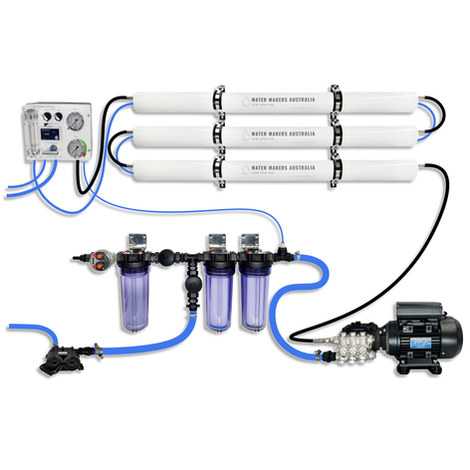
A three-membrane modular watermaker with 200 L/h nominal output and up to 240 L/h family-level marketing, for larger crews and heavy use.
Explore →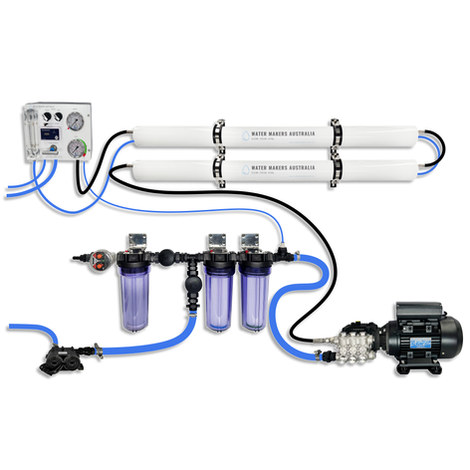
A two-membrane modular watermaker with 140 L/h nominal output, aimed at families and liveaboards that want more water per run.
Explore →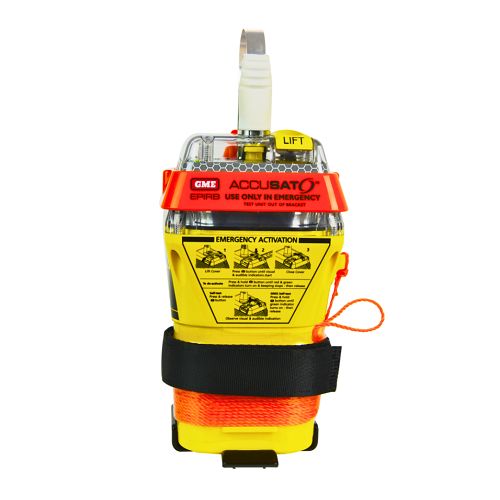
A 10‑year battery EPIRB with integrated GNSS (supports GPS and Galileo), infrared strobe and 121.5 MHz homing signal. Approved for worldwide COSPAS‑SARSAT operation.
Explore →