Loading this page…

Loading this page…
Sailing club
Griffith Sailing Club is a small, family-oriented volunteer club on the western shore of Lake Wyangan (Griffith, NSW) offering dinghy and catamaran sailing alongside rowing and kayaking. The club runs a Sunday sailing season from 1 September to 30 April, races using Yardstick handicaps so mixed fleets can compete together, and supports informal learn-to-sail mentoring plus occasional formal courses when instructors are available. The club and lake have experienced significant water-level volatility (drought, flooding and periodic blue‑green algae), and recent recovery work has been an active part of the club’s community role.
About
Griffith Sailing Club is a small, family-oriented volunteer club on the western shore of Lake Wyangan (Griffith, NSW) offering dinghy and catamaran sailing alongside rowing and kayaking. The club runs a Sunday sailing season from 1 September to 30 April, races using Yardstick handicaps so mixed fleets can compete together, and supports informal learn-to-sail mentoring plus occasional formal courses when instructors are available. The club and lake have experienced significant water-level volatility (drought, flooding and periodic blue‑green algae), and recent recovery work has been an active part of the club’s community role.
Service area: Lake Wyangan / Griffith, NSW
Keep exploring
Inland sailing clubs live and die by their water, and few illustrate that better than Griffith Sailing Club, which runs its season on the western shore of Lake Wyangan in the NSW Riverina, about ten minutes' drive north-west of the city. This is a small, family-oriented, volunteer-run organisation with a broader brief than most: sailing sits alongside kayaking and rowing, making it a genuine multi-sport hub for non-powered water activity in the district. The Australian Sports Foundation has described the club as "a community asset, a meeting place, and a source of connection for families, friends, volunteers and local residents", and that framing fits — when Australian Sailing visited in 2021 it found a well-established club with a friendly family atmosphere and leadership openly keen to grow the membership.
The sailing itself centres on off-the-beach dinghies and catamarans, with Sunday afternoon racing from the first of September through to the end of April. Every boat competes on Yardstick handicap, which keeps a mixed fleet racing on level terms regardless of class, and trailer sailors up to six metres are welcome too, launching from the club's own ramp or the neighbouring public area. A winter series carries on for the more committed, with the club itself calling those off-season outings "often the best sailing of the year".
What sets Griffith apart from almost any other club in this directory is the adversity it has absorbed. Drought dropped its lake well below normal in 2021, record floods then drowned the facility for roughly a year in 2022–23, and blue-green algae has periodically shut the water down altogether. That this club is still racing says plenty about the people behind it.
Griffith's learn-to-sail pathway is deliberately practical rather than institutional. The club keeps two loan boats — a Laser and a Maricat — that beginners can borrow, and instruction typically happens one-on-one with experienced members who take newcomers out and show them the ropes. A more formal Learn to Sail program runs when instructor availability allows, but the informal mentoring model is the reliable constant, and it suits a club of this scale: new sailors are folded straight into the Sunday fleet, where Yardstick handicap racing means a first-season sailor in a borrowed boat can share a start line with the club's quickest crews without the contest being meaningless.
The racing calendar anchors the program. Sundays are race day from 1 September right through to 30 April, with all classes sailing under the one handicap system. Once autumn closes the season out, the winter series takes over for what the club calls the more hardy sailors — and, by the club's own account, those crisp winter afternoons frequently deliver the finest conditions of the year on the lake.
Beyond the sailboats, the club's paddle and rowing arms broaden the offering considerably. Kayakers gather for group paddles on Sunday mornings at eight, with additional Monday, Wednesday and Friday evening sessions during daylight saving, plus occasional all-day river trips built around a picnic or barbecue. Rowers have access to single, double and quad sculls, with learn-to-row programs for those starting out. For a regional city, that breadth of low-cost water access — sail, paddle and scull under one clubhouse roof — makes the club an unusually complete entry point to life on the water.
Lake Wyangan is a shallow, closed-catchment lake, split into its North and South basins by the Jones Road causeway, and the club occupies the western shore with lawns, shady trees, amenities, green rigging areas and a private boat ramp giving easy access to the water. Because the lake has no natural drainage outlet, water levels are at the mercy of the seasons — and that single geographical fact has shaped nearly everything about the club's recent existence.
When catchment runoff pours in, as it did through 2022, the only way water leaves is by mechanical pumping; when the rain stops, evaporation and drought pull the shoreline back. The lake carries enough depth for trailer sailors up to six metres, and the sailing water itself is an open, uncomplicated expanse well suited to dinghy and catamaran racing.
The volatility is stark. In early 2021 the lake sat one to one-and-a-half metres below its usual level, and Griffith City Council was working to raise it. Within two years the lake had swung to record heights, with around 4,000 megalitres needing extraction, and council responded by reallocating funds in its 2022/23 budget to a roughly $1.4 million flood pump and pipeline project — a pump shifting about twenty megalitres a day through one and a half kilometres of pipe toward the Barren Box Storage and Wetlands.
The lake wears other hats too. It is a recreational fishery that OzFish and its partners restocked with native fish in December 2021, installing woody habitat and rock reefs along a 500-metre stretch, and it hosts V8 Superboats jet sprint events run by a separate organisation. Blue-green algae blooms have periodically pushed the lake to red-alert status, closing it to recreation. Sailing here means sharing a hardworking, closely managed piece of water — and watching the level gauge.
The club's published record doesn't fix a founding date, but by the time Australian Sailing profiled it in 2021 Griffith Sailing Club was already "well established with a friendly family atmosphere", and making an enthusiastic push to build membership under then-President Tom. That 2021 visit captured the club mid-battle with drought: Lake Wyangan sat a metre or more below normal, council was working to lift the level, and members made the best of the low water by refurbishing the sea wall fronting their clubhouse.
Then the story flipped with almost no warning. Continual rainfall and catchment runoff drove Lake Wyangan to record heights through 2022, flooding foreshore buildings and infrastructure, and the Griffith local government area was disaster-declared twice — on 4 August and again on 14 September. The club facility spent around twelve months underwater, the damage extensive enough to bring operations to a standstill. When rising water entered the clubhouse and sheds again in October 2023, members shifted boats and equipment to higher ground, with club secretary David Martin fronting local media on the latest inundation.
The recovery has been a community effort in the truest sense. Members and volunteers brought the facility back to working order, and Griffith City Council's flood pump and pipeline project gave the lake its first real mechanism for shedding excess water. Long-term repairs to water-damaged buildings continue, funded in part through an Australian Sports Foundation campaign for the flood-destroyed clubhouse reconstruction, while blue-green algae outbreaks remain an unwelcome recurring character in the story, hitting membership and participation whenever red alerts make the lake unsuitable for recreation.
Through drought, flood and bloom, the club has kept its Sunday season alive — a persistence the Riverina sailing community clearly values.
Batemans Bay and the Clyde River form a classic NSW South Coast cruising region where a sheltered, tidal estuary meets a short, island‑dotted entrance to the Tasman Sea. It’s distinctive for easy access from Canberra, a mix of river and bay sailing, a compact marina and mooring network, and a river entrance (the Clyde River bar) that can change rapidly. The area suits day sails, weekend cruising, trailer‑boat exploration and sheltered coastal passages; offshore or long‑passage plans require careful timing and local knowledge. Preparation for tidal flow, variable southerly swells and shallow, s

Maybe — it depends. In NSW you often need registration and a boat operator licence for motorised vessels, but many small trailerable sailing dinghies without engines don’t require boat registration or a licence. Check the specific rules for your craft, trailer and engine.
Explore →
Legal requirements can change — check Transport for NSW for the current rules. As a practical baseline for coastal day sailing from NSW shores: keep the right number and type of lifejackets for everyone, have a means of calling for help, show navigation lights if you’ll be out after dusk, and carry basic items to manage a man‑overboard or abandon‑ship situation. Add anchor, bilge/bailer, sun/protection and basic repair kit as recommended items.
Explore →
Late spring to summer is usually the best time for beginners to start learning to sail in Tasmania because the weather is generally warmer, days are longer and conditions are often more settled. Expect lighter to moderate winds with regular afternoon sea breees in summer, while spring and autumn bring more changeable and sometimes stronger conditions; winter is colder, wetter and typically windier with more fronts and swell.
Explore →
Many pets can enjoy sailing but suitability comes down to temperament, physical fitness and how you introduce them. Do a calm, staged assessment and get a vet check before you take them offshore.
Explore →A practical guide to the coastal weather systems that affect sailing along Western Australia's coast, focusing on the Fremantle Doctor, local sea breezes, and linked coastal phenomena. Explains how these systems form, when they tend to occur, how they influence boat handling and passage planning, common mistakes, and a
Explore →A practical guide for recreational sailors planning visits to Albany and King George Sound. Covers the main anchorage areas, typical local weather patterns, tidal and current considerations, navigational hazards, on-the-water etiquette and a pre-departure checklist to help you plan a safe passage and enjoyable stopover
Explore →
A practical guide for new sailors on picking the right Australian sailing club: training, boat access, racing, social fit, costs and the key questions to ask before joining.
Explore →A practical guide for recreational sailors planning day sails or short cruises on Lake Macquarie. Covers the entrance, navigation considerations, popular anchorages, local weather and tide influences, mooring etiquette, safety checks and suggested itineraries around the lake.
Explore →Burke Yachtsman Gear Bag 40L - Shop Now Zip Pay | Tamar Marine Skip to content 59 – 63 Holbrook Street, Invermay Online Shop Open 24/7 Products search Contact us 1300 MARINE $ 0.00 0 Cart Burke Yachtsman Gear Bag 40L $ 79.90 Colour Choose an option Black Blue Black Blue Clear - Burke Yachtsman Gear Bag 40L quantity + Add to cart Enquire about this product SKU BAGB-Y24/BLACK* Category Bags - Sail & Gear A Burke classic and customer favourite, the Yachtsman’s Gear Bag is built tough to handle wet, salty conditions while keeping your gear dry and protected. Made from double coated waterproof…
Explore →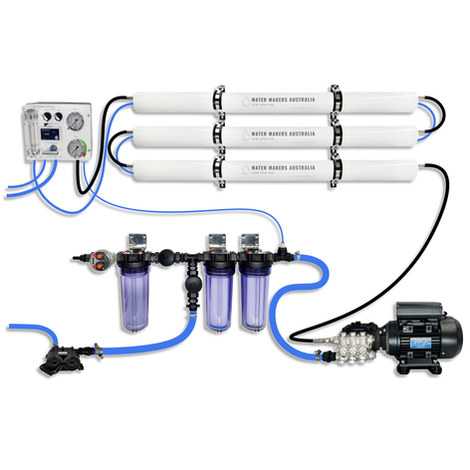
A three-membrane modular watermaker with 200 L/h nominal output and up to 240 L/h family-level marketing, for larger crews and heavy use.
Explore →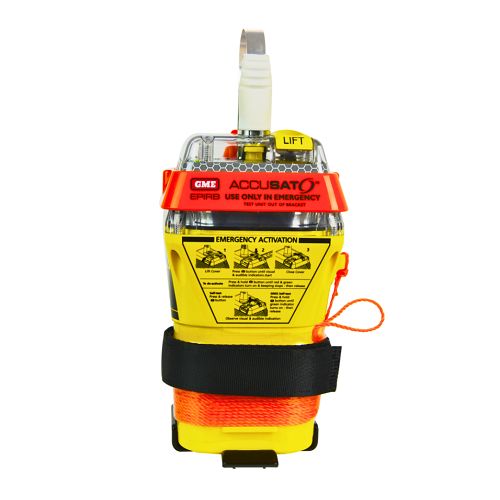
A 10‑year battery EPIRB with integrated GNSS (supports GPS and Galileo), infrared strobe and 121.5 MHz homing signal. Approved for worldwide COSPAS‑SARSAT operation.
Explore →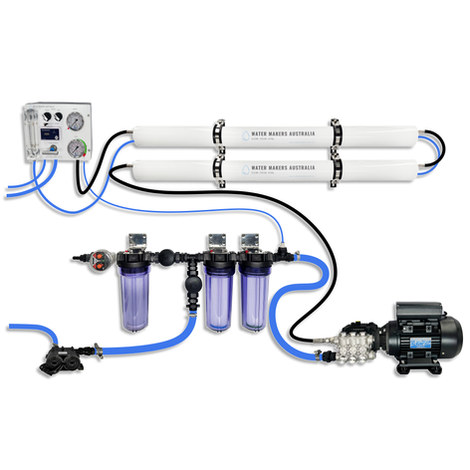
A two-membrane modular watermaker with 140 L/h nominal output, aimed at families and liveaboards that want more water per run.
Explore →