Loading this page…

Loading this page…
Sailing club
Hawkesbury River Yacht Club (HRYC) is a mooring-based keelboat club sailing from Parsley Bay, Brooklyn (NSW). Established in 1992, the club runs year‑round racing and social sailing across the lower Hawkesbury River, Cowan Creek, Broken Bay and Pittwater. The fleet is primarily keelboats of about 6–11 metres, with trailer sailors and sports yachts also welcome. Regular programmes include monthly Passage and Windward‑Leeward series, sprint races, trophy events and the Broken Bay Interclub Series, while beginners typically learn by crewing with members.
About
Hawkesbury River Yacht Club (HRYC) is a mooring-based keelboat club sailing from Parsley Bay, Brooklyn (NSW). Established in 1992, the club runs year‑round racing and social sailing across the lower Hawkesbury River, Cowan Creek, Broken Bay and Pittwater. The fleet is primarily keelboats of about 6–11 metres, with trailer sailors and sports yachts also welcome. Regular programmes include monthly Passage and Windward‑Leeward series, sprint races, trophy events and the Broken Bay Interclub Series, while beginners typically learn by crewing with members.
Service area: Parsley Bay, Brooklyn; Broken Bay and the lower Hawkesbury River (including Cowan Creek and Pittwater)
Keep exploring
Hawkesbury River Yacht Club (HRYC) is a small sailing and yacht club based in Parsley Bay at Brooklyn on the Hawkesbury River, north of Sydney. Established in 1992, the club runs year-round racing and social sailing activities for keelboats and trailer sailors. Its fleet is described as yachts 6–11 metres and it welcomes trailer sailors and sports yachts. Regular events include passage and windward–leeward race series, monthly and special trophy races, midweek social sails and raft-ups, twilight sailing with BBQs, and interclub racing in Broken Bay, Cowan Creek, the Hawkesbury River and Pittwater.
Hawkesbury River Yacht Club's development model is the oldest one in yachting: turn up, crew, and learn by racing. The club runs no formal learn-to-sail school of its own; instead, beginners are welcomed aboard member yachts, where the full rhythm of keelboat sailing — trimming, helming, navigating tides and marks, working a start line — is absorbed race by race under skippers who know these waters intimately. For sailors coming across from dinghies or stepping onto a yacht for the first time, it's a direct route into real competition.
The racing program itself is the club's backbone and runs year-round across Broken Bay and the lower Hawkesbury. The Passage Series sails on the first Saturday of each month, the Windward-Leeward Series on the third Saturday, and a Sprint Series compresses three short races into a day's outing. Beyond the pointscore sits a set of standalone fixtures: the Three Island Race, the Rhumb Race, and the Crews' Race — a fixture that, by long yachting tradition, hands the helm to the people who usually work the front of the boat.
Windward-leeward and passage races typically run two to four hours around permanent and laid marks spread across Cowan Creek, Pittwater, Broken Bay and the Hawkesbury itself, while inter-club and trophy races stretch longer.
The marquee contest is the Broken Bay Interclub Series — also known as the Broken Bay Island Series — a three-race series contested against Royal Prince Alfred Yacht Club, Royal Motor Yacht Club and Gosford Sailing Club, with a Club Teams trophy alongside individual yacht prizes. Off the racetrack, the social program keeps the fleet connected: a Social Sail and Raft-up closes out each month's final Wednesday, twilight sailing and barbecues run through summer, and members gather at one another's homes after the sailing is done.
The club's sailing water is, in its own words, the "uncluttered waters of Broken Bay and the lower reaches of the Hawkesbury River" — and uncluttered is the operative word. Where Sydney Harbour fleets dodge ferries and weekend traffic, Hawkesbury crews race among sandstone headlands and drowned-valley anchorages, with courses extending into Cowan Creek and across to Pittwater. It's big, scenic, tidal water: passage races can thread between the river's reaches one month and square off on windward-leewards in Broken Bay the next, with permanent marks supplementing laid courses across the whole system.
Parsley Bay serves as the club's home port and the practical centre of operations. It's Brooklyn's small-craft hub, close to the Parsley Bay boat ramp, and the club's yachts lie on moorings in the bay or nearby — there's no marina or clubhouse compound here, just moored boats and a village shoreline shared with the Hawkesbury River Dragons and other local groups. Brooklyn itself sits in Hornsby Shire's north-eastern district, a small village where the river meets the railway and the M1 corridor, giving Sydney-based crews remarkably quick access to genuine cruising-ground sailing.
That shared, low-key infrastructure is precisely what the Lower Hawkesbury Aquatic & Recreation Association wants to improve. Formed in 2019, LHARA counts Hawkesbury River Yacht Club among its member associations alongside Hornsby Ku-ring-gai Sailing Club, Hawkesbury River Sailing Club, the Dragons and Brooklyn community groups, and its proposal for the bay is a purpose-built multi-use community facility with community spaces, ramp, storage and toilets. For a club whose fleet lives on moorings, better shore facilities would shore up the next thirty years of racing here.
The club traces its history to 1992, making it one of the younger yacht clubs on the New South Wales coast — a founding decade more recent than many of the boats now racing in its fleet. The public record doesn't preserve the founders' names or the exact circumstances of that first season, but the club's own account and the Lower Hawkesbury Aquatic & Recreation Association both fix 1992 as the starting point, and the shape the club took then — mooring-based, keelboat and trailer-sailer focused, racing and social in equal parts — is the shape it retains today.
Over three decades the club built out the calendar that now defines it: the monthly Passage and Windward-Leeward series, the sprint racing, and the standalone trophies — Three Island Race, Crews' Race, Rhumb Race — that give the season its punctuation. The Broken Bay Interclub Series grew into the highlight of the year, pitting Brooklyn sailors against Royal Prince Alfred, Royal Motor Yacht Club and Gosford crews for team and individual honours. Through it all the club has kept members connected with its newsletter, The Pennant, whose archived back issues chart the fleet's comings and goings even as current editions circulate to members.
The most consequential recent chapter has been collective rather than club-specific. In 2019 the club joined with its Brooklyn neighbours to form the Lower Hawkesbury Aquatic & Recreation Association, recognising that Parsley Bay's ageing shared facilities needed a united voice. LHARA's proposal for the shared facility at the bay — community spaces, ramp, storage and toilets — now represents the club's main advocacy front. More than thirty years on from that 1992 start, Hawkesbury River Yacht Club remains what it set out to be: a friendly mooring-based fleet racing some of the finest sheltered water within reach of Sydney.

Plan to transit Sydney Heads and northern NSW estuary entrances to take advantage of favourable tidal streams or slack water; account for local acceleration over shoals, eddies, wind-on-current effects and river discharge, and always check the latest local observations and tide/stream products before departure.
Explore →
Usually not for a small sailing dinghy. In NSW a boat driving licence is needed only to drive at 10 knots or more, or to drive a personal watercraft, and a vessel must be registered if it has an engine of 4 kW or more, is 5.5 m or longer, or needs a mooring licence or marina berth. A trailer towed on public roads needs its own registration.
Explore →
Before the season: confirm seaworthiness — hull, rig, engine, electrics, sails and safety gear — and replace or service wearable items. After the season: wash, dry and protect gear, service consumables and record what you did so the boat’s ready and reliable next season.
Explore →
Legal requirements can change — check Transport for NSW for the current rules. As a practical baseline for coastal day sailing from NSW shores: keep the right number and type of lifejackets for everyone, have a means of calling for help, show navigation lights if you’ll be out after dusk, and carry basic items to manage a man‑overboard or abandon‑ship situation. Add anchor, bilge/bailer, sun/protection and basic repair kit as recommended items.
Explore →
A practical guide for new sailors on picking the right Australian sailing club: training, boat access, racing, social fit, costs and the key questions to ask before joining.
Explore →Practical guide for recreational sailors planning passage on the Hawkesbury River: how to plan around tides, choose anchorages, read local conditions and prepare the boat and crew for a safe, comfortable trip.
Explore →A practical guide for recreational sailors planning day sails or short cruises around Batemans Bay, Broulee and the Clyde River. Covers local conditions, safe approaches, anchorages, launching, tides, common hazards, and checklists for trip planning and on-water decisions.
Explore →A practical guide for recreational sailors planning passages to, from or around Eden and Twofold Bay. Covers sheltered anchorages, shore facilities, local weather and tidal considerations, preparing for Bass Strait conditions and a focused equipment and safety checklist.
Explore →
Push-to-talk radio that uses 4G mobile networks where there is coverage and a built-in 16-channel analog radio where there is none, with GPS and SOS. Sold as a two-pack.
Explore →
Metal-bodied 4G push-to-talk radio with GPS and SOS in the GPS variant and a lifetime SIM plan included. Sold as a two-pack.
Explore →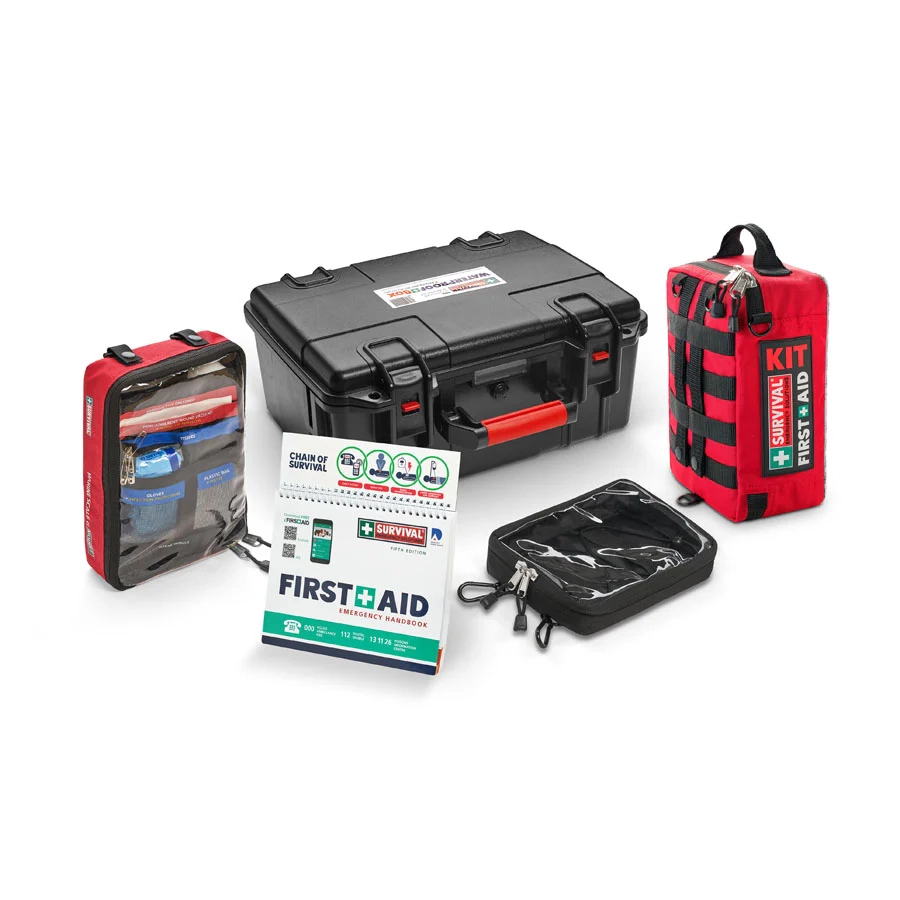
A 142-item marine first aid kit built around the Australian Scale G requirement, with a workplace kit, a Scale G module and a handbook packed in a large waterproof box.
Explore →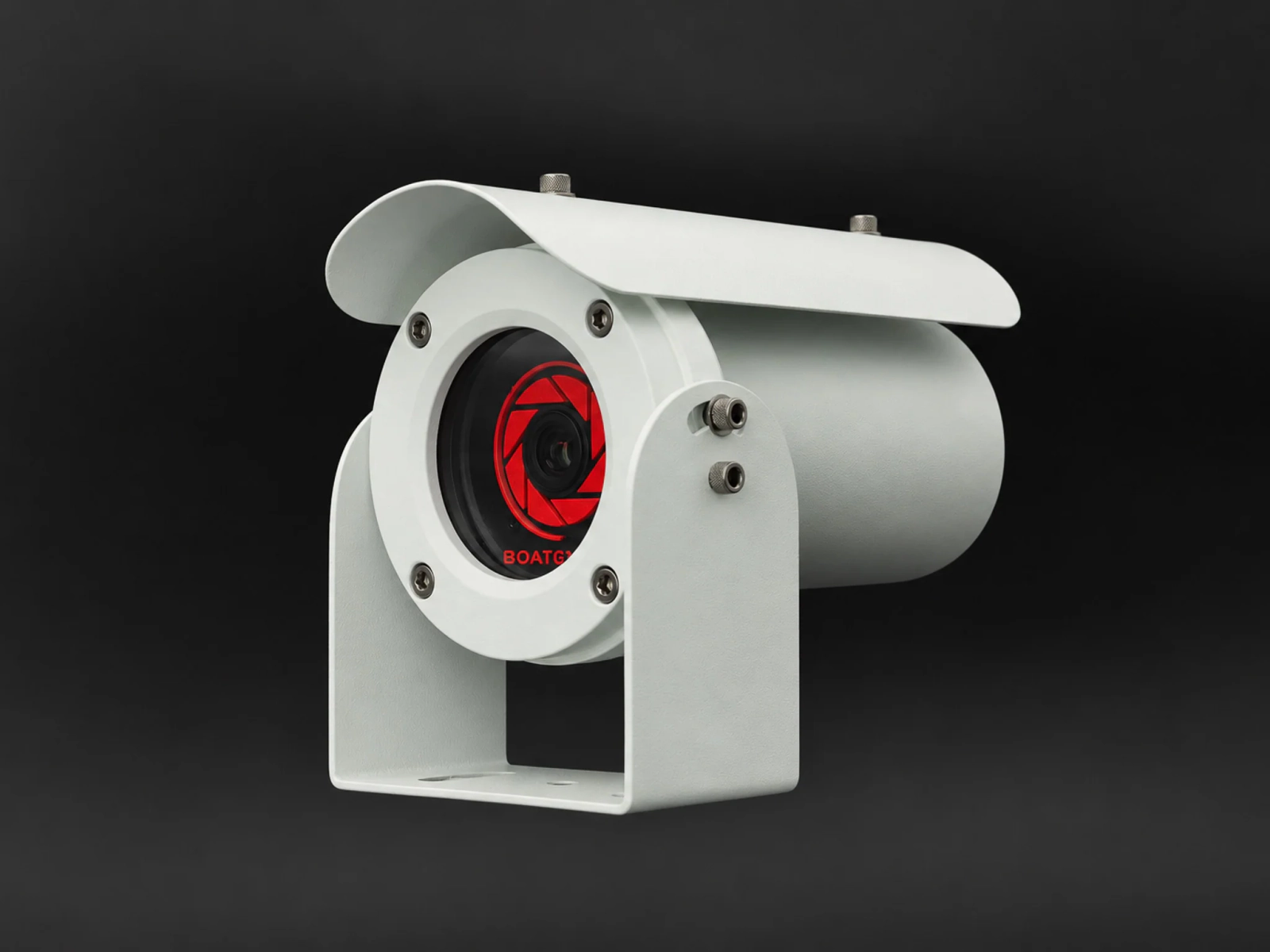
The original BoatEye360 full-colour low-light camera: the same 0.0001 lux sensor as the V2 in a larger 316L stainless housing, with HDMI and analog output, at a lower price.
Explore →