Loading this page…

Loading this page…
Sailing club
Community sailing club on the Hawkesbury River near Brooklyn (Dead Horse Bay). Run by volunteer parents/carers, the club runs a Learn to Sail program, junior and skiff racing (Manly Juniors, Flying 11s, 125s, VS 15ft skiffs, 13ft skiffs and 16ft skiffs) and operates on Saturdays in the spring/summer season (October to March). The site mentions safety-boat training and VHF marine radio notes; contact: hornsbysailing@gmail.com.
About
Community sailing club on the Hawkesbury River near Brooklyn (Dead Horse Bay). Run by volunteer parents/carers, the club runs a Learn to Sail program, junior and skiff racing (Manly Juniors, Flying 11s, 125s, VS 15ft skiffs, 13ft skiffs and 16ft skiffs) and operates on Saturdays in the spring/summer season (October to March). The site mentions safety-boat training and VHF marine radio notes; contact: hornsbysailing@gmail.com.
Service area: Brooklyn, NSW
Keep exploring
Community sailing club on the Hawkesbury River near Brooklyn (Dead Horse Bay). Run by volunteer parents/carers, the club runs a Learn to Sail program, junior and skiff racing (Manly Juniors, Flying 11s, 125s, VS 15ft skiffs, 13ft skiffs and 16ft skiffs) and operates on Saturdays in the spring/summer season (October to March). The site mentions safety-boat training and VHF marine radio notes; contact: hornsbysailing@gmail.com.
The skiff pathway is the club's signature. Where most junior programs funnel kids toward Olympic classes, HKSC's class structure climbs the traditional Australian ladder: Manly Junior for the youngest sailors, then the Flying 11 and the 125 as stepping stones, and beyond them the VS 15ft, 13ft and 16ft skiffs — the same three-man development route that has produced generations of Sydney skiff sailors. The club is among the few still racing the VS 15ft Skiff at all, keeping a genuinely historic class alive on the Hawkesbury.
Instruction follows a rhythm families can plan around. Theory sessions run on some Thursday evenings, with the practical sailing following on Saturdays, and — critically for parents weighing up the cost of the sport — the learn-to-sail boats are provided and maintained by the club itself. There's no need to buy a boat before a child has decided sailing is for them; the club puts them on the water in its own hulls and lets enthusiasm do the rest. Racing happens most Saturdays from September through to Easter, and the club has already locked in a 2026–27 season running from 5 September 2026 to 3 April 2027 at Dead Horse Bay.
Casual participation is deliberately low-friction. Australian Sailing's SailPass scheme gives visitors temporary membership and personal accident insurance, usable as often as needed, so a curious family can try a few Saturdays before joining properly, and newcomers without boats can crew for a regular or ride along on a support boat to see how a race day works. Behind it all sits the duty roster: parents and carers take their turns on safety boats, on the start line and around the shed, which is how a volunteer club keeps a six-class program afloat. An Australian Sports Foundation campaign to replace the club's primary safety boat is the current fundraising priority.
The club sails from Dead Horse Bay on the Hawkesbury River, at 22X George Street, Brooklyn — a short walk from the Parsley Bay boat ramp, and an easy run up the M1 Pacific Motorway from Sydney's northern suburbs. The club calls Dead Horse Bay one of Sydney's unique river bays, and the setting earns it: steep, bush-covered shores funnel the river past a sheltered anchorage that stays workable for junior sailing even when Broken Bay, a short sail downstream, is kicking up.
The water here is classic lower Hawkesbury — tidal river water ringed by national park, deep enough for the skiffs yet protected enough for an eight-year-old's first solo in a Manly Junior. Saturday racing keeps to the bay and the adjoining reach of the river, with the club linking families to Hornsby Shire Council's water-quality information so parents can check swimming conditions and water temperature through the season. It's a genuine river-sailing education: tides, shifting breezes off the headlands and the occasional fast-moving runabout all teach young sailors to keep their eyes out of the boat.
Shore infrastructure is modest and shared. The 1969 boatshed remains the heart of operations, and the wider precinct's future is tied up with the Lower Hawkesbury Aquatic & Recreation Association's proposal for a combined community and boating facility at Parsley Bay, incorporating community spaces, a boat ramp, storage and toilets. HKSC is a member association of LHARA alongside Hawkesbury River Yacht Club, Hawkesbury River Sailing Club, the Hawkesbury River Dragons and Brooklyn community groups — a coalition recognising that this stretch of river deserves shore facilities to match the quality of the water.
HKSC was formed in 1968 with a purpose spelled out from the start: "to provide an entry for local children and youth to the sport of sailing". A year later, in 1969, the club's families and friends painstakingly built the boatshed at Dead Horse Bay with their own hands — a founding act of volunteer labour that set the template for everything since. The club has never had paid staff; for more than fifty years it has been run by the parents and carers of the kids on the water, supported along the way by sailing families and local businesses.
The fleet tells the story of the decades in between. A 125-class dinghy built in 1997 appears in the class owner's register with its home listed as Hornsby Ku-ring-gai Sailing Club, confirming the double-handed junior trainers were racing here through the 1990s and 2000s, while the Manly Juniors, Flying 11s and the VS 15ft, 13ft and 16ft skiffs trace the club's long commitment to the traditional Australian class pathway. Generations of Brooklyn and Hornsby Shire kids have come through the same Saturday routine their parents — and in some cases grandparents — knew.
Recent history has been about securing the future. In 2019 the club became a founding member association of the Lower Hawkesbury Aquatic & Recreation Association, joining neighbouring clubs and community groups to push for better shared facilities at Parsley Bay. In 2020 the club found itself on a very different national stage, appearing on the registered clubs list for the Zhik National eSailing Challenge state championships — proof that even a shed-based volunteer club can show up wherever sailors compete.
And with an Australian Sports Foundation campaign underway to replace its primary safety boat, the same community that built the boatshed in 1969 is still funding the essentials, one donation at a time.
A comprehensive cruising guide to Pittwater, the sheltered estuarine waterway north of Sydney framed by Ku-ring-gai Chase National Park and the Northern Beaches. The guide explains the waterway’s geography, seasonal wind and swell patterns, principal sailing zones, recommended anchorages, shore facilities, navigation and port interactions, local hazards and regulatory constraints, plus several practical day and weekend sailing experiences and the types of sailors and craft best suited to the area.

Look for a friendly club with beginner-focused training, accessible facilities and boats, a supportive community, clear safety practices, and opportunities to progress at your own pace.
Explore →
Late spring to summer is usually the best time for beginners to start learning to sail in Tasmania because the weather is generally warmer, days are longer and conditions are often more settled. Expect lighter to moderate winds with regular afternoon sea breees in summer, while spring and autumn bring more changeable and sometimes stronger conditions; winter is colder, wetter and typically windier with more fronts and swell.
Explore →
Expect very different seasonal systems across Western Australia: the south‑west (Perth to Albany) has a strong summer afternoon sea breeze (the “Fremantle Doctor”) and winter westerly fronts, while northern WA follows a wet/dry monsoonal cycle with strong seasonal onshore winds, thunderstorms and cyclone risk in the wet season. Local headlands, estuaries and tidal flows often change what you actually feel on the water, so learn the local timing and sheltered venues first.
Explore →
Progress gradually by increasing exposure, practising specific skills, sailing with more experienced crew/skippers, and deliberately training for each new step—start in calm sheltered bays, then move to longer trips, busier waters, stronger winds and finally open coastal passages when you and your crew are consistently competent and comfortable.
Explore →
A concise, practical guide to the points of sail and how to trim sails effectively for common Australian conditions. Learn the basics of wind angles, sail shape, telltales, reefing considerations and simple steps to improve boat speed and balance.
Explore →Practical guide for recreational sailors planning passage on the Hawkesbury River: how to plan around tides, choose anchorages, read local conditions and prepare the boat and crew for a safe, comfortable trip.
Explore →
A practical guide for new sailors on picking the right Australian sailing club: training, boat access, racing, social fit, costs and the key questions to ask before joining.
Explore →A practical guide for recreational sailors planning visits to Albany and King George Sound. Covers the main anchorage areas, typical local weather patterns, tidal and current considerations, navigational hazards, on-the-water etiquette and a pre-departure checklist to help you plan a safe passage and enjoyable stopover
Explore →Burke Yachtsman Gear Bag 40L - Shop Now Zip Pay | Tamar Marine Skip to content 59 – 63 Holbrook Street, Invermay Online Shop Open 24/7 Products search Contact us 1300 MARINE $ 0.00 0 Cart Burke Yachtsman Gear Bag 40L $ 79.90 Colour Choose an option Black Blue Black Blue Clear - Burke Yachtsman Gear Bag 40L quantity + Add to cart Enquire about this product SKU BAGB-Y24/BLACK* Category Bags - Sail & Gear A Burke classic and customer favourite, the Yachtsman’s Gear Bag is built tough to handle wet, salty conditions while keeping your gear dry and protected. Made from double coated waterproof…
Explore →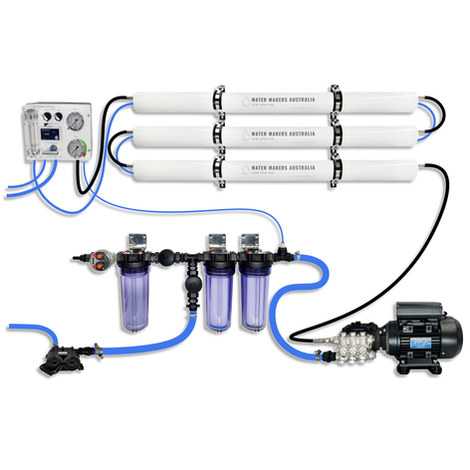
A three-membrane modular watermaker with 200 L/h nominal output and up to 240 L/h family-level marketing, for larger crews and heavy use.
Explore →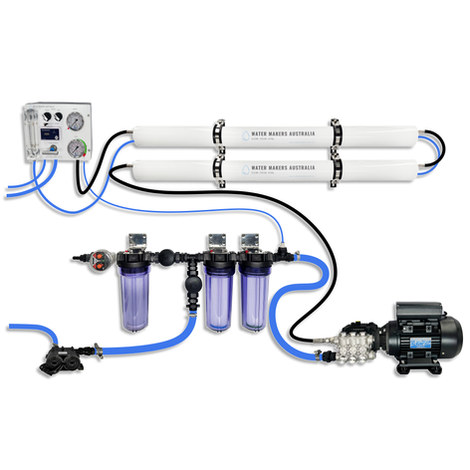
A two-membrane modular watermaker with 140 L/h nominal output, aimed at families and liveaboards that want more water per run.
Explore →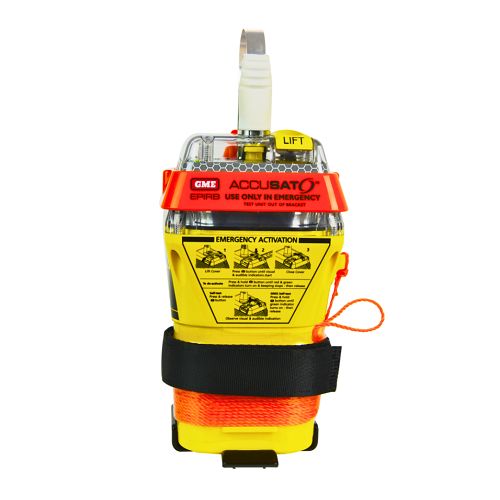
A 10‑year battery EPIRB with integrated GNSS (supports GPS and Galileo), infrared strobe and 121.5 MHz homing signal. Approved for worldwide COSPAS‑SARSAT operation.
Explore →