Loading this page…

Loading this page…
Sailing club
Jervis Bay Cruising Yacht Club (JBCYC) is the keelboat and trailer-yacht club based at Callala Bay on the northern shore of Jervis Bay, New South Wales. The club shares a volunteer-built clubhouse at 42 Boorawine Terrace with Jervis Bay Sailing Club, Sailability Callala and an outrigger canoe club. JBCYC runs a keelboat racing and social programme, supports local trailer-boat owners, and contributes to junior sailing in the precinct via the Callala Junior Sailing School and broader community partnerships.
About
Jervis Bay Cruising Yacht Club (JBCYC) is the keelboat and trailer-yacht club based at Callala Bay on the northern shore of Jervis Bay, New South Wales. The club shares a volunteer-built clubhouse at 42 Boorawine Terrace with Jervis Bay Sailing Club, Sailability Callala and an outrigger canoe club. JBCYC runs a keelboat racing and social programme, supports local trailer-boat owners, and contributes to junior sailing in the precinct via the Callala Junior Sailing School and broader community partnerships.
Service area: Jervis Bay / Callala Bay, NSW
Keep exploring
Jervis Bay Cruising Yacht Club is a sailing club based in Callala Bay, NSW, operating on the waters of Jervis Bay. The club runs regular racing programs and social events for members and participants.
The club's training story is unusual in that its great contribution to junior sailing grew legs and walked next door. Jervis Bay Cruising Yacht Club runs no accredited sailing school of its own; instead, the Callala Junior Sailing School — which grew directly out of the JBCYC community early in the 1990s — does the teaching, and does it prolifically. Club members began instructing local teenagers partly to keep them out of trouble, and classes swelled to thirty or forty children a weekend. The school now runs a learn-by-doing program across the full summer season with two safety boats and a fleet of club boats, operating from the same volunteer-built clubhouse the cruising club calls home.
The pathway that results is a model of local cooperation. CJSS graduates are encouraged to step up into racing with Jervis Bay Sailing Club, Sailability Callala provides sailing for people with disability from the same site, and the cruising club rounds out the ecosystem as the destination for sailors whose ambitions run to keelboats and trailable yachts. A kid who learns in a school dinghy can, without leaving Boorawine Terrace, end up crewing a trailer yacht on a Saturday afternoon.
The racing itself, per published listings, runs Saturday afternoons, starting on the October long weekend and continuing to the end of May, with briefings at one and a 1:30 pm start — a season long enough to make the most of the bay's generous conditions. The club also administers the practical machinery of keelboat life at Callala Bay, handling mooring and keelboat matters for the precinct. And the regatta program gives newer crews a friendly target: the Saltwater Veterans Cup's sprint and round-the-bay formats are designed as much for participation as for silverware, with charity rather than championship points as the stakes.
Jervis Bay is about as kind to sailors as Australian water gets. An oval-shaped bay roughly fifteen kilometres long and eight wide, it carries depths of ten to twenty metres over most of its area, sits within a protected Marine Park, and is virtually free of navigation hazards with only light boat traffic — a combination that lets race officers set courses almost anywhere and lets cruising sailors relax in a way the open Tasman rarely permits. Callala Bay, where the club is based, lies on the northern shore about a three-hour drive from Sydney, and north-east of Canberra, close to a public boat ramp for the trailer fleet.
The wind regime is famously cooperative: steady and persistent year-round, with fifteen-to-twenty-knot north-easterly sea breezes a feature of summer afternoons and ten to fifteen knots on offer most days, easing a little in spring and autumn. Southerly swells do enter the bay, lending the open-water races some genuine ocean texture, but the partially sheltered enclosure keeps conditions manageable for club fleets. Wildlife supplies the commentary track — dolphins are commonly encountered on the racecourse, whales pass in season, and the club's regatta promotion cheerfully invites visitors to sail with the famous dolphins or spot a whale.
The racecourses themselves have community value the club has been prepared to defend. When mussel aquaculture leases were proposed for the bay in 2013–14, the club objected on the grounds that the proposed Callala leases were "located on existing yacht race courses, where races regularly start and finish" — a reminder that clear, open water is a working asset for a sailing community, not just scenery. Between the Marine Park protection, the volunteer-built shore base shared with three other clubs and those dependable sea breezes, Callala Bay offers keelboat sailing that bigger harbours struggle to match.
The club's own account places its establishment in Jervis Bay during the 1980s, though the precise founding year hasn't been pinned down in public records. What is clear is that by the early 1990s the Jervis Bay Cruising Yacht Club was running regular events on the bay — Keith Horne, a local sailor of the era, crewed for Col Ryan aboard the yacht "Tales" — and the club had gathered a substantial membership of local boat owners around the keelboat and trailable-yacht scene at Callala Bay.
The early 1990s also produced the club's most lasting legacy, albeit an indirect one. Members began teaching local teenagers to sail, and that volunteer impulse grew into the Callala Junior Sailing School, whose classes quickly reached thirty to forty children a weekend. The school's clubhouse at Callala Bay was subsequently built entirely by volunteers and became the shared home of Jervis Bay Sailing Club, Sailability Callala and the cruising club itself — three sailing organisations under one community-built roof, an arrangement that persists today.
The decades since have been marked by quiet persistence and two public stands. In 2013 and 2014 the club campaigned against mussel aquaculture leases proposed for Jervis Bay, lodging a submission that described both its large membership and the threat to race courses where its fleets regularly start and finish. Then, over the Australia Day weekend of 26–28 January 2023, the club hosted the inaugural Saltwater Veterans Cup Regatta at Callala Bay — an "Across the Bay Sprint" and a "Race Around the Bay", with every dollar raised going to the Saltwater Veterans charity — and repeated the event on 7 April 2024 with brewery-sponsored shoreside hospitality.
Forty years on from its 1980s beginnings, the cruising club remains the keelboat heart of a remarkably collaborative little sailing village on one of the country's finest bays.
A detailed cruising guide to Brunswick Heads and the Brunswick River on the far north coast of New South Wales. Covers river and harbour geography, seasonal wind and swell patterns, principal sailing areas and anchorages, approach issues at the bar, shore facilities, local hazards and the legal/regulatory environment, plus suggested day sails, weekend cruises and island circuits suitable for a range of recreational craft.

Use ramps and beaches with respect for local conditions: check ramp layout, tide and swell, wind direction, vehicle access and crowding; prepare boat and crew before you launch or retrieve; and follow local signage, courtesy and safety practices. Specifics vary by ramp and beach, so confirm details for the exact site before you go.
Explore →
Progress gradually by increasing exposure, practising specific skills, sailing with more experienced crew/skippers, and deliberately training for each new step—start in calm sheltered bays, then move to longer trips, busier waters, stronger winds and finally open coastal passages when you and your crew are consistently competent and comfortable.
Explore →
Before your first sail in South Australian waters check the weather and tide, make sure the boat and safety equipment are fit for the trip, confirm local rules and any area-specific hazards, and tell someone your plan.
Explore →
Write a one‑page plan with the who/what/when/where/how of your trip, keep a copy on board and leave the main copy with a responsible person ashore (and optionally with your club, marina office or local volunteer rescue service).
Explore →A practical guide to selecting and using anchorages around New South Wales for cruising sailors. Covers sheltered bays, tidal considerations, holding, approach planning, and example anchorages with local conditions to check before you go.
Explore →A practical guide to preparing, planning and executing a recreational offshore passage along the New South Wales coast. Covers route selection, weather and tidal considerations, vessel and crew checks, safety equipment, communication, watchkeeping and common mistakes, with clear pre‑departure and underway checklists.
Explore →A practical guide for recreational sailors planning passages to, from or around Eden and Twofold Bay. Covers sheltered anchorages, shore facilities, local weather and tidal considerations, preparing for Bass Strait conditions and a focused equipment and safety checklist.
Explore →A practical guide for recreational sailors planning day sails or short cruises around Batemans Bay, Broulee and the Clyde River. Covers local conditions, safe approaches, anchorages, launching, tides, common hazards, and checklists for trip planning and on-water decisions.
Explore →Burke Yachtsman Gear Bag 40L - Shop Now Zip Pay | Tamar Marine Skip to content 59 – 63 Holbrook Street, Invermay Online Shop Open 24/7 Products search Contact us 1300 MARINE $ 0.00 0 Cart Burke Yachtsman Gear Bag 40L $ 79.90 Colour Choose an option Black Blue Black Blue Clear - Burke Yachtsman Gear Bag 40L quantity + Add to cart Enquire about this product SKU BAGB-Y24/BLACK* Category Bags - Sail & Gear A Burke classic and customer favourite, the Yachtsman’s Gear Bag is built tough to handle wet, salty conditions while keeping your gear dry and protected. Made from double coated waterproof…
Explore →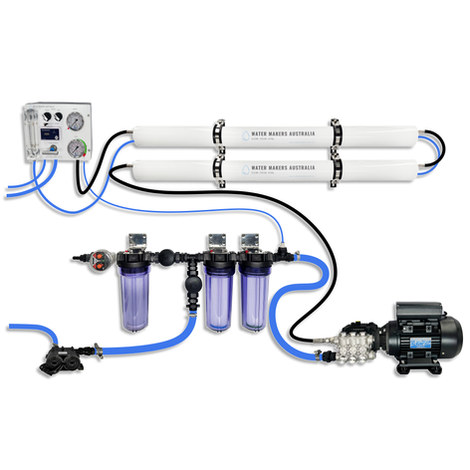
A two-membrane modular watermaker with 140 L/h nominal output, aimed at families and liveaboards that want more water per run.
Explore →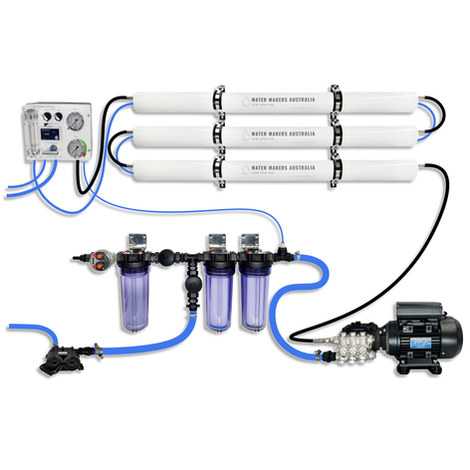
A three-membrane modular watermaker with 200 L/h nominal output and up to 240 L/h family-level marketing, for larger crews and heavy use.
Explore →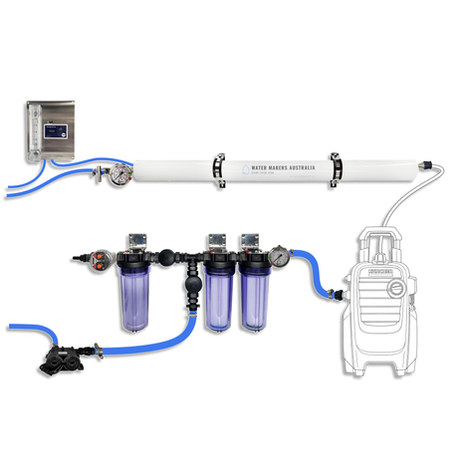
A one-membrane modular marine watermaker with 80 L/h nominal output, remote stainless control panel, standard consumables and direct Australian support.
Explore →