Loading this page…

Loading this page…
Sailing club
Jervis Bay Sailing Club (JBSC) is a volunteer-run dinghy and off-the-beach sailing club based at the Callala Bay Boatshed on the northern shore of Jervis Bay, New South Wales. The club runs a mixed-fleet race programme through the sailing season, hosts regattas and state-level events, and maintains a close operational partnership with the Callala Junior Sailing School and neighbouring water-sports groups.
About
Jervis Bay Sailing Club (JBSC) is a volunteer-run dinghy and off-the-beach sailing club based at the Callala Bay Boatshed on the northern shore of Jervis Bay, New South Wales. The club runs a mixed-fleet race programme through the sailing season, hosts regattas and state-level events, and maintains a close operational partnership with the Callala Junior Sailing School and neighbouring water-sports groups.
Service area: Callala Bay / northern Jervis Bay (NSW South Coast)
Keep exploring
Jervis Bay Sailing Club is a community sailing club based at Callala Bay, NSW that runs club racing, regattas and a learn-to-sail program. The club operates a mixed dinghy fleet (examples listed: PJ, MJ, Laser, Heron), runs organised race series and major events, and provides on-water support with club RIBs. The club is an accredited Discover Sailing Centre and advertises sail training, race officer resources and powerboat/operator courses.
What sets this club apart is the conveyor belt it shares with the Callala Junior Sailing School — the very organisation whose graduates the club was created to serve. The school's philosophy is learn-by-doing: minimal classroom theory, a full summer season on the water, and two safety boats shadowing students as they progress from crewing to single-handed sailing, with families encouraged to get involved rather than watch from the shore.
Its training fleet reads like a museum of Australian junior sailing — six Pittwater Juniors and nine Manly Juniors, a Sabot, a Heron, two Lasers, a Flying Ant, a de Havilland Vagabond and a little Swiffie 10. The arrangement has run since the club was founded in 2004 precisely to give the school's graduates somewhere to race.
The handover to club racing is deliberately gentle. School sailors are invited into Jervis Bay Sailing Club races on shortened courses, with early-morning starts timed to catch the lighter winds and rescue boat support standing by — a graduated introduction that turns nervous learners into confident racers without ever throwing them in the deep end. Club members repay the arrangement by participating in the school's volunteer training group, so the instruction pipeline and the racing fleet constantly refresh one another.
For adults and visiting sailors, the pathway is less formal: turn up on a Saturday, take advantage of day-membership arrangements where offered, and learn the trade inside a mixed fleet where every boat is yardsticked into contention. There is no accredited Discover Sailing Centre operation on the books; here, teaching happens through the school, and racing craft is learned on the course.
You'll find the clubhouse at 42 Boorawine Terrace, Callala Bay, at the very end of the road that leads to the boat ramp — roughly three hours' drive south of Sydney and an easy run north-east from Canberra. The clubhouse itself was raised entirely by volunteer labour for the junior sailing school, and three organisations now share the building — the sailing club, the cruising yacht club and the local outrigger canoe club — making the site a genuine community water-sports hub.
The sailing water is the northern corner of Jervis Bay, an oval embayment some 15 kilometres long and eight wide, mostly 10 to 20 metres deep and lying inside the Jervis Bay Marine Park. For race officers it is close to ideal: virtually no navigation hazards, light boat traffic, and enough open room to set long, fair beats. The bay is partially sheltered, though southerly swells do find their way in, and the wind is a dependable companion — steady and persistent year-round, with 15 to 20 knot north-east sea breezes through summer, 10 to 15 knots on most days, and softer airs in spring and autumn.
Reporting on the 2021 NSW Laser Master Championships held here, one account praised the "pristine and clear (no traffic) waters" and described one to two metre waves rolling through in 12 to 18 knots. When racing is cancelled, sailors are pointed across the bay to Nowra Community Sailing Club, while Vincentia Sailing Club — host of the Hobie 16 Worlds in February 2014 — lies just down the coast.
The story begins not with the club but with its feeder school. In the early 1990s, a police constable suggested to local sailors that teaching a group of teenagers to sail might keep them out of trouble; the sailors — among them Keith Horne, who crewed aboard SV Tales in Jervis Bay Cruising Yacht Club events — took the hint, and the Callala Junior Sailing School was born. Demand quickly swelled to 30 or 40 youngsters each weekend, and volunteers built the clubhouse at Callala Bay to house the operation. By 2004 it was clear the graduates needed somewhere to keep racing, so Jervis Bay Sailing Club was established to hone those skills and give local sailors a permanent racing venue.
Two decades on, the club has grown into a trusted regatta host. Its volunteers provided the race management team for the Rooster RS Aero 2025 National Championships, earning formal thanks from Australian Sailing, with 80 sailors and officials attending the presentation dinner at Club Callala. The 2021 NSW Laser Master Championships were fought out on its home water — 75 Radial rigs and 62 Standard rigs across six races — and the Spiral class NSW State Championship followed on 22–23 November 2025.
The forward calendar is busier still: the Hobie Cat State Titles in December 2026, the Spiral Nationals in January 2027, and RIB support for the Catamaran Nationals at Vincentia and the International Canoe World Titles in February 2027. Incorporated and based at PO Box 232 Nowra, the club is led by Commodore Geoff Carne, with Secretary/Treasurer Steve Lymbery — an accomplished RL24 sailor whose "Thinga Majig" took the 2009 club championship and second at the 2008 RL24 Nationals — keeping the books.
A detailed cruising guide to Brunswick Heads and the Brunswick River on the far north coast of New South Wales. Covers river and harbour geography, seasonal wind and swell patterns, principal sailing areas and anchorages, approach issues at the bar, shore facilities, local hazards and the legal/regulatory environment, plus suggested day sails, weekend cruises and island circuits suitable for a range of recreational craft.

Use ramps and beaches with respect for local conditions: check ramp layout, tide and swell, wind direction, vehicle access and crowding; prepare boat and crew before you launch or retrieve; and follow local signage, courtesy and safety practices. Specifics vary by ramp and beach, so confirm details for the exact site before you go.
Explore →
Look for a friendly club with beginner-focused training, accessible facilities and boats, a supportive community, clear safety practices, and opportunities to progress at your own pace.
Explore →
Plan the turn, move deliberately and in sequence, keep the boat balanced, trim sails smoothly and keep weight and rudder actions small so speed is preserved through both tacks and gybes.
Explore →
Progress gradually by increasing exposure, practising specific skills, sailing with more experienced crew/skippers, and deliberately training for each new step—start in calm sheltered bays, then move to longer trips, busier waters, stronger winds and finally open coastal passages when you and your crew are consistently competent and comfortable.
Explore →A practical guide to preparing, planning and executing a recreational offshore passage along the New South Wales coast. Covers route selection, weather and tidal considerations, vessel and crew checks, safety equipment, communication, watchkeeping and common mistakes, with clear pre‑departure and underway checklists.
Explore →A practical guide for recreational sailors planning passages to, from or around Eden and Twofold Bay. Covers sheltered anchorages, shore facilities, local weather and tidal considerations, preparing for Bass Strait conditions and a focused equipment and safety checklist.
Explore →A practical guide for recreational sailors planning day sails or short cruises around Batemans Bay, Broulee and the Clyde River. Covers local conditions, safe approaches, anchorages, launching, tides, common hazards, and checklists for trip planning and on-water decisions.
Explore →Practical guide for recreational sailors planning passage on the Hawkesbury River: how to plan around tides, choose anchorages, read local conditions and prepare the boat and crew for a safe, comfortable trip.
Explore →Burke Yachtsman Gear Bag 40L - Shop Now Zip Pay | Tamar Marine Skip to content 59 – 63 Holbrook Street, Invermay Online Shop Open 24/7 Products search Contact us 1300 MARINE $ 0.00 0 Cart Burke Yachtsman Gear Bag 40L $ 79.90 Colour Choose an option Black Blue Black Blue Clear - Burke Yachtsman Gear Bag 40L quantity + Add to cart Enquire about this product SKU BAGB-Y24/BLACK* Category Bags - Sail & Gear A Burke classic and customer favourite, the Yachtsman’s Gear Bag is built tough to handle wet, salty conditions while keeping your gear dry and protected. Made from double coated waterproof…
Explore →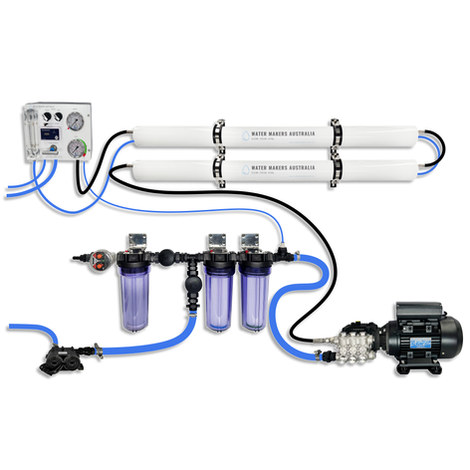
A two-membrane modular watermaker with 140 L/h nominal output, aimed at families and liveaboards that want more water per run.
Explore →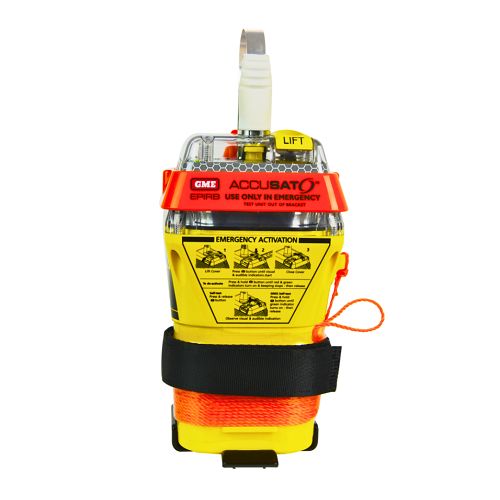
A 10‑year battery EPIRB with integrated GNSS (supports GPS and Galileo), infrared strobe and 121.5 MHz homing signal. Approved for worldwide COSPAS‑SARSAT operation.
Explore →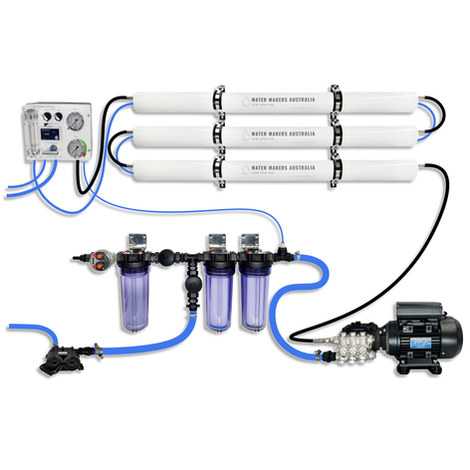
A three-membrane modular watermaker with 200 L/h nominal output and up to 240 L/h family-level marketing, for larger crews and heavy use.
Explore →