Loading this page…

Loading this page…
Sailing club
Koonawarra Bay Sailing Club is a small, volunteer-run club on Kanahooka Point (western shore of Lake Illawarra, NSW) focused on radio-controlled yacht racing and foiling windsurfing. The club sails year-round with organised radio-yacht race days, a clubhouse available for hire, large grassed rigging areas and lake access for events and training.
About
Koonawarra Bay Sailing Club is a small, volunteer-run club on Kanahooka Point (western shore of Lake Illawarra, NSW) focused on radio-controlled yacht racing and foiling windsurfing. The club sails year-round with organised radio-yacht race days, a clubhouse available for hire, large grassed rigging areas and lake access for events and training.
Service area: Kanahooka / Lake Illawarra, NSW
Keep exploring
Koonawarra Bay Sailing Club is a community sailing club on Kanahooka Point (Dapto) on the western shore of Lake Illawarra. Established in 1956, the club currently hosts radio-controlled yacht racing (International One Metre and International A Class) and foiling windsurfers, and welcomes all classes of sailing craft. The club sails on Lake Illawarra (triangular full-size race courses possible) with radio yacht racing held year-round on Tuesday, Thursday and Saturday (racing usually starts at 12:00).
Facilities include large grassed yacht preparation areas, waterfront access, boat washing, showers, catering and an upstairs clubhouse available for hire (carpeted clubroom for ~80, kitchen, air conditioning, balcony with lake views, accessible toilets). Basic sailing instruction for inexperienced sailors is offered and new members are welcome.
Instruction at Koonawarra Bay follows its own path: the club's classroom is the radio-yacht start line. With organised racing three days a week — IOM on Saturday and Tuesday, A Class on Thursday, all from 12 midday — newcomers get more structured sailing time here than most full-size clubs offer, and the learning curve in radio yachting is famously compressed: the tactics, rules and wind-reading of keelboat racing, mastered from dry land with a transmitter in hand. Other radio classes are welcome, so sailors arriving with a DF95 or a vintage Marblehead can find a start.
For those new to sailing in any form, the club keeps things personal and informal — basic instruction can be arranged for the inexperienced, and new members are always welcome. There are no accredited Australian Sailing courses on the books, and that is worth stating plainly: this is not the place for a Tackers holiday program, but it is a genuinely good place to learn race craft.
Foiling windsurfers, the club's other specialty, likewise develop their skills within the fleet — the deciding round of the NSW Foil/Formula windsurfing series was sailed from here in March 2019, proof that the standard of windsurfing at Kanahooka runs to state-series level. Between the two fleets, a newcomer can pick the discipline that suits and find experienced hands happy to share what they know.
In a sport where many clubs have let junior training lapse entirely, Koonawarra's honest, low-key offer — turn up, and members will teach you — has kept fresh faces coming to Kanahooka Point for decades.
Kanahooka Point, in Dapto, looks out over Lake Illawarra from its western shore, about an hour and a half's drive south of Sydney; the club's radio-yacht address is 1 Kanahooka Road, Kanahooka. The lake itself is the asset: roughly ten kilometres long and five wide, it gives race officers open water roomy enough for full-size courses, with little interference from the shoreline and barely any tidal flow — rare qualities behind the club's standing claim to be an experienced championship host at state, national and even international level. The elevated site lets spectators and radio sailors alike see the whole course, and the shore is set up for serious regatta work, with large grassed preparation areas, convenient lake access, boat washing, showers and catering.
The clubhouse adds another dimension. Inside is a carpeted clubroom measuring ten metres by nine, opening onto an outside balcony with views across the water to the escarpment; a well-equipped kitchen and tables and chairs for eighty people make it a natural function venue, and it is hired out for birthdays, engagements, weddings and meetings. The western-shore position has one consequence every sailor here learns to respect: exposure to the westerly.
When the club hosted the NSW Foil/Formula windsurfing final in March 2019, the day delivered a westerly gusting beyond 25 knots, with 43 knots recorded at the Primbee gauge across the lake — racing was abandoned after a single race, a reminder that Lake Illawarra's flat water can turn ferocious when the escarpment wind machine switches on.
A small group of local sailing enthusiasts established the club in 1956, and in the decades since it has operated more different classes than most clubs twice its size. Small catamarans were part of the mix, and at times the club even owned cats available for members to use — the kind of practical fleet-sharing that kept sailing affordable in the suburbs west of Wollongong. A 1999 photograph of the clubhouse held in Wollongong City Libraries' local-studies collection for the suburb of Koonawarra captures the club as it was: a community fixture on the point, embedded in the life of the district.
The modern reinvention came through radio yachting and foiling boards. The club hosted the RC Laser 2013 NSW State Title on Lake Illawarra at Kanahooka, establishing its credentials as a radio-sailing venue, and in March 2019 the NSW Foil/Formula windsurfing series chose Kanahooka as a fresh venue for its season decider — even if the 43-knot westerly meant only one race counted. Both milestones mattered less for the results sheets than for what they signalled: a 1950s club successfully pivoting to disciplines most of its contemporaries never embraced.
Through its affiliation with the NSW Radio Yachting Association, which lists the club's sailing days and officers, Koonawarra plugs into the state radio-yacht calendar, while its regatta-hosting pitch and function-hire operation keep the clubhouse busy between race days. It is a club that has survived by adapting: when one class faded, another was welcomed in, and the result, nearly seventy years on, is a venue that serves two of sailing's newest disciplines from a site chosen when the VJ was still king.
Batemans Bay and the Clyde River form a classic NSW South Coast cruising region where a sheltered, tidal estuary meets a short, island‑dotted entrance to the Tasman Sea. It’s distinctive for easy access from Canberra, a mix of river and bay sailing, a compact marina and mooring network, and a river entrance (the Clyde River bar) that can change rapidly. The area suits day sails, weekend cruising, trailer‑boat exploration and sheltered coastal passages; offshore or long‑passage plans require careful timing and local knowledge. Preparation for tidal flow, variable southerly swells and shallow, s

A regular, layered maintenance routine combining hull cleaning, targeted anti-fouling management, cathodic protection and systems checks will substantially reduce marine growth and corrosion for boats kept year‑round in South Australian waters. Focus on preventing attachment and electrochemical attack, then inspect and act more often if you’re in warm, nutrient-rich or high‑traffic sheltered waters.
Explore →
Maybe — it depends. In NSW you often need registration and a boat operator licence for motorised vessels, but many small trailerable sailing dinghies without engines don’t require boat registration or a licence. Check the specific rules for your craft, trailer and engine.
Explore →
Treat Tasmanian waters as cold year-round: prevent immersion where possible, wear appropriate layers and a lifejacket, carry reliable distress equipment, and have clear procedures to recover and rewarm anyone who gets wet.
Explore →
Look for a friendly club with beginner-focused training, accessible facilities and boats, a supportive community, clear safety practices, and opportunities to progress at your own pace.
Explore →A practical, Australian-focused guide explaining how sails generate drive, the points of sail, and how to trim sails for different conditions. Includes simple explanations of aerodynamic concepts, step-by-step trim checks, common mistakes and clear next steps for practice on the water.
Explore →
A practical guide for new sailors on picking the right Australian sailing club: training, boat access, racing, social fit, costs and the key questions to ask before joining.
Explore →A practical guide for recreational sailors planning passages to, from or around Eden and Twofold Bay. Covers sheltered anchorages, shore facilities, local weather and tidal considerations, preparing for Bass Strait conditions and a focused equipment and safety checklist.
Explore →A practical guide to the coastal weather systems that affect sailing along Western Australia's coast, focusing on the Fremantle Doctor, local sea breezes, and linked coastal phenomena. Explains how these systems form, when they tend to occur, how they influence boat handling and passage planning, common mistakes, and a
Explore →Burke Yachtsman Gear Bag 40L - Shop Now Zip Pay | Tamar Marine Skip to content 59 – 63 Holbrook Street, Invermay Online Shop Open 24/7 Products search Contact us 1300 MARINE $ 0.00 0 Cart Burke Yachtsman Gear Bag 40L $ 79.90 Colour Choose an option Black Blue Black Blue Clear - Burke Yachtsman Gear Bag 40L quantity + Add to cart Enquire about this product SKU BAGB-Y24/BLACK* Category Bags - Sail & Gear A Burke classic and customer favourite, the Yachtsman’s Gear Bag is built tough to handle wet, salty conditions while keeping your gear dry and protected. Made from double coated waterproof…
Explore →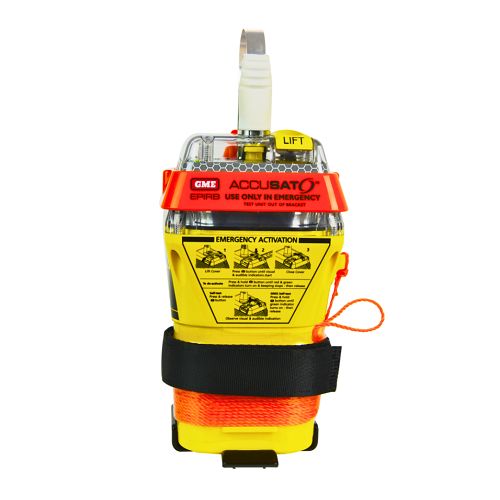
A 10‑year battery EPIRB with integrated GNSS (supports GPS and Galileo), infrared strobe and 121.5 MHz homing signal. Approved for worldwide COSPAS‑SARSAT operation.
Explore →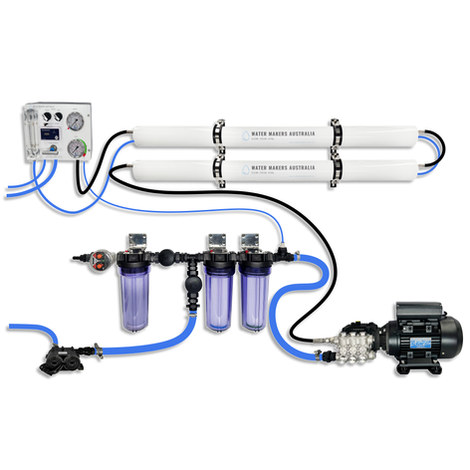
A two-membrane modular watermaker with 140 L/h nominal output, aimed at families and liveaboards that want more water per run.
Explore →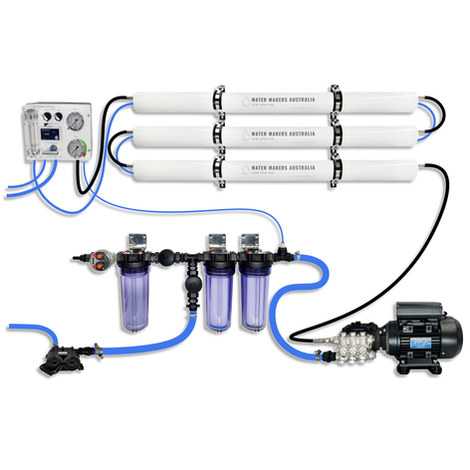
A three-membrane modular watermaker with 200 L/h nominal output and up to 240 L/h family-level marketing, for larger crews and heavy use.
Explore →