Loading this page…

Loading this page…
Sailing club
Kurnell Catamaran Club is an off‑the‑beach multihull‑focused sailing club based at Silver Beach, Kurnell, on the eastern shore of Botany Bay (Sydney, NSW). The club runs a weekend racing program through the sailing season, supports a lively junior monohull division, provides long‑term boat storage, and operates race support craft for event safety and starts. It describes itself as a fun, family‑oriented club welcoming novices and experienced multihull sailors alike.
About
Kurnell Catamaran Club is an off‑the‑beach multihull‑focused sailing club based at Silver Beach, Kurnell, on the eastern shore of Botany Bay (Sydney, NSW). The club runs a weekend racing program through the sailing season, supports a lively junior monohull division, provides long‑term boat storage, and operates race support craft for event safety and starts. It describes itself as a fun, family‑oriented club welcoming novices and experienced multihull sailors alike.
Service area: Kurnell / Botany Bay (Sydney, NSW)
Keep exploring
Kurnell Catamaran Club (KCC) is a family-oriented sailing club based at Kurnell, Sydney NSW that organises off-the-beach catamaran and junior monohull racing and social sailing on Botany Bay. The club sails most weekends (typically early September to early May), runs a junior program (O'pen Skiff and Laser classes) with club-owned boats available for loan, maintains a large clubhouse on the corner of Ward Street and Prince Charles Parade, and provides long-term boat storage in two member boat yards plus a junior storage shed. The club operates its races with support vessels and VHF radio contact and publishes race calendars, results and membership/boat-storage information on its website.
The engine room of Kurnell's next generation is the Junior Monohull Division. While mum and dad race cats, sailors under sixteen — particularly those aged about six to thirteen — learn their craft in O'pen Skiffs and Lasers, and the scale is impressive for a beach club: more than fifteen boats sail regularly, ten of them club-owned, some donated by the Caltex Oil Refinery, now Ampol. Juniors can borrow the club-owned boats on sailing days for a token fee, which removes the biggest barrier to junior sailing — buying a first boat — and lets families test the water before committing.
The pathway in is deliberately low-pressure. Any under-sixteen wanting a go can simply turn up on a Sunday morning any time from October through April and have a word with the Junior President about trying the O'pen Skiff class, a boat whose self-draining, near-indestructible design makes it ideal for first-timers. The junior calendar peaks with the KCC Junior's Kurnell Cup, raced across a February weekend. Club membership fees include Australian Sailing membership, connecting every member to the national sport.
Formal adult learn-to-sail courses are not on the books — the club's approach for grown-up beginners is the traditional catamaran one: join a welcoming fleet, crew with experienced sailors on race weekends, and let the boat-handling come naturally. With race days always staffed by an Officer of the Day, a Boat Captain and at least one Race Committee or Executive member, new sailors step into a well-supervised environment from the start.
The clubhouse — a large one — stands where Ward Street meets Prince Charles Parade, Kurnell, and the sailing office is the beach directly in front: Silver Beach, on Botany Bay's eastern shore, noted for ideal sailing and sailboarding conditions, with a boat ramp and a shark-proof swimming enclosure alongside. Launching is straight off the sand, and the bay beyond offers protected, open water that suits everything from a six-year-old's O'pen Skiff to a Formula 18 at full gallop. Botany Bay's enclosed geography keeps the chop modest compared with the open Tasman, while still delivering the reliable afternoon breezes that beach cats crave; on a fresh north-easterly the rigging lawn empties fast.
Shoreside logistics are a strength. Members enjoy long-term boat storage across two yards — one mast-down, one mast-up, so cats can be kept race-ready — plus a dedicated shed for the junior monohulls. On the water, race support comes from a Webster 5.2 twin-hulled aluminium workboat backed by zodiacs and rubber duckies, all in VHF contact with the clubhouse, and somebody is always on duty there on sailing days. The clubhouse itself holds a restricted alcohol licence for members and bona-fide visiting sailors.
The setting carries an unusual weight of history: Kurnell is where Lieutenant James Cook came ashore in 1770, Silver Beach was the site of his first encounter with local Aboriginal people, and the peninsula's National Heritage citation calls it "the birthplace of a nation". Kurnell village, said to have "its own identity and sense of guardianship", counts the catamaran club among the volunteer organisations that give it character.
Two dates sit at the start of this club's story, and both are worth telling. The club's own honour boards reach back to 1967, when J. Myers took the chair as founding president of the Port Hacking Catamaran Club, with P. Fletcher as secretary and W. Keeping as treasurer; a Sutherland Shire pictorial history dates the clubhouse story from 1971, when an ex-army shed was carted to the site.
Read together, the record suggests a fleet racing for a few seasons before the shed gave it a permanent home — and either way, the club relocated and adopted the Kurnell Catamaran Club name in 1972, incorporated in 1986, and saw J. Cody hold the presidency through most of the 1970s. The clubhouse that grew from that army shed was built, extended and renovated by members' voluntary labour.
The honour boards trace an unbroken competitive thread: the Sprint Series has run continuously since 1987–88, when "Ann" won for J. Goodier, and carries boat names that echo through Sydney cat sailing — "Botany Bay Express", B. Argall's "Sir A", and P. Backhouse's "Taipanic", which threepeated from 2005 to 2008. The modern era has added international chapters: the Skewes brothers' second place in the 2024 Worrell 1000, Archie Gargett and Sarah Hoffman's NACRA 17 Olympic-class campaign reaching the 2026 European Championships, and members on the start line at the F18 Worlds in 2026.
From an army shed on a historic beach to podium finishes on the other side of the Pacific, Kurnell's trajectory has been remarkable — and it is still, at heart, the volunteer club of the Kurnell village community.
Apollo Bay is a small working harbour on Victoria’s Great Ocean Road where sheltered inshore sailing meets the Southern Ocean. The character is a mix of protected harbour berths and an exposed open coast: pleasant day-sails and sheltered weekend cruising inside the bay, with demanding coastal passages immediately offshore where south‑westerly swell and strong winds from the Southern Ocean dominate. It suits coastal cruisers, trailer sailors who launch at the ramp, and experienced coastal sailors who understand bar and swell behaviour; it is not a casual open‑ocean anchorage for unprepared or

Plan to transit Sydney Heads and northern NSW estuary entrances to take advantage of favourable tidal streams or slack water; account for local acceleration over shoals, eddies, wind-on-current effects and river discharge, and always check the latest local observations and tide/stream products before departure.
Explore →
Use ramps and beaches with respect for local conditions: check ramp layout, tide and swell, wind direction, vehicle access and crowding; prepare boat and crew before you launch or retrieve; and follow local signage, courtesy and safety practices. Specifics vary by ramp and beach, so confirm details for the exact site before you go.
Explore →
Legal requirements can change — check Transport for NSW for the current rules. As a practical baseline for coastal day sailing from NSW shores: keep the right number and type of lifejackets for everyone, have a means of calling for help, show navigation lights if you’ll be out after dusk, and carry basic items to manage a man‑overboard or abandon‑ship situation. Add anchor, bilge/bailer, sun/protection and basic repair kit as recommended items.
Explore →
Pick a protected bay, estuary or river reach where you can rig, launch and arrive on calm water within a short, sheltered transit; choose a site with a good ramp or jetty, clear recovery options and a nearby sailing club, marina or commercial operator for local knowledge and help.
Explore →
A practical guide for new sailors on picking the right Australian sailing club: training, boat access, racing, social fit, costs and the key questions to ask before joining.
Explore →Practical guide for recreational sailors planning a coastal cruise from Sydney north to the Queensland border. Covers route options, weather and tidal considerations, planning checklists, common hazards, anchorages and practical examples for a safe, enjoyable trip.
Explore →A concise, practical introduction to the essential parts of a recreational sailing boat for beginners in Australia. Covers hull, deck, rigging, sails, steering, below-decks spaces and safety equipment, with simple explanations, common mistakes and a pre-decast checklist to help new sailors communicate and get underway.
Explore →Practical, safety-focused cruising guidance for recreational sailors planning a coastal voyage from Sydney to Eden. Covers trip planning, common routes, weather and tidal considerations, safe anchorages and ports of refuge, provisioning, and sensible watchkeeping for Australian conditions.
Explore →Burke Yachtsman Gear Bag 40L - Shop Now Zip Pay | Tamar Marine Skip to content 59 – 63 Holbrook Street, Invermay Online Shop Open 24/7 Products search Contact us 1300 MARINE $ 0.00 0 Cart Burke Yachtsman Gear Bag 40L $ 79.90 Colour Choose an option Black Blue Black Blue Clear - Burke Yachtsman Gear Bag 40L quantity + Add to cart Enquire about this product SKU BAGB-Y24/BLACK* Category Bags - Sail & Gear A Burke classic and customer favourite, the Yachtsman’s Gear Bag is built tough to handle wet, salty conditions while keeping your gear dry and protected. Made from double coated waterproof…
Explore →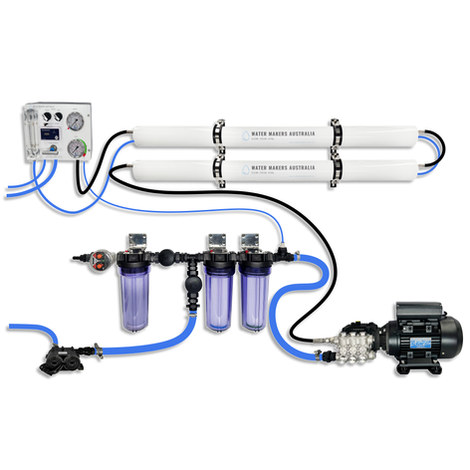
A two-membrane modular watermaker with 140 L/h nominal output, aimed at families and liveaboards that want more water per run.
Explore →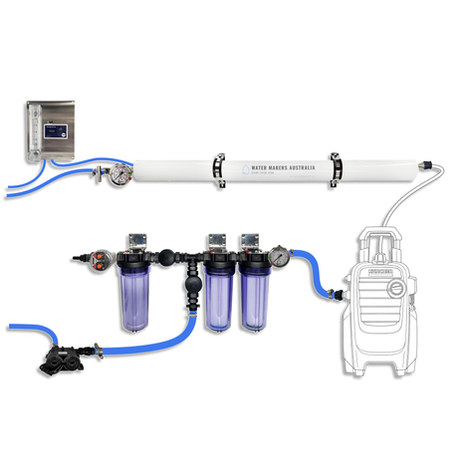
A one-membrane modular marine watermaker with 80 L/h nominal output, remote stainless control panel, standard consumables and direct Australian support.
Explore →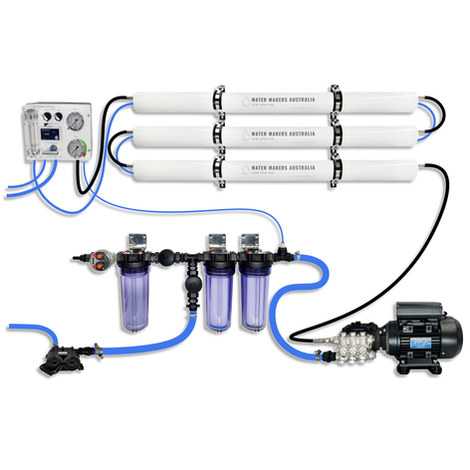
A three-membrane modular watermaker with 200 L/h nominal output and up to 240 L/h family-level marketing, for larger crews and heavy use.
Explore →