Loading this page…

Loading this page…
Sailing club
Lake Jindabyne Sailing Club is a small, volunteer-led dinghy and catamaran club based on Lake Jindabyne in Jindabyne, New South Wales. The club runs a seasonal sailing programme from November to April with Wednesday twilight sails (followed by a barbecue) and Sunday afternoon racing. Fleets commonly include Lasers, Nacras, Hobie Cats and junior Optimists; the club operates as an Australian Sailing Discover Sailing Centre and runs Tackers and Green Fleet pathways for juniors.
About
Lake Jindabyne Sailing Club is a small, volunteer-led dinghy and catamaran club based on Lake Jindabyne in Jindabyne, New South Wales. The club runs a seasonal sailing programme from November to April with Wednesday twilight sails (followed by a barbecue) and Sunday afternoon racing. Fleets commonly include Lasers, Nacras, Hobie Cats and junior Optimists; the club operates as an Australian Sailing Discover Sailing Centre and runs Tackers and Green Fleet pathways for juniors.
Service area: Jindabyne and Lake Jindabyne, NSW
Keep exploring
Lake Jindabyne Sailing Club is a community sailing club on the shores of Lake Jindabyne in Jindabyne, New South Wales. The club runs a sailing program from about November to April with Wednesday twilight races (followed by a barbecue) and Sunday afternoon racing. Members sail boats including Lasers, Nacras and Hobie Cats; the club uses yardstick handicap racing and publishes an introduction to sailing for new members. The site also references boat storage, club facilities (a clubhouse rebuilt in the 1990s) and training courses.
The standout here is a fully accredited Australian Sailing Discover Sailing Centre operating in an alpine lake town — an unusual commitment for a club of this size, and one that shapes everything from the fleet to the volunteer roster. The junior pathway is deliberately structured: children start in Tackers courses, offered in January holiday blocks, then step into regular Green Fleet racing sessions designed for Tackers graduates, where low-pressure racing consolidates their skills. From there, a recognition ladder keeps them hooked — Greenfleet Sailor of the Year, Junior Sailor of the Year and Youth Sailor of the Year awards — and a Junior Committee gives young sailors an actual voice in how the club is run.
The 2022–23 season shows the breadth: SheSails 1 and 2 courses for women, Tackers 1 and 2 for the kids, and Start Powerboating for those driving the rescue craft, delivered by a team of nine dinghy instructors and assistants plus two powerboat instructors, with Thor Slater as Training and Development Officer. The training fleet comprises Optimists — six new Opti dollies were bought that year — three Corsairs and Lasers, backed by a start boat, a RHIB and a tractor for launching.
The club's women took their SheSails training to Newcastle Cruising Yacht Club's SheSails Development Regatta of March 2023, racing Force 24 inshore keelboats. And the volunteer effort has been recognised at state level, with 2022 Australian Sailing awards for NSW and the ACT going to club members Freya (as Instructor) and the late John Byrne (as Volunteer).
Lake Jindabyne is a freshwater alpine lake born of the 1960s damming of the Snowy River valley, a project that swallowed the old township of Jindabyne, and the sailing club occupies a foreshore site in the lake's "full storage" zone — land unsuited to other development. The clubhouse is among the handful of buildings from before the flooding that were spared the demolition crews. By surface area the lake is larger than Sydney Harbour, according to Rowing NSW, which has noted Jindabyne's value as a high-altitude training venue for water sports — and at over 930 metres of elevation, the sailing here comes with mountain light, cold clean water and weather that can turn quickly.
The 2022–23 season illustrated the lake's moods: high lake levels put the rigging lawn and car park under water, and rock-work had to be laid to hold the retaining walls, while the wind blew harder than it had for years. The dual-season character of the town produces one of the more unusual income streams in Australian sailing — over the ski season the clubhouse is let to a caretaker who winters on site, worth $1,250 a week in 2022–23 while the boats are shedded.
Two purpose-built boatsheds, opened in December 2022, now house the fleet through the snow months. Being snow-fed, the lake stays cold even in midsummer, and mountain weather can switch from glassy calm to a white-capped blow in minutes — conditions that sharpen boat-handling fast. For sailors, the proposition is simple: uncrowded high-country water from November to April, a start boat and rescue RHIB on station, and a clubhouse verandah with mountain views for the post-race debrief.
When the winter freeze sets in, the club simply changes gear — the boats go into the sheds, the caretaker moves in, and the town turns its attention to the ski slopes until the thaw brings the sailing season round again.
The club's roots reach back to the Snowy Mountains Hydro-Electric Scheme itself, and the Scheme's support ran to the top — Commissioner Sir William Hudson served as Patron. It all began in 1957, when men working on Tumut Pond Dam and the Tumut 1 Power Station got together as the Cabramurra Yacht Club and held their first organised racing on 3 Mile Dam, close by the township. When the construction front shifted, so did the club: to Lake Eucumbene, scene of the 1958 "Festival of the Snows" regatta.
The move to today's home came in July 1968 through SMHEA Assistant Commissioner Dave Douglas, who offered a spot beside the newly filled Lake Jindabyne; on 13 August that year the club adopted the name Lake Jindabyne Yacht Club, then on 1 January 1969 signed a twenty-year lease with the Authority.
A separate Catamaran Club formed in 1979, and in April 1982 the two bodies amalgamated to create the Lake Jindabyne Sailing Club of today. That first lease ran out in 1989, after which the foreshore came under lease from the Snowy River Shire Council of the day — the arrangement carries on under what is now the Snowy Monaro Regional Council. Members bankrolled a 1996 clubhouse rebuild themselves: $80,000 in materials, at least that much again in volunteered labour, and not a cent taken in grants or donations.
Some rooms of the old farmhouse were kept for posterity. National titles followed at the rebuilt club — the Hobie Cat National Championships of 1997, then the Maricat Nationals of 2001. In 2002 the "Jindabyne Yabbies", the nippers of the Lake Jindabyne Surf Life Saving Club, moved into the clubhouse, installing a solar power and hot-water system by way of contribution, and yoga, tai chi and meditation groups were welcomed later.
Two boatsheds went up between September 2020 and early 2021, paid for with $193,000 in NSW Government funding and plenty of member sweat; Nichole Overall, the Member for Monaro of the day, cut the ribbon on 14 December 2022. That same month the Snowy Mountains Regatta folded in the NSW Nacra State Championships, and around twenty visiting Nacras turned up, joined by Mosquitos, Vipers, an Elliott 7 and a mixed bag of monohulls.
A detailed cruising guide to Brunswick Heads and the Brunswick River on the far north coast of New South Wales. Covers river and harbour geography, seasonal wind and swell patterns, principal sailing areas and anchorages, approach issues at the bar, shore facilities, local hazards and the legal/regulatory environment, plus suggested day sails, weekend cruises and island circuits suitable for a range of recreational craft.

Late spring to summer is usually the best time for beginners to start learning to sail in Tasmania because the weather is generally warmer, days are longer and conditions are often more settled. Expect lighter to moderate winds with regular afternoon sea breees in summer, while spring and autumn bring more changeable and sometimes stronger conditions; winter is colder, wetter and typically windier with more fronts and swell.
Explore →
Pick a stable, simple, forgiving dinghy with a single sail or basic sloop rig, affordable handling and easy maintenance—ideally one with a local class or school nearby so you can access coaching and spare parts.
Explore →
Write a one‑page plan with the who/what/when/where/how of your trip, keep a copy on board and leave the main copy with a responsible person ashore (and optionally with your club, marina office or local volunteer rescue service).
Explore →
Reef as soon as the boat becomes hard to steer, uncomfortable, or when sails start flogging — reduce the mainsail first (to keep balance), then reduce headsail area; practise the reefing sequence and check sail trim and helm balance afterwards.
Explore →Practical guidance for recreational sailors planning to cross coastal bars in New South Wales. Explains how to assess conditions, plan a crossing, prepare equipment and crew, recognise hazards and manage emergencies, with checklists and realistic examples relevant to NSW waters.
Explore →A practical guide to selecting and using anchorages around New South Wales for cruising sailors. Covers sheltered bays, tidal considerations, holding, approach planning, and example anchorages with local conditions to check before you go.
Explore →A practical guide to preparing, planning and executing a recreational offshore passage along the New South Wales coast. Covers route selection, weather and tidal considerations, vessel and crew checks, safety equipment, communication, watchkeeping and common mistakes, with clear pre‑departure and underway checklists.
Explore →
A practical guide for new sailors on picking the right Australian sailing club: training, boat access, racing, social fit, costs and the key questions to ask before joining.
Explore →Burke Yachtsman Gear Bag 40L - Shop Now Zip Pay | Tamar Marine Skip to content 59 – 63 Holbrook Street, Invermay Online Shop Open 24/7 Products search Contact us 1300 MARINE $ 0.00 0 Cart Burke Yachtsman Gear Bag 40L $ 79.90 Colour Choose an option Black Blue Black Blue Clear - Burke Yachtsman Gear Bag 40L quantity + Add to cart Enquire about this product SKU BAGB-Y24/BLACK* Category Bags - Sail & Gear A Burke classic and customer favourite, the Yachtsman’s Gear Bag is built tough to handle wet, salty conditions while keeping your gear dry and protected. Made from double coated waterproof…
Explore →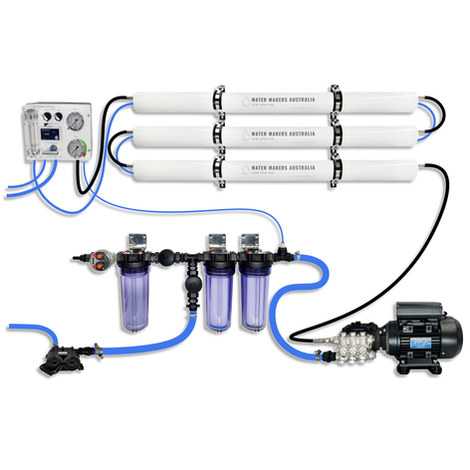
A three-membrane modular watermaker with 200 L/h nominal output and up to 240 L/h family-level marketing, for larger crews and heavy use.
Explore →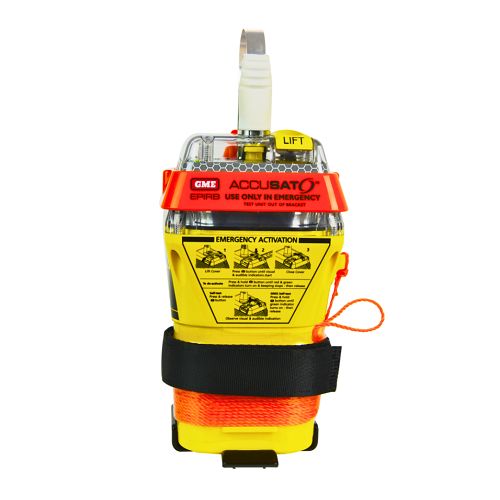
A 10‑year battery EPIRB with integrated GNSS (supports GPS and Galileo), infrared strobe and 121.5 MHz homing signal. Approved for worldwide COSPAS‑SARSAT operation.
Explore →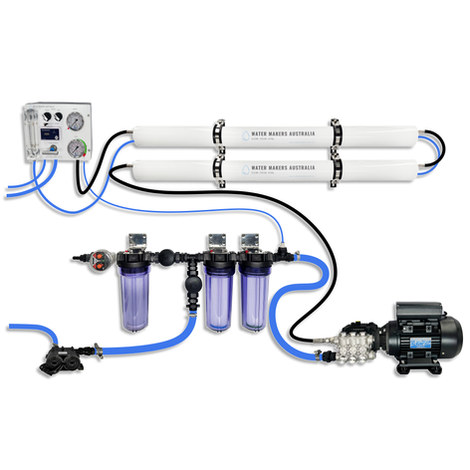
A two-membrane modular watermaker with 140 L/h nominal output, aimed at families and liveaboards that want more water per run.
Explore →