Loading this page…

Loading this page…
Sailing club
Lake Macquarie Yacht Club (LMYC) is a family‑orientated, member‑owned sailing club on absolute waterfront at Ada Street, Belmont. Founded in 1929 and operating from Belmont Bay since the 1930s, the club runs a year‑round racing calendar for keelboats and dinghies, operates an on‑site marina and offers learn‑to‑sail and junior programs alongside a bar, restaurant and function facilities.
About
Lake Macquarie Yacht Club (LMYC) is a family‑orientated, member‑owned sailing club on absolute waterfront at Ada Street, Belmont. Founded in 1929 and operating from Belmont Bay since the 1930s, the club runs a year‑round racing calendar for keelboats and dinghies, operates an on‑site marina and offers learn‑to‑sail and junior programs alongside a bar, restaurant and function facilities.
Service area: Belmont Bay / Lake Macquarie, New South Wales
Keep exploring
Lake Macquarie Yacht Club (LMYC) is a waterfront sailing club in Belmont, NSW. The club runs year-round sailing activities and a Learn to Sail program, and operates waterfront facilities including a licensed bar and Crusoe’s on the Lake restaurant, function and wedding spaces, a marina with club-controlled access and pricing, courtesy bus and tender service. Club amenities listed include toilets and showers, an ATM, and waterfront deck areas overlooking Belmont Bay.
Women's sailing gets top billing here, and the club has earned the right. LMYC runs the SheSails program — pitched as social, relaxing and fun — and in January 2026 it hosts the opening race of the three-club SheSails Regatta series on Lake Macquarie, with Wangi Amateur Sailing Club and Royal Motor Yacht Club taking the later rounds. For a keelboat club, that is a genuine point of difference: a structured pathway for women onto bigger boats, capped by a regatta on home water.
The engine room underneath is an Australian Sailing accredited Discover Sailing Centre, and the course menu runs wide. OutThere Sailing looks after pre-teens and teenagers aged 11 to 17 with adventure-style sailing, while secondary school sailing programs run through Terms 1 and 4, turning school sport afternoons into time on the lake. Rather than funnelling the youngest children through a branded dinghy scheme, the club's junior entry points are these school and teen programs, with private lessons available for sailors chasing specific skills.
Adults step in through keelboat courses pitched at every level from raw beginner to experienced racer, and those ready to compete can take the Australian Sailing Start Racing course straight into club racing.
Instruction is delivered by qualified sailing instructors, many of them active sailors in the club's own fleets, which keeps the teaching close to the racing. The twilight and midweek fixtures then do the quiet developmental work that all good clubs rely on — low-stakes starts, short courses and a bar open afterwards — giving newer crews somewhere to make their mistakes before they tackle the Sunday pointscore.
The address is Ada Street, Belmont, hard against the lake's eastern shore, where the clubhouse occupies absolute waterfront on Belmont Bay. The lake itself needs little introduction to NSW sailors: regional guides describe it as Australia's largest coastal saltwater lake, and some go further, calling it "the largest permanent coastal saltwater lake in the southern hemisphere". Belmont Bay offers sheltered water directly in front of the clubhouse, an ideal classroom and warm-up area before fleets head out into the broader lake.
As with any big enclosed coastal lake, summer racing here is shaped by the afternoon sea breeze, and the sheer expanse of water gives race officers room to set long, honest courses well away from the shore effects that plague tighter venues. Winter brings cooler westerly patterns off the ranges, which is part of why a year-round calendar works so well on a lake of this scale. The club's facilities have grown with the fleet: the 1934 clubhouse has been expanded over the decades, the carpark arrived in 1966, and the original marina was finished in 1978, most of the design and procurement handled by volunteer members — a genuine members' marina rather than a contractor's delivery.
There is also a pleasing historical symmetry to the setting. In the lake's early days most transport around its shores went by water, and crowds came from the mining communities and Newcastle for holidays, recreation and sport, with regattas rotating through Belmont, Toronto, Wangi and Sunshine. Modern race weeks at Ada Street are the direct descendants of that carnival era, sailed over the same bays where excursion steamers once unloaded holidaymakers, and the bar and restaurant in the expanded clubhouse keep the lakeside social tradition intact.
The founding story is pure 1929. In the year of the Wall Street crash, ten prospective members met in a tobacconist-and-hairdresser's shop on Hunter Street in Newcastle to float a club that would bring cruising and racing together under one roof. The first committee was elected on 2 October 1929, and because the founding fathers came from skiff backgrounds, mostly at Toronto, the earliest racing happened on the lake's western side rather than at Belmont.
The move east came quickly. In December 1932 the club took up the Old Stone Jetty at Belmont — already 60 to 70 years old and needing considerable restoration — and began starting and finishing races from a timber landing at its western end. Approval to build on the jetty followed in December 1933, and the Hon. C.J. Parker MLC opened the new clubhouse on Saturday 28 April 1934, ahead of the Easter Regatta, with the club's red-on-white burgee unveiled at the ceremony. That burgee still flies, and the club has operated continuously ever since.
The post-war decades were built largely by members' own hands: the carpark in 1966 and the original marina in 1978, both substantially volunteer efforts. The club's sailing pedigree shows in its boats and people. Wallsend-born boatbuilder Les Steel was probably among the original members, and his 1952 Huon pine and spotted gum yacht Caress III was one of the fastest on the lake in its day; around 1960 Arch Sinclair raced the celebrated 30 Square Metre class yacht Wings — built on the lake by Harry Bond in 1938 — out of the club.
The full story is preserved in Ray Kiely's history, Lake Macquarie Yacht Club – The Beginning, and the club that began above a tobacconist's counter now anchors Belmont Bay.
Apollo Bay is a small working harbour on Victoria’s Great Ocean Road where sheltered inshore sailing meets the Southern Ocean. The character is a mix of protected harbour berths and an exposed open coast: pleasant day-sails and sheltered weekend cruising inside the bay, with demanding coastal passages immediately offshore where south‑westerly swell and strong winds from the Southern Ocean dominate. It suits coastal cruisers, trailer sailors who launch at the ramp, and experienced coastal sailors who understand bar and swell behaviour; it is not a casual open‑ocean anchorage for unprepared or

Look for a friendly club with beginner-focused training, accessible facilities and boats, a supportive community, clear safety practices, and opportunities to progress at your own pace.
Explore →
Use ramps and beaches with respect for local conditions: check ramp layout, tide and swell, wind direction, vehicle access and crowding; prepare boat and crew before you launch or retrieve; and follow local signage, courtesy and safety practices. Specifics vary by ramp and beach, so confirm details for the exact site before you go.
Explore →
Write a one‑page plan with the who/what/when/where/how of your trip, keep a copy on board and leave the main copy with a responsible person ashore (and optionally with your club, marina office or local volunteer rescue service).
Explore →
Before your first sail in South Australian waters check the weather and tide, make sure the boat and safety equipment are fit for the trip, confirm local rules and any area-specific hazards, and tell someone your plan.
Explore →A practical guide for recreational sailors planning day sails or short cruises on Lake Macquarie. Covers the entrance, navigation considerations, popular anchorages, local weather and tide influences, mooring etiquette, safety checks and suggested itineraries around the lake.
Explore →
A practical guide for new sailors on picking the right Australian sailing club: training, boat access, racing, social fit, costs and the key questions to ask before joining.
Explore →A practical guide for recreational sailors planning visits to Albany and King George Sound. Covers the main anchorage areas, typical local weather patterns, tidal and current considerations, navigational hazards, on-the-water etiquette and a pre-departure checklist to help you plan a safe passage and enjoyable stopover
Explore →A practical guide for recreational sailors planning passages to, from or around Eden and Twofold Bay. Covers sheltered anchorages, shore facilities, local weather and tidal considerations, preparing for Bass Strait conditions and a focused equipment and safety checklist.
Explore →Burke Yachtsman Gear Bag 40L - Shop Now Zip Pay | Tamar Marine Skip to content 59 – 63 Holbrook Street, Invermay Online Shop Open 24/7 Products search Contact us 1300 MARINE $ 0.00 0 Cart Burke Yachtsman Gear Bag 40L $ 79.90 Colour Choose an option Black Blue Black Blue Clear - Burke Yachtsman Gear Bag 40L quantity + Add to cart Enquire about this product SKU BAGB-Y24/BLACK* Category Bags - Sail & Gear A Burke classic and customer favourite, the Yachtsman’s Gear Bag is built tough to handle wet, salty conditions while keeping your gear dry and protected. Made from double coated waterproof…
Explore →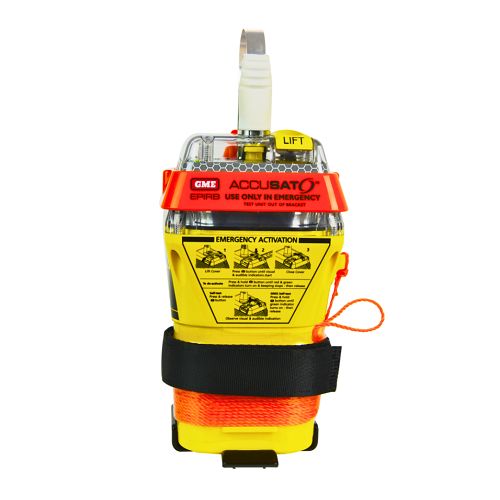
A 10‑year battery EPIRB with integrated GNSS (supports GPS and Galileo), infrared strobe and 121.5 MHz homing signal. Approved for worldwide COSPAS‑SARSAT operation.
Explore →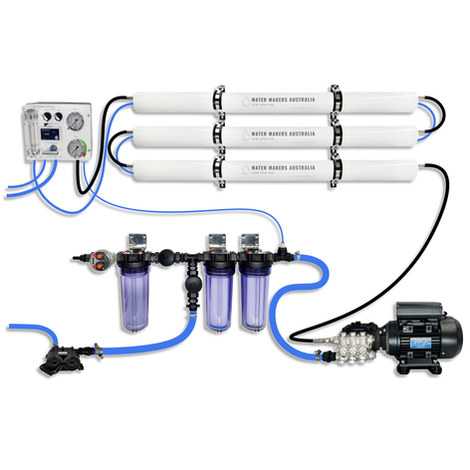
A three-membrane modular watermaker with 200 L/h nominal output and up to 240 L/h family-level marketing, for larger crews and heavy use.
Explore →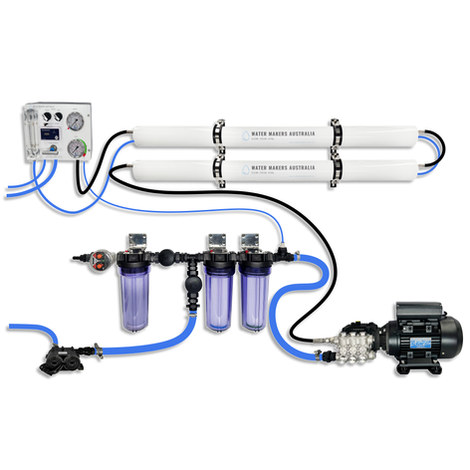
A two-membrane modular watermaker with 140 L/h nominal output, aimed at families and liveaboards that want more water per run.
Explore →