Loading this page…

Loading this page…
Sailing club
Family-focused, volunteer-run dinghy sailing club based beside Longueville Wharf on the Lane Cove River. Founded 1918, the club is best known for keeping the 12ft skiff tradition alive alongside active junior and learn-to-sail programmes and regular Saturday and twilight racing from September to April.
About
Family-focused, volunteer-run dinghy sailing club based beside Longueville Wharf on the Lane Cove River. Founded 1918, the club is best known for keeping the 12ft skiff tradition alive alongside active junior and learn-to-sail programmes and regular Saturday and twilight racing from September to April.
Service area: Longueville / Lane Cove River, Lower North Shore, Sydney, New South Wales
Keep exploring
Lane Cove 12ft Sailing Skiff Club is a volunteer-run, family-focused dinghy sailing club based beside Longueville Wharf on the Lane Cove River. The club runs organised racing (notably 12ft skiffs plus Sabots, Flying 11s, Cherubs and ILCA/Lasers) and social activities, with Friday twilight sails and Saturday afternoon race sailing from September to April. It is an Australian Sailing Discover Sailing Centre and runs introductory Learn to Sail programs (including school-holiday courses), coaching and junior development.
The club describes a strong volunteer culture, community events, and on-site maintenance activities (RUST Men’s Shed). Contact via commodore@lc12ftssc.org.au; street location shown as Stuart St, Longueville NSW 2066.
Few clubs in the country can put a number on their teaching legacy the way Lane Cove can: more than 2,000 youngsters introduced to dinghy sailing through its school-holiday learn-to-sail programs over roughly 25 years. Those programs are the club's signature, running in blocks of four to five days across the September–October, December and January holidays, mixing theory with time on the water and open to non-members. A recent season drew more than 100 children across four programs, and NSW Active Kids vouchers are accepted to keep the cost within reach.
The intake is split sensibly in two. Younger beginners, aged about eight to twelve with little or no experience, start in Sabots — the classic Australian training dinghy — while older first-timers up to 18 learn in Lasers. From there the pathway is the club's quiet strength, refined over a century: Sabot graduates step into Flying Elevens, then into the senior fleets of Cherubs, ILCAs in Standard, Radial and 4.7 rigs, and ultimately the 12ft skiffs for those with the appetite. It is a conveyor that has fed the skiff class for generations, and the club's consistent presence at championships well beyond the river shows where it leads.
Everything is delivered by a volunteer workforce — the club operates exclusively through its sailors, families and supporters — and the racing calendar doubles as the finishing school. Saturday club racing from September to April sharpens skills weekly, and Lane Cove regularly hosts legs of the 12ft skiff NSW and Australian Championships on behalf of the 12 Foot Skiff Association, giving home sailors championship-standard race management on their own water.
Longueville Point, on Sydney's Lower North Shore, is one of those harbour sites that seems designed for a sailing club: a shelf of foreshore beside the Longueville Wharf ferry stop, looking out over the Lane Cove River where it widens toward the upper harbour. Sailing had been organised from this point since at least 1896–97, and the club has held the site beside the wharf since 1918, on land leased from Lane Cove Council.
The racing water divides neatly in two. The river itself offers enclosed, tactical sailing where shifts bend around the points, while the upper harbour gives the bigger fleets room to stretch. Do not mistake the setting for soft conditions, though. During the first weekend of the 2025 12ft Skiff NSW Championship a 35-knot westerly with bigger gusts tore through the fleet, and another day's racing had to be abandoned when a nor'easter swung late in the afternoon into a heavy westerly. At the friendlier end of the scale, summer nor'easters in the ten-to-twelve-knot range make for glorious skiff racing, as the 2019 Interdominion decider on the harbour showed.
The shore setup matches the sailing. The 1936 clubhouse doubled as boat storage from the start, and a 1975 redevelopment added a second storey bringing club rooms, a canteen and a verandah open to the breeze overlooking the start and finish line — still the best seat in the house on a Saturday. After the 2018 arson, the rebuilt Western Storage Shed came back with additional storage and expanded rigging areas, funded by members, donors and local and state government. On race days the point hums: up to eighty boats rigging, launching and charging off the same foreshore they have used for more than a century.
Small open boats were raced off Longueville Point long before the first meeting — organised sailing is recorded there from at least 1896–97. The club itself dates from 1918, when residents of Longueville, Greenwich and Northwood gathered on 10 December in the pavilion at the local cricket ground, now Kingsford Smith Oval, to establish rules, elect office bearers and open a bank account. A few larger vessels appeared on the initial register; by the early 1920s, though, the 12ft skiff had become the club's sole class.
A combined clubhouse and boatshed rose on council-leased land near the wharf in 1936. Racing continued through the Second World War because members serving in the forces specifically asked that it should, though club championships were suspended from 1941 to 1943; a full program resumed straight after the war. Junior development recurred steadily: the VJ class arrived in 1946, the Moth in 1955, and in 1961 the Sabot came with the club's first lesson-based learn-to-sail program.
When that effort faded by 1985, the club rebuilt it from scratch — a new fleet of club Sabots and a fresh syllabus — and learn-to-sail has been a fixture ever since. Lasers replaced the Moths in 1974, and Cherubs absorbed the dwindling Gwen 12 sailors late in that decade.
The hardest chapter came in 2018, when arson destroyed the Western Storage Shed along with 46 boats belonging to members; the rebuilding that followed stands as one of the club's finest hours. Lane Cove ran the 87th 12ft Skiff Australian Championship in 2024 — won by Brett Hobson and Peter Nicholson's Geotherm for the Norman Booth Trophy, with the club's own Sail Inc. third, a point off second — before Nick Press and Andrew Hay took the 2025 NSW crown. Murray Press still races at Interdominion level — two generations of one family under the same burgee.
A practical cruising guide for the Moyne River port at the mouth of the Moyne River on Victoria’s south-west coast. It explains harbour geometry, seasonal conditions, principal sailing zones, anchorages, visitor facilities, known local hazards (bar, reefs, strong currents, surf and commercial traffic), regulatory controls and realistic experiences for day sailors, trailer-sailors and coastal cruisers. The guide draws on local port plans, state boating authorities, the yacht club’s visiting-boat practice and regional marine management documents.

Look for a friendly club with beginner-focused training, accessible facilities and boats, a supportive community, clear safety practices, and opportunities to progress at your own pace.
Explore →
Late spring to summer is usually the best time for beginners to start learning to sail in Tasmania because the weather is generally warmer, days are longer and conditions are often more settled. Expect lighter to moderate winds with regular afternoon sea breees in summer, while spring and autumn bring more changeable and sometimes stronger conditions; winter is colder, wetter and typically windier with more fronts and swell.
Explore →
Pick a protected bay, estuary or river reach where you can rig, launch and arrive on calm water within a short, sheltered transit; choose a site with a good ramp or jetty, clear recovery options and a nearby sailing club, marina or commercial operator for local knowledge and help.
Explore →
Legal safety equipment for recreational boats in South Australia depends on the type, size and where you operate; you must check the current SA government requirements for your vessel. Independently of legal minimums, carry a sensible set of recommended items (lifejackets, means of communication, signaling, fire protection, anchor and basic tools) and make them usable and maintained.
Explore →
A practical guide for new sailors on picking the right Australian sailing club: training, boat access, racing, social fit, costs and the key questions to ask before joining.
Explore →Practical guide for recreational sailors planning passage on the Hawkesbury River: how to plan around tides, choose anchorages, read local conditions and prepare the boat and crew for a safe, comfortable trip.
Explore →Practical guide for recreational sailors navigating the Swan River and coastal waters around Perth. Covers local weather patterns, tides and currents, river navigation, launching and berthing options, safety equipment, common hazards, and step-by-step pre-departure and on-water checklists tailored to Western Australian
Explore →
A practical, Australia-focused guide for planning and sailing around the Whitsunday Islands: weather and seasons, navigation and anchoring, moorings and parks, provisioning and charters, safety and common mistakes, plus checklists and next steps.
Explore →Burke Yachtsman Gear Bag 40L - Shop Now Zip Pay | Tamar Marine Skip to content 59 – 63 Holbrook Street, Invermay Online Shop Open 24/7 Products search Contact us 1300 MARINE $ 0.00 0 Cart Burke Yachtsman Gear Bag 40L $ 79.90 Colour Choose an option Black Blue Black Blue Clear - Burke Yachtsman Gear Bag 40L quantity + Add to cart Enquire about this product SKU BAGB-Y24/BLACK* Category Bags - Sail & Gear A Burke classic and customer favourite, the Yachtsman’s Gear Bag is built tough to handle wet, salty conditions while keeping your gear dry and protected. Made from double coated waterproof…
Explore →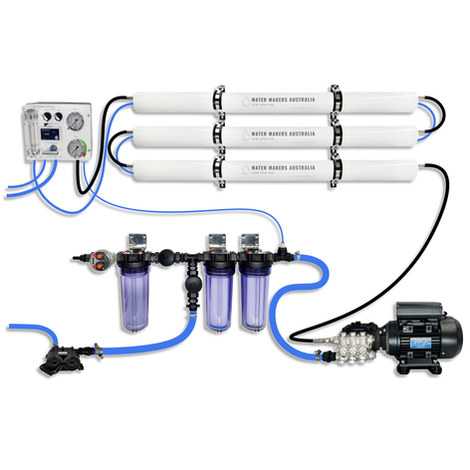
A three-membrane modular watermaker with 200 L/h nominal output and up to 240 L/h family-level marketing, for larger crews and heavy use.
Explore →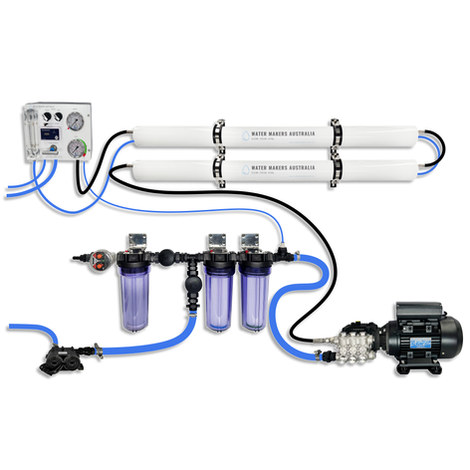
A two-membrane modular watermaker with 140 L/h nominal output, aimed at families and liveaboards that want more water per run.
Explore →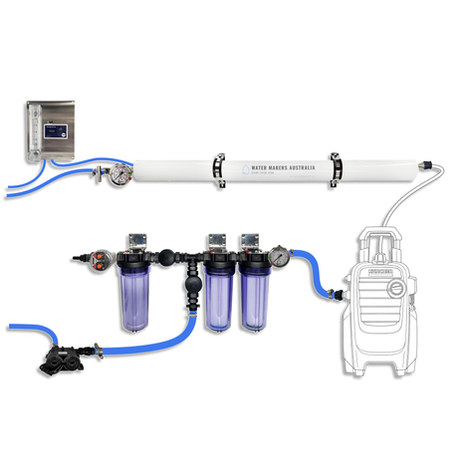
A one-membrane modular marine watermaker with 80 L/h nominal output, remote stainless control panel, standard consumables and direct Australian support.
Explore →