Loading this page…

Loading this page…
Sailing club
Manly Yacht Club (MYC) is a community-focused sailing club on East Esplanade, Manly, NSW. Founded in 1950, the club runs active junior and adult sailing programs, weekend and twilight racing, an Open Skiff regatta (the Manly Cup) and supports both dinghy and small-keelboat fleets. The clubhouse occupies the heritage former Manly Baths building on Manly Cove and the club describes itself as "run for the benefit of the local community."
About
Manly Yacht Club (MYC) is a community-focused sailing club on East Esplanade, Manly, NSW. Founded in 1950, the club runs active junior and adult sailing programs, weekend and twilight racing, an Open Skiff regatta (the Manly Cup) and supports both dinghy and small-keelboat fleets. The clubhouse occupies the heritage former Manly Baths building on Manly Cove and the club describes itself as "run for the benefit of the local community."
Service area: Manly, Sydney Harbour (Manly Cove)
Keep exploring
Manly Yacht Club (est. 1950) is a community-focused sailing club in Manly, NSW, welcoming sailors of all ages and abilities. The club runs organised sailing programs and events (including junior racing and yacht series), offers crewing and membership opportunities, and operates a tender service to transport boat owners and crews to and from vessels on race days (and for licensed owners at other times). The club website also references event calendars, noticeboard/results, a photo gallery and venue-hire information.
The junior program's cleverest feature is its business model: Manly Yacht Club shares the job with a commercial partner. Manly Sailing, a sailing school operating from the clubhouse, takes beginners through Levels 1 and 2 — starting in Optimists and small-rig O'pen Skiffs before graduating to full rigs — and its graduates then step straight into the club's own Level 3 and 4 Racing Development Program, where the emphasis shifts from seamanship to race craft. Families get professional instruction at the front end and club racing culture at the back end, with no awkward handover in between.
Accessibility is engineered in. The club owns its training fleet — O'pen Skiff Sports boats, Optimists and Flying Elevens — so junior members between 8 and 18 can sail at a low-cost entry point without owning a boat, whether they arrive as complete novices or experienced racers. A head coach manages a team of qualified instructors, with coaching for the racing fleets on Saturdays and Sundays across a season of about twenty weeks, and parent volunteering keeps program costs down. The juniors then test themselves in club races, local regattas and state events, with the club's own Manly Cup Open Skiff regatta giving them a home trophy to chase.
This structure is the product of a deliberate rebuild. In 2015 the club made what it called a bold decision to overhaul junior sailing, investing heavily in twenty Open Skiffs, coaching more than 50 kids across three racing fleets and adding a 4.7 Laser rig for the youth sailors. It marked a return to first principles for the club that invented the Manly Junior: own the pathway, own the boats, and the sailors will come.
Manly Cove, on North Harbour just inside Sydney Harbour's North Head side, has been the club's stage since its earliest days racing out of Little Manly. The clubhouse is a local landmark in its own right — the heritage former Manly Baths building on East Esplanade, taken over after the old baths were damaged beyond repair in the great 1974 storm, and restored since by volunteer labour. Manly 16ft Skiff Sailing Club stands immediately adjacent, and Treharne's Manly Boatshed nearby carries the lineage of Verrall's Boatshed, the shed from which Manly sailing was organised in 1922.
The water here has a reputation, and the club's own history makes the claim plainly: "there are few places in the world as challenging for a sailor as the waters off Manly". The villains are the black nor'easters, wild and gusty sea breezes that arrive without warning on hot summer days through November and December, while September's spring westerlies can be extreme in their own right. Crews raised in these conditions tend to be unflappable elsewhere, and the world's best have come to test themselves: in the lead-up to Sydney 2000, Olympic-class sailors training in Tornados, Solings and 49ers worked these waters, getting to know an area that punishes complacency.
The cove's exposure is the flip side of its beauty. On 25 May 1974 a south-easterly gale driving 70-mile-per-hour winds on top of 2.5-metre tides devastated Manly Cove — 23 of the 46 boats moored there were lost, the promenade was wrecked, the seawall breached and every East Esplanade boatshed flooded a metre or more. That catastrophe reshaped the foreshore and, indirectly, delivered the club its present home. Dinghy storage and a rigging deck serve the sailing, with launching straight into the cove.
Sailing at Manly predates the club by generations. A Sailing and Rowing Club was founded there in 1875, and the Manly Sailing Club took shape around September 1922, when Lach Simms gathered the district's young sailors at Verrall's Boatshed. Manly Yacht Club's own beginning was an act of rebellion: the skiff club's rules stopped anyone over 18 from racing 14-footers, so in 1949 Harry Pollard led a breakaway group of young sailors out of Little Manly.
The new club was constituted on 28 February 1950 under the name Manly 14ft Skiff Club, with Bill Edgley and Pollard as first President and Commodore; the first race, sailed on Saturday 21 October, saw Reg Barron take the opening championship heat on Van-Too in a brisk south-easterly. Early boats were stored at Farrell's Boatshed; in the mid-1950s the club bought Stuart's Boatshed, an old blue shed on piers, for roughly £1,500, the £400 deposit raised within a day. Monthly summer dances paid off the debt and funded renovations, growing so popular that off-duty police were hired as bouncers and rock-and-roll bands played into the early hours.
The defining creation came in September 1959, when committee member Ralph Tobias's Manly Junior was launched — its snub nose dictated by a boatshed ceiling just over 8.5 feet high, since dinghies were stored standing up, with kits sold for £80. Ian Perdriau, plucked from the crowd at the launch, reckons he was the first kid to race one. Alan Rann became the club's first Australian champion (14ft class), Pollard's re-rigged Rainbow seeded the Manly Graduate, and by decade's end the club counted 42 Juniors and 20 Graduates.
The Manly Yacht Club name arrived in 1964–65 as members moved into small yachts, and catamarans brought a Multihull Division in 1968–69. After the 1974 storm, the club took over the ruined Manly Baths and began the volunteer restoration that continues today.
Adelaide’s metropolitan coast fronts the eastern side of Gulf St Vincent and mixes short, sheltered bay sailing around Holdfast Bay and the Patawalonga with more exposed, open-water sailing north toward Outer Harbour and along the Le Fevre Peninsula. The area suits a wide range of activity — sheltered day sails, club and trailer-sailer racing, short coastal cruising into the Fleurieu and Yorke Peninsula, and launch-and-home-port racing — but demands local knowledge about shipping channels, tidal flows in the Port River/Outer Harbour approaches, and seasonal wind patterns.

Use ramps and beaches with respect for local conditions: check ramp layout, tide and swell, wind direction, vehicle access and crowding; prepare boat and crew before you launch or retrieve; and follow local signage, courtesy and safety practices. Specifics vary by ramp and beach, so confirm details for the exact site before you go.
Explore →
Write a one‑page plan with the who/what/when/where/how of your trip, keep a copy on board and leave the main copy with a responsible person ashore (and optionally with your club, marina office or local volunteer rescue service).
Explore →
Before your first sail in South Australian waters check the weather and tide, make sure the boat and safety equipment are fit for the trip, confirm local rules and any area-specific hazards, and tell someone your plan.
Explore →
Look for a friendly club with beginner-focused training, accessible facilities and boats, a supportive community, clear safety practices, and opportunities to progress at your own pace.
Explore →
A practical guide for new sailors on picking the right Australian sailing club: training, boat access, racing, social fit, costs and the key questions to ask before joining.
Explore →
A practical, Australia-focused guide for planning and sailing around the Whitsunday Islands: weather and seasons, navigation and anchoring, moorings and parks, provisioning and charters, safety and common mistakes, plus checklists and next steps.
Explore →A practical guide for recreational sailors planning visits to Albany and King George Sound. Covers the main anchorage areas, typical local weather patterns, tidal and current considerations, navigational hazards, on-the-water etiquette and a pre-departure checklist to help you plan a safe passage and enjoyable stopover
Explore →
A practical, Australia‑focused introduction to sailing: key terms, common boat types, basic manoeuvres, where to learn, licence and club options, and planning your first trips with safety and local conditions in mind.
Explore →Burke Yachtsman Gear Bag 40L - Shop Now Zip Pay | Tamar Marine Skip to content 59 – 63 Holbrook Street, Invermay Online Shop Open 24/7 Products search Contact us 1300 MARINE $ 0.00 0 Cart Burke Yachtsman Gear Bag 40L $ 79.90 Colour Choose an option Black Blue Black Blue Clear - Burke Yachtsman Gear Bag 40L quantity + Add to cart Enquire about this product SKU BAGB-Y24/BLACK* Category Bags - Sail & Gear A Burke classic and customer favourite, the Yachtsman’s Gear Bag is built tough to handle wet, salty conditions while keeping your gear dry and protected. Made from double coated waterproof…
Explore →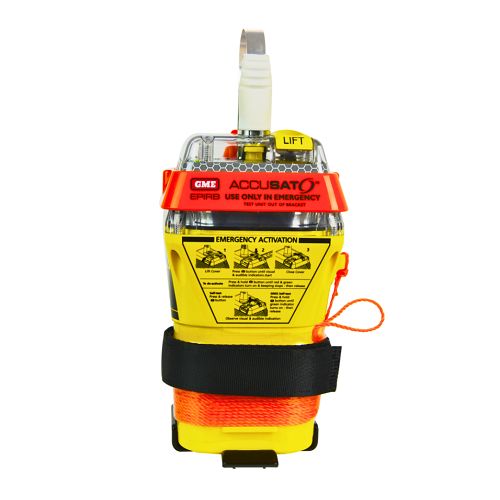
A 10‑year battery EPIRB with integrated GNSS (supports GPS and Galileo), infrared strobe and 121.5 MHz homing signal. Approved for worldwide COSPAS‑SARSAT operation.
Explore →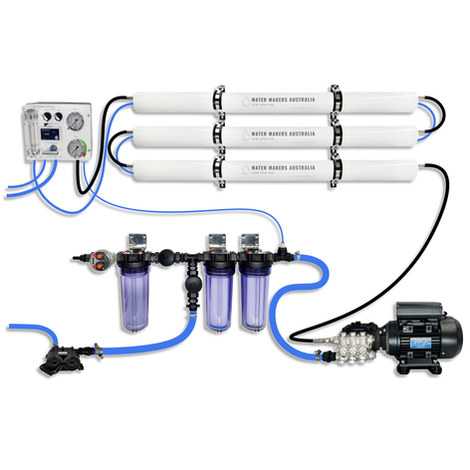
A three-membrane modular watermaker with 200 L/h nominal output and up to 240 L/h family-level marketing, for larger crews and heavy use.
Explore →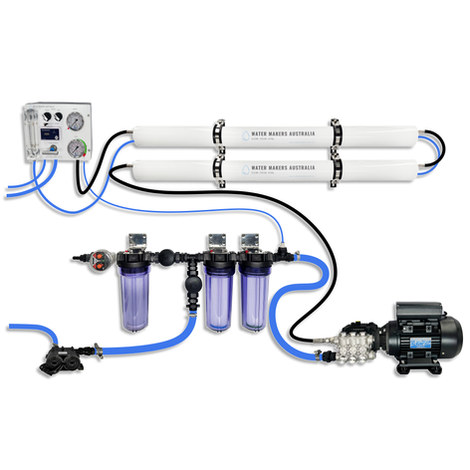
A two-membrane modular watermaker with 140 L/h nominal output, aimed at families and liveaboards that want more water per run.
Explore →