Loading this page…

Loading this page…
Sailing club
Middle Harbour 16ft Skiff Club (Middle Harbour Skiffs) is a Mosman-based skiff club on the Middle Harbour foreshore at The Spit. Founded in 1902, the club specialises in high-performance 16ft skiff racing and runs a full junior pathway from beginner Poppies/Optimists through Manly Juniors and Flying 11s up to 13ft and 16ft skiffs. The clubhouse at 237 Spit Road houses a licensed bar and bistro, event facilities (Deck Bar) and supports regular weekend and twilight racing.
About
Middle Harbour 16ft Skiff Club (Middle Harbour Skiffs) is a Mosman-based skiff club on the Middle Harbour foreshore at The Spit. Founded in 1902, the club specialises in high-performance 16ft skiff racing and runs a full junior pathway from beginner Poppies/Optimists through Manly Juniors and Flying 11s up to 13ft and 16ft skiffs. The clubhouse at 237 Spit Road houses a licensed bar and bistro, event facilities (Deck Bar) and supports regular weekend and twilight racing.
Service area: Middle Harbour / The Spit (Mosman), NSW
Keep exploring
Middle Harbour 16ft Skiff Club (Middle Harbour Skiffs) is a Mosman-based sailing club focused on 16ft and 13ft skiff racing and development of junior and youth sailors. The club runs structured junior programs (from beginner 'Poppies'/Optimists through Manly Juniors and Flying 11s), organised training, coaching and racing, and supports family participation from beginners through to high-performance skiff sailing. The clubhouse also promotes events, venue hire (Deck Bar, Bistro, boardroom) and hospitality services.
The club's junior pathway is its own creation — a structured four-stage ladder rather than a branded national syllabus, and all the more distinctive for it. Complete novices are welcome from age six, starting in the club-owned "Poppie"/Optimist trainers, stable and near-indestructible little boats that forgive every early mistake. Stage 1 is the Learn to Sail Program, Stage 2 the Learn to Race Program, and from there sailors step into the Manly Junior Race Program and finally the Flying 11 Race Program.
No-obligation free trials let families test the water first, and regular organised training, coaching, racing and social sails sit behind the whole structure, governed by a Junior Sailing Committee and a detailed safety management plan.
The Manly Junior, a two-handed dinghy, is the first boat sailors actually race, and the MJ fleet program sails Novice and Open divisions side by side, so beginners and old hands share the start line. The club calls Flying 11s "the high school of sailing", raced over bigger courses in stronger wind, and some MJ skippers double up as Flying 11 crews in the same season. From there, the 13ft skiff bridges the gap to the 16s — a class adopted nationally in 2002 after the 16s lost their fourth crew spot, the "bailer boy", leaving juniors without a stepping stone.
Parents are part of the program, not spectators: they are encouraged onto support boats, and the club assists with parent upskilling, including earning boat licences. Junior Sailing Open Days and learn-to-sail days bring new families through the gate each season, and the pathway's credibility rests on results — club 13ft skiff Australian champions include Dan Watterson and Scott Cotton, with Lee Knapton among the club's 16ft champions.
The club occupies the Middle Harbour foreshore at The Spit, in Mosman — 237 Spit Road, with the NSW club register listing the same precinct at 77 Parriwi Road — where the Spit Bridge marks the gateway between the harbour's middle and northern reaches. It is a working waterfront address: boatsheds stood along these foreshores when the club was founded, and the deck added to the clubhouse around 1952 to make room for rigging skiffs acknowledges how tight and valuable every square metre of this shoreline is.
Racing takes place on Middle Harbour itself. A 2007 council estuary study noted the club's 16ft skiffs racing Saturdays and Sundays, plus twilight fixtures, across four different courses in North Harbour and Middle Harbour, a spread of water that lets race officers pick the best available breeze and shelter. In the early days the fleet sailed an all-weather course circling the Bombora buoy. Detailed wind statistics for the club's courses are not published, but Middle Harbour's steep, wooded shores are known to Sydney sailors for shifty breezes, tidal movement and flat water — conditions that reward local knowledge and sharp crew work, which is precisely what skiff sailing is meant to test.
The clubhouse itself doubles as a social venue. The bar and bistro open Wednesday to Saturday from late morning until 10.30 at night and Sunday afternoons, and the upstairs spaces host weddings and functions with water views, including an exclusive Deck Bar. A major renovation and a long catering agreement are in place to carry the operation forward — practical insurance that the foreshore base which has served skiffies since 1936 remains viable for decades more.
The club grew out of conversations beside Adams's Boatshed by the Spit wharf, and a September 1902 meeting formed the Middle Harbour Sailing Club, with J. Adams Snr., J. Alderton Snr. and George Snow the gentlemen concerned. The first race, sailed on 11 October 1902, went to Snow's 16-footer "Fransie", and the first Middle Harbour Regatta followed on 1 January 1903. Fundraising aquatic carnivals for the North Shore Hospital, slippery pole and pillow fights included, ran from 1904 to 1909.
Re-kindled in 1920 after the First World War, it met at the Ventura Tea Rooms, then Mosman Town Hall and the Cremorne School of Arts. The present name arrived either in 1927, per the club's own history, or in 1923 according to a 1959 club history — that account also claiming it the Commonwealth's oldest 16ft skiff sailing club. In 1935 Sid Thatcher called the Mosman Town Hall meeting that resolved to build a clubhouse; with material and financial backing from Harold D. and W. E. Arnott and Frank Walters, the 60-by-40-foot building went up in 1936 on fundraising and voluntary labour, debt-free within two years.
"U-Dear" (J. Lyons) delivered the club's first Australian Championship in 1941; the Army commandeered the clubhouse the following year for the Spit's wartime defence; and a 1946 extension took it to two storeys with forty-boat storage. Jim "Salty" O'Rourke — nicknamed for fiercely defending his salt ration in Changi Prison — took the 1952 national title in "Return".
Trapezes arrived in 1958 and the present, again largely member-built, clubhouse opened in 1961; Ken Beashel ("Seaforth") won a national title in the 1960s and Trevor Beardsmore two ("Minx") in the 1970s. Lean times in the 1980s saw the function area sub-leased to the Fresh Ketch Restaurant for twenty years; a $4 million renovation with Zest Waterfront Venues now aims to keep the club sailing through to 2034.
Adelaide’s metropolitan coast fronts the eastern side of Gulf St Vincent and mixes short, sheltered bay sailing around Holdfast Bay and the Patawalonga with more exposed, open-water sailing north toward Outer Harbour and along the Le Fevre Peninsula. The area suits a wide range of activity — sheltered day sails, club and trailer-sailer racing, short coastal cruising into the Fleurieu and Yorke Peninsula, and launch-and-home-port racing — but demands local knowledge about shipping channels, tidal flows in the Port River/Outer Harbour approaches, and seasonal wind patterns.

Plan to transit Sydney Heads and northern NSW estuary entrances to take advantage of favourable tidal streams or slack water; account for local acceleration over shoals, eddies, wind-on-current effects and river discharge, and always check the latest local observations and tide/stream products before departure.
Explore →
Pick a protected bay, estuary or river reach where you can rig, launch and arrive on calm water within a short, sheltered transit; choose a site with a good ramp or jetty, clear recovery options and a nearby sailing club, marina or commercial operator for local knowledge and help.
Explore →
Pick a stable, simple, forgiving dinghy with a single sail or basic sloop rig, affordable handling and easy maintenance—ideally one with a local class or school nearby so you can access coaching and spare parts.
Explore →
Late spring to summer is usually the best time for beginners to start learning to sail in Tasmania because the weather is generally warmer, days are longer and conditions are often more settled. Expect lighter to moderate winds with regular afternoon sea breees in summer, while spring and autumn bring more changeable and sometimes stronger conditions; winter is colder, wetter and typically windier with more fronts and swell.
Explore →
A practical guide for new sailors on picking the right Australian sailing club: training, boat access, racing, social fit, costs and the key questions to ask before joining.
Explore →A practical guide for recreational sailors planning visits to Albany and King George Sound. Covers the main anchorage areas, typical local weather patterns, tidal and current considerations, navigational hazards, on-the-water etiquette and a pre-departure checklist to help you plan a safe passage and enjoyable stopover
Explore →
Practical guidance for recreational sailors in Australia on assessing swell, tide and wind, choosing the safest time to cross a coastal bar, preparing crew and gear, and making the decision to go or turn back.
Explore →A practical guide for recreational sailors on using VHF marine radios safely and effectively in Australian waters: basic operation, channel use, emergency procedures, DSC basics, common mistakes and a ready checklist for pre-departure and on-water use.
Explore →Burke Yachtsman Gear Bag 40L - Shop Now Zip Pay | Tamar Marine Skip to content 59 – 63 Holbrook Street, Invermay Online Shop Open 24/7 Products search Contact us 1300 MARINE $ 0.00 0 Cart Burke Yachtsman Gear Bag 40L $ 79.90 Colour Choose an option Black Blue Black Blue Clear - Burke Yachtsman Gear Bag 40L quantity + Add to cart Enquire about this product SKU BAGB-Y24/BLACK* Category Bags - Sail & Gear A Burke classic and customer favourite, the Yachtsman’s Gear Bag is built tough to handle wet, salty conditions while keeping your gear dry and protected. Made from double coated waterproof…
Explore →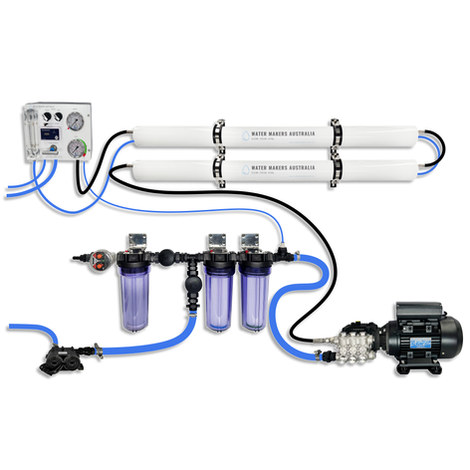
A two-membrane modular watermaker with 140 L/h nominal output, aimed at families and liveaboards that want more water per run.
Explore →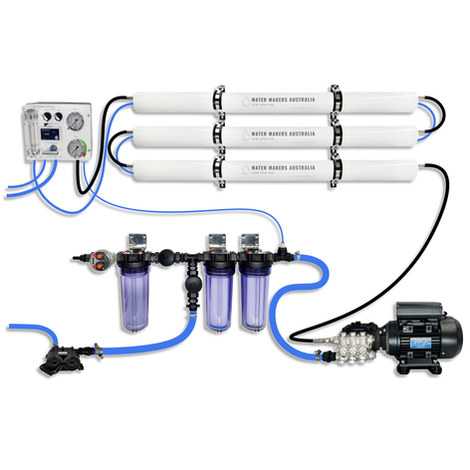
A three-membrane modular watermaker with 200 L/h nominal output and up to 240 L/h family-level marketing, for larger crews and heavy use.
Explore →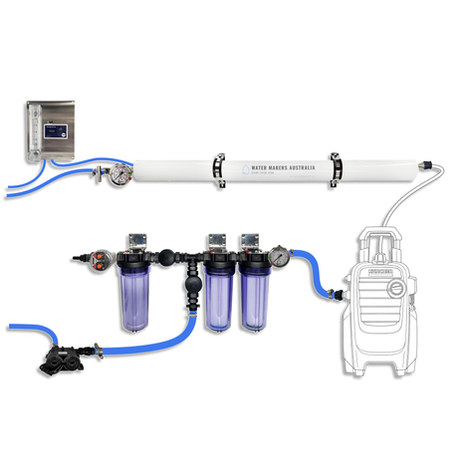
A one-membrane modular marine watermaker with 80 L/h nominal output, remote stainless control panel, standard consumables and direct Australian support.
Explore →