Loading this page…

Loading this page…
Sailing club
Middle Harbour Amateur Sailing Club (MHASC), known locally as The Laser Club, is a volunteer-run dinghy club based at The Spit, Lower Parriwi Road, Mosman, on Sydney’s Middle Harbour. The club is single-class focused — racing ILCA/Laser dinghies across ILCA 4, ILCA 6 and ILCA 7 rigs — and promotes active member participation, competitive one-design racing and a strong masters presence rather than formal beginner tuition.
About
Middle Harbour Amateur Sailing Club (MHASC), known locally as The Laser Club, is a volunteer-run dinghy club based at The Spit, Lower Parriwi Road, Mosman, on Sydney’s Middle Harbour. The club is single-class focused — racing ILCA/Laser dinghies across ILCA 4, ILCA 6 and ILCA 7 rigs — and promotes active member participation, competitive one-design racing and a strong masters presence rather than formal beginner tuition.
Service area: Mosman, NSW
Keep exploring
Middle Harbour Amateur Sailing Club (MHASC) is a Mosman-based sailing club focused on Laser / ILCA class sailing. The club publishes a sailing calendar and racing instructions, runs regular race days (including winter races) and posts race results and handicaps. The site includes pages about joining, membership fees, safety and sailing skills, and notes that visitors are welcome with free race entry.
Single-class depth, not beginner tuition, is the program here, and the club is upfront about it: the Laser, as the club describes it, is best suited to people who already have dinghy experience. Rather than teaching beginners, MHASC positions itself as the destination — the place sailors come once they can handle a dinghy and want close, honest one-design racing against adults of every age. Formal Tackers or junior pathways are not on offer; what the club offers instead is depth within a single class.
That depth begins with the three rig options. ILCA 4, ILCA 6 and ILCA 7 sails accommodate different body weights, meaning a light teenager, a masters veteran and a fit adult in their prime can all race the same hull competitively — adult men and women members race across the fleet. Development happens through participation rather than tuition: members run their own mid-week practice and sailing sessions, then line up for organised club racing on Sundays, a day deliberately chosen when fewer clubs are racing.
The season runs from early September until late April, backed by a published race calendar, sailing instructions, a duty roster and current handicaps, and monthly winter racing keeps skills warm through the off-season — visitors are welcome, with winter race entry free.
Beyond the club course, members are encouraged onto the wider ILCA circuit: Metro, State, National and International competition, coordinated through the NSW/ACT ILCA district association of which the club is a member. The pathway clearly works — the club sent a team to the 2026 ILCA Masters World Championships in Athens and created the Battle of The Sound regatta to sharpen local racing. For the experienced dinghy sailor wanting fitness, competition and a volunteer-run club, it is a deliberately distilled model.
On Lower Parriwi Road at The Spit, Mosman, the clubhouse sits immediately beside Middle Harbour Yacht Club, with access through the East Reserve carpark and along the laneway running past its larger neighbour. Inside is a compact, purposeful facility: boat storage for 48 boats, with racks reserved for financial members who actively take part in the sailing program, plus a members' room and kitchen, change rooms, limited parking and an outdoor deck that overlooks Middle Harbour. The Borogegal and Cammeraigal people are acknowledged by the club as the traditional custodians of the land and waters on which it stands and sails.
The sailing water is the club's great fortune. A 2007 council estuary study portrays MHASC as a small club racing Lasers on Sundays across courses in Middle Harbour and the Sound — the broad open bight where Middle Harbour meets the main harbour, giving race officers room for proper windward-leeward work away from the ferry lanes. The club itself rates this as among the best sailing in Sydney, with easy reach of both Middle Harbour and the Sound.
Detailed wind statistics for the course area are not published, but the Sound is familiar to generations of Sydney dinghy sailors as a testing arena: open enough for a genuine breeze, framed by headlands that bend and funnel the wind, and tidal enough to keep tacticians honest.
Racing is organised for Sundays, with the season calendar running from early September to late April and monthly winter fixtures in between. The deck overlooking the water serves as the natural finishing point for race days — a quiet, member-run contrast to the bustle of the yacht club next door, and a vantage point over water the club has sailed since 1949.
On 22 March 1949, a band of enthusiasts fronted by Barry Wilson and Brian Baker met at Adams' Boatshed at The Spit and formed the Middle Harbour Sailing Club. The first race followed the very next Sunday with six boats competing. The young club affiliated first with the NSW Modified VJ Association and then, just before the 1950–51 season, with the VJ & VS Amateur Association. Growth was immediate: the first full season closed on 93 members and 44 boats registered, and the second season reached 200 members and 52 boats.
A downturn followed as the high cost of building a VJ bit into numbers, until a boat-building scheme launched by then Club Captain Don Fairbrother in 1954–55 revived both membership and boat quality. By 1959 the club was calling itself one of the strongest clubs in the country, with more than 200 members and 70 boats on the register. Members won Australian Championships on three occasions — J. Hartnett in "J.W. III" and "Fantasy", and B. Holmes in "Venture", with Bob Holmes also taking three consecutive State Titles.
When exactly the club moved from the VJ/VS classes to become today's single-class Laser club is not recorded in available material, but by the time it opened its 72nd annual season in September 2020, the ILCA identity was long settled. Recent chapters show a club still inventing traditions: the inaugural Battle of The Sound in November 2021, inspired by Covid restrictions, created a scratch-racing challenge with Manly Yacht Club, Northbridge Sailing Club and Vaucluse Yacht Club for a perpetual trophy, reaching its fifth edition in November 2025. The deaths of life member Penny Marshall and ex-Commodore Graham Gilbert in 2025 were keenly felt, but a team bound for the 2026 ILCA Masters Worlds suggests the next chapter is already being written.
A practical cruising guide for the Moyne River port at the mouth of the Moyne River on Victoria’s south-west coast. It explains harbour geometry, seasonal conditions, principal sailing zones, anchorages, visitor facilities, known local hazards (bar, reefs, strong currents, surf and commercial traffic), regulatory controls and realistic experiences for day sailors, trailer-sailors and coastal cruisers. The guide draws on local port plans, state boating authorities, the yacht club’s visiting-boat practice and regional marine management documents.

Look for a friendly club with beginner-focused training, accessible facilities and boats, a supportive community, clear safety practices, and opportunities to progress at your own pace.
Explore →
Late spring to summer is usually the best time for beginners to start learning to sail in Tasmania because the weather is generally warmer, days are longer and conditions are often more settled. Expect lighter to moderate winds with regular afternoon sea breees in summer, while spring and autumn bring more changeable and sometimes stronger conditions; winter is colder, wetter and typically windier with more fronts and swell.
Explore →
Plan to use tide and local knowledge, slow and steerable power, and deliberate positioning to work with—rather than fight—strong streams and eddies when entering or leaving Tasmanian harbours.
Explore →
Pick a protected bay, estuary or river reach where you can rig, launch and arrive on calm water within a short, sheltered transit; choose a site with a good ramp or jetty, clear recovery options and a nearby sailing club, marina or commercial operator for local knowledge and help.
Explore →
A practical guide for new sailors on picking the right Australian sailing club: training, boat access, racing, social fit, costs and the key questions to ask before joining.
Explore →A practical, step‑by‑step guide for recreational sailors on Sydney Harbour covering navigation, local weather and tides, safe anchoring, berthing, common routes, rules of the road, and useful checklists tailored to Australian conditions.
Explore →Practical guide for recreational sailors planning a coastal cruise from Sydney north to the Queensland border. Covers route options, weather and tidal considerations, planning checklists, common hazards, anchorages and practical examples for a safe, enjoyable trip.
Explore →A practical guide to the coastal weather systems that affect sailing along Western Australia's coast, focusing on the Fremantle Doctor, local sea breezes, and linked coastal phenomena. Explains how these systems form, when they tend to occur, how they influence boat handling and passage planning, common mistakes, and a
Explore →Burke Yachtsman Gear Bag 40L - Shop Now Zip Pay | Tamar Marine Skip to content 59 – 63 Holbrook Street, Invermay Online Shop Open 24/7 Products search Contact us 1300 MARINE $ 0.00 0 Cart Burke Yachtsman Gear Bag 40L $ 79.90 Colour Choose an option Black Blue Black Blue Clear - Burke Yachtsman Gear Bag 40L quantity + Add to cart Enquire about this product SKU BAGB-Y24/BLACK* Category Bags - Sail & Gear A Burke classic and customer favourite, the Yachtsman’s Gear Bag is built tough to handle wet, salty conditions while keeping your gear dry and protected. Made from double coated waterproof…
Explore →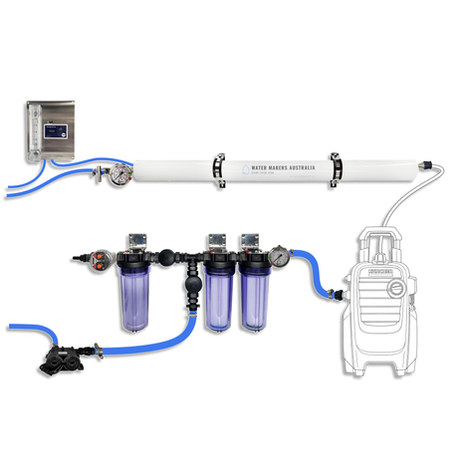
A one-membrane modular marine watermaker with 80 L/h nominal output, remote stainless control panel, standard consumables and direct Australian support.
Explore →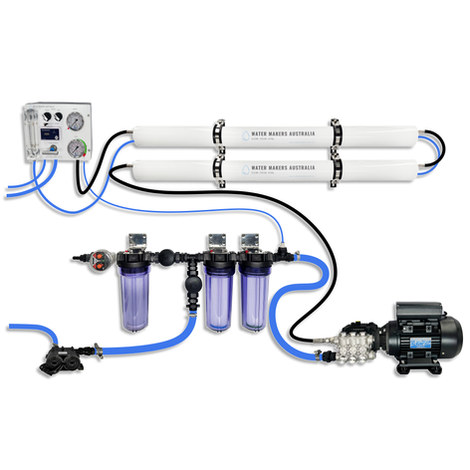
A two-membrane modular watermaker with 140 L/h nominal output, aimed at families and liveaboards that want more water per run.
Explore →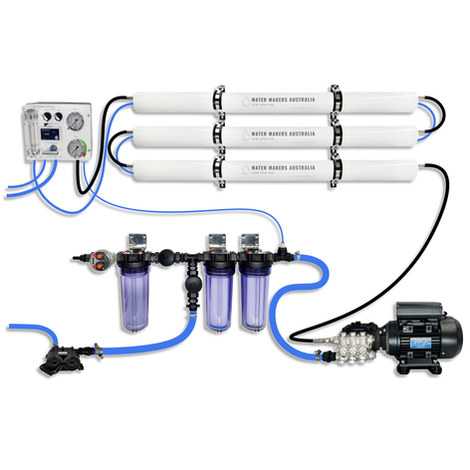
A three-membrane modular watermaker with 200 L/h nominal output and up to 240 L/h family-level marketing, for larger crews and heavy use.
Explore →