Loading this page…

Loading this page…
Sailing club
Narrabeen Lakes Sailing Club (NLSC) is a volunteer-run dinghy club based at Jamieson Park on Narrabeen Lagoon in Sydney’s Northern Beaches. The club focuses on family-friendly, lifetime pathways in small-boat sailing — from beginner Learn to Sail programs for children through to competitive youth and adult racing in classes such as Optimist, Sabot, Heron and Laser. NLSC operates on calm, enclosed lagoon waters and maintains an inclusive community culture with club boats, coaching squads and active parent participation.
About
Narrabeen Lakes Sailing Club (NLSC) is a volunteer-run dinghy club based at Jamieson Park on Narrabeen Lagoon in Sydney’s Northern Beaches. The club focuses on family-friendly, lifetime pathways in small-boat sailing — from beginner Learn to Sail programs for children through to competitive youth and adult racing in classes such as Optimist, Sabot, Heron and Laser. NLSC operates on calm, enclosed lagoon waters and maintains an inclusive community culture with club boats, coaching squads and active parent participation.
Service area: Jamieson Park / Narrabeen Lagoon (Northern Beaches, Sydney)
Keep exploring
Narrabeen Lakes Sailing Club (NLSC) is a volunteer-run community dinghy sailing club on Sydney’s Northern Beaches, based on the calm waters of Narrabeen Lagoon. The club runs racing programs, a structured Learn to Sail syllabus for children and adults, development and intermediate squads, coaching by Australian Sailing–accredited instructors, and pathways for progression from novice to competitive racing. NLSC also maintains a club fleet (boats available to lease/hire) and offers member boat storage support. Contact by email is provided.
The engine room of the club is a three-step youth pathway that takes a child from first sail to regatta start line without ever leaving Jamieson Park. It begins with Learn to Sail, open to kids aged eight and up, run on Sunday mornings from 8:15 to 11:00 after the spring school holidays and continuing through to April. Instructors cover how to rig, how to right a capsized dinghy, the points of sail and clean tacks and gybes, and the stated ambition is that every child is handling a dinghy solo before the season ends.
The club supplies the boats, typically Optimists, and also runs condensed week-long versions during the school holidays. Places are limited and allocated at the committee's discretion, with a September trial day letting families test the water before committing.
Graduates move into the Intermediate Squad on Sundays from 10:30, then the Development Squad, which trains from nine until half past twelve between September and April. That top step is where the serious work happens: boat tuning, race strategy, mental resilience and travel to away regattas, with sailors hiring club boats or campaigning their own. Afternoon racing rounds out each Sunday in two-handed Herons, so a child standing on the rigging area at eight can see the entire pathway laid out in front of them across a single day's program.
The classes the club campaigns — Optimist, Heron and Sabot — are classic Australian trainers with deep state and national circuits, giving graduating sailors somewhere meaningful to take their skills. The program is explicitly youth-focused — the club does not currently run adult learn-to-sail courses — and it functions because parents pitch in; participation by families is written into the way membership works rather than treated as a bonus.
Jamieson Park, on the shores of Narrabeen Lagoon, has been the club's base for generations, and the setting explains much about the sailing style. The lagoon is enclosed, flat and free of ferry wash — the club calls it Sydney's safest waterway for learning, and it is easy to see why parents of first-time sailors relax here. There is no commercial traffic to dodge, no ocean swell rolling through the heads, just open water ringed by parkland in the Northern Beaches Council area. Sailing operations concentrate on Sundays through the season, when the foreshore fills with trolleys, sails and the particular chaos of a volunteer club at full stretch.
The lagoon has always set its own terms. Water levels rise and fall, and that variability has shaped racing since the beginning: a 1927 report describes sailors racing an extended course while the lake was full, then switching to a shorter one when it dropped. Depth still dictates course geometry today. The club's base has shifted around the foreshore over the decades — the 1940s clubhouse in Goodwin Street, shared with the local Boy Scouts, eventually gave way to later facilities at Jamieson Park. On the facilities front the club is between chapters.
Its Jamieson Park clubhouse was destroyed by a fierce fire in late 2021, taking records and memorabilia with it, and a replacement — the proposed Jamieson Park Sports Amenities Building, shaped by the club's own input, with boat storage, multipurpose indoor space, a veranda, kiosk and better water access — has been through community consultation, with construction anticipated from late 2025.
Sailing on Narrabeen Lake began, as so much Australian sailing did, with a sibling rivalry. In 1904, Lidcombe-born brothers George and Thomas Sneesby started match-racing their skiffs against one another on the lake, and other locals gradually joined in. Two decades later, in 1924, the brothers formalised things, founding the club alongside two local boat shed owners, Willis Douglass and Don McLean.
Momentum that year followed a "Venetian Carnival" run with the South Narrabeen Surf Lifesaving Club and Furlough House that sent a wave of enthusiasm through the district. Both co-founding shed owners were boating men: Douglass built 16-foot skiffs behind the Narrabeen tram terminus, while McLean's boatshed had served the lake since around 1900.
By the 1930s the club fielded Sydney's biggest 16-footer fleet, and a 1927 Sydney Mail report already had ten boats racing most weekends. Wars, drought and renaming — it was briefly the Narrabeen Amateur Club in the late 1930s — interrupted the run, but a clubhouse shared with the Boy Scouts opened in Goodwin Street in the late 1940s. Revival came in 1967 around the Australian Sailfish class, driven by Ben Castle, who ran the first Sailfish national titles on the lake in 1969–70 and later co-founded the long-running Warringah Shire Council Sailing School at Jamieson Park.
The 1970s brought nearly 100 boats racing regularly. The 2021 fire destroyed the clubhouse and its archives, prompting a public appeal for photographs and memories; the sailing community answered, with Concord Ryde running a fundraiser, the SailGP team lending a hand and neighbouring clubs offering rebuild advice. In February 2025, 120 years on, the club celebrated with a regatta, a barbecue and cake on the water off Jamieson Park.
Apollo Bay is a small working harbour on Victoria’s Great Ocean Road where sheltered inshore sailing meets the Southern Ocean. The character is a mix of protected harbour berths and an exposed open coast: pleasant day-sails and sheltered weekend cruising inside the bay, with demanding coastal passages immediately offshore where south‑westerly swell and strong winds from the Southern Ocean dominate. It suits coastal cruisers, trailer sailors who launch at the ramp, and experienced coastal sailors who understand bar and swell behaviour; it is not a casual open‑ocean anchorage for unprepared or

Local rules, marine‑park zoning and permit needs vary by reserve around South Australia’s coast — check the relevant marine park zoning map and SA Department for Environment and Water (DEW) information for the exact area before you go.
Explore →
Maybe — it depends. In NSW you often need registration and a boat operator licence for motorised vessels, but many small trailerable sailing dinghies without engines don’t require boat registration or a licence. Check the specific rules for your craft, trailer and engine.
Explore →
Plan to transit Sydney Heads and northern NSW estuary entrances to take advantage of favourable tidal streams or slack water; account for local acceleration over shoals, eddies, wind-on-current effects and river discharge, and always check the latest local observations and tide/stream products before departure.
Explore →
Look for a friendly club with beginner-focused training, accessible facilities and boats, a supportive community, clear safety practices, and opportunities to progress at your own pace.
Explore →
A practical guide for new sailors on picking the right Australian sailing club: training, boat access, racing, social fit, costs and the key questions to ask before joining.
Explore →
Buying a Sailing Boat
Explore →A concise, practical introduction to the essential parts of a recreational sailing boat for beginners in Australia. Covers hull, deck, rigging, sails, steering, below-decks spaces and safety equipment, with simple explanations, common mistakes and a pre-decast checklist to help new sailors communicate and get underway.
Explore →
A practical, Australia‑focused introduction to sailing: key terms, common boat types, basic manoeuvres, where to learn, licence and club options, and planning your first trips with safety and local conditions in mind.
Explore →Burke Yachtsman Gear Bag 40L - Shop Now Zip Pay | Tamar Marine Skip to content 59 – 63 Holbrook Street, Invermay Online Shop Open 24/7 Products search Contact us 1300 MARINE $ 0.00 0 Cart Burke Yachtsman Gear Bag 40L $ 79.90 Colour Choose an option Black Blue Black Blue Clear - Burke Yachtsman Gear Bag 40L quantity + Add to cart Enquire about this product SKU BAGB-Y24/BLACK* Category Bags - Sail & Gear A Burke classic and customer favourite, the Yachtsman’s Gear Bag is built tough to handle wet, salty conditions while keeping your gear dry and protected. Made from double coated waterproof…
Explore →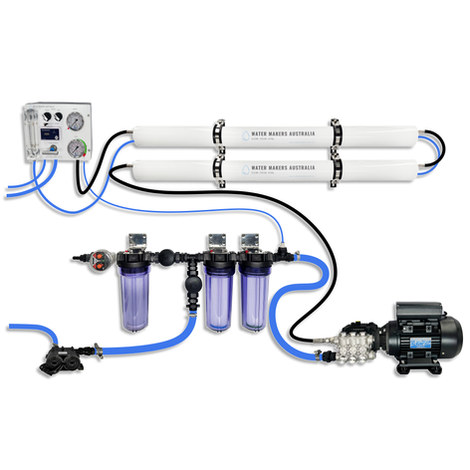
A two-membrane modular watermaker with 140 L/h nominal output, aimed at families and liveaboards that want more water per run.
Explore →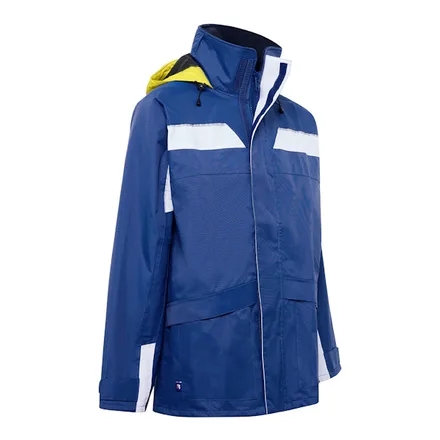
Burke Super Dry Jacket in Blue. Product codes shown: DRY228-XS, DRY228-S, DRY228-M, DRY228-L, DRY228-XL, DRY228-XXL. Available sizes listed: XS, S, M, L, XL, XXL.
Explore →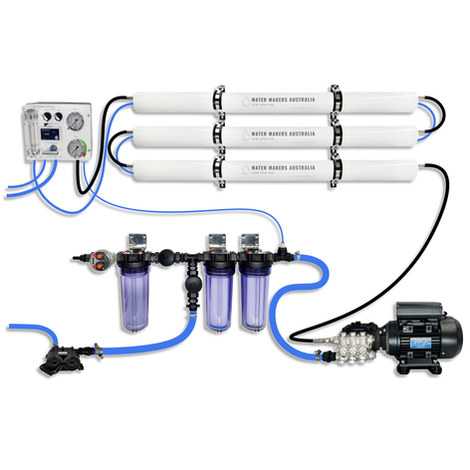
A three-membrane modular watermaker with 200 L/h nominal output and up to 240 L/h family-level marketing, for larger crews and heavy use.
Explore →