Loading this page…

Loading this page…
Sailing club
New England Sailing Club is a small, community-focused dinghy and multihull sailing club based at Loch Malpas (Malpas Dam) on the New England Tablelands, near Armidale, NSW. Perched at about 1,175 metres elevation, the club sails on a cold high-country reservoir and runs a season of weekend racing, junior development and social events. The club is incorporated and affiliated with Australian Sailing and supports a mix of dinghies, catamarans, windsurfing and foiling craft rather than keelboat racing.
About
New England Sailing Club is a small, community-focused dinghy and multihull sailing club based at Loch Malpas (Malpas Dam) on the New England Tablelands, near Armidale, NSW. Perched at about 1,175 metres elevation, the club sails on a cold high-country reservoir and runs a season of weekend racing, junior development and social events. The club is incorporated and affiliated with Australian Sailing and supports a mix of dinghies, catamarans, windsurfing and foiling craft rather than keelboat racing.
Service area: Loch Malpas / Malpas Dam, near Armidale, New England (Northern Tablelands), NSW
Keep exploring
At 1,175 metres above sea level on the NSW Northern Tablelands, New England Sailing Club sails higher than anyone else in the country — at least according to the club itself, which styles its Loch Malpas home the "Highest Sailing Club in Australia". The altitude is more than a slogan. This is a small regional club where sailors pull on wetsuits to race in September, where the season calendar bends around a cold, elevated water supply dam, and where the fleet leans towards off-the-beach cats and dinghies alongside the newer wing foil and windsurfing craft rather than keelboats.
The club describes its own atmosphere as fun and friendly, open to sailors of all levels, and it also answers to a second name — the New England Sailing and Aquatic Club — reflecting the mixed water-sport community that shares the dam.
What lifts this modest outfit well beyond its weight is a genuine high-performance thread. The club's current Commodore is Andrew Landenberger, Olympic silver medallist in the Tornado catamaran class at Atlanta 1996, who lives nearby at Ben Lomond and sails regularly at Malpas. The club claims, in its own words, to be home to "multi-year olympic, world, national and state champion sailors", and while it is the club making that claim, the presence of "Landy" on the committee sheet lends it real credibility.
An incorporated association affiliated with Australian Sailing, the club aims to promote sailing right across the New England region, mixing racing with picnic sailing days and social functions. Its annual regatta — the 2025 edition ran across the weekend of 15–16 March — remains the centrepiece of the year.
Junior development is not a side project here; it is written into the club's constitution. The club's stated aims include teaching juniors the arts of sailing, setting up and running instruction classes, assisting and coaching members to sharpen their skills, and running a dedicated junior sailing and racing program. That formal commitment shapes a season in which club sailing runs every Saturday from two o'clock between the start of October and the beginning of May, giving families a dependable weekly rhythm across the warmer half of the year.
The learning environment is unusual. The season opens again in early September with a sailing meet on water still cold enough that wetsuits are standard kit, as former Commodore Andrew Sawyer has noted — an education in dressing for the conditions that coastal kids never get. Having an Olympic medallist and A Class world champion around the place does the coaching culture no harm either, and the fleet mix keeps things lively: catamarans and conventional dinghies share the water with wing foilers and windsurfers, so newer sailing disciplines find a home alongside the traditional ones.
The club's inter-club ambitions keep improving sailors pointed outward. Lasers have featured in plans for a zone regatta and a travelling inland series connecting coastal clubs with Carcoar Dam and Grafton, an idea Sawyer championed in 2019 to strengthen inland sailing generally. Membership categories run from Junior through Senior, Family, Honorary, Life and Affiliate, keeping the door open to every configuration of sailing household, and the annual regatta each March gives the season's training a focal point on home water.
Loch Malpas — Malpas Dam — sits roughly 30 kilometres south of Armidale in the New England region, holding the city's water supply. Completed in 1968, it replaced the much older Dumaresq Dam, and a boat ramp on its shore serves the cluster of aquatic clubs that call it home; Armidale Rowing Club is based at Lake Malpas too, and informal inter-club regattas between rowing, kayaking and sailing groups have been part of the dam's life since April 1989. At 1,175 metres elevation, the sailing happens in thin high-country air a long way from the smell of salt.
Conditions demand respect. Outside the summer months the water is properly cold — hence the wetsuits when the season opens — and the official season of October to May neatly sidesteps the bleakest part of the Tablelands year. High-country weather can turn quickly at this elevation, and afternoon breezes rolling off the surrounding ranges keep even seasoned sailors honest. Drought is the other constant companion of inland clubs.
At the end of the parched 2019 season the dam sat at about 51 per cent capacity, and levels fluctuate enough to reshape the sailing from year to year. Even so, Malpas has proved a relative refuge: when Lake Keepit near Gunnedah virtually dried up that same year, it was Malpas that hosted the displaced fleets, underlining the dam's importance to sailing across the whole north-west of the state. One of the Thunderbolt Trophy heats against Keepit is traditionally sailed here each early December, a fixture that anchors the summer calendar.
The club's documented story begins with its water rather than its founders — no founding date appears in the club's own material or local coverage. What is certain is that the club's existence is tied to Malpas Dam, finished in 1968 to supply Armidale's water in place of Dumaresq Dam, built back in 1896–98. Informal aquatic competition on the new dam followed within a couple of decades, with inter-club regattas recorded from 1989, and the sailing club grew into an incorporated association affiliated with Australian Sailing, promoting the sport across the New England.
Rivalry has done as much as anything to define the club's competitive identity. The Thunderbolt Trophy series against Lake Keepit Sailing Club "has been going on for donkey's years" by local reckoning, with one heat traditionally sailed at Malpas in early December and the return at Keepit in March. The drought of 2019 forced both heats onto Malpas, with Keepit sailors driving three hours each way to compete — a measure of what the fixture means.
The modern era has been shaped by Andrew Landenberger, a Grafton product who lives at nearby Ben Lomond, close to the dam. He teamed with Mitch Booth for Tornado silver at the 1996 Atlanta Olympics — the country's strongest Olympic sailing result since 1972 — and later won the Classic Division at the 2019 A Class Catamaran Worlds in England, winning the final seven races to claim the title by 12 points, before turning his hand to design through Landenberger OneDesign. He now serves as Commodore, racing at Malpas alongside the membership.
With the annual regatta firmly established, the little club at the top of the tablelands keeps punching along.
American River (Kangaroo Island, SA) is a small, sheltered inlet and township on the north‑eastern side of Kangaroo Island that acts as a calm staging point for cruising the eastern part of the island and for short hops through Backstairs Passage. It’s distinctive for its protected anchorage inside Eastern Cove and the adjacency of Pelican Lagoon — a shallow, ecologically important lagoon with sanctuary zoning — which shapes how and where boats can move. The area suits sheltered day sailing, weekend cruising and short coastal passages; it’s appropriate for trailer sailors, small cruisers and a

Maybe — it depends. In NSW you often need registration and a boat operator licence for motorised vessels, but many small trailerable sailing dinghies without engines don’t require boat registration or a licence. Check the specific rules for your craft, trailer and engine.
Explore →
Pick a ramp that matches your boat size and trailer setup, has safe approach and exit conditions (depth, slope, surface), good onshore parking and flow, and follow simple ramp etiquette: queue, help others, rig off the trailer when clear, and secure your vessel quickly.
Explore →
Pick a stable, simple, forgiving dinghy with a single sail or basic sloop rig, affordable handling and easy maintenance—ideally one with a local class or school nearby so you can access coaching and spare parts.
Explore →
Write a one‑page plan with the who/what/when/where/how of your trip, keep a copy on board and leave the main copy with a responsible person ashore (and optionally with your club, marina office or local volunteer rescue service).
Explore →
A practical guide for new sailors on picking the right Australian sailing club: training, boat access, racing, social fit, costs and the key questions to ask before joining.
Explore →
A practical, Australia-focused guide for planning and sailing around the Whitsunday Islands: weather and seasons, navigation and anchoring, moorings and parks, provisioning and charters, safety and common mistakes, plus checklists and next steps.
Explore →A practical guide for recreational sailors planning passages to, from or around Eden and Twofold Bay. Covers sheltered anchorages, shore facilities, local weather and tidal considerations, preparing for Bass Strait conditions and a focused equipment and safety checklist.
Explore →A practical guide for recreational sailors planning visits to Albany and King George Sound. Covers the main anchorage areas, typical local weather patterns, tidal and current considerations, navigational hazards, on-the-water etiquette and a pre-departure checklist to help you plan a safe passage and enjoyable stopover
Explore →Burke Yachtsman Gear Bag 40L - Shop Now Zip Pay | Tamar Marine Skip to content 59 – 63 Holbrook Street, Invermay Online Shop Open 24/7 Products search Contact us 1300 MARINE $ 0.00 0 Cart Burke Yachtsman Gear Bag 40L $ 79.90 Colour Choose an option Black Blue Black Blue Clear - Burke Yachtsman Gear Bag 40L quantity + Add to cart Enquire about this product SKU BAGB-Y24/BLACK* Category Bags - Sail & Gear A Burke classic and customer favourite, the Yachtsman’s Gear Bag is built tough to handle wet, salty conditions while keeping your gear dry and protected. Made from double coated waterproof…
Explore →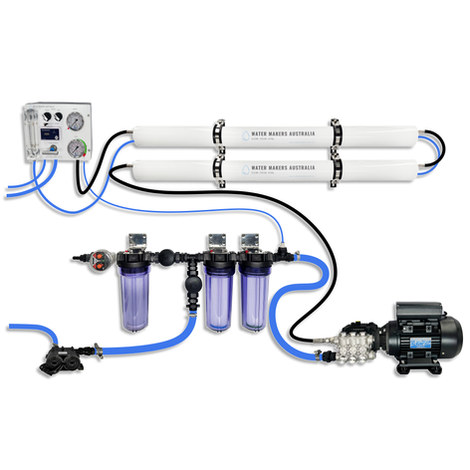
A two-membrane modular watermaker with 140 L/h nominal output, aimed at families and liveaboards that want more water per run.
Explore →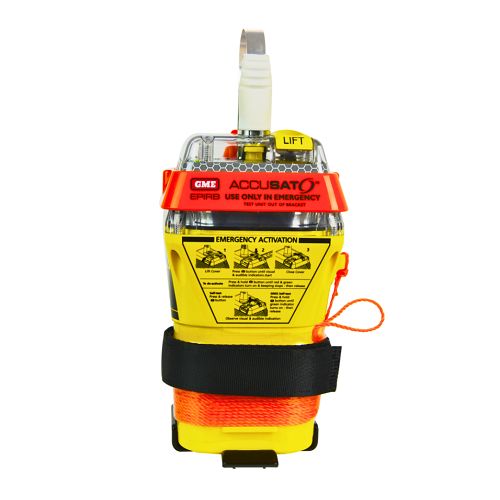
A 10‑year battery EPIRB with integrated GNSS (supports GPS and Galileo), infrared strobe and 121.5 MHz homing signal. Approved for worldwide COSPAS‑SARSAT operation.
Explore →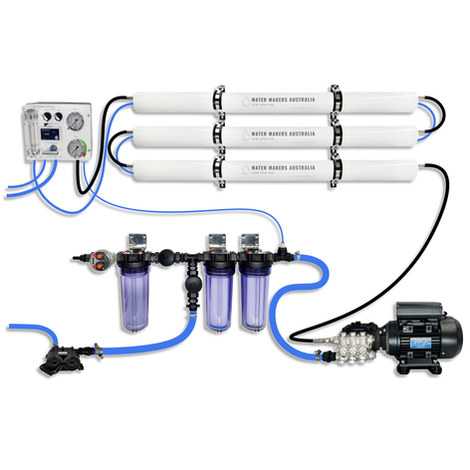
A three-membrane modular watermaker with 200 L/h nominal output and up to 240 L/h family-level marketing, for larger crews and heavy use.
Explore →