Loading this page…

Loading this page…
Sailing club
Newcastle & Hunter Trailer Yacht Association (NHTYA) is a volunteer-run sailing club for trailer sailers based on Lake Macquarie. The association organises social cruising weekends, local and off-the-beach racing, a year-round racing and cruising calendar, monthly meetings, and member social events. The club welcomes novice and experienced trailer-sailer owners, offers peer help with rigging and sailing, and publishes a monthly newsletter and race program.
About
Newcastle & Hunter Trailer Yacht Association (NHTYA) is a volunteer-run sailing club for trailer sailers based on Lake Macquarie. The association organises social cruising weekends, local and off-the-beach racing, a year-round racing and cruising calendar, monthly meetings, and member social events. The club welcomes novice and experienced trailer-sailer owners, offers peer help with rigging and sailing, and publishes a monthly newsletter and race program.
Service area: Rathmines, NSW
Keep exploring
Newcastle & Hunter Trailer Yacht Association (NHTYA) is a volunteer-run sailing club for trailer sailers based on Lake Macquarie. The association organises social cruising weekends, local and off-the-beach racing, a year-round racing and cruising calendar, monthly meetings, and member social events. The club welcomes novice and experienced trailer-sailer owners, offers peer help with rigging and sailing, and publishes a monthly newsletter and race program.
Forget accredited courses and laminated certificates: learning here happens the old way, sailor to sailor. The association's own pitch to the nervous beginner is disarmingly simple — if you don't know how to sail or you're a bit rusty, talk to them, because plenty of experienced members are willing to share what they know. In practice that means members helping newcomers rig and sail their own boats, and the quieter craft of navigating Lake Macquarie safely being passed along during cruising weekends, where the local knowledge of channels, shallows and anchorages transfers almost by osmosis.
There is no formal learn-to-sail program, and the association makes no pretence otherwise; the mentoring model is the program, and for adult trailer-sailer owners it works.
Racing doubles as the finishing school. Monthly race weekends use the lake's navigation marks, usually starting from Rathmines Bay, with staggered scratch starts sending the slower boats away first so the whole fleet finishes close together — a format that keeps novices in the contest rather than watching transoms disappear. A performance-based handicapping system sharpens the lesson, Spring and Autumn series structure the season, and nothing races from June to August, when the lake is left to the winter quiet.
An Off the Beach division sails monthly out of Rathmines for those with smaller boats, keeping dinghy sailors inside the same club tent as the trailer yachts, and members also take on external events including the 3 & 6 Hour Regatta and Sail Port Stephens. Membership costs $100 per boat annually, Australian Sailing fees included, with insurance required.
Home water is Lake Macquarie, Australia's largest coastal saltwater lake, and it is hard to imagine a better trailer-sailer playground. Races generally get away from Rathmines Bay, which also hosts the Off the Beach division's monthly sailing, while the wider lake offers enough room for long handicap courses using fixed navigation marks. When the cruising urge takes the fleet further afield, the destination list reads like a tour of the NSW coast's best sheltered water: Wallis Lakes, Myall Lakes, Pittwater and Sydney Harbour all feature, along with on-shore cruise events such as a gathering at Gloucester Showground for those who prefer their weekends with wheels firmly on grass.
The association runs lean on bricks and mortar by design. There is no clubhouse; instead, general meetings are held on the third Tuesday of each month at seven in the evening at Club Macquarie on Lake Road, Argenton, and the clubrooms are otherwise virtual. That arrangement frees the club from maintaining buildings and keeps the modest $100 annual fee where members like it.
Trailer-sailer practicality shapes everything about how the fleet uses these waters: boats are towed to the ramp, rigged and launched for the weekend, then hauled out and driven home, which is precisely what makes the wider cruising circuit possible. What the association does invest in is time on the water — weekend cruises where Saturday night is spent around a fire or simply in good company, and a tradition of destination sailing that keeps the lake as a starting point rather than a boundary.
For sailors weighing up membership, the club's suggestion is to come along to an activity or two and a meeting first, and let the lake do the convincing.
The honour board begins with Ross Berghofer's term as club leader in 1979–80, which dates the association to about 1979, and it was already an operating racing club when Nev and Judy Heap — later life members — joined in 1982. The early format alternated one race day per fortnight with one cruise per fortnight, racing on Sundays, a rhythm that balanced the twin loves of the membership from the start. Communication ran on a Gestetner duplicator printing the newsletter for manual posting, and arranging a rendezvous meant finding a phone box, since nobody carried a telephone.
Around early 2000, member Ian Nunn proposed turning race weekends into a proper weekend away with two consecutive race days, and that two-day monthly race weekend format survives today. In 2010 the leadership title changed from President to Commodore, a shift recorded on the Presidents Bell as reflecting the nautical activities of the association. The life membership roll honours the couples who built the place: David and Hazel Cooper, Neville and Judy Heap, Ralph and Jan Penn, Phillip and Kim Sparkes, and Hart and Pam Peters, recognised across the decade from 2015 to 2024.
Away cruises have ranged from Fraser Island, the Gippsland Lakes and the River Murray in earlier years to more recent expeditions to the Whitsundays, the Hawkesbury, Sydney Harbour, Wallis Lakes and Lake Glenbawn — though members say Myall Lakes cruising occupies a special spot in their hearts. The 2025–26 Club Champions, Will and Sue Hardcastle on Amethyst, join a roll of champion boat names — Scallywag, Zero Balance, Wanderer II, Possum, Aye-Sea-Red among them — that charts the club's personality across four and a half decades.
A practical cruising guide for the Moyne River port at the mouth of the Moyne River on Victoria’s south-west coast. It explains harbour geometry, seasonal conditions, principal sailing zones, anchorages, visitor facilities, known local hazards (bar, reefs, strong currents, surf and commercial traffic), regulatory controls and realistic experiences for day sailors, trailer-sailors and coastal cruisers. The guide draws on local port plans, state boating authorities, the yacht club’s visiting-boat practice and regional marine management documents.

Look for a friendly club with beginner-focused training, accessible facilities and boats, a supportive community, clear safety practices, and opportunities to progress at your own pace.
Explore →
Use ramps and beaches with respect for local conditions: check ramp layout, tide and swell, wind direction, vehicle access and crowding; prepare boat and crew before you launch or retrieve; and follow local signage, courtesy and safety practices. Specifics vary by ramp and beach, so confirm details for the exact site before you go.
Explore →
Pick a protected bay, estuary or river reach where you can rig, launch and arrive on calm water within a short, sheltered transit; choose a site with a good ramp or jetty, clear recovery options and a nearby sailing club, marina or commercial operator for local knowledge and help.
Explore →
Write a one‑page plan with the who/what/when/where/how of your trip, keep a copy on board and leave the main copy with a responsible person ashore (and optionally with your club, marina office or local volunteer rescue service).
Explore →A practical guide for recreational sailors planning day sails or short cruises on Lake Macquarie. Covers the entrance, navigation considerations, popular anchorages, local weather and tide influences, mooring etiquette, safety checks and suggested itineraries around the lake.
Explore →
A practical guide for new sailors on picking the right Australian sailing club: training, boat access, racing, social fit, costs and the key questions to ask before joining.
Explore →A practical guide for recreational sailors planning visits to Albany and King George Sound. Covers the main anchorage areas, typical local weather patterns, tidal and current considerations, navigational hazards, on-the-water etiquette and a pre-departure checklist to help you plan a safe passage and enjoyable stopover
Explore →Practical guide for recreational sailors planning passage on the Hawkesbury River: how to plan around tides, choose anchorages, read local conditions and prepare the boat and crew for a safe, comfortable trip.
Explore →Burke Yachtsman Gear Bag 40L - Shop Now Zip Pay | Tamar Marine Skip to content 59 – 63 Holbrook Street, Invermay Online Shop Open 24/7 Products search Contact us 1300 MARINE $ 0.00 0 Cart Burke Yachtsman Gear Bag 40L $ 79.90 Colour Choose an option Black Blue Black Blue Clear - Burke Yachtsman Gear Bag 40L quantity + Add to cart Enquire about this product SKU BAGB-Y24/BLACK* Category Bags - Sail & Gear A Burke classic and customer favourite, the Yachtsman’s Gear Bag is built tough to handle wet, salty conditions while keeping your gear dry and protected. Made from double coated waterproof…
Explore →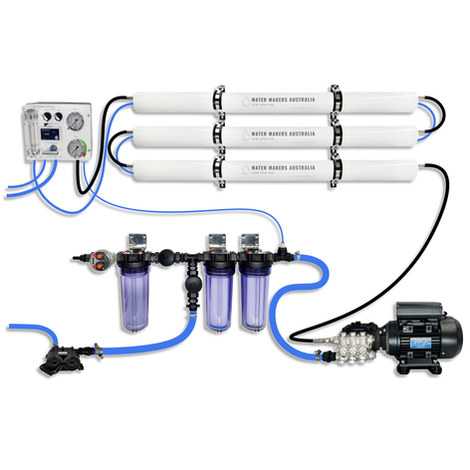
A three-membrane modular watermaker with 200 L/h nominal output and up to 240 L/h family-level marketing, for larger crews and heavy use.
Explore →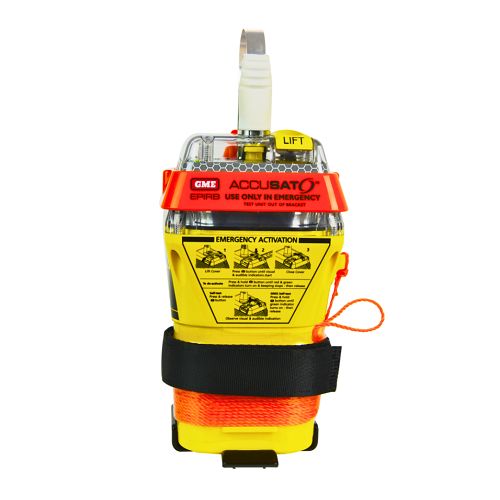
A 10‑year battery EPIRB with integrated GNSS (supports GPS and Galileo), infrared strobe and 121.5 MHz homing signal. Approved for worldwide COSPAS‑SARSAT operation.
Explore →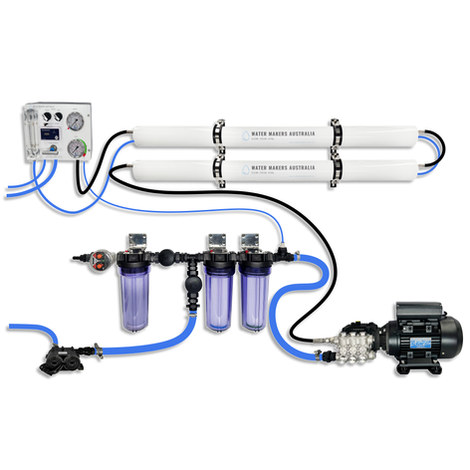
A two-membrane modular watermaker with 140 L/h nominal output, aimed at families and liveaboards that want more water per run.
Explore →