Loading this page…

Loading this page…
Sailing club
Northbridge Sailing Club is a community-focused dinghy club on Sailors Bay at the head of Middle Harbour in Northbridge, NSW. The club runs learn-to-sail courses and a long-established January “Live-In” junior camp, supports social sailing and regular club racing across a range of dinghy classes and maintains a waterside clubhouse with deck facing calm, protected water.
About
Northbridge Sailing Club is a community-focused dinghy club on Sailors Bay at the head of Middle Harbour in Northbridge, NSW. The club runs learn-to-sail courses and a long-established January “Live-In” junior camp, supports social sailing and regular club racing across a range of dinghy classes and maintains a waterside clubhouse with deck facing calm, protected water.
Service area: Sailors Bay / Upper Middle Harbour, Northbridge (Willoughby LGA), NSW
Keep exploring
Northbridge Sailing Club is a community-oriented sailing club on Middle Harbour (Northbridge, NSW) offering Learn-to-Sail programs and a Sailing School for children, families and adults, a live-in summer camp for young sailors, regular club racing and social sailing, and member boat rental on selected days. The club publishes a sailing calendar and accepts enquiries via email.
The January Live-In Camp is the institution every Northbridge family knows. Held each year in the summer holidays, it builds sailing skills and confidence in young sailors over an immersive stretch on and off the water, and the club describes it simply as a must for many kids — the kind of formative week that turns tentative beginners into committed sailors. It anchors a broader learn-to-sail offering that runs courses for kids, families and adults, with the one quirk that all Sailing School participants must also be club members, tying training directly into the life of the club rather than running it as a separate commercial sailing school.
Boat access removes the usual barrier to continuing. The club keeps a range of boats members can hire at minimal cost, whether for social sailing or for adult training under qualified coaches, and sailors who have come through the Sailing School — or arrived already competent — can join social sailing and fun racing in club boats on nominated Sundays across the season. The season itself runs from the first Sunday in September until Easter, and an Open Day before each season showcases the pathways for every age.
Racing spans several dinghy classes, with members competing at every level and ILCA and Optimist-type dinghies featuring in the fleet alongside the club's famous home-grown designs, and the Tasar connection remains living history: the club ran a special Bethwaite Trophy in November 2025 — two Tasar races marking fifty years since the class launched.
Sailors Bay, at the top of Middle Harbour where the main harbour's traffic fades away, is the kind of water sailing parents dream about. The club sits where Sailors Bay Road finally runs out, in the Willoughby council area where the suburban streets give way to bush-fringed foreshore, and describes its stretch of water as calm and protected, well clear of the main harbour's busy channels — exactly the environment in which children can learn without ferries, wash or swell complicating their first tacks.
Enclosed bays like this one hold their breeze softly, shifting with the surrounding ridges, which teaches young sailors to read wind on water rather than simply hold a course. The clubhouse is a sunlit building whose huge deck sits right by the water; the venue can be hired by members and non-members alike, and the deck does the heavy lifting as the club's social heart.
The site's sailing history runs deep and humble. When Frank Bethwaite arrived in 1959, the club's youngsters were racing VJs off a tiny half-tide beach, and the seniors operated out of a tiny commercial boatshed that had no facilities — a world away from today's clubhouse, which did not exist until at least the mid-1950s. That modest shoreline proved adequate as a laboratory: it was on this protected water that the NS14 was evaluated across the autumn of 1960 and the classes that followed it were refined. Upper Middle Harbour's enclosed waters remain the everyday training ground, close enough to the city to be practical, quiet enough to feel like a secret.
The club exists because a group of local sailors got tired of driving to Manly. Around 1947 they began racing each other informally on Middle Harbour, contesting the Norm Landers' Trophy at an Easter regatta each year; after two such regattas they concluded there were enough sailors in the district to justify a club, and by autumn 1949 Northbridge Sailing Club had been created. Founding members included Phil Hammett, Ian MacLean, Albert Jackson, Owen Hasemer, Grahame Sibley and Patricia Smith.
For years there was no clubhouse at all — the first building arrived only in the mid-1950s — and when the Middle Harbour Regatta was revived in 1959, a Northbridge VJ club stood among the six clubs behind it.
That same year, 1959, changed everything. Frank Bethwaite and his wife Nel moved to Northbridge and joined in; finding the juniors racing VJs off a scrap of beach, he volunteered for race management, then helped form the group that designed the Northbridge Senior — the NS14 — after a clubhouse conversation with Hal Myer about a dinghy a husband and wife could sail together.
Prototype evaluation ran from February to April 1960, the class grew to roughly a thousand boats, and hundreds of children learned to sail in it through the 1960s, many going on to state, national and world titles. The NS14 line led to the Nova in 1972 and the Tasar in 1975. Bethwaite's weather research for Olympic teams became the book "High Performance Sailing", translated into twelve languages, and in 2020 he entered the Australian Sailing Hall of Fame.
In a 2021 planning submission the club described more than 60 years of history and an important role in both the local and wider sailing communities — typically understated for a place with a lane named after its own legend.
Bathurst Harbour (Port Davey system), in south‑west Tasmania, is a vast, almost land‑locked estuarine harbour inside the Southwest National Park and World Heritage Area. It offers a remote, sheltered anchoring environment protected from the Roaring Forties, but demands careful planning, an awareness of marine‑reserve rules, and a willingness to operate in shallow, tannin‑stained waters. Best suited to experienced coastal cruisers and small expedition yachts prepared for self‑sufficiency, Bathurst Harbour is more a place to linger and explore on foot and by tender than a port of call for busy,

Look for a friendly club with beginner-focused training, accessible facilities and boats, a supportive community, clear safety practices, and opportunities to progress at your own pace.
Explore →
Late spring to summer is usually the best time for beginners to start learning to sail in Tasmania because the weather is generally warmer, days are longer and conditions are often more settled. Expect lighter to moderate winds with regular afternoon sea breees in summer, while spring and autumn bring more changeable and sometimes stronger conditions; winter is colder, wetter and typically windier with more fronts and swell.
Explore →
Expect very different seasonal systems across Western Australia: the south‑west (Perth to Albany) has a strong summer afternoon sea breeze (the “Fremantle Doctor”) and winter westerly fronts, while northern WA follows a wet/dry monsoonal cycle with strong seasonal onshore winds, thunderstorms and cyclone risk in the wet season. Local headlands, estuaries and tidal flows often change what you actually feel on the water, so learn the local timing and sheltered venues first.
Explore →
Legal requirements can change — check Transport for NSW for the current rules. As a practical baseline for coastal day sailing from NSW shores: keep the right number and type of lifejackets for everyone, have a means of calling for help, show navigation lights if you’ll be out after dusk, and carry basic items to manage a man‑overboard or abandon‑ship situation. Add anchor, bilge/bailer, sun/protection and basic repair kit as recommended items.
Explore →
A concise, practical guide to the points of sail and how to trim sails effectively for common Australian conditions. Learn the basics of wind angles, sail shape, telltales, reefing considerations and simple steps to improve boat speed and balance.
Explore →
A practical guide for new sailors on picking the right Australian sailing club: training, boat access, racing, social fit, costs and the key questions to ask before joining.
Explore →A concise, practical introduction to the essential parts of a recreational sailing boat for beginners in Australia. Covers hull, deck, rigging, sails, steering, below-decks spaces and safety equipment, with simple explanations, common mistakes and a pre-decast checklist to help new sailors communicate and get underway.
Explore →A practical, Australian-focused guide explaining how sails generate drive, the points of sail, and how to trim sails for different conditions. Includes simple explanations of aerodynamic concepts, step-by-step trim checks, common mistakes and clear next steps for practice on the water.
Explore →Burke Yachtsman Gear Bag 40L - Shop Now Zip Pay | Tamar Marine Skip to content 59 – 63 Holbrook Street, Invermay Online Shop Open 24/7 Products search Contact us 1300 MARINE $ 0.00 0 Cart Burke Yachtsman Gear Bag 40L $ 79.90 Colour Choose an option Black Blue Black Blue Clear - Burke Yachtsman Gear Bag 40L quantity + Add to cart Enquire about this product SKU BAGB-Y24/BLACK* Category Bags - Sail & Gear A Burke classic and customer favourite, the Yachtsman’s Gear Bag is built tough to handle wet, salty conditions while keeping your gear dry and protected. Made from double coated waterproof…
Explore →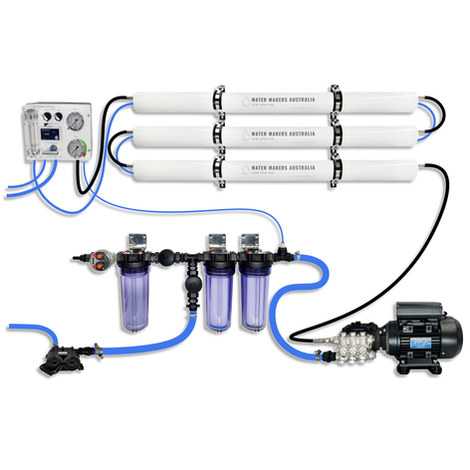
A three-membrane modular watermaker with 200 L/h nominal output and up to 240 L/h family-level marketing, for larger crews and heavy use.
Explore →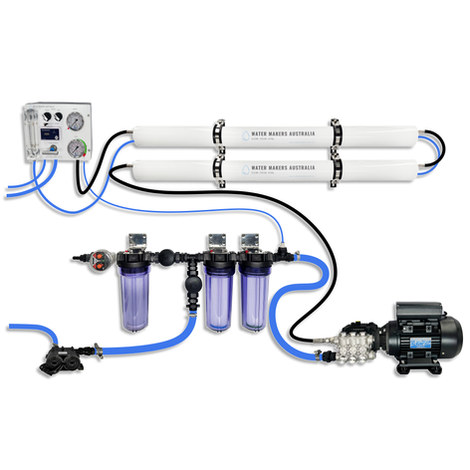
A two-membrane modular watermaker with 140 L/h nominal output, aimed at families and liveaboards that want more water per run.
Explore →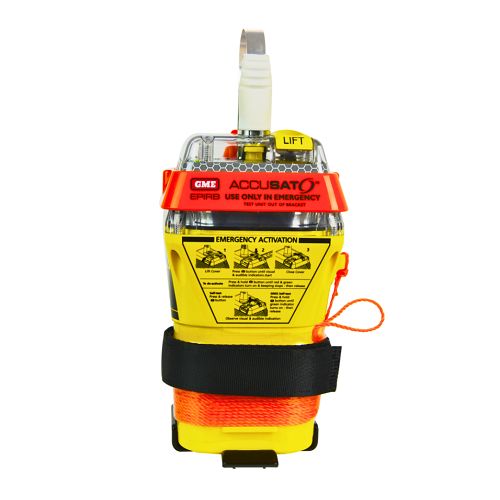
A 10‑year battery EPIRB with integrated GNSS (supports GPS and Galileo), infrared strobe and 121.5 MHz homing signal. Approved for worldwide COSPAS‑SARSAT operation.
Explore →