Loading this page…

Loading this page…
Sailing club
Nowra Community Sailing Club is a small, community-run dinghy club on the Shoalhaven River at Nowra (NSW South Coast). The club races a mixed dinghy fleet including Spirals, Finns, Lasers, Manly Graduates and Hansas, and is notable for an inclusive sailing culture that races Hansa accessibility dinghies alongside other classes. The club lost its long-standing clubhouse to fire in June 2017 but continues to run regular Saturday sailing from a public wharf precinct south‑east of the Nowra road bridge.
About
Nowra Community Sailing Club is a small, community-run dinghy club on the Shoalhaven River at Nowra (NSW South Coast). The club races a mixed dinghy fleet including Spirals, Finns, Lasers, Manly Graduates and Hansas, and is notable for an inclusive sailing culture that races Hansa accessibility dinghies alongside other classes. The club lost its long-standing clubhouse to fire in June 2017 but continues to run regular Saturday sailing from a public wharf precinct south‑east of the Nowra road bridge.
Service area: Nowra, NSW — Shoalhaven River
Keep exploring
Nowra Community Sailing Club measures its wealth differently from most clubs: since 2017 it has had no clubhouse at all, and it kept sailing anyway. "THE CLUB GOES ON!!" declared the club after fire destroyed its historic home on the Shoalhaven River, and that stubborn cheerfulness captures the place. This is a small, passionate community club whose members describe sailing as a sport of strategy, fitness and fun, and dinghy sailing as something that can be a solo pursuit or one for the whole family. The fleet on the river mixes Spirals, Finns, Lasers, Manly Graduates and Hansas, with the firm policy that all classes are very welcome.
What really sets Nowra apart is an inclusivity most clubs only talk about. The club calls itself totally inclusive and says it is the only one it knows of where Hansa accessibility dinghies race in the same fleet as every other boat. That claim has pedigree: Hansa Sailing Systems, whose accessible dinghies are used worldwide, are manufactured at South Nowra, and in spring 2015 the club ran the Hansa 2.3 23rd Birthday Regatta — 30 boats and 40 sailors from four states and territories over two days, 80 guests at the dinner, and Hansa founder Chris Mitchell cutting the cake — which the club billed as "the biggest sailing event on the river in living memory".
The lost clubhouse, meanwhile, lives on in local memory as one of Nowra's most recognisable buildings and, for decades, the town's unofficial flood gauge — locals measured the river's moods against its roofline.
The most distinctive thing about sailing at Nowra is that nobody gets left behind on the course — literally. Races are sailed as laps, so slower boats and less confident racers simply complete fewer laps yet still finish with the fleet, with times adjusted through a modified Victorian Yachting Council yardstick tuned to the club's courses and to international yardsticks where Finns and Lasers race in numbers.
Fold in the integrated Hansa boats and you get a racing format where a first-timer, a seasoned Finn sailor and a sailor with a disability all share the same start and the same finish. The club's Marathon race doubles as a heat of the Spiral class Travellers Trophy, giving members a taste of inter-club competition on home water and drawing visiting sailors up the river each January.
Formal accredited courses are not the club's way; learning here is personal and informal. The club cheerfully asserts that almost anyone of any age can learn to sail in a day or two, and prospective sailors are invited to get in touch with members Bill Jauncey or Wayne Norris and arrange a Saturday out on the water. That apprenticeship model suits a club whose strength is experienced sailors with time to give. Sailing happens on selected Saturdays from mid-October, starting at 2.15 in the afternoon, with the season program posted each September.
The 2015 Hansa regatta, run alongside Hansa Sailing Systems, the Sailing for Everyone Foundation and Sailability Shoalhaven, showed how naturally the club's inclusive instincts scale up when the occasion demands.
The club's patch is the Shoalhaven River at Nowra, on the NSW South Coast, operating from Wharf Road just south-east of the Nowra road bridge, beside the public wharf. It is river sailing with real character: the current has always run strongly here — the pre-bridge ferry crossing once took more than half an hour because of it — and the site is flood-prone in a way that shaped local folklore. For decades, townsfolk judged a flood not by official river heights but by where the water had reached on the sailing club's roofline. Tide and freshwater flow combine to keep the tactics interesting, and the bridge and banks frame courses that demand close attention from first mark to finish.
Since the 2017 fire the physical setting has been remade around the club rather than for it. Shoalhaven City Council's Nowra Sails project, finished in 2020, cleared the fire-damaged remains and built a new wharf and viewing platform standing on 16-metre steel piles, plus floating pontoons and striking architectural shade sails, officially opened in February 2021 with picnic seating and interpretive signage.
Flood heights from past decades are marked on bands wrapped around the central shade-sail pole, and the century-old, heritage-listed piles that once held up the clubhouse were retained as a legacy feature. A stone boat ramp sits alongside, and the whole precinct doubles as a riverside park where the town can watch the sailing go past. The river at Nowra is wide enough for genuine course racing yet enclosed enough that a capsized sailor is never far from a friendly bank.
For a club without a building, it is a handsome and genuinely public place to rig a dinghy and push off into the current.
The club's first home was older than the club by the better part of a century. The weatherboard building and timber wharf beside the Nowra bridge began life serving the Illawarra Steamship Navigation Company — council dates the original to the 1880s, when it stored goods moving between Nowra and Sydney, while a Transport for NSW heritage assessment puts the surviving Inter-War Federation structure at 1930, after the company set up an office there following 1904.
Goods had moved overland to Greenwell Point and on by steamer until 1903, when the river was blasted to open a safe passage for steamers up to Nowra. The Nowra Fishing Co-op occupied the premises from the mid-1940s, trading into the 1960s.
The sailing club's lease of the building and wharf was approved in 1964, and Nowra Sailing Club was established at the site that year, with the old storehouse spending the next five decades as the town's sailing headquarters and its informal flood gauge. It survived two World Wars and countless floods, but on Wednesday 21 June 2017 fire broke out and destroyed it completely; mercifully, the club's gear happened to be out of the building that day.
The heritage-listed supporting piles, more than a hundred years old, remained, and council's Nowra Sails project transformed the site into the public precinct that opened in 2021. Through it all the club never stopped sailing, and events like the January Marathon — a Spiral Travellers Trophy heat — and the memory of that 30-boat Hansa regatta keep the racing tradition alive on the river.

Plan as a chain of conservative daily legs tied to your boat’s real-world fuel and speed in the expected sea state, with confirmed primary and alternate anchorages/berths, fuel legs and back-up fuel options, and a documented emergency/diversion plan (comms, tow and med-evac). Build tidal and weather gates into each leg and carry chart and comms redundancy.
Explore →
Usually not for a small sailing dinghy. In NSW a boat driving licence is needed only to drive at 10 knots or more, or to drive a personal watercraft, and a vessel must be registered if it has an engine of 4 kW or more, is 5.5 m or longer, or needs a mooring licence or marina berth. A trailer towed on public roads needs its own registration.
Explore →
Legal requirements can change — check Transport for NSW for the current rules. As a practical baseline for coastal day sailing from NSW shores: keep the right number and type of lifejackets for everyone, have a means of calling for help, show navigation lights if you’ll be out after dusk, and carry basic items to manage a man‑overboard or abandon‑ship situation. Add anchor, bilge/bailer, sun/protection and basic repair kit as recommended items.
Explore →
Plan to transit Sydney Heads and northern NSW estuary entrances to take advantage of favourable tidal streams or slack water; account for local acceleration over shoals, eddies, wind-on-current effects and river discharge, and always check the latest local observations and tide/stream products before departure.
Explore →A practical guide to preparing, planning and executing a recreational offshore passage along the New South Wales coast. Covers route selection, weather and tidal considerations, vessel and crew checks, safety equipment, communication, watchkeeping and common mistakes, with clear pre‑departure and underway checklists.
Explore →Practical guide for recreational sailors planning passage on the Hawkesbury River: how to plan around tides, choose anchorages, read local conditions and prepare the boat and crew for a safe, comfortable trip.
Explore →A practical guide for recreational sailors planning day sails or short cruises around Batemans Bay, Broulee and the Clyde River. Covers local conditions, safe approaches, anchorages, launching, tides, common hazards, and checklists for trip planning and on-water decisions.
Explore →
A practical guide for new sailors on picking the right Australian sailing club: training, boat access, racing, social fit, costs and the key questions to ask before joining.
Explore →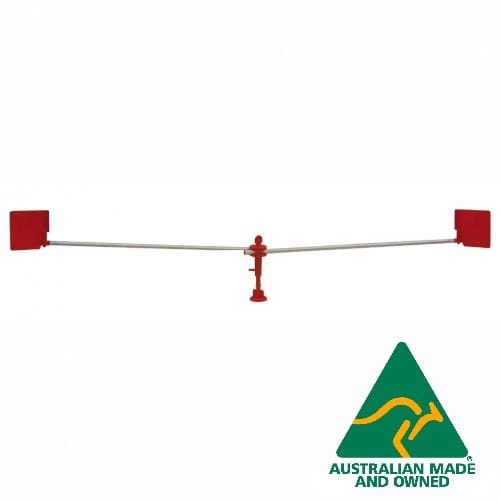
Wind-driven bird repeller with 1 metre rotating arms for smaller areas such as a boom, a solar panel or a small bimini. UV stabilised, with a bayonet base and a 12 month warranty.
Explore →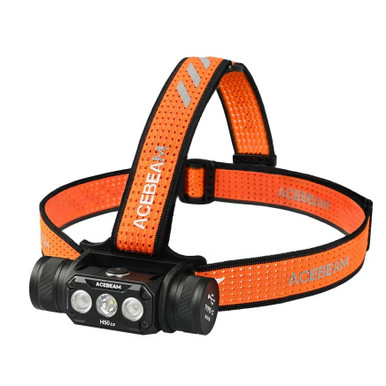
A 2000 lumen headlamp with spot and flood beams, rated IP68 and submersible to 2 metres, with a 141 metre beam and up to 30 hours on low.
Explore →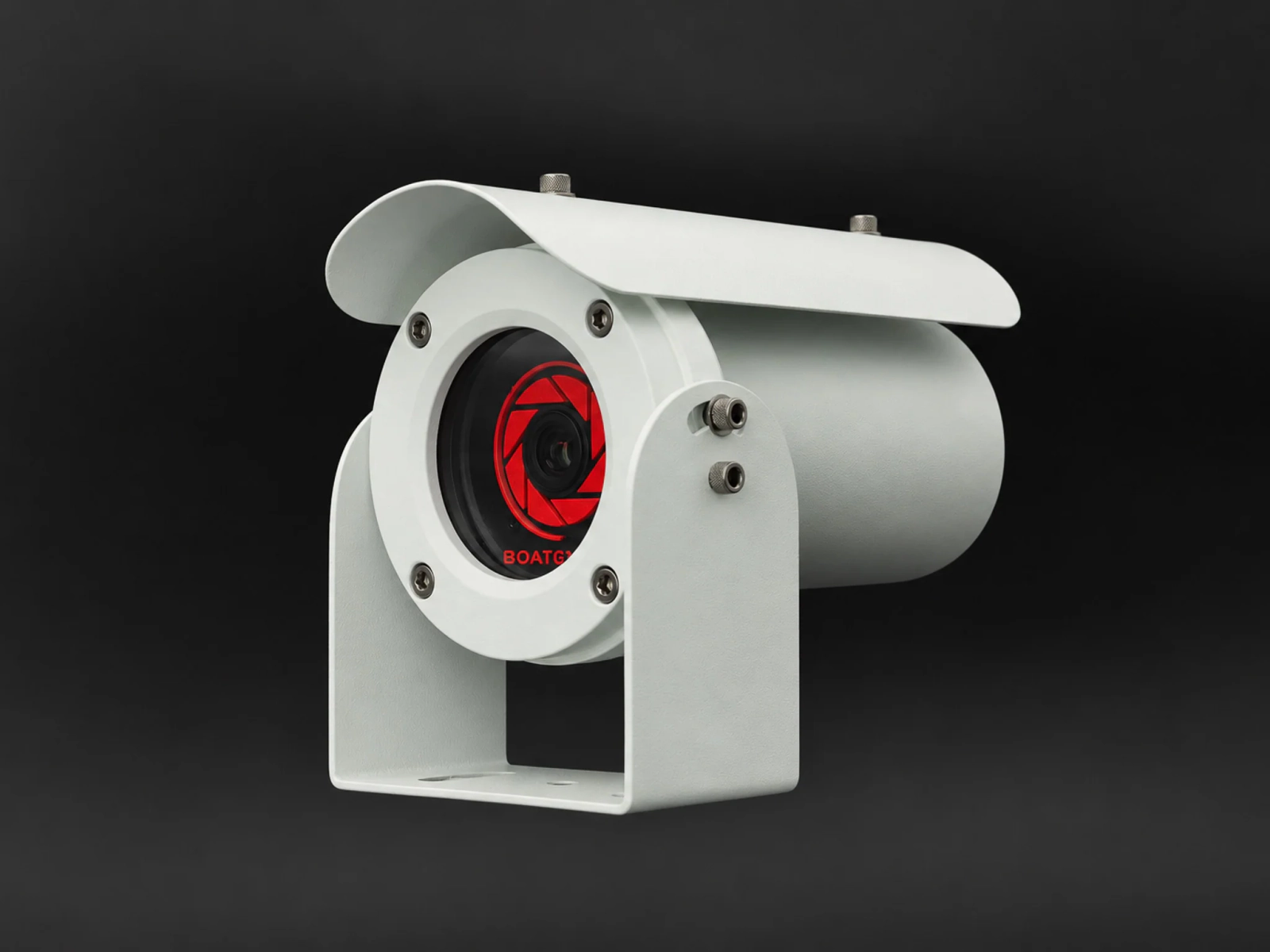
The original BoatEye360 full-colour low-light camera: the same 0.0001 lux sensor as the V2 in a larger 316L stainless housing, with HDMI and analog output, at a lower price.
Explore →
Push-to-talk radio that uses 4G mobile networks where there is coverage and a built-in 16-channel analog radio where there is none, with GPS and SOS. Sold as a two-pack.
Explore →