Loading this page…

Loading this page…
Sailing club
Oak Flats Sailing Club is a small, family‑oriented dinghy club on the southern shore of Lake Illawarra at Deakin Reserve, Oak Flats (NSW). Founded in 1949 as the Illawarra South Yacht Club and renamed in the mid‑1950s, the club runs weekly sailing from a modest waterside clubhouse, operates a shared fleet of Spiral dinghies and focuses on accessible, community‑based training and racing rather than large regattas.
About
Oak Flats Sailing Club is a small, family‑oriented dinghy club on the southern shore of Lake Illawarra at Deakin Reserve, Oak Flats (NSW). Founded in 1949 as the Illawarra South Yacht Club and renamed in the mid‑1950s, the club runs weekly sailing from a modest waterside clubhouse, operates a shared fleet of Spiral dinghies and focuses on accessible, community‑based training and racing rather than large regattas.
Service area: Deakin Reserve, Oak Flats / southern shore of Lake Illawarra
Keep exploring
Oak Flats Sailing Club has outlasted almost everything around it. Founded in 1949 on the southern shore of Lake Illawarra, it is the second-oldest sailing club in the Illawarra, behind only the Illawarra Yacht Club at Warrawong, and in February 2025 it marked 75 years with 60 to 70 people — founding members among them — gathering to watch club historian Kevin Gillis OAM, then 94, present a slideshow of the decades.
The generational depth at that party told its own story: as the club noted, there were blokes in their eighties who had sailed there when they were ten, and one old-timer even recognised his dog in a faded black-and-white photograph. Small, family-oriented and stubbornly enduring, the club is described by its own people as a real get-together place.
These days about half a dozen boats hit the water each weekend, a long way from the hundred-boat fleets of the club's peak, and COVID-19 ranks among the toughest membership challenges in its history. But the ambition is plain: rebuild the base and make sure the club is still there in another 25 years. Community Bank Oak Flats sponsorships help keep it afloat, and the club's record as a nursery of talent gives the rebuilding real purpose — club historian Kevin Gillis observes that a lot of sailors trained at Oak Flats ended up as professionals, and past member Wulf Wilkens crewed aboard Celestial, the boat that won the 2022 Sydney to Hobart and was provisional overall winner again in 2024.
Here is the Oak Flats difference in one number: fifteen. The club owns 15 Spiral dinghies that members can simply use, along with three motor boats, so nobody needs to own a boat to sail — a model most clubs talk about and few actually deliver. The Spiral, a 3.8-metre dinghy needing minimal rigging, is easy to set up and forgiving to learn in, and as an affiliate of the Spiral Association of Australia the club hosts its national and state titles every so often, with club members in the mix. Membership costs $100 a year for children and $150 for adults, boat access included, which makes this one of the cheapest entries into sailing anywhere in the state.
The weekly rhythm is equally accessible. Most Sundays a course is set with buoys from the clubhouse at Deakin Reserve, for either racing or training, and the 2025 season opened on Sunday 14 September from nine in the morning. The junior pathway runs on mentorship: the club has many junior members, and older sailors pass their knowledge down, with the shallow, protected bay making an ideal classroom for beginners.
Many of those juniors have gone on to advanced sailing courses in Sydney, continuing a tradition that reaches back to the era when the Manly Junior ranked as NSW's most popular training boat and VJs filled the bay. There is no accredited Tackers program here — the strength is the club fleet, the low fees and the unbroken chain of older hands teaching younger ones.
Deakin Reserve, on Lake Illawarra's southern shore in the Shellharbour City Council area, has been the club's home since the first clubhouse went up there in 1950. The sailing water is a shallow, protected bay of the lake — exactly the kind of forgiving environment in which juniors and nervous beginners prosper, with none of the swell, tidal currents or traffic of open water. Commodore Brett Overton points out another advantage that money cannot buy: the club is the only one on that part of the lake week after week, so the fleet effectively enjoys its own private race course every single Sunday.
The setting is quiet to the point of anonymity — the club jokes that not many people even know it exists, tucked away at the reserve as it is. That seclusion suits the club's purposes fine, and the locals who do find it tend to stay for decades. The original community began, in the club's own telling, in a shed near what is now Deakin Reserve, and the present clubhouse continues the tradition of a modest base right on the water's edge where boats can be rigged on the grass and launched straight into the bay.
With the club's three motor boats on hand for course-laying and safety duties alike, the reserve operates as a complete little sailing centre each Sunday. Lake Illawarra itself is a broad coastal lagoon popular with prawners and fishers, but it is this sheltered southern corner, with its soft bottoms and small fetch, that has shaped 75 years of Sunday sailing.
The club grew out of Depression-era neighbourliness. Oak Flats took shape from 1925 as a holiday estate drawing visitors for water sports, fishing and prawning, and residents built their houses brick by brick with neighbours pitching in — forming, as the club's anniversary account puts it, a community spirit that became the foundation of the sailing club. In 1949 that spirit formalised as the Illawarra South Yacht Club, with annual membership set at 21 shillings; Ken Christopher, later a life member, recalled starting out in a little dinghy before he, his father and others started the club.
A first clubhouse rose at Deakin Reserve in 1950, and the name Oak Flats Sailing Club arrived with the 1954–55 season.
The club's very first official race was actually sailed at Warrawong's Illawarra Yacht Club, the district's only older club, having started in 1945. From there the fleet grew to around a hundred boats at its peak, and a WIN Television news crew covered a club regatta in December 1967. The alumni list carries some weight: Alan Carwardine learned to sail on the lake at Oak Flats from the age of nine and won the VJ state championship at twelve against an 80-boat fleet alongside his brother Geoff, before going on to design catamarans.
The 75th anniversary in February 2025 brought the launch of Kevin Gillis's book "Oak Flats Sailing Club: 75 Years of Sailing History and Community Involvement", now held in the Wollongong, Shellharbour and Kiama libraries — a fitting archive for a club determined to sail on for the next quarter-century.

Usually not for a small sailing dinghy. In NSW a boat driving licence is needed only to drive at 10 knots or more, or to drive a personal watercraft, and a vessel must be registered if it has an engine of 4 kW or more, is 5.5 m or longer, or needs a mooring licence or marina berth. A trailer towed on public roads needs its own registration.
Explore →
Legal requirements can change — check Transport for NSW for the current rules. As a practical baseline for coastal day sailing from NSW shores: keep the right number and type of lifejackets for everyone, have a means of calling for help, show navigation lights if you’ll be out after dusk, and carry basic items to manage a man‑overboard or abandon‑ship situation. Add anchor, bilge/bailer, sun/protection and basic repair kit as recommended items.
Explore →
Expect the usual IALA-B lateral system (red and green), cardinal and isolated-danger marks, safe-water and special marks, plus harbour-specific fairway buoys, leading/transit marks and exclusion or speed‑limit buoys. Check local harbour charts and Notices to Mariners for exact positions and light characteristics before entry.
Explore →
Before the season: confirm seaworthiness — hull, rig, engine, electrics, sails and safety gear — and replace or service wearable items. After the season: wash, dry and protect gear, service consumables and record what you did so the boat’s ready and reliable next season.
Explore →
A practical guide for new sailors on picking the right Australian sailing club: training, boat access, racing, social fit, costs and the key questions to ask before joining.
Explore →A practical guide for recreational sailors planning day sails or short cruises on Lake Macquarie. Covers the entrance, navigation considerations, popular anchorages, local weather and tide influences, mooring etiquette, safety checks and suggested itineraries around the lake.
Explore →A concise, practical introduction to the essential parts of a recreational sailing boat for beginners in Australia. Covers hull, deck, rigging, sails, steering, below-decks spaces and safety equipment, with simple explanations, common mistakes and a pre-sail checklist to help new sailors communicate and get underway.
Explore →A practical guide to preparing, planning and executing a recreational offshore passage along the New South Wales coast. Covers route selection, weather and tidal considerations, vessel and crew checks, safety equipment, communication, watchkeeping and common mistakes, with clear pre‑departure and underway checklists.
Explore →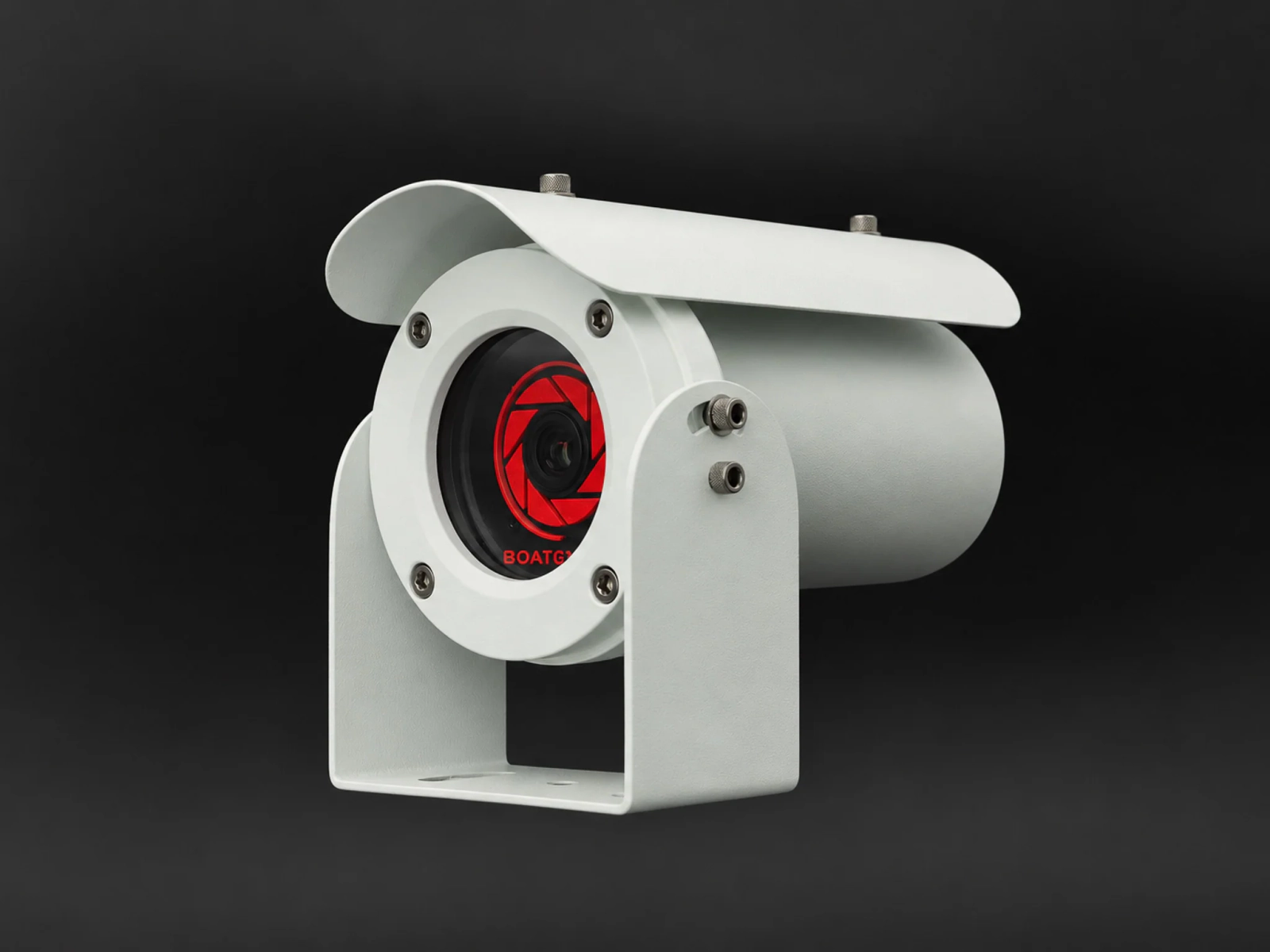
The original BoatEye360 full-colour low-light camera: the same 0.0001 lux sensor as the V2 in a larger 316L stainless housing, with HDMI and analog output, at a lower price.
Explore →
The entry-level Poclink push-to-talk radio: 4G mobile network only, three years of service included, sold as a two-pack for half the price of the Pro and Ultra.
Explore →
Push-to-talk radio that uses 4G mobile networks where there is coverage and a built-in 16-channel analog radio where there is none, with GPS and SOS. Sold as a two-pack.
Explore →
Metal-bodied 4G push-to-talk radio with GPS and SOS in the GPS variant and a lifetime SIM plan included. Sold as a two-pack.
Explore →