Loading this page…

Loading this page…
Sailing club
Palm Beach Sailing Club (PBSC) is an off‑the‑beach multihull‑focused sailing club based at Sand Point / Sandy Beach, Palm Beach (Pittwater), New South Wales. It welcomes catamarans of all classes, windsurfers and small dinghies, runs regular Saturday racing and Sunday learn‑to‑sail sessions, and maintains a strong history of producing state, national, world and Olympic multihull sailors. The club operates from a modest clubhouse and beach rigging area at 1 Iluka Road, Palm Beach, and its sailing calendar centres on the summer nor‑east sea breeze and the long‑running Beware the Bullets regatta.
About
Palm Beach Sailing Club (PBSC) is an off‑the‑beach multihull‑focused sailing club based at Sand Point / Sandy Beach, Palm Beach (Pittwater), New South Wales. It welcomes catamarans of all classes, windsurfers and small dinghies, runs regular Saturday racing and Sunday learn‑to‑sail sessions, and maintains a strong history of producing state, national, world and Olympic multihull sailors. The club operates from a modest clubhouse and beach rigging area at 1 Iluka Road, Palm Beach, and its sailing calendar centres on the summer nor‑east sea breeze and the long‑running Beware the Bullets regatta.
Service area: Pittwater / Palm Beach, Northern Beaches, NSW
Keep exploring
Palm Beach Sailing Club is a community sailing club on Pittwater at Palm Beach, NSW. The club runs organised racing (primarily for off-the-beach catamarans such as Hobies and A-class, and windsurfers), social events and membership programs. The club also offers introductory "Learn to Sail" courses using a Hobie 18 catamaran; courses are run most Sundays during the season, start at the clubhouse (1 Iluka Rd, Palm Beach) and include on‑water instruction. Contacts shown on the website include comm.pbsc@gmail.com and phone numbers for the club and an instructor.
The standout offering is hands-on catamaran tuition for adults: learn-to-sail sessions run most Sundays in season as four-hour classes from ten until two, taught on a Hobie 18 with a preferred class size of just two students — four is possible — and priced at fifty dollars a day. The syllabus is thoroughly practical: launching off the beach and retrieving the boat, steering and sail trim, tacks, gybes, person-overboard recovery, reading wind and water, and, for those ready, an introduction to the trapeze.
Instruction comes from Scott Kesteven, a Dinghy Instructor qualified through Australian Sailing, who brings more than fifty years of sailing experience to the beach. Children from eight years and young teenagers can join in, provided a parent or guardian enrols alongside them — a family-first arrangement that suits the club's character.
Beyond the formal course, learning here is deeply social. Saturday-morning sailing schools have run periodically, teaching everything from basic knot-tying through to advanced racing technique, and experienced members informally mentor newcomers on rigging, tuning, crew work and tactics. A common entry route is simply to crew for a seasoned skipper and absorb the craft race by race.
Each season opens with an Open Day known as the Heart Starter, when visitors can hop aboard a catamaran and feel what multihull speed is like; the 2018 edition even drew the Deputy Mayor. The club is not an accredited Discover Sailing Centre and does not run the Tackers junior program — instruction remains deliberately member-led and informal. For sailors who progress into racing, the Saturday-afternoon club championship and pointscore series provide the competitive ladder, and the depth of talent on the beach means coaching by osmosis happens whether you seek it or not.
The clubhouse sits at 1 Iluka Road, Palm Beach, on Sand Point — the locals also know it as Sandy Beach — on the western foreshore of Pittwater, just around the corner from Barrenjoey Headland and diagonally opposite the end of Snapperman Lane. Boats rig on the beach and the grassy verge reached via Sand Point Lane, with trailer parking beside Iluka Park; the club holds a limited allocation of season passes, with some free parking behind the western car park. It is an unassuming setup, but the sailing arena it opens onto is anything but.
Pittwater is a broad, protected estuary ringed by national park, and the summer nor-east sea breeze funnels in reliably across the racing area, which for the big regatta sprawls from Governor Phillip Park across to West Head, The Basin and Careel Bay. What makes this stretch of water famous, though, is its treachery. Where the sea breeze bends around Barrenjoey Headland and its sand spit, it spawns "bullets" — fluky, violent gusts that bounce down the headland and arrive without warning, more than capable of pitching an unwary catamaran straight over.
Generations of sailors have learned respect here the wet way, and the hazard is celebrated rather than cursed: the club's signature regatta takes its name from those very gusts. The season runs from a late-August Heart Starter through to May, pausing over Christmas, with racing on Saturday afternoons. Between races the backdrop does its own quiet work — dolphins, turtles and sea eagles are commonly spotted from the trampolines.
It is, by any measure, one of Sydney's great natural sailing amphitheatres, and the club's belief that competence earned here travels anywhere is easy to understand after one gusty afternoon.
The club traces its beginnings to 1949, when it was founded as the Palm Beach Catamaran Club, sailing chiefly off the southern end of Sandy Beach. An earlier profile put the start a year later, in 1950, with a fleet of small monohulls and "the odd catamaran" — the club's own telling prefers 1949, and either way the multihull thread was present from the outset. The second great strand of the story began in 1962, when the Pittwater Catamaran Club was established, sailing strictly for catamarans of all types off Sandy Beach near Sand Point Lane.
That club became a genuine production line of State, National, World and Olympic champions, and it marked a half-century of multihull sailing off the beach in 2012. Around 1999–2000 the two clubs merged, and today's Palm Beach Sailing Club carries both lineages.
The competitive record is remarkable for a beach club. David Forbes won Star class gold at the 1972 Munich Olympics and a Star world title in 1971; Chris Cairns took Tornado bronze in Los Angeles in 1984; Mitch Booth and John Forbes collected bronze in Barcelona in 1992, Booth adding silver in 1996 and Forbes silver at Sydney 2000; Jason Waterhouse and Lisa Darmanin won silver in Rio in 2016. Member Upu Kila received an MBE recognising his sailing achievements in Papua New Guinea.
The annual Beware the Bullets Regatta, held on November's third weekend, has run consecutively for over half a century — 2018 was its 53rd edition — and in the 1970s and 1980s it drew more than two hundred catamarans to Governor Phillip Park. The 2018 running incorporated the NSW Taipan State Titles, and the 2025 edition saw John Forbes sailing with daughter Bronte alongside Nacra 15 sailors bound for the Youth Worlds. The name, fittingly, honours Barrenjoey's notorious gusts.
A practical, harbour-focused cruising guide to Trial Bay on the New South Wales Mid North Coast. The guide describes the bay’s sheltered and exposed zones, headlands and islands, local seasonal wind and swell patterns, principal sailing areas and recommended anchorages, shore facilities around South West Rocks and Arakoon, navigation and arrival considerations, specific hazards such as the Macleay River entrance, sand movement and reefs, local marine park and heritage restrictions, and three realistic sailing experiences ranging from sheltered family daysails to multi-day island circuits. It’s

Rig and de-rig a small dinghy by following a consistent, step-by-step sequence: prepare the boat on shore, fit spars and foils in a stable order, control sails and running rigging so lines don’t tangle, check fittings and safety gear, and reverse the process when coming ashore—always working with a partner when possible and staying aware of wind and tide.
Explore →
Pick a stable, simple, forgiving dinghy with a single sail or basic sloop rig, affordable handling and easy maintenance—ideally one with a local class or school nearby so you can access coaching and spare parts.
Explore →
After reefing and beaching, do a visual and tactile inspection of the hull, centreboard/daggerboard and fittings for cracks, gouges, loose fastenings, retained sand/corrosion and deformities; address problems promptly and avoid sailing until significant damage is assessed or repaired.
Explore →
Before your first sail in South Australian waters check the weather and tide, make sure the boat and safety equipment are fit for the trip, confirm local rules and any area-specific hazards, and tell someone your plan.
Explore →A practical guide to preparing, planning and executing a recreational offshore passage along the New South Wales coast. Covers route selection, weather and tidal considerations, vessel and crew checks, safety equipment, communication, watchkeeping and common mistakes, with clear pre‑departure and underway checklists.
Explore →A practical guide for recreational sailors planning passages to, from or around Eden and Twofold Bay. Covers sheltered anchorages, shore facilities, local weather and tidal considerations, preparing for Bass Strait conditions and a focused equipment and safety checklist.
Explore →Practical guidance for recreational sailors in New South Wales on navigating marine parks, using moorings and anchoring responsibly. Covers how to plan passages, approach moorings, set and retrieve an anchor, minimise environmental impact and follow local rules.
Explore →A practical guide to selecting and using anchorages around New South Wales for cruising sailors. Covers sheltered bays, tidal considerations, holding, approach planning, and example anchorages with local conditions to check before you go.
Explore →Burke Yachtsman Gear Bag 40L - Shop Now Zip Pay | Tamar Marine Skip to content 59 – 63 Holbrook Street, Invermay Online Shop Open 24/7 Products search Contact us 1300 MARINE $ 0.00 0 Cart Burke Yachtsman Gear Bag 40L $ 79.90 Colour Choose an option Black Blue Black Blue Clear - Burke Yachtsman Gear Bag 40L quantity + Add to cart Enquire about this product SKU BAGB-Y24/BLACK* Category Bags - Sail & Gear A Burke classic and customer favourite, the Yachtsman’s Gear Bag is built tough to handle wet, salty conditions while keeping your gear dry and protected. Made from double coated waterproof…
Explore →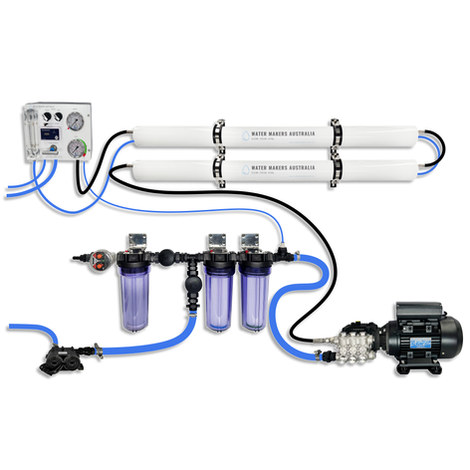
A two-membrane modular watermaker with 140 L/h nominal output, aimed at families and liveaboards that want more water per run.
Explore →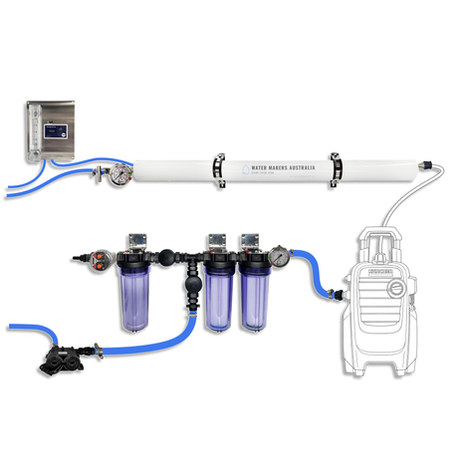
A one-membrane modular marine watermaker with 80 L/h nominal output, remote stainless control panel, standard consumables and direct Australian support.
Explore →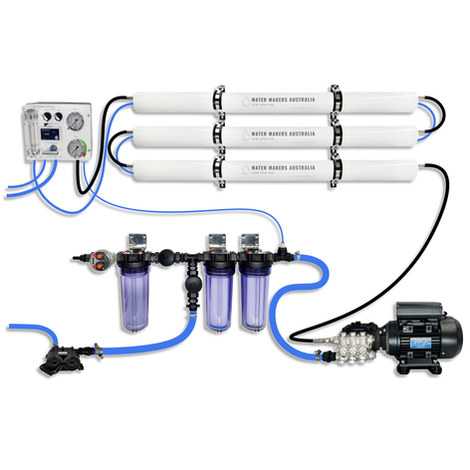
A three-membrane modular watermaker with 200 L/h nominal output and up to 240 L/h family-level marketing, for larger crews and heavy use.
Explore →