Loading this page…

Loading this page…
Sailing club
Palm Beach Yacht Club (PBYC) is a small, member‑run keelboat club based at Palm Beach on Pittwater, New South Wales. The club deliberately operates without a clubhouse or marina: members keep yachts on moorings in the estuary and use shared club casual moorings. PBYC focuses on friendly yacht racing and cruising, with a full seasonal calendar of twilight, Sunday and sprint races and an active social program centred on post‑race dinners and raft‑ups. Membership is structured to keep fees low and to welcome less experienced sailors through small fleet racing and a crew (non‑boat owner) membership option.
About
Palm Beach Yacht Club (PBYC) is a small, member‑run keelboat club based at Palm Beach on Pittwater, New South Wales. The club deliberately operates without a clubhouse or marina: members keep yachts on moorings in the estuary and use shared club casual moorings. PBYC focuses on friendly yacht racing and cruising, with a full seasonal calendar of twilight, Sunday and sprint races and an active social program centred on post‑race dinners and raft‑ups. Membership is structured to keep fees low and to welcome less experienced sailors through small fleet racing and a crew (non‑boat owner) membership option.
Service area: Pittwater / Palm Beach, Northern Beaches, New South Wales
Keep exploring
Palm Beach Yacht Club is a community sailing and yacht club based in Palm Beach, NSW, promoting sailing, cruising and yacht racing on Pittwater and the surrounding waterways. The club runs organised on-water activities including fortnightly twilight racing and monthly Sunday races, publishes racing programs and courses, maintains shared Club Casual Moorings in three locations, and provides safety-audit documentation for member yachts. Membership options for boat owners and crew are advertised on the club website.
Rather than a sailing school, the club's development engine is its seasonal sprint series, which packs three short-course races into one afternoon over the same repeated course, so crews can test, adjust and genuinely master their tactics across the day. It is a clever format — the repetition strips away luck and exposes decision-making, and sailors finish each afternoon measurably sharper than they started. Beyond that, the club's entire structure is built to teach by doing.
Because fleets are small and the atmosphere forgiving, newer skippers can enter yacht racing without the intimidation of a big start line, learning their boat's behaviour in real competition with minimal stress. Courses are offered with or without spinnakers, so crews can step up the complexity as confidence grows.
The other genuine pathway is membership itself. A crew category for non-boat-owners, priced at $75 a year, gives people without a yacht a route onto the water — historically the surest way to learn keelboat sailing is to crew for someone who already owns a boat, and the club formalises that door. With as many as fifty races on the annual calendar across twilight, Sunday, sprint, summer and winter series, a willing newcomer can accumulate sea time at a pace no weekend course could match.
What the club does not offer is formal tuition: there are no learn-to-sail courses, no Tackers program and no Discover Sailing Centre accreditation, and it makes no claim otherwise. It is a boat-owners' racing and cruising club, and its training philosophy is the oldest one in yachting — turn up, get a ride, sail often, and let the racing sharpen you. Safety standards underpin the lot, with yachts requiring Category 5 or Category 7 audits before they race.
Palm Beach Yacht Club operates from Palm Beach on Pittwater, on Sydney's northern beaches, but its real asset is the water rather than any building. Members' yachts swing on moorings scattered across the estuary, and the club supplements these with shared casual moorings in three locations — a practical solution for a club that deliberately owns nothing ashore. The racing footprint splits between inshore courses on Pittwater and offshore courses out into Broken Bay, giving the program a variety that many bricks-and-mortar clubs cannot match.
Lion Island, sitting squarely at the meeting point of river, bay and ocean swell, features prominently enough that the club publishes its own notes on safely rounding it — a small detail that says a great deal about both the local geography and the club's seamanship culture.
Pittwater itself is a deep, island-dotted estuary opening north into Broken Bay and the Hawkesbury River system, and it rewards year-round sailing; the club runs on-water activities across all seasons rather than shutting down for winter. When members cruise, the destinations read like a south-coast and central-coast highlights reel: Broughton Island at Port Stephens, Jervis Bay, Sydney Harbour, Port Hacking and the Hawkesbury River have all featured in club cruising. The social geography matters too.
Without a clubhouse, the fleet's shore life centres on Club Palm Beach, where post-race dinners are a fixture and where PBYC members hold complimentary membership, while The Basin — the sheltered lagoon inside Pittwater's western shore — hosts the club's raft-ups, yachts lashing together for long afternoons at anchor. It is a thoroughly Pittwater way of doing things: the estuary provides the venue, the boats provide the company, and nobody misses the building.
The founding story has two versions, separated by a single year. The club's own records give 1985, established to promote friendly sailing in every race it conducts, with the stated objective of fostering, encouraging and engaging in the sport. A published club profile places the beginning a year earlier, in 1984, when Lamoore Yacht Sales principals Sue Lammert and John Moore decided Pittwater needed a cheap, fun alternative to the exclusive clubs then chasing serious and expert boats and sailors. Either way, the spirit is well documented: the club grew out of locals sharing a post-race beer on Palm Beach's old wooden jetty, and it has never strayed far from that origin.
The founding-era fleet numbered thirty-five yachts racing fortnightly on Fridays and monthly on Sundays, and it included some notable hulls — Van Dieman, Caprice of Huon, and Winston Churchill, the last of these lost in the tragic 1998 Sydney to Hobart Yacht Race. Founder Carl Gonsalves owned the ketch Van Dieman and ran Gonsalves Boatshed at Palm Beach; his boatshed served as the gathering place after club sailing until his death in 2009.
Many of the original members remain active across the club's racing, cruising and social life, an unusual continuity that keeps the founding ethos — cheap, friendly, unpretentious — alive as practice rather than nostalgia. The club has never sought to host major open regattas or chase headline events, preferring its own weekly and seasonal rhythm. Four decades on, the structure is unchanged: no clubhouse, modest fees, a full racing calendar, and a 2025–26 committee led by Commodore Jim Gordon with Paul Pugliese as secretary and Daryl Holland as treasurer.
The one-year discrepancy in the founding date has never been formally resolved, which somehow suits a club that has always cared more about the sailing than the paperwork.
Bathurst Harbour (Port Davey system), in south‑west Tasmania, is a vast, almost land‑locked estuarine harbour inside the Southwest National Park and World Heritage Area. It offers a remote, sheltered anchoring environment protected from the Roaring Forties, but demands careful planning, an awareness of marine‑reserve rules, and a willingness to operate in shallow, tannin‑stained waters. Best suited to experienced coastal cruisers and small expedition yachts prepared for self‑sufficiency, Bathurst Harbour is more a place to linger and explore on foot and by tender than a port of call for busy,

Do a seasonal inspection and servicing routine that focuses on hull and antifouling, through-hulls and seacocks, rigging and sails, engine and fuel systems, electricals and batteries, safety gear and bilge systems. Tailor exact tasks to your boat type, age and where you sail in South Australia, and follow manufacturer and marine service advice for anything technical.
Explore →
Rig and de-rig a small dinghy by following a consistent, step-by-step sequence: prepare the boat on shore, fit spars and foils in a stable order, control sails and running rigging so lines don’t tangle, check fittings and safety gear, and reverse the process when coming ashore—always working with a partner when possible and staying aware of wind and tide.
Explore →
Before your first sail in South Australian waters check the weather and tide, make sure the boat and safety equipment are fit for the trip, confirm local rules and any area-specific hazards, and tell someone your plan.
Explore →
Legal safety equipment for recreational boats in South Australia depends on the type, size and where you operate; you must check the current SA government requirements for your vessel. Independently of legal minimums, carry a sensible set of recommended items (lifejackets, means of communication, signaling, fire protection, anchor and basic tools) and make them usable and maintained.
Explore →Practical guidance for recreational sailors in New South Wales on navigating marine parks, using moorings and anchoring responsibly. Covers how to plan passages, approach moorings, set and retrieve an anchor, minimise environmental impact and follow local rules.
Explore →
A practical guide for new sailors on picking the right Australian sailing club: training, boat access, racing, social fit, costs and the key questions to ask before joining.
Explore →Practical guide for recreational sailors planning passage on the Hawkesbury River: how to plan around tides, choose anchorages, read local conditions and prepare the boat and crew for a safe, comfortable trip.
Explore →A practical guide to preparing, planning and executing a recreational offshore passage along the New South Wales coast. Covers route selection, weather and tidal considerations, vessel and crew checks, safety equipment, communication, watchkeeping and common mistakes, with clear pre‑departure and underway checklists.
Explore →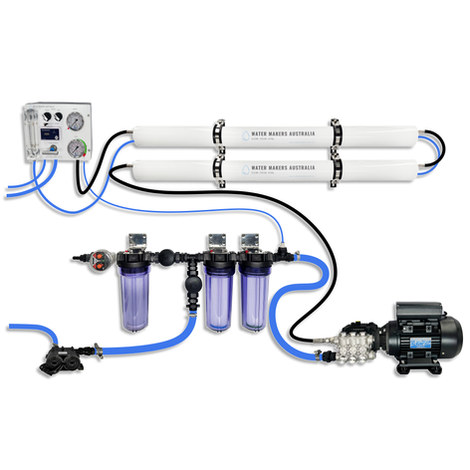
A two-membrane modular watermaker with 140 L/h nominal output, aimed at families and liveaboards that want more water per run.
Explore →Burke Yachtsman Gear Bag 40L - Shop Now Zip Pay | Tamar Marine Skip to content 59 – 63 Holbrook Street, Invermay Online Shop Open 24/7 Products search Contact us 1300 MARINE $ 0.00 0 Cart Burke Yachtsman Gear Bag 40L $ 79.90 Colour Choose an option Black Blue Black Blue Clear - Burke Yachtsman Gear Bag 40L quantity + Add to cart Enquire about this product SKU BAGB-Y24/BLACK* Category Bags - Sail & Gear A Burke classic and customer favourite, the Yachtsman’s Gear Bag is built tough to handle wet, salty conditions while keeping your gear dry and protected. Made from double coated waterproof…
Explore →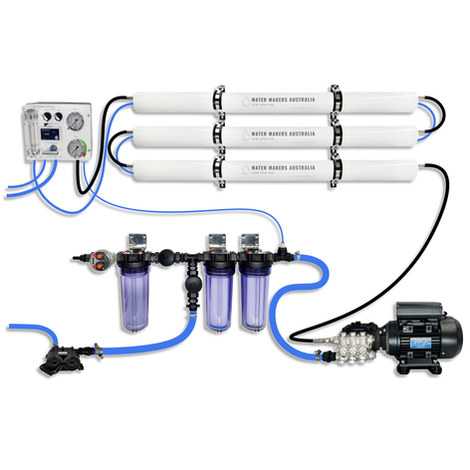
A three-membrane modular watermaker with 200 L/h nominal output and up to 240 L/h family-level marketing, for larger crews and heavy use.
Explore →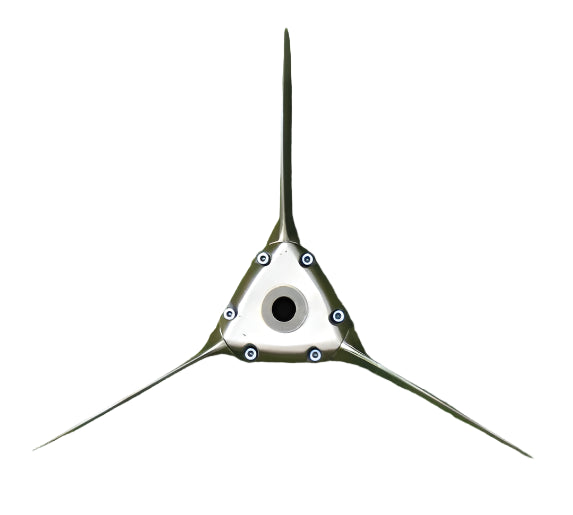
Feathering propeller designed for larger cruising yachts. Diameter range 18"–25"; shaft range 1¼"–1¾"; hub lengths 120mm or 165mm (with anode). Sail drive option available.
Explore →