Loading this page…

Loading this page…
Sailing club
Port Hacking Open Sailing Club (PHOSC) is a family-oriented dinghy sailing club based at Yowie Bay on the Port Hacking River, Sutherland Shire, NSW. Established in 1945, the club runs seasonal dinghy racing, member coaching and lessons for juniors and adults, offers a SailPass day option for newcomers, and hires a waterfront clubhouse for events. PHOSC supports a mixed dinghy fleet including Herons, NS14s, Manly Juniors, Flying 11s, Optimists and BIC O'pen Skiffs, and maintains member moorings for deep-water access.
About
Port Hacking Open Sailing Club (PHOSC) is a family-oriented dinghy sailing club based at Yowie Bay on the Port Hacking River, Sutherland Shire, NSW. Established in 1945, the club runs seasonal dinghy racing, member coaching and lessons for juniors and adults, offers a SailPass day option for newcomers, and hires a waterfront clubhouse for events. PHOSC supports a mixed dinghy fleet including Herons, NS14s, Manly Juniors, Flying 11s, Optimists and BIC O'pen Skiffs, and maintains member moorings for deep-water access.
Service area: Yowie Bay / Port Hacking River, Sutherland Shire, NSW
Keep exploring
Born in the immediate aftermath of war, Port Hacking Open Sailing Club has been teaching the Sutherland Shire to sail for eighty years. A group of enthusiastic sailors founded it in 1945, their stated aim being to bring the community together and begin the healing after the ravages of the Second World War — an origin story that still shapes the club's outlook.
It trades today as Port Hacking Sailing, with the longer Port Hacking Sailing Club also registered, and it wears the motto "Pioneers of Sailing in the Sutherland Shire" with some justification, having raced continuously on the enclosed waters of Port Hacking ever since. The flavour is deliberately community-based and family-oriented: dinghy sailing is open to every age group, membership categories run to a family option designed to keep sailing affordable, and beginners — adults and children alike — are actively welcomed.
The racing heart of the club is the NS14, the Northbridge Senior dinghy, and that focus brought silverware in 2025 when PHOSC took out the NSW NS14 state pennant — the Vic Hammond Champion Club trophy. Alongside the NS14s the fleet spans Herons, Flying 11s, Manly Juniors, Optimists, BIC O'pen Skiffs and Sabres, with a small open class mopping up anything that fits nowhere else.
The club also plays a visible civic role, hosting local, state and federal representatives — among them Mark Speakman MP — who have backed sailing as a family and community activity. Junior member Lauren Gray carried the club's colours to a bigger stage in 2021, sailing for both the club and Team USA at the 2021 SailGP event's Inspire Program on Sydney Harbour, where she shared a podium with Australian SailGP sailor Nina Curtis.
Coaching here works on the club's own community terms: adult and junior teaching sessions run whenever sufficient numbers make them viable, and individual coaching can be arranged for sailors who ask. There is no rigid academy structure — instead, the club folds instruction into its weekly rhythm and leans on its class mix to do the developing. The junior ladder runs through three proper trainers: Optimists for the smallest sailors, Manly Juniors as the classic two-up next step, and Flying 11s for teenagers ready for a livelier boat.
From there, graduates feed naturally into the senior fleet of Herons and NS14s, with BIC O'pen Skiffs and Sabres offering alternative routes and a small open class accommodating dinghies that fit no other box. It is a pathway refined over decades, and it suits a club that measures success in families sailing together rather than in academy intakes.
Accessibility is taken seriously. Beginners are welcome from age five upwards, membership is open to every level of experience, and the club accepts NSW Active Kids vouchers, taking the sting out of junior registration costs for local families. Racing runs weekly on Sunday afternoons through a September-to-April season, so learners quickly find themselves in real fleets with experienced hands around them — the oldest and still one of the most effective sailing classrooms.
There is no Discover Sailing Centre accreditation here, and Tackers has never featured on the program; its teaching remains member-driven, scaled to whoever turns up wanting to learn. What it lacks in formality it makes up in continuity: generations of Shire sailors have come through exactly this route, from a first nervous session in an Opti to racing an NS14 for a state pennant, and the 2025 champion-club trophy suggests the system still works rather well.
Yowie Bay, a tranquil arm of the Port Hacking River on Sydney's southern fringe, is the club's home and has been for decades — Sutherland Shire Council minutes from 1977 record discussions about providing the club a new boat rigging area during foreshore works, evidence of how long the association with this shoreline runs. The address is 226B Attunga Road, Yowie Bay, where a clubhouse with views over Port Hacking and a well-regarded kitchen doubles as a function venue available for hire. Two deep-water moorings held by the club are available for members' use, a useful asset on a waterway where swing moorings are prized.
The sailing water is the Port Hacking River itself — enclosed, sheltered and genuinely lovely, ringed by bushland that includes the Royal National Park along its southern shore. For dinghy racing this is close to ideal: protected from ocean swell, compact enough that courses stay manageable for juniors, yet open enough for a fair beat and a genuine run. The club describes the water as pristine, and anyone who has sailed the Hacking on a clear spring afternoon would struggle to argue.
Racing runs on Sunday afternoons through the season from September to April, and the enclosed nature of the river means the fleet is rarely beaten up by conditions — though the same headlands and hills that shelter the bay can bend and shadow the breeze, keeping tacticians honest. Yowie Bay itself is a largely residential corner of the Shire, which reinforces the club's neighbourhood character: sailors rig up a short walk from home, race within sight of the clubhouse, and are back on the hard before dinner.
It is grassroots sailing on one of Sydney's most beautiful waterways, conducted at a scale that suits families perfectly.
Established in 1945 by sailors intent on reuniting their community after the war, the club has a founding purpose unusually explicit for an Australian sailing club — healing through shared time on the water. Racing has been conducted regularly on the enclosed waters of Port Hacking ever since, giving PHOSC an unbroken competitive thread stretching back eighty years. The club's long grip on the Yowie Bay foreshore shows up in the historical record in prosaic but telling ways: when Sutherland Shire Council considered reclamation works in the bay as an extension of Kareena Park in 1977, the minutes noted the need for a new rigging area for the sailing club, treating its presence as a given.
The modern club has formalised its identity while keeping the community brief. Port Hacking Open Sailing Club Inc. holds two ASIC-registered business names — Port Hacking Sailing, and the fuller Port Hacking Sailing Club — styles itself the pioneer of sailing in the Shire, and during the pandemic registered as a NSW Government COVID-Safe business to keep sailing running safely.
Competitive highlights have accumulated along the way, with the standout recent result the 2025 running of the Vic Hammond pennant, a trophy awarded to the strongest NS14 club across the state, and fitting recognition for a fleet that has made the Northbridge Senior its own. Individual members have stepped onto bigger stages too, none more visibly than junior Lauren Gray, who carried the club's colours alongside Team USA at the 2021 Sydney Harbour SailGP's Inspire Program and finished on the podium with Olympic sailor Nina Curtis.
From post-war reconstruction to state pennants and SailGP podiums, the club's arc has stayed true to its founding idea: sailing as the thing that holds a community together.
Batemans Bay and the Clyde River form a classic NSW South Coast cruising region where a sheltered, tidal estuary meets a short, island‑dotted entrance to the Tasman Sea. It’s distinctive for easy access from Canberra, a mix of river and bay sailing, a compact marina and mooring network, and a river entrance (the Clyde River bar) that can change rapidly. The area suits day sails, weekend cruising, trailer‑boat exploration and sheltered coastal passages; offshore or long‑passage plans require careful timing and local knowledge. Preparation for tidal flow, variable southerly swells and shallow, s

Progress gradually by increasing exposure, practising specific skills, sailing with more experienced crew/skippers, and deliberately training for each new step—start in calm sheltered bays, then move to longer trips, busier waters, stronger winds and finally open coastal passages when you and your crew are consistently competent and comfortable.
Explore →
Plan passages across Spencer Gulf or to Kangaroo Island by basing fuel on your boat’s actual consumption plus a generous reserve, choosing sensible staging/stop options that match your boat and crew, and prioritising shelter and weather windows (gale fronts, strong winds and tidal streams can make the gulf uncomfortable or unsafe). Confirm fuel availability, safe anchorages or marinas on your route, and check up-to-date local weather, tide and navigation information before you go.
Explore →
Late spring to summer is usually the best time for beginners to start learning to sail in Tasmania because the weather is generally warmer, days are longer and conditions are often more settled. Expect lighter to moderate winds with regular afternoon sea breees in summer, while spring and autumn bring more changeable and sometimes stronger conditions; winter is colder, wetter and typically windier with more fronts and swell.
Explore →
Pick a protected bay, estuary or river reach where you can rig, launch and arrive on calm water within a short, sheltered transit; choose a site with a good ramp or jetty, clear recovery options and a nearby sailing club, marina or commercial operator for local knowledge and help.
Explore →
A practical guide for new sailors on picking the right Australian sailing club: training, boat access, racing, social fit, costs and the key questions to ask before joining.
Explore →A practical guide for recreational sailors planning day sails or short cruises around Batemans Bay, Broulee and the Clyde River. Covers local conditions, safe approaches, anchorages, launching, tides, common hazards, and checklists for trip planning and on-water decisions.
Explore →
A practical guide to the safety equipment commonly carried on recreational sailing boats in Australia: lifejackets, EPIRBs/PLBs, flares, radios, fire extinguishers, liferafts, jacklines, first-aid and how state requirements influence what you must carry.
Explore →Practical guide for recreational sailors planning passage on the Hawkesbury River: how to plan around tides, choose anchorages, read local conditions and prepare the boat and crew for a safe, comfortable trip.
Explore →Burke Yachtsman Gear Bag 40L - Shop Now Zip Pay | Tamar Marine Skip to content 59 – 63 Holbrook Street, Invermay Online Shop Open 24/7 Products search Contact us 1300 MARINE $ 0.00 0 Cart Burke Yachtsman Gear Bag 40L $ 79.90 Colour Choose an option Black Blue Black Blue Clear - Burke Yachtsman Gear Bag 40L quantity + Add to cart Enquire about this product SKU BAGB-Y24/BLACK* Category Bags - Sail & Gear A Burke classic and customer favourite, the Yachtsman’s Gear Bag is built tough to handle wet, salty conditions while keeping your gear dry and protected. Made from double coated waterproof…
Explore →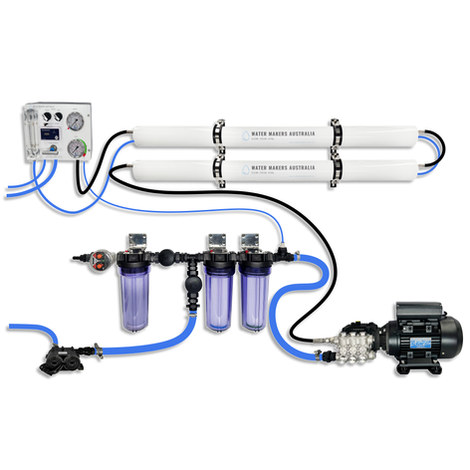
A two-membrane modular watermaker with 140 L/h nominal output, aimed at families and liveaboards that want more water per run.
Explore →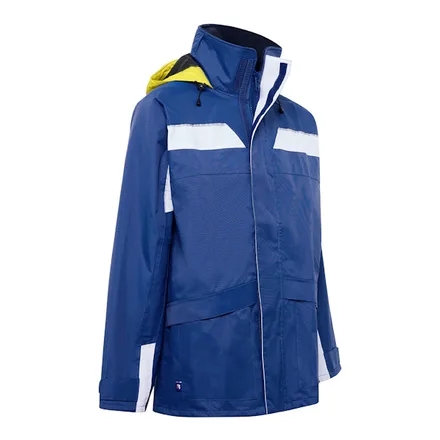
Burke Super Dry Jacket in Blue. Product codes shown: DRY228-XS, DRY228-S, DRY228-M, DRY228-L, DRY228-XL, DRY228-XXL. Available sizes listed: XS, S, M, L, XL, XXL.
Explore →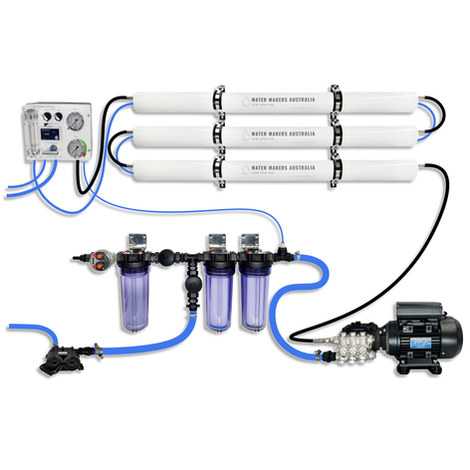
A three-membrane modular watermaker with 200 L/h nominal output and up to 240 L/h family-level marketing, for larger crews and heavy use.
Explore →