Loading this page…

Loading this page…
Sailing club
Stockton's 16ft skiff club, racing across the harbour from Newcastle since 1909 and one of Australia's oldest continuously operating skiff clubs, with 16-footers, MG14s, catamarans and Flying Ants.
About
Stockton's 16ft skiff club, racing across the harbour from Newcastle since 1909 and one of Australia's oldest continuously operating skiff clubs, with 16-footers, MG14s, catamarans and Flying Ants.
Service area: Stockton, NSW
Keep exploring
Across the harbour from the Newcastle CBD, at Stockton, sits a club that has guarded the 16ft skiff tradition on this waterway since 1909. Port Hunter 16ft Sailing Skiff Club counts itself among Australia's oldest continuously operating skiff clubs, with honour rolls and records stretching back to 1913–14, and Saturday-afternoon racing has run here, interrupted only by the Second World War, for well over a century.
The 16-footer remains the headline act from September to April, backed by MG14s and a catamaran division that has run continuously since the early 1980s, while Flying Ants occupy Saturday mornings. The club's alumni carry genuine weight in Australian sailing lore: Ben Lexcen — then Bob Miller, the man who would go on to design the winged-keel Australia II of America's Cup fame — had his first sail in a 16ft skiff here, crewing with Neville de Glorian in IRIS. The 1995 NACRA 5.8 Catamaran World Championship fell to club pair Chris Russell and Jeff Jordan.
Yet for all that pedigree, the modern dress code could hardly be more relaxed — thongs, the club notes, are practically obligatory footwear — a pointed contrast to the top hats, jackets and ties once required aboard the 22-footers of the 1890s. Family names thread through the records — Watters, Newton, Devereaux, Gore, Holmes — and the roll of life members, Arthur Holmes and Max Preston among them, reads like a genealogy of Newcastle sailing. The club championship itself was renamed in Holmes's honour from 2008–09.
Since 2019 the club's sailing has also formed part of SailFest Newcastle, the harbour regatta founded by Newcastle Cruising Yacht Club with city support.
The junior pathway here runs through a proper little skiff of its own: the Flying Ant, a ten-foot trainer that races on Saturday mornings with parents and senior sailors on hand to help. The fleet numbered around ten boats in 2004, and the class continues a deliberate lineage — Flying Ants took over from Pelicans, which had themselves succeeded the VJ in the club's training role for eight-to-sixteen-year-olds moving up into the big skiffs.
The thinking is classic skiff-country apprenticeship: learn boat handling small, learn it early, and step up when ready. From the Flying Ant the natural next rung is the MG14, introduced to the club in 2002 as an intermediate class, before the leap to a crewed 16ft skiff — one of Australian sailing's most demanding and rewarding boats, all horsepower and teamwork.
That stepped structure has produced results well beyond the harbour. Roger York's FERAL took the 2003–04 MG14 Australian Championship, the club claimed the 2021–22 MG14 state titles, and Laurie Gore's NORBRICK won the 1982–83 Dumaresq Cup alongside a string of state handicap pointscore wins in the 1980s and 1990s. On the catamaran side, the division running since the early 1980s produced the 1995 NACRA 5.8 world champions.
There is no Tackers program or Discover Sailing Centre accreditation here; instruction remains the skiff-club way, delivered by parents, senior sailors and the racing itself. Sailing days listed for the club include Thursday afternoons and Sunday mornings alongside the traditional Saturday racing, giving juniors and adults multiple windows each week. For a young Novocastrian with skiff ambitions, the route from a ten-foot Flying Ant on a Saturday morning to a 16-footer charging across the harbour could hardly be more clearly marked.
The clubhouse stands at Stockton, off Hunter Street on Newcastle Harbour, just north of the old punt wharf, looking directly across the water at the city it predates most of. This is the original 1884 site, occupied through various incarnations ever since — a continuity rare even among Australia's old skiff clubs. The present building, opened in June 1975 and standing on land leased from Newcastle council, replaced the demolished original, whose pier stumps still lurk near the finish line as a navigational quirk the fleet knows well.
Newcastle Harbour is a working port first and a sailing venue second, and that shapes the racing. Skiffs share the water with tugs and coal ships, the breeze is often a light nor-easterly in the warmer months, and the enclosed harbour keeps the sea state flat even when it is lively outside the heads — ideal conditions for boats as overpowered as 16-footers. Historical colour clings to the site: a tank at the wharf end once stored Tomago water for the steam tugs, and in earlier days local boys scrambled into the clubhouse rafters after pigeons, selling the birds to a Newcastle bird shop to pay for their sailing.
The club's sailing calendar also reaches beyond the harbour. For ninety years, from at least 1911 until legislation forced a stop in 2001, the club ran week-long camping regattas at Mungo Brush on the Myall Lakes; the tradition survives today as an annual regatta at Legges Camp, across the lake — part regatta, part family expedition. Between the harbour's weekly racing, the Myalls pilgrimage and the club's place in the SailFest Newcastle program, Port Hunter offers its members a sailing geography that stretches well beyond its historic patch of Stockton foreshore.
Organised sailing on Newcastle Harbour began with a regatta in 1834 — some accounts say 1845 — when the harbour's "Butcher Boats" raced and the occasion turned into a public festival, later institutionalised as the Newcastle Harbour Regatta, usually held around New Year's Day or Anniversary Day. The club's own site at Stockton entered the story in 1884, when the Mercantile Rowing Club built its over-water clubhouse there.
The Stockton Sailing Club launched in 1889, racing 10ft, 14ft and 22ft watermen's skiffs — the big boats raced in top hats, jackets and ties — and regular skiff racing under the Port Hunter name began in 1895 with the Port Hunter Sailing Skiff Club, which took skiffs of every size from six to twenty-two feet. The Mercantile club collapsed by 1897; its building went at auction for £75 and became a Seamans Mission.
In 1902 the sailors, then without a boatshed, renamed themselves the Port Hunter Sailing Club; the 1903 season carded sixteen events with £48/10/10 in prize money, and member boat OLGA won an interstate championship against the Queensland Dinghy Club.
Around 1909, as the Port Jackson skiff took hold, the club occupied the old Mission premises and adopted the name it still carries, reflecting its embrace of the 16ft class. The clubhouse passed formally to the club in 1913, and the champions came quickly: EDGAR under Tot Walters was first club champion, Les Steel's BRITANNIA claimed the club's maiden state crown in 1914–15, and Fred Newton's VAUCLUSE won seven straight club titles plus two state championships.
Wartime brought the surreal moment of 1941, when the government removed every skiff to open-air storage at Carrington lest invading Japanese forces use them to cross the harbour. The old clubhouse came down in 1970, replaced by the current building, opened in June 1975. Through it all, Saturday-afternoon sailing has never really stopped.
A comprehensive cruising guide to Pittwater, the sheltered estuarine waterway north of Sydney framed by Ku-ring-gai Chase National Park and the Northern Beaches. The guide explains the waterway’s geography, seasonal wind and swell patterns, principal sailing zones, recommended anchorages, shore facilities, navigation and port interactions, local hazards and regulatory constraints, plus several practical day and weekend sailing experiences and the types of sailors and craft best suited to the area.

Look for a friendly club with beginner-focused training, accessible facilities and boats, a supportive community, clear safety practices, and opportunities to progress at your own pace.
Explore →
Expect very different seasonal systems across Western Australia: the south‑west (Perth to Albany) has a strong summer afternoon sea breeze (the “Fremantle Doctor”) and winter westerly fronts, while northern WA follows a wet/dry monsoonal cycle with strong seasonal onshore winds, thunderstorms and cyclone risk in the wet season. Local headlands, estuaries and tidal flows often change what you actually feel on the water, so learn the local timing and sheltered venues first.
Explore →
Carry wearable lifejackets (one per person that fits), a reliable means of distress communication, basic firefighting and bilge items, navigation lights and charts, plus sensible clothing, sun protection and drinking water. Exact legal requirements vary by state and vessel — check the relevant regulator before you go.
Explore →
Taking pets between Australian states and into marinas or national parks is governed by state and territory biosecurity/quarantine rules, local council and marina policies, and the management rules of parks. Requirements vary by jurisdiction and by the species of animal, so check the relevant state/territory biosecurity office, the park management agency and the marina operator before you travel.
Explore →
A practical guide for new sailors on picking the right Australian sailing club: training, boat access, racing, social fit, costs and the key questions to ask before joining.
Explore →
A practical, Australia‑focused introduction to sailing: key terms, common boat types, basic manoeuvres, where to learn, licence and club options, and planning your first trips with safety and local conditions in mind.
Explore →
A practical, Australia-focused guide for planning and sailing around the Whitsunday Islands: weather and seasons, navigation and anchoring, moorings and parks, provisioning and charters, safety and common mistakes, plus checklists and next steps.
Explore →A practical guide to the coastal weather systems that affect sailing along Western Australia's coast, focusing on the Fremantle Doctor, local sea breezes, and linked coastal phenomena. Explains how these systems form, when they tend to occur, how they influence boat handling and passage planning, common mistakes, and a
Explore →Burke Yachtsman Gear Bag 40L - Shop Now Zip Pay | Tamar Marine Skip to content 59 – 63 Holbrook Street, Invermay Online Shop Open 24/7 Products search Contact us 1300 MARINE $ 0.00 0 Cart Burke Yachtsman Gear Bag 40L $ 79.90 Colour Choose an option Black Blue Black Blue Clear - Burke Yachtsman Gear Bag 40L quantity + Add to cart Enquire about this product SKU BAGB-Y24/BLACK* Category Bags - Sail & Gear A Burke classic and customer favourite, the Yachtsman’s Gear Bag is built tough to handle wet, salty conditions while keeping your gear dry and protected. Made from double coated waterproof…
Explore →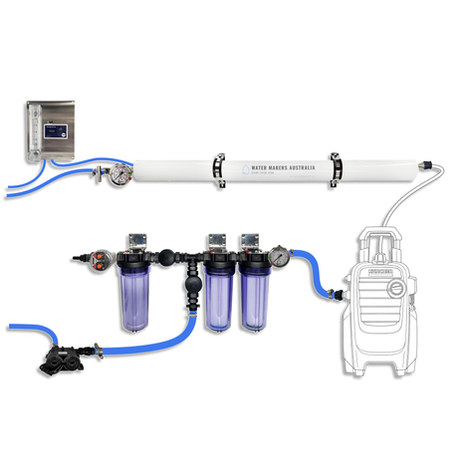
A one-membrane modular marine watermaker with 80 L/h nominal output, remote stainless control panel, standard consumables and direct Australian support.
Explore →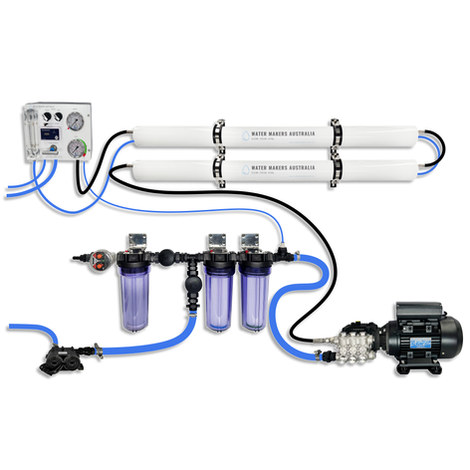
A two-membrane modular watermaker with 140 L/h nominal output, aimed at families and liveaboards that want more water per run.
Explore →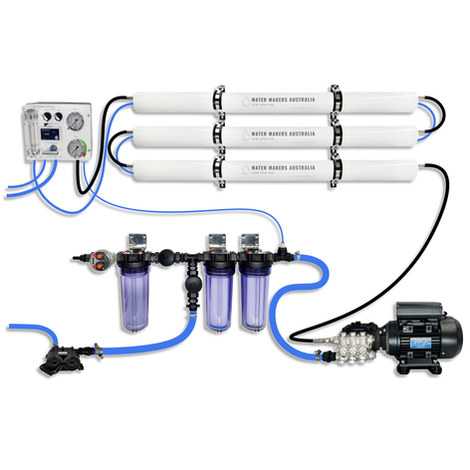
A three-membrane modular watermaker with 200 L/h nominal output and up to 240 L/h family-level marketing, for larger crews and heavy use.
Explore →