Loading this page…

Loading this page…
Sailing club
Port Kembla Sailing Club Co-op is a volunteer-run dinghy and trailer-yacht club on the northern shore of Lake Illawarra (Berkeley, NSW). The club runs an active learn-to-sail and junior coaching program, regular Saturday club racing, and hosts state- and national-level off-the-beach regattas — its signature event is Sail Illawarra (incorporating the Kembla Klassic). Facilities include an expansive clubhouse with canteen and bar, large grassy rigging area, sandy beach launching for off-the-beach boats, nearby ramp for trailable yachts, parking and hot showers.
About
Port Kembla Sailing Club Co-op is a volunteer-run dinghy and trailer-yacht club on the northern shore of Lake Illawarra (Berkeley, NSW). The club runs an active learn-to-sail and junior coaching program, regular Saturday club racing, and hosts state- and national-level off-the-beach regattas — its signature event is Sail Illawarra (incorporating the Kembla Klassic). Facilities include an expansive clubhouse with canteen and bar, large grassy rigging area, sandy beach launching for off-the-beach boats, nearby ramp for trailable yachts, parking and hot showers.
Service area: Lake Illawarra, northern shore (Berkeley), Illawarra region, NSW
Keep exploring
Port Kembla Sailing Club Co-op is a volunteer-run sailing and social club on the northern shores of Lake Illawarra (Berkeley, NSW). The club operates an expansive clubhouse with canteen, bar, large rigging area, sandy beach, hot showers, parking and a nearby launching ramp for trailer yachts. It is an Australian Sailing–accredited Discover Sailing Centre and runs learn-to-sail programs for juniors and adults, junior Saturday sessions, adult Green Fleet coaching, regular club racing and state/national regattas (signature event: Sail Illawarra).
The club's junior program is its signature: a Saturday-morning learn-to-sail and coaching pathway where first-timers learn on the club's own Skyrider boats, progressing through four structured stages that culminate in racing, under the guidance of a Head Junior Coach. Supplying the boats removes the biggest barrier for new families — no purchase, no trailer, just turn up and sail — and the staged structure gives young sailors visible milestones on the way to their first start line. As an Australian Sailing accredited Discover Sailing Centre, the club backs that junior pipeline with recognised learn-to-sail offerings for all ages, and Australian Sailing Better Sailing courses for adults appear among its events.
Adults are looked after in a refreshingly personal way: experienced members take new sailors out during the mornings to teach them, and the club will advise on buying a suitable boat when the time comes. Saturday afternoons then belong to club racing, so a new sailor can learn in the morning and, before long, test themselves in the afternoon fleet. The breadth of classes — Herons, Sharpies and OKs among the monohulls, F18s and other cats, Wetas, trailable yachts — means graduates are not funnelled into a single class but can find the boat that suits.
The club also hosts state and national level championship regattas, which exposes developing sailors to front-of-fleet standards without leaving home water. The whole edifice runs on volunteers, consistent with the club's co-operative structure, and that shapes the atmosphere: coaching here is done by people who simply want more sailors on the lake. From a child's first session on a Skyrider to a state championship start, the pathway is complete, local and genuinely affordable in spirit if not in formal policy.
Lake Illawarra — the name means "pleasant place by the sea" in the Dharawal language, and the club pays its respects to the Dharawal traditional owners of this land and water — is a large, shallow coastal lagoon where the suburbs of Berkeley and Lake Heights meet the water, about an hour's drive from central Sydney. The clubhouse sits on Northcliffe Drive on the lake's northern shore, a short distance from the Illawarra Yacht Club further east along the same road, making this strip something of a sailing precinct for the region.
Facilities are a genuine strength. The expansive clubhouse with canteen and bar fronts a large grassy rigging area big enough to accommodate camping during regattas, with easy parking, a sandy beach for launching off-the-beach boats, hot showers and a nearby ramp for trailable yachts. A visiting historian of the VJ class described the rigging and launching area as among the best of any sailing club in the country, and regatta organisers clearly agree — class associations repeatedly choose the venue for state championships and travellers' trophies.
Shallow lagoon sailing has its own character: the fetch is short, so chop builds quickly rather than swell, and the wind arrives in full strength. The 2025 Kembla Klassic demonstrated the lake's feistier side, when a westerly built into the mid-thirties in knots and forced Saturday's racing to be abandoned, before moderating only to the mid-twenties on Sunday. In gentler moods the lake is ideal teaching water — enclosed, warm and forgiving — which is why the junior program can run year after year on club boats straight off the beach.
Between the protected shallows for learners and the fresh westerlies that test championship fleets, Lake Illawarra gives this club a wider range of conditions than many open-water venues.
The club's own history records its formation in 1950 as the Northcliffe VJ and VS Sailing Club, begun by friends sailing together on Lake Illawarra. A VJ class history site remembers it slightly differently — as the Lake Heights VJ Sailing Club, formed in 1949 — a one-year discrepancy in the record that matters less than the substance: a post-war club built around the Vaucluse Junior and Vaucluse Senior, the plywood training dinghies that taught a generation of Australians to sail. As those fleets faded, the club renamed itself the Lake Heights Amateur Sailing Club, and in 1972 it took its present name, Port Kembla Sailing Club, later incorporating as a co-operative — the structure it still holds.
VJs raced here until around the 1980s, when other classes grew more popular, and the club broadened into the multi-class off-the-beach operation it is today, accumulating state and national champions across its classes along the way. The signature fixture is the late-November regatta — long known as the Kembla Klassic and now expanding under the Sail Illawarra banner — which the club bills as the Illawarra's biggest annual off-the-beach event.
Class associations regularly bring their state championships and travellers' trophies to it; past editions have welcomed everything from foiling Moths down to Herons, and the 2025 running paired the Weta state titles with a Sharpie state round alongside OKs, F18s, a B14, a Moth and an RS800, despite losing Saturday to a westerly in the mid-thirties. From 2026 the event adds a Friday yardstick time trial, the Norfyx Technology Dash 4 Cash, with cash prizes and a format that could see a foiling Moth or a humble Heron take the money.
Under president Stephen Watts, the club enters its eighth decade much as it began — a group of friends sailing together, now with a rather larger lakefront home.

Usually not for a small sailing dinghy. In NSW a boat driving licence is needed only to drive at 10 knots or more, or to drive a personal watercraft, and a vessel must be registered if it has an engine of 4 kW or more, is 5.5 m or longer, or needs a mooring licence or marina berth. A trailer towed on public roads needs its own registration.
Explore →
Legal requirements can change — check Transport for NSW for the current rules. As a practical baseline for coastal day sailing from NSW shores: keep the right number and type of lifejackets for everyone, have a means of calling for help, show navigation lights if you’ll be out after dusk, and carry basic items to manage a man‑overboard or abandon‑ship situation. Add anchor, bilge/bailer, sun/protection and basic repair kit as recommended items.
Explore →
Plan to transit Sydney Heads and northern NSW estuary entrances to take advantage of favourable tidal streams or slack water; account for local acceleration over shoals, eddies, wind-on-current effects and river discharge, and always check the latest local observations and tide/stream products before departure.
Explore →
Before the season: confirm seaworthiness — hull, rig, engine, electrics, sails and safety gear — and replace or service wearable items. After the season: wash, dry and protect gear, service consumables and record what you did so the boat’s ready and reliable next season.
Explore →
A concise, practical guide to the points of sail and how to trim sails effectively for common Australian conditions. Learn the basics of wind angles, sail shape, telltales, reefing considerations and simple steps to improve boat speed and balance.
Explore →A concise, practical introduction to the essential parts of a recreational sailing boat for beginners in Australia. Covers hull, deck, rigging, sails, steering, below-decks spaces and safety equipment, with simple explanations, common mistakes and a pre-sail checklist to help new sailors communicate and get underway.
Explore →A practical, Australian-focused guide explaining how sails generate drive, the points of sail, and how to trim sails for different conditions. Includes simple explanations of aerodynamic concepts, step-by-step trim checks, common mistakes and clear next steps for practice on the water.
Explore →
A practical guide for new sailors on picking the right Australian sailing club: training, boat access, racing, social fit, costs and the key questions to ask before joining.
Explore →
The entry-level Poclink push-to-talk radio: 4G mobile network only, three years of service included, sold as a two-pack for half the price of the Pro and Ultra.
Explore →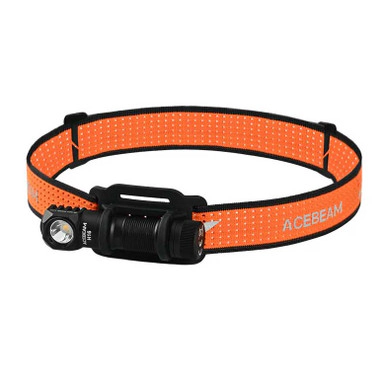
A lightweight headlamp that runs on one AA-size cell, giving up to 1000 lumens, a 105 metre beam and up to 58 hours of run time, rated IP68.
Explore →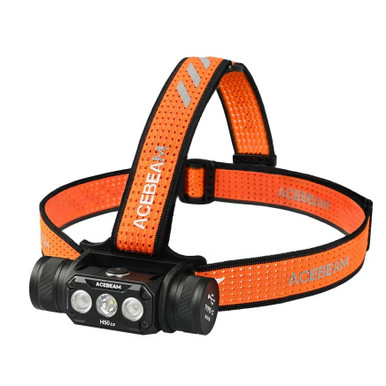
A 2000 lumen headlamp with spot and flood beams, rated IP68 and submersible to 2 metres, with a 141 metre beam and up to 30 hours on low.
Explore →
Push-to-talk radio that works over 4G mobile networks and Wi-Fi, including a Starlink router, with GPS tracking and an SOS button. Sold as a two-pack.
Explore →