Loading this page…

Loading this page…
Sailing club
Port Macquarie Sailing Club is a volunteer-run dinghy and catamaran club based at McInherney Park, Settlement Point, on the Hastings River in Port Macquarie, NSW. The club runs an active off‑the‑beach racing program for mixed fleets (monohulls and cats), long-distance marathon events and community come-and-try sailing in partnership with the Port Macquarie Yacht Club and Sailability.
About
Port Macquarie Sailing Club is a volunteer-run dinghy and catamaran club based at McInherney Park, Settlement Point, on the Hastings River in Port Macquarie, NSW. The club runs an active off‑the‑beach racing program for mixed fleets (monohulls and cats), long-distance marathon events and community come-and-try sailing in partnership with the Port Macquarie Yacht Club and Sailability.
Service area: Settlement Point / Hastings River, Port Macquarie (Mid North Coast), NSW
Keep exploring
From its base at McInherney Park on Settlement Point, hard by the Hastings River, Port Macquarie Sailing Club runs off-the-beach racing for one of the mid-north coast's most loyal dinghy and catamaran fleets. Tasars, NS14s, Impulses, Lasers and Laser Radials race alongside catamarans — Arrow cats among them — split into monohull and cat divisions scored on yardstick and handicap, through a season that opens in early September after a working bee and runs through spring, summer, sprint and handicap-start series to a club championship in both divisions.
This is a community volunteer club in the truest sense, right down to the trophy shelf: perpetual honours include the Ted Kuhn Cup, contested in three divisions — cat, single-handed monohull, and crewed boats without spinnakers — and the Easter Cup, sailed as a mixed-fleet contest, while presentation night pairs clubhouse proceedings with dinner next door at Banks Café.
The development culture is visible in the awards themselves — top junior female and male sailors, leading woman sailor, a senior encouragement award and a most-improved trophy all feature. Club members have also travelled to Newcastle Cruising Yacht Club's SheSails Development Regatta to sharpen their skills. Long-distance racing is a local speciality: the spring Cock of the River marathon each October and the Harold Dick Memorial marathon in February, the latter a fourteen-plus nautical mile course leading from the clubhouse down to the Town Green, then back up past Dennis Bridge and home again.
The club shares its corner of Port Macquarie closely with the Port Macquarie Yacht Club — which holds its monthly meetings at the Sailing Club premises — and with Sailability, the three co-hosting the town's annual Discover Sailing Day.
The most distinctive item on the calendar is the free Discover Sailing Day held each year on the Hastings River, co-hosted with the Port Macquarie Yacht Club and Sailability. Four sessions run by the Sailing Club and Sailability welcome all ages — children from five with a parent alongside — while the Yacht Club caters for participants fifteen and over, and everyone goes out with an experienced sailor at the helm. It is a genuinely open door: no cost, no membership requirement, just a sail on the river and an introduction to the clubs' programs.
For a regional town, having three sailing bodies pull together on a single come-and-try day says much about how this sailing community organises itself.
Development beyond that first taste happens without the scaffolding of accreditation — the club holds no Discover Sailing Centre status and runs no Tackers program — so learning is woven through the racing structure rather than formal courses. The awards list tells the story — top junior girl and boy, leading woman sailor, a senior encouragement prize, most improved — a deliberate architecture of recognition aimed at keeping learners progressing.
Women from the club have taken that further afield, travelling to Newcastle for the 2025 SheSails Development Regatta, a dedicated women's sail-training event. On the water, the mixed fleet itself is the teacher: Tasars and NS14s are forgiving, sociable classes in which new crews can learn alongside experienced hands, while the marathon events — fourteen nautical miles of river, tide and shifting breeze — build boat-handling endurance that short-course racing never will.
Instruction stays informal and member-led, in keeping with the club's volunteer character. What it offers instead is a full season of varied racing, marathon adventures and a network of sailors plainly invested in bringing the next generation along.
McInherney Park, beside the Hastings at Settlement Point, is the club's home — a council-described popular informal recreation park where a floating pontoon near the clubhouse has made the spot a favoured boat-launching location. Port Macquarie sits roughly midway up the NSW north coast, and the Hastings is a proper coastal river: broad, tidal and long enough to offer genuine variety, with courses running between landmarks that read like a local history lesson — the Town Green and Royal Hotel, the Coal Wharf, Dennis Bridge, and up toward the Maria River.
River racing here demands real craft. Tides shape everything: one Harold Dick Memorial marathon began in a patchy ten-knot southerly with short sharp gusts to fifteen and plenty of holes, the incoming tide making the first mark stubbornly hard to round. Sea breezes fill and fade against the river's bends, and the Settlement Point vehicular ferry is a moving hazard that has delayed competitors mid-race — a thoroughly local problem, and one the fleet takes in its stride.
The marathon courses showcase the river's scale: the Harold Dick Memorial runs fourteen-plus nautical miles from the clubhouse down to the Town Green, up to Dennis Bridge and home, and fleets of around fifteen boats are typical. The closeness of the racing is the best advertisement for the venue — three Tasars once crossed a marathon finish line within eleven seconds of one another after fourteen miles.
The clubhouse itself doubles as the monthly meeting place of the Port Macquarie Yacht Club, making Settlement Point the organisational hub for both arms of the town's sailing. Historical photographs from the 1960s show the fleet setting sail from this same headquarters, and the essential geography — river, ferry crossing, long grassy bank — is little changed.
Exactly when the club began is, honestly, not recorded in any source the club or its historians have published — but the photographic record held by the Port Macquarie Historical Society shows the club active in the late 1950s — among the images is a 1958 regatta sailed on the Hastings River. Those photographs open a window on a flourishing sixties scene: VJs racing on the river, trophy winners Reid Doig and Eric Whitbread with Reid's VJ Witchcraft in 1962, Cec Radley and Peter Brest among the identities of the era — Brest later commemorated in the Peter Brest Trophy — and Commodore Gene Stuart pictured in 1969.
A 1968 sesqui-centenary regatta at Settlement Point and Easter Regattas documented from at least 1970 to 1972 confirm a club with a full calendar, including a 1970 Ladies Day race that required every boat to carry a lady aboard. A 1969 image shows the fleet setting sail from the Settlement Point headquarters to the Coal Wharf, the same start line it uses today.
The decades since have kept that continuity. The clubhouse at McInherney Park also became the meeting home of the separately founded Port Macquarie Yacht Club in 1981, an arrangement that persists. The marathon tradition — the October Cock of the River and February's Harold Dick Memorial — carries the long-distance thread forward, and the club's competitive standing was underlined when it hosted the 60th NSW NS14 Championships on home water in March 2023, a fitting honour for a fleet that has raced the class for decades.
Current results sheets feature sailors such as Frank O'Rourke, dominant in the cat division on his Arrow Turbo, alongside Jeff Walsh, Terry Howard and Tony Kuhn. The founding minute may be lost, but the river has rarely been without sails at Settlement Point since.
A practical cruising guide for the Moyne River port at the mouth of the Moyne River on Victoria’s south-west coast. It explains harbour geometry, seasonal conditions, principal sailing zones, anchorages, visitor facilities, known local hazards (bar, reefs, strong currents, surf and commercial traffic), regulatory controls and realistic experiences for day sailors, trailer-sailors and coastal cruisers. The guide draws on local port plans, state boating authorities, the yacht club’s visiting-boat practice and regional marine management documents.

Look for a friendly club with beginner-focused training, accessible facilities and boats, a supportive community, clear safety practices, and opportunities to progress at your own pace.
Explore →
Rig and de-rig a small dinghy by following a consistent, step-by-step sequence: prepare the boat on shore, fit spars and foils in a stable order, control sails and running rigging so lines don’t tangle, check fittings and safety gear, and reverse the process when coming ashore—always working with a partner when possible and staying aware of wind and tide.
Explore →
Expect light to moderate, thermally-driven sea breezes in summer with afternoon strengthening; more changeable and often stronger winds with frontal systems in autumn and spring; and the windiest, roughest conditions in winter when cold fronts and sou’westers are most frequent. Gulf St Vincent is more sheltered than the exposed coast but can still produce steep chop and sudden changes near Adelaide and headlands.
Explore →
Keep the boat balanced by steering a consistent course for the sail trim and by moving crew weight fore/aft and side-to-side to control helm and reduce weather or lee helm. Upwind you aim for a slight weather helm and a heel that lets the sails work efficiently; downwind you flatten the boat a little, ease sheets to prevent luffing or accidental broaches, and shift weight aft as the apparent wind drops.
Explore →
A practical guide for new sailors on picking the right Australian sailing club: training, boat access, racing, social fit, costs and the key questions to ask before joining.
Explore →Practical guide for recreational sailors planning passage on the Hawkesbury River: how to plan around tides, choose anchorages, read local conditions and prepare the boat and crew for a safe, comfortable trip.
Explore →A practical guide for recreational sailors planning visits to Albany and King George Sound. Covers the main anchorage areas, typical local weather patterns, tidal and current considerations, navigational hazards, on-the-water etiquette and a pre-departure checklist to help you plan a safe passage and enjoyable stopover
Explore →A practical guide for recreational sailors planning day sails or short cruises around Batemans Bay, Broulee and the Clyde River. Covers local conditions, safe approaches, anchorages, launching, tides, common hazards, and checklists for trip planning and on-water decisions.
Explore →Burke Yachtsman Gear Bag 40L - Shop Now Zip Pay | Tamar Marine Skip to content 59 – 63 Holbrook Street, Invermay Online Shop Open 24/7 Products search Contact us 1300 MARINE $ 0.00 0 Cart Burke Yachtsman Gear Bag 40L $ 79.90 Colour Choose an option Black Blue Black Blue Clear - Burke Yachtsman Gear Bag 40L quantity + Add to cart Enquire about this product SKU BAGB-Y24/BLACK* Category Bags - Sail & Gear A Burke classic and customer favourite, the Yachtsman’s Gear Bag is built tough to handle wet, salty conditions while keeping your gear dry and protected. Made from double coated waterproof…
Explore →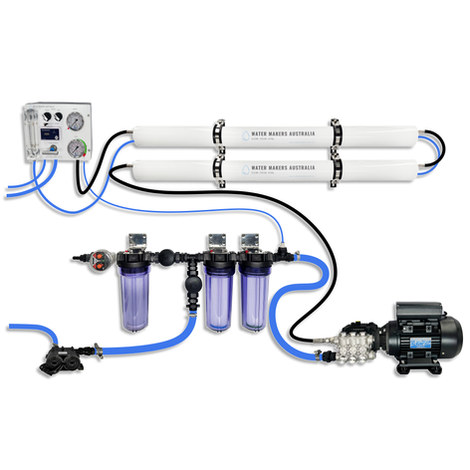
A two-membrane modular watermaker with 140 L/h nominal output, aimed at families and liveaboards that want more water per run.
Explore →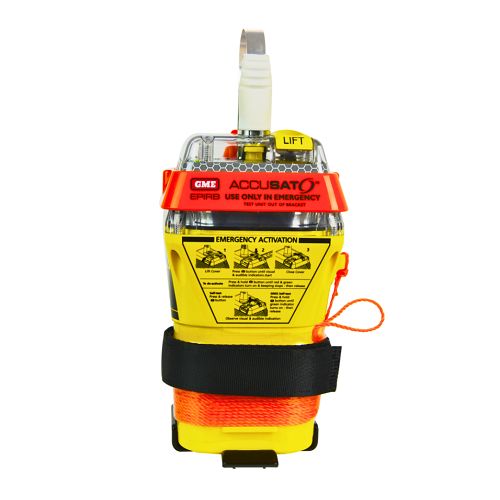
A 10‑year battery EPIRB with integrated GNSS (supports GPS and Galileo), infrared strobe and 121.5 MHz homing signal. Approved for worldwide COSPAS‑SARSAT operation.
Explore →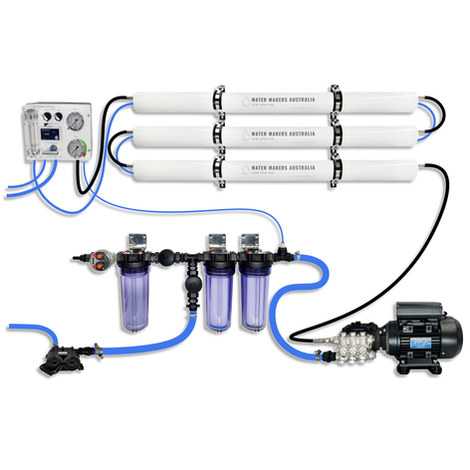
A three-membrane modular watermaker with 200 L/h nominal output and up to 240 L/h family-level marketing, for larger crews and heavy use.
Explore →