Loading this page…

Loading this page…
Sailing club
Queens Lake Sailing Club is a small volunteer dinghy club based at the Queens Lake Sailing Club Reserve, Ocean Drive, Lakewood (near Laurieton) on the NSW Mid North Coast. The club runs regular weekend racing across three divisions, a visible junior and development programme with club-owned training boats, and in recent seasons has hosted state and national small-boat championships and regattas.
About
Queens Lake Sailing Club is a small volunteer dinghy club based at the Queens Lake Sailing Club Reserve, Ocean Drive, Lakewood (near Laurieton) on the NSW Mid North Coast. The club runs regular weekend racing across three divisions, a visible junior and development programme with club-owned training boats, and in recent seasons has hosted state and national small-boat championships and regattas.
Service area: Lakewood / Camden Haven district, NSW Mid North Coast
Keep exploring
On a bushland shoreline in the Camden Haven, a small volunteer club has been quietly making a name far beyond its postcode. Queens Lake Sailing Club sails from its own reserve at Lakewood, near Laurieton on the NSW Mid North Coast, and in recent seasons local reporting has described it as "a sought-after country location for sailing regattas" — a claim backed by a 2025–26 calendar that included the Taipan catamaran State Championships, the Maricat National Championships and MG14 skiff events. For a lake that most sailors outside the Hastings could not find on a chart, that is serious company to keep.
The engine room is unashamedly local. Commodore Dave Castleton, a plumber by trade, has driven the club's growth through sponsorship deals and sheer volunteer hours, and he credits the results to "the generosity of their sponsors and the significant amount of hard work put in by volunteers". Castleton walks the talk as a sailor too: he crewed aboard Inner Circle in the 2025 Rolex Sydney Hobart Yacht Race, then collected the club's Commodore's Award at the June presentation.
The culture is community-first — schools partnerships, junior development, cheap access to boats — yet the racing is organised with real rigour, three series a season across three divisions and up to fifteen boats on the line each week. It is the sort of club where the same person might run the canteen, rescue a capsized junior and win Division 1 in the same afternoon, and where visiting championship fleets are greeted like old friends.
Saturday is the beating heart of Queens Lake's development pathway, and its signature offering is a "tri-sailing" program run alongside the junior sailing program every weekend. The format is deliberately low-friction: Saturday morning try-out sessions invite young and old to have a go, with boats and safety gear supplied by the club, so nobody needs to own so much as a lifejacket to get afloat. That access rests on a fleet of small boats the club has bought outright thanks to generous backing from local organisations and businesses — a point of pride, because it means beginners can learn properly before spending a dollar on their own gear.
The pathway does not stop at the first tack. Junior sailors Toby, Sid and Oscar are themselves training as instructors and have already helped deliver a schools taster day, creating a teach-the-teachers cycle that keeps skills inside the club. Community outreach runs wide: in January 2025 the club hosted thirty home-schooled students aged ten to fifteen from the Manning and Port Macquarie–Hastings areas, part of Education Revolutions' Young Hero's Adventure Quest program, for a sailing experience day.
On the racing side, three series structure the season — Spring Pointscore, Summer Pointscore and the Club Championship — contested across three divisions. Juniors race in Division 3, where, as race secretary Martina Holt explains, they build versatility by swapping boats and crew positions to suit the weather. It is a deliberately old-school apprenticeship: sail everything, in every position, in all conditions, and the skills will follow.
Queens Lake is a coastal lake in the Camden Haven district, sitting roughly thirty kilometres south-west of Port Macquarie, and it forms part of the broader Camden Haven River estuary system. The club's home is the Queens Lake Sailing Club Reserve at 304 Ocean Drive, Lakewood — described by Port Macquarie-Hastings Council as "a bushland reserve on Queens Lake with a boat ramp and picnic tables". The Lakewood Boat Ramp at the reserve gives direct access to the water, and the setting does much of the club's recruiting for it: sheltered lake sailing ringed by bush, far from the traffic of bigger waterways, with room for catamarans to stretch out and for beginners to capsize in peace.
The practical simplicity of the site shapes how the club operates. There is no licensed clubhouse or marina infrastructure here — the appeal is the water itself and the reserve that fronts it, with rigging on the grass and picnics after racing. For the state and national titles the club now attracts, that translates into a regatta venue with clean launch access, fresh lake breeze and a laid-back country atmosphere that visiting crews remember.
Laurieton and the other Camden Haven villages sit just up the road, so regatta families have beaches, bakeries and accommodation close at hand, and Port Macquarie is an easy half-hour away. In an era when many small clubs fight for water access, Queens Lake's council-supported reserve is a genuine asset — a permanent, public doorway onto a lake that has quietly become one of the more interesting small-boat venues on the NSW coast.
If Queens Lake Sailing Club has a founding story, it has not yet been written down. The club's public presence runs through its Facebook page rather than a formal website, and no published history records the year the first sailors gathered on the lake or who called the meeting. What is documented, and documented well, is the club's recent rise — a story that begins with a modest volunteer club on a Camden Haven lake and accelerates sharply in the 2020s.
The turning point has been a run of event-hosting success that would flatter a club ten times its size. In the 2025–26 season alone, Queens Lake welcomed the Taipan State Championships for catamarans, the Maricat National Championships and MG14 skiff events, prompting local coverage to call it a sought-after country regatta venue. Much of that momentum is credited to Commodore Dave Castleton, a local plumber whose sponsorship hunting and volunteer organising have underwritten the club's growth — including the purchase of its own training fleet with support from local sponsors.
Castleton's own sailing résumé gained a blue-water line when he crewed on Inner Circle in the 2025 Rolex Sydney Hobart, and the season closed with the club's annual presentation and awards afternoon on 20 June, where Castleton received the Commodore's Award and the club marked what local press called a banner year. The history that is written so far, then, is less about origins and more about arrival: a club that spent years as a quiet local fixture and has now stepped, on its own terms and by its own labour, onto the state and national stage.
Ballina sits at the mouth of the Richmond River on NSW’s far‑north coast. It’s a working river entrance with a compact boat harbour, exposed ocean beaches and a changeable, sand‑dominated bar. For coastal cruisers it offers a useful stop between Tweed Heads and Yamba, sheltered estuary cruising upriver and easy access to open ocean passages — but the river entrance is highly condition‑dependent and demands respectful planning and local knowledge.

Plan as a chain of conservative daily legs tied to your boat’s real-world fuel and speed in the expected sea state, with confirmed primary and alternate anchorages/berths, fuel legs and back-up fuel options, and a documented emergency/diversion plan (comms, tow and med-evac). Build tidal and weather gates into each leg and carry chart and comms redundancy.
Explore →
Maybe — it depends. In NSW you often need registration and a boat operator licence for motorised vessels, but many small trailerable sailing dinghies without engines don’t require boat registration or a licence. Check the specific rules for your craft, trailer and engine.
Explore →
Expect very different seasonal systems across Western Australia: the south‑west (Perth to Albany) has a strong summer afternoon sea breeze (the “Fremantle Doctor”) and winter westerly fronts, while northern WA follows a wet/dry monsoonal cycle with strong seasonal onshore winds, thunderstorms and cyclone risk in the wet season. Local headlands, estuaries and tidal flows often change what you actually feel on the water, so learn the local timing and sheltered venues first.
Explore →
Pick a protected bay, estuary or river reach where you can rig, launch and arrive on calm water within a short, sheltered transit; choose a site with a good ramp or jetty, clear recovery options and a nearby sailing club, marina or commercial operator for local knowledge and help.
Explore →
A practical guide for new sailors on picking the right Australian sailing club: training, boat access, racing, social fit, costs and the key questions to ask before joining.
Explore →Practical guide for recreational sailors planning a coastal cruise from Sydney north to the Queensland border. Covers route options, weather and tidal considerations, planning checklists, common hazards, anchorages and practical examples for a safe, enjoyable trip.
Explore →
A practical guide for recreational sailors planning trips on the Gold Coast Broadwater: key features, local weather and tide considerations, navigation tips, common hazards, equipment checklist and step‑by‑step trip planning tailored to Australian conditions.
Explore →A practical guide to preparing, planning and executing a recreational offshore passage along the New South Wales coast. Covers route selection, weather and tidal considerations, vessel and crew checks, safety equipment, communication, watchkeeping and common mistakes, with clear pre‑departure and underway checklists.
Explore →Burke Yachtsman Gear Bag 40L - Shop Now Zip Pay | Tamar Marine Skip to content 59 – 63 Holbrook Street, Invermay Online Shop Open 24/7 Products search Contact us 1300 MARINE $ 0.00 0 Cart Burke Yachtsman Gear Bag 40L $ 79.90 Colour Choose an option Black Blue Black Blue Clear - Burke Yachtsman Gear Bag 40L quantity + Add to cart Enquire about this product SKU BAGB-Y24/BLACK* Category Bags - Sail & Gear A Burke classic and customer favourite, the Yachtsman’s Gear Bag is built tough to handle wet, salty conditions while keeping your gear dry and protected. Made from double coated waterproof…
Explore →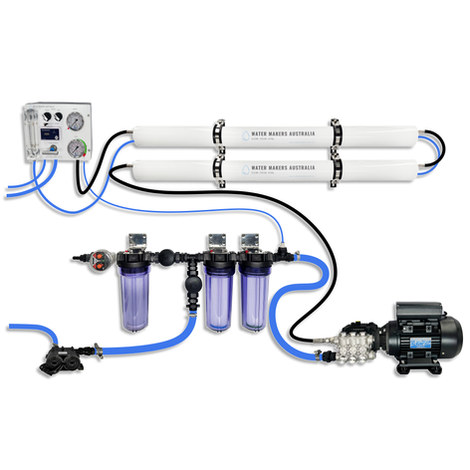
A two-membrane modular watermaker with 140 L/h nominal output, aimed at families and liveaboards that want more water per run.
Explore →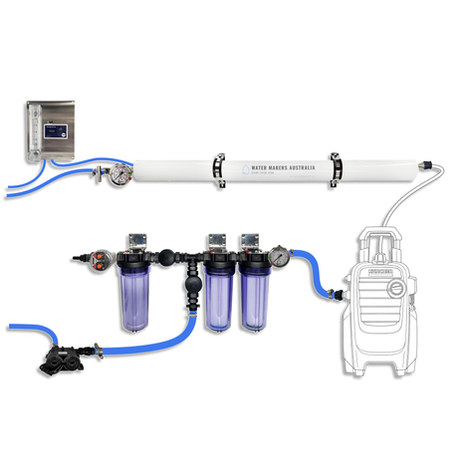
A one-membrane modular marine watermaker with 80 L/h nominal output, remote stainless control panel, standard consumables and direct Australian support.
Explore →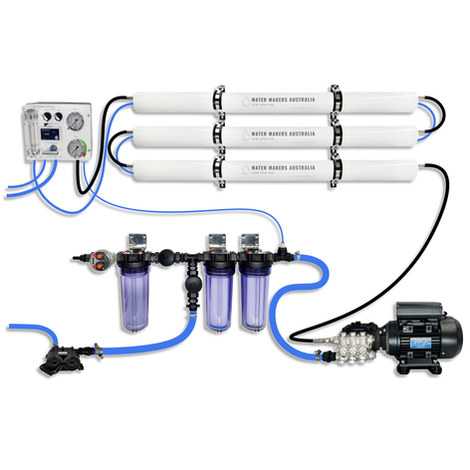
A three-membrane modular watermaker with 200 L/h nominal output and up to 240 L/h family-level marketing, for larger crews and heavy use.
Explore →