Loading this page…

Loading this page…
Sailing club
Richmond River Sailing & Rowing Club (RRSRC) is a volunteer-run sailing and rowing club located on the Richmond River at 2 River Street, Ballina, New South Wales. The club runs an active mixed sailing program (catamarans, trailer-sailers, twin-wire skiffs and dinghies), regular club racing on handicap, seasonal learn-to-sail courses and a social rowing section. RRSRC stages regattas that attract interstate competitors and is embedded in Ballina's riverfront community.
About
Richmond River Sailing & Rowing Club (RRSRC) is a volunteer-run sailing and rowing club located on the Richmond River at 2 River Street, Ballina, New South Wales. The club runs an active mixed sailing program (catamarans, trailer-sailers, twin-wire skiffs and dinghies), regular club racing on handicap, seasonal learn-to-sail courses and a social rowing section. RRSRC stages regattas that attract interstate competitors and is embedded in Ballina's riverfront community.
Service area: Ballina / Richmond River, NSW Far North Coast
Keep exploring
Richmond River Sailing & Rowing Club is a community sailing and rowing club located on the Richmond River in Ballina, NSW. The club runs organised sailing programs including weekly races and a racing season (September–end of May), offers Learn to Sail courses and training boats, and supports a range of small-boat classes (dinghy, catamaran, skiff, gennaker and trailer-sailors). Contact and booking details are published on the club website.
The jewel in this club's crown is its Skiff Coaching program, which Australian Sailing has described as world-leading: sailors arrive with little or no background in the sport and are coached first into crews and then into skippers of high-performance twin-wire skiffs. The architect is High Performance Sail Trainer Michael Wiley, whose work introducing young adults — many of whom had never sailed at all — to skiff sailing earned him NSW Coach of the Year honours in 2023. It is an unusual ladder, skipping the conventional dinghy apprenticeship and trusting coaching to carry people straight into demanding boats, and the club's regatta results suggest it works.
The broader learn-to-sail structure is deliberately affordable. Two Sailing Introduction courses run each year, giving around thirty people a three-day taste of the sport, while the main Learn-to-Sail course runs on Sunday mornings from 9.30 to 11.30 across eight sessions at the River Street clubhouse — priced at $160 for adults, $110 for juniors and students, and a family rate of $140 plus $60 per head, with a year's membership folded into the fee. Recent courses have booked out, with waiting lists forming for the next intake.
Juniors learn aboard the club's Bic training skiffs; adults and families learn in Pacers; and the nine club boats are so often fully booked for practice that demand is its own testimonial. Graduates have already begun entering full club races. The next project is a new RS Quest training boat, funded by tax-deductible donations channelled through the Australian Sports Foundation, with an expanded female changeroom the companion project — investment aimed squarely at keeping the pathway open to everyone.
The clubhouse stands at 2 River Street, Ballina, hard by the Richmond River in the NSW Far North Coast's biggest coastal town. The river here is wide and tidal, opening to the sea at Ballina's bar a short distance downstream, and the racing reach gives fleets room for genuine courses without leaving sight of town. The season runs from September until the end of May, dodging the southern winter entirely and leaning on the river's reliable breezes through the warmer months.
Racing is conducted on handicap, and the club is cheerfully frank about the levelling effect, its own material noting that on the right day a relative newcomer in a modest boat can knock off one of the guns campaigning a machine worth thirty grand. That egalitarian streak suits the mixed fleet — catamarans, trailer sailers, twin-wire skiffs and dinghies sharing the same stretch of water, with the rowers out in the early mornings before the sailing breeze fills.
The clubhouse itself fronts the river in the heart of Ballina, within walking distance of the town centre, and the club's social calendar takes full advantage of the waterway: upriver trips to the Wardell pub are a beloved institution. For visiting sailors, the Richmond offers sheltered sailing with the Pacific over the bar for those wanting more, and the club's regattas — which pull entries from across the country — show how well the venue hosts big fleets.
The Formula 15 catamaran Nationals came to town in 2021, a marker of how far this river reach punches above its weight as a championship venue.
The club itself has published no founding story — no date, no list of names, no account of the first meeting — so its early history remains a gap waiting for a club historian. But the waterway it sails has one of the deepest competitive pedigrees in regional Australia. Organised rowing racing on the Richmond dates to the mid-1880s, driven by the Benaud brothers — Grafton campaigners — together with Captain John Storey and the McKinnons, and by the 1900s regattas ran annually at Ballina, Woodburn, Coraki, Broadwater, Swan Bay and Lismore.
Those early regattas were serious affairs: professional scullers backed by betting syndicates raced for champion titles and purses of at least one hundred pounds, and each river town formed its own rowing club to formalise the rules, umpires and handicaps. The twin sailing-and-rowing identity of today's Ballina club is a direct echo of that era, when the river was the sporting highway of the Northern Rivers.
The modern record is written in silverware and resilience. The club hosted the Formula 15 Nationals in 2021, then endured the 2022 flood disaster that wrecked much of Lismore and inundated parts of Ballina. Out of that season came its finest recognition: thirty-one per cent membership growth in twelve months, the 2023 NSW Small Club of the Year award, and a place on the Category B shortlist for Australian Sailing's national Club of the Year honour.
Individual honours followed — Michael Wiley named NSW Coach of the Year 2023 for the skiff program — while the membership roll quietly accumulated state and national champions and Sydney Hobart campaigners. Current fundraising through the Australian Sports Foundation, for an RS Quest trainer and an expanded female changeroom, shows a club still building. The founding chapter may be unwritten, but the present one is being written very well indeed.
Batemans Bay and the Clyde River form a classic NSW South Coast cruising region where a sheltered, tidal estuary meets a short, island‑dotted entrance to the Tasman Sea. It’s distinctive for easy access from Canberra, a mix of river and bay sailing, a compact marina and mooring network, and a river entrance (the Clyde River bar) that can change rapidly. The area suits day sails, weekend cruising, trailer‑boat exploration and sheltered coastal passages; offshore or long‑passage plans require careful timing and local knowledge. Preparation for tidal flow, variable southerly swells and shallow, s

Look for a friendly club with beginner-focused training, accessible facilities and boats, a supportive community, clear safety practices, and opportunities to progress at your own pace.
Explore →
Late spring to summer is usually the best time for beginners to start learning to sail in Tasmania because the weather is generally warmer, days are longer and conditions are often more settled. Expect lighter to moderate winds with regular afternoon sea breees in summer, while spring and autumn bring more changeable and sometimes stronger conditions; winter is colder, wetter and typically windier with more fronts and swell.
Explore →
Pick a protected bay, estuary or river reach where you can rig, launch and arrive on calm water within a short, sheltered transit; choose a site with a good ramp or jetty, clear recovery options and a nearby sailing club, marina or commercial operator for local knowledge and help.
Explore →
A regular, layered maintenance routine combining hull cleaning, targeted anti-fouling management, cathodic protection and systems checks will substantially reduce marine growth and corrosion for boats kept year‑round in South Australian waters. Focus on preventing attachment and electrochemical attack, then inspect and act more often if you’re in warm, nutrient-rich or high‑traffic sheltered waters.
Explore →A practical guide to preparing, planning and executing a recreational offshore passage along the New South Wales coast. Covers route selection, weather and tidal considerations, vessel and crew checks, safety equipment, communication, watchkeeping and common mistakes, with clear pre‑departure and underway checklists.
Explore →Practical guide for recreational sailors planning passage on the Hawkesbury River: how to plan around tides, choose anchorages, read local conditions and prepare the boat and crew for a safe, comfortable trip.
Explore →A practical guide for recreational sailors planning day sails or short cruises around Batemans Bay, Broulee and the Clyde River. Covers local conditions, safe approaches, anchorages, launching, tides, common hazards, and checklists for trip planning and on-water decisions.
Explore →
A practical guide for new sailors on picking the right Australian sailing club: training, boat access, racing, social fit, costs and the key questions to ask before joining.
Explore →Burke Yachtsman Gear Bag 40L - Shop Now Zip Pay | Tamar Marine Skip to content 59 – 63 Holbrook Street, Invermay Online Shop Open 24/7 Products search Contact us 1300 MARINE $ 0.00 0 Cart Burke Yachtsman Gear Bag 40L $ 79.90 Colour Choose an option Black Blue Black Blue Clear - Burke Yachtsman Gear Bag 40L quantity + Add to cart Enquire about this product SKU BAGB-Y24/BLACK* Category Bags - Sail & Gear A Burke classic and customer favourite, the Yachtsman’s Gear Bag is built tough to handle wet, salty conditions while keeping your gear dry and protected. Made from double coated waterproof…
Explore →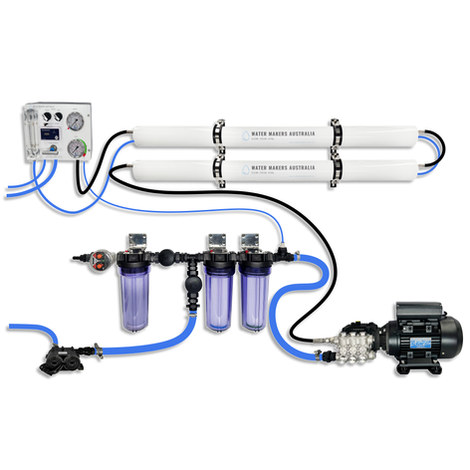
A two-membrane modular watermaker with 140 L/h nominal output, aimed at families and liveaboards that want more water per run.
Explore →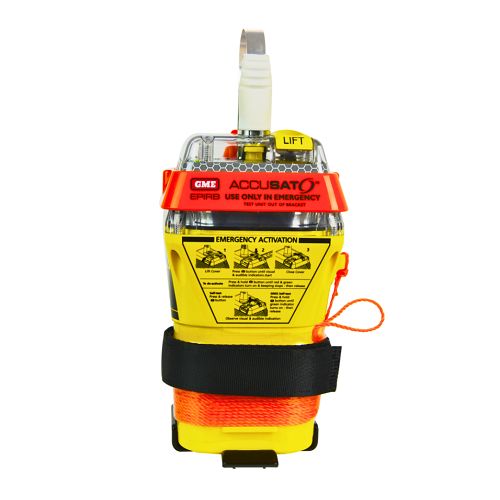
A 10‑year battery EPIRB with integrated GNSS (supports GPS and Galileo), infrared strobe and 121.5 MHz homing signal. Approved for worldwide COSPAS‑SARSAT operation.
Explore →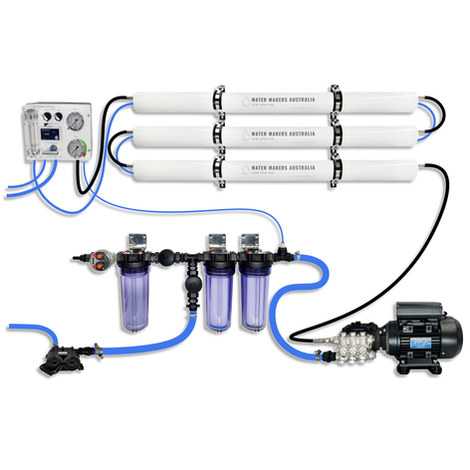
A three-membrane modular watermaker with 200 L/h nominal output and up to 240 L/h family-level marketing, for larger crews and heavy use.
Explore →