Loading this page…

Loading this page…
Sailing club
Royal Motor Yacht Club Broken Bay (RMYCBB) is a long-established Newport waterfront yacht club on Pittwater offering active sailing and cruising programmes alongside a full marina and shore facilities. The club hosts large twilight and around‑the‑buoy racing fleets, an offshore Newport–to–Coffs race, social and family activities, and a Mini Mariners youth programme, while providing marina berths, fuel wharves, a 100‑tonne slipway and visitor services from its Horseshoe Cove waterfront at 46 Prince Alfred Parade, Newport (NSW).
About
Royal Motor Yacht Club Broken Bay (RMYCBB) is a long-established Newport waterfront yacht club on Pittwater offering active sailing and cruising programmes alongside a full marina and shore facilities. The club hosts large twilight and around‑the‑buoy racing fleets, an offshore Newport–to–Coffs race, social and family activities, and a Mini Mariners youth programme, while providing marina berths, fuel wharves, a 100‑tonne slipway and visitor services from its Horseshoe Cove waterfront at 46 Prince Alfred Parade, Newport (NSW).
Service area: Pittwater / Broken Bay (Newport), Northern Beaches, NSW
Keep exploring
Royal Motor Yacht Club Broken Bay is a Newport (Pittwater) yacht club offering an extensive marina and member services. The club operates fixed berths, swing and club moorings, visitor berths on a floating breakwall, two fuel wharves (diesel and unleaded with diesel-only on the outer wharf), pump-out facilities, a boat ramp (for boat‑owner members), slipway/haul-out facilities for vessels up to 100 tonnes, marina valet, on‑board catering, laundry, secure car park, 24h toilets/showers, trolleys, and retail items such as LPG, bait and ice.
Mini Mariners is where the club's youngest members get their start — a division created by volunteer parents and now in its eighth year, giving children ideally aged six to fourteen, and their families, water-safety skills in what the club calls "a safe, social, fun and non-competitive atmosphere". It is a deliberately gentle entry point, more about confidence around boats than racing craft, and it reflects the family-first character the club has cultivated since the 1950s. Formal accredited dinghy courses are left to neighbouring training centres on Pittwater; this club's strength is the on-ramp from family boating into its vast racing and cruising program.
And that program is vast. The Sailing Division runs more than a hundred around-the-buoy races a season, split between spinnaker and non-spinnaker fleets, with an open invitation to newcomers: "join us for a sail or register as a crew member". The Monday Twilight "no extras" series — no spinnakers, no complications — attracts around seventy entrants in several divisions on a typical evening, while the Broken Bay Islands Series adds a friendly rivalry among members' boats across the estuary's landmarks.
The Top Hat Sailing Division, a club institution, meets monthly — generally the first Saturday — and races in two fleets, drawing on a published set of twenty-three courses that use Pittwater and Broken Bay marks from Lion Island to Towlers Bay and Long Nose Point. For those who prefer horizons to buoys, the Sail Cruising Division organises weekends away, coastal passages, raft-ups and barbecues across the Pittwater and Hawkesbury. Add the Newport to Coffs race each autumn, and the pathway from Mini Mariner to offshore sailor is all there.
Pittwater is the gift here. The club sits at 46 Prince Alfred Parade, Newport, on the western shore of the estuary at Horseshoe Cove, facing the gateway to Broken Bay and the Hawkesbury River — a waterway the club describes, with pardonable pride, as "arguably one of the most beautiful boating waterways in the world". North of the Newport arm the estuary opens into Broken Bay itself, with Lion Island standing sentinel at the meeting of the Hawkesbury and the sea, and the club's race courses make full use of the geography: Lion Island, Rocky Point, Juno Point, Long Nose Point, Mackerel Beach, Stokes Point, Soldiers Point, Towlers Bay and Taylors Point all appear on the Top Hat course card.
The shore-side plant matches the water. The club's marina, described by its Game Fishing division as international class with 256 berths, is backed by a 100-tonne slipway along with fuel and pump-out facilities, boat-owner tenders and marine trade services on site. Ashore there are three bars — the Garden Bar, Mariners Bar and Level 1 Lounge Bar — plus the Salt Cove on Pittwater restaurant open seven days, a heated swimming pool and children's play park, and a free member shuttle bus covering a five-kilometre radius from Church Point to Avalon.
Racing happens on Pittwater and out into Broken Bay, with the big twilight fleets starting within sight of the clubhouse and the offshore Newport to Coffs fleet leaving the estuary behind entirely. For a cruising sailor, few clubs anywhere offer a more practical base: deep water, full services, and the whole Hawkesbury system at the front gate.
On an October evening in 1926, a large gathering at the Motor Yacht Club of NSW's Rose Bay clubhouse voted to establish a Broken Bay branch. Twenty-six foundation members enrolled, with Mr N. Light of Newport as honorary branch secretary. The first event ran on 20 November 1926, and the branch's opening season decided twenty-five races — eight of them for ladies — with prizes shared between eleven boats.
Land at Horseshoe Cove, Newport, still the club's home, was bought in early 1927; that same year King George V conferred the Royal prefix on the parent club — the first motor yacht club anywhere in the Empire to receive it — and the branch became the Royal Motor Yacht Club, its members entitled to fly the defaced Blue Ensign. A. C. Cooke was the first branch commodore; within nine months membership neared a hundred.
The official opening of a clubhouse, boat shed, wharf and slipway followed on 17 March 1928, and Governor Sir Dudley de Chair, a former Royal Navy admiral, proved a warm patron.
The decades since have tested and rebuilt the club. Fire destroyed that first building; its replacement stood further back from the seawall, and a 1939 land purchase on the eastern side, for two hundred dollars, took the waterfrontage to about five hundred feet. Wartime petrol rationing curtailed pleasure boating, and many sizeable member cruisers went into Naval Auxiliary Patrol service.
The pool opened on 15 March 1959 with membership at 354 active members, and the "family Club" era began; a new lounge deck and bar followed in 1964, and the current clubhouse — built around its predecessor under Commodore Alan Leslie — was opened by Lady Cutler on 17 August 1968. In 2026 the club celebrates its centenary: an official opening, a Centenary Ball and a boat parade from Rose Bay to Broken Bay.
A practical, harbour-focused cruising guide to Trial Bay on the New South Wales Mid North Coast. The guide describes the bay’s sheltered and exposed zones, headlands and islands, local seasonal wind and swell patterns, principal sailing areas and recommended anchorages, shore facilities around South West Rocks and Arakoon, navigation and arrival considerations, specific hazards such as the Macleay River entrance, sand movement and reefs, local marine park and heritage restrictions, and three realistic sailing experiences ranging from sheltered family daysails to multi-day island circuits. It’s

Write a one‑page plan with the who/what/when/where/how of your trip, keep a copy on board and leave the main copy with a responsible person ashore (and optionally with your club, marina office or local volunteer rescue service).
Explore →
Pick a protected bay, estuary or river reach where you can rig, launch and arrive on calm water within a short, sheltered transit; choose a site with a good ramp or jetty, clear recovery options and a nearby sailing club, marina or commercial operator for local knowledge and help.
Explore →
Before your first sail in South Australian waters check the weather and tide, make sure the boat and safety equipment are fit for the trip, confirm local rules and any area-specific hazards, and tell someone your plan.
Explore →
Use ramps and beaches with respect for local conditions: check ramp layout, tide and swell, wind direction, vehicle access and crowding; prepare boat and crew before you launch or retrieve; and follow local signage, courtesy and safety practices. Specifics vary by ramp and beach, so confirm details for the exact site before you go.
Explore →A practical guide for recreational sailors planning passages to, from or around Eden and Twofold Bay. Covers sheltered anchorages, shore facilities, local weather and tidal considerations, preparing for Bass Strait conditions and a focused equipment and safety checklist.
Explore →
A practical guide for new sailors on picking the right Australian sailing club: training, boat access, racing, social fit, costs and the key questions to ask before joining.
Explore →A practical guide for recreational sailors planning visits to Albany and King George Sound. Covers the main anchorage areas, typical local weather patterns, tidal and current considerations, navigational hazards, on-the-water etiquette and a pre-departure checklist to help you plan a safe passage and enjoyable stopover
Explore →A practical guide for recreational sailors planning day sails or short cruises around Batemans Bay, Broulee and the Clyde River. Covers local conditions, safe approaches, anchorages, launching, tides, common hazards, and checklists for trip planning and on-water decisions.
Explore →Burke Yachtsman Gear Bag 40L - Shop Now Zip Pay | Tamar Marine Skip to content 59 – 63 Holbrook Street, Invermay Online Shop Open 24/7 Products search Contact us 1300 MARINE $ 0.00 0 Cart Burke Yachtsman Gear Bag 40L $ 79.90 Colour Choose an option Black Blue Black Blue Clear - Burke Yachtsman Gear Bag 40L quantity + Add to cart Enquire about this product SKU BAGB-Y24/BLACK* Category Bags - Sail & Gear A Burke classic and customer favourite, the Yachtsman’s Gear Bag is built tough to handle wet, salty conditions while keeping your gear dry and protected. Made from double coated waterproof…
Explore →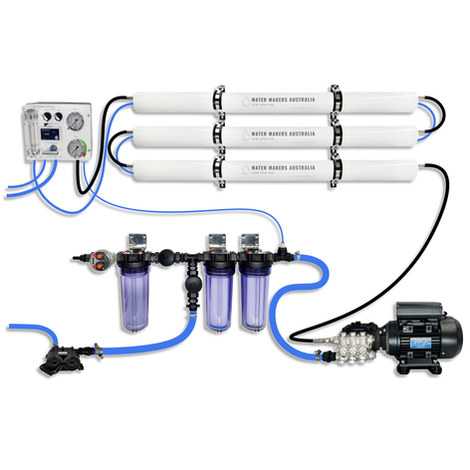
A three-membrane modular watermaker with 200 L/h nominal output and up to 240 L/h family-level marketing, for larger crews and heavy use.
Explore →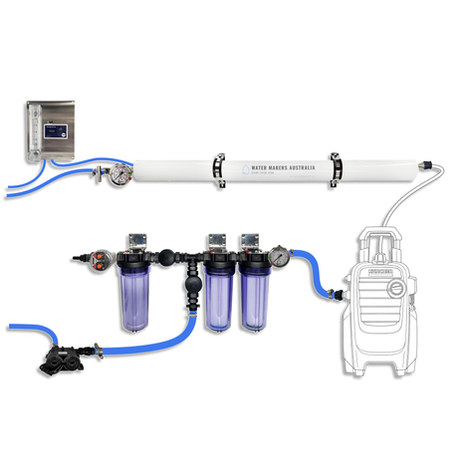
A one-membrane modular marine watermaker with 80 L/h nominal output, remote stainless control panel, standard consumables and direct Australian support.
Explore →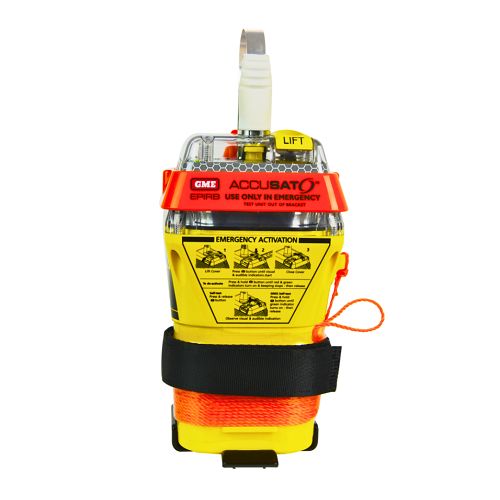
A 10‑year battery EPIRB with integrated GNSS (supports GPS and Galileo), infrared strobe and 121.5 MHz homing signal. Approved for worldwide COSPAS‑SARSAT operation.
Explore →