Loading this page…

Loading this page…
Sailing club
Royal Motor Yacht Club Port Hacking (RMYC Port Hacking) is a long-established Burraneer waterfront yacht and motor boat club on Gunnamatta Bay, Port Hacking. The club operates a floating marina, slipway and boat ramp, runs an active keelboat racing division trading as Port Hacking Sailing, and supports a broad membership across sailing, cruising, game fishing and powerboating alongside hospitality facilities including The Galley waterfront restaurant.
About
Royal Motor Yacht Club Port Hacking (RMYC Port Hacking) is a long-established Burraneer waterfront yacht and motor boat club on Gunnamatta Bay, Port Hacking. The club operates a floating marina, slipway and boat ramp, runs an active keelboat racing division trading as Port Hacking Sailing, and supports a broad membership across sailing, cruising, game fishing and powerboating alongside hospitality facilities including The Galley waterfront restaurant.
Service area: Gunnamatta Bay / Port Hacking (Burraneer), Sutherland Shire, Sydney, NSW
Keep exploring
On the northern shore of Gunnamatta Bay, where the Port Hacking waterway widens towards the sea, the Royal Motor Yacht Club Port Hacking has been a fixture of Burraneer waterfront life since 1934. It is a big, full-service, not-for-profit boating club: a floating marina, slipway, brokerage and marine suppliers sit alongside The Galley waterfront restaurant, and the membership spreads across sub-clubs for sailing, cruising, game fishing, power boating and even golf. Sailors should note the distinction up front — this is not the dinghy club up the bay.
Neighbouring Cronulla Sailing Club, formed in 1963 from the old VJ and VS clubs, runs its own separate program on the same bay, and the two are easily confused only by outsiders.
The sailing arm, which races today as Port Hacking Sailing, gives the club its keelboat heartbeat. Its home ground is Bate Bay, the open bight beyond the Port Hacking heads, where the Short Haul Summer Point Score decides both the club champion and the most improved skipper each season. Around that competitive core runs a social machinery built over decades: knowledge-sharing evenings such as the sailing group's eStela talks, a year-round calendar of family events, and a waterfront dining room that keeps the club busy seven days a week.
For coastal cruisers working the NSW coast, RMYC Port Hacking also positions itself as a welcoming stopover inside Port Hacking — guest berthing, fuel of friendship and a feed included. It is a club where power and sail genuinely coexist, and where the sailing division punches well above its size.
Rather than formal learn-to-sail courses, development at Port Hacking Sailing runs through a racing ladder that has been refined over decades — and the Short Haul Summer Point Score is its mainstay. Open to every boat in the club and sailed fortnightly on Sundays in Bate Bay, outside public-holiday weekends, the series doubles as the club's talent nursery: the same racing that decides the club champion also names the most improved skipper, an award that quietly maps each season's graduating class. New crews typically arrive through the skipper network rather than a classroom, learn their craft on the fortnightly pointscores, and are talked through the finer points at the sailing group's knowledge-sharing evenings, where experienced campaigners present on everything from tactics to tracking software.
Three perpetual trophies structure the season. The Spring Point Score entered the trophy cabinet in 1997, shortly after the sailing division itself was formed; the Autumn Point Score trophy, which came from Ian Short Sails, entered service in 1998; and the Summer Point Score trophy, donated in 2001, replaced the original Ian Short trophy. The offshore tradition runs deep too: the original Short Haul races were ocean courses between Botany Bay and Wattamolla, and although the later Long Haul series of overnight races eventually faded under time and crew pressures, a short ocean series still caters for sailors wanting blue water.
For a club without a dinghy school, the message to newcomers is simple — bring enthusiasm, find a berth on a pointscore boat, and the Bate Bay fleet will teach you the rest.
The clubhouse stands at 228–232 Woolooware Road, Burraneer, on the shores of Gunnamatta Bay — about twenty-six kilometres south of the Sydney CBD on the Burraneer Point peninsula, in the heart of the Sutherland Shire's boating country. Gunnamatta Bay itself is a sheltered, sandy-edged anchorage on Port Hacking, one of the most protected natural harbours on the NSW coast, and from the club's marina the whole waterway lies open: upstream towards the national park reaches, downstream to the heads and the open Tasman.
The waterfront infrastructure is substantial. In April 2012 the club opened a floating concrete marina of sixty-four berths taking vessels to eighteen metres, with plans for eight more; around it sit a boat ramp with direct access to the Port Hacking waterways, a slipway, tender and dinghy services, marine suppliers on site and a brokerage run in-house. Visiting vessels are welcomed at guest berths, and Marine Rescue NSW's Botany Port Hacking base keeps watch on VHF 16 seven days a week.
The Galley, the club's waterfront restaurant, trades daily with views across the bay, anchoring the club's role as a dining destination as much as a boating one. For the sailors, the working water is Bate Bay — the broad, honest stretch of ocean between Port Hacking and the northern beaches of Botany Bay where the pointscore fleets race fortnightly — with historic offshore courses reaching as far south as Wattamolla in the Royal National Park.
Few Sydney clubs can offer sheltered moorings, full marine services and open-ocean racing within a few miles of the clubhouse door.
The roots reach back to 1905, when the Motor Yacht Club was founded in Sydney; it opened its clubhouse at Point Piper in December 1910. On Port Hacking, organised powerboating arrived with the Port Hacking Rowing and Motor Boat Club at Lilli Pilli in 1922, renamed the Port Hacking Power Boat Club in 1932. The two strands joined in January 1934, when Foundation Commodore Claude Daly and Vice Commodore Frank O'Brian asked the Royal Motor Yacht Club of NSW to establish a Port Hacking branch — the parent club's minutes of 30 January 1934 record the directors' unanimous agreement — and on 8 December that year the branch's modest clubhouse opened on the site the club still occupies.
War service followed. During the Second World War the Navy took over the premises as the Volunteer Coastal Patrol's Southern Command headquarters under Rear Admiral Gould, and members' boats patrolled the coast between Sydney and Wollongong. Peace brought rebuilding: the clubhouse underwent extension and modernisation in 1995, and again in 2018, the floating marina arrived in 2012, and the kitchen, dining and lounge areas were refurbished in 2022. The sailing story runs parallel.
The Port Hacking Ocean Yacht Club, whose first commodore in 1964 is remembered simply as Fred, was the forerunner of today's sailing division; around 1991 a group of yachts moved to Cronulla Sailing Club, taking the original summer series trophy with them, and for a time the two clubs even synchronised races as a combined series. In 1997 the RMYC Sailing Division was formally established — the Spring Point Score trophy dates from that year — and it has raced since, latterly under the Port Hacking Sailing banner, keeping the ocean-racing thread of the club's history very much alive.
A practical cruising guide for the Moyne River port at the mouth of the Moyne River on Victoria’s south-west coast. It explains harbour geometry, seasonal conditions, principal sailing zones, anchorages, visitor facilities, known local hazards (bar, reefs, strong currents, surf and commercial traffic), regulatory controls and realistic experiences for day sailors, trailer-sailors and coastal cruisers. The guide draws on local port plans, state boating authorities, the yacht club’s visiting-boat practice and regional marine management documents.

Look for a friendly club with beginner-focused training, accessible facilities and boats, a supportive community, clear safety practices, and opportunities to progress at your own pace.
Explore →
Plan passages across Spencer Gulf or to Kangaroo Island by basing fuel on your boat’s actual consumption plus a generous reserve, choosing sensible staging/stop options that match your boat and crew, and prioritising shelter and weather windows (gale fronts, strong winds and tidal streams can make the gulf uncomfortable or unsafe). Confirm fuel availability, safe anchorages or marinas on your route, and check up-to-date local weather, tide and navigation information before you go.
Explore →
Use ramps and beaches with respect for local conditions: check ramp layout, tide and swell, wind direction, vehicle access and crowding; prepare boat and crew before you launch or retrieve; and follow local signage, courtesy and safety practices. Specifics vary by ramp and beach, so confirm details for the exact site before you go.
Explore →
Write a one‑page plan with the who/what/when/where/how of your trip, keep a copy on board and leave the main copy with a responsible person ashore (and optionally with your club, marina office or local volunteer rescue service).
Explore →
A practical guide for new sailors on picking the right Australian sailing club: training, boat access, racing, social fit, costs and the key questions to ask before joining.
Explore →A practical guide for recreational sailors planning visits to Albany and King George Sound. Covers the main anchorage areas, typical local weather patterns, tidal and current considerations, navigational hazards, on-the-water etiquette and a pre-departure checklist to help you plan a safe passage and enjoyable stopover
Explore →Practical guide for recreational sailors planning passage on the Hawkesbury River: how to plan around tides, choose anchorages, read local conditions and prepare the boat and crew for a safe, comfortable trip.
Explore →A practical guide for recreational sailors planning day sails or short cruises around Batemans Bay, Broulee and the Clyde River. Covers local conditions, safe approaches, anchorages, launching, tides, common hazards, and checklists for trip planning and on-water decisions.
Explore →Burke Yachtsman Gear Bag 40L - Shop Now Zip Pay | Tamar Marine Skip to content 59 – 63 Holbrook Street, Invermay Online Shop Open 24/7 Products search Contact us 1300 MARINE $ 0.00 0 Cart Burke Yachtsman Gear Bag 40L $ 79.90 Colour Choose an option Black Blue Black Blue Clear - Burke Yachtsman Gear Bag 40L quantity + Add to cart Enquire about this product SKU BAGB-Y24/BLACK* Category Bags - Sail & Gear A Burke classic and customer favourite, the Yachtsman’s Gear Bag is built tough to handle wet, salty conditions while keeping your gear dry and protected. Made from double coated waterproof…
Explore →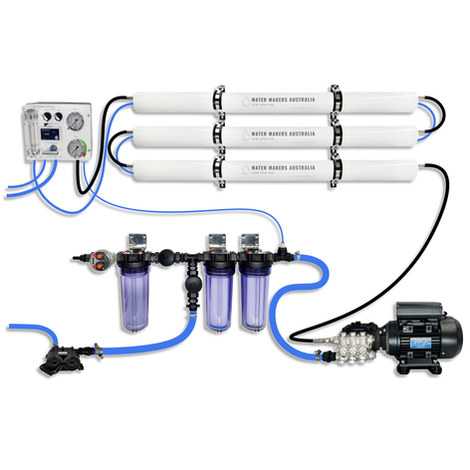
A three-membrane modular watermaker with 200 L/h nominal output and up to 240 L/h family-level marketing, for larger crews and heavy use.
Explore →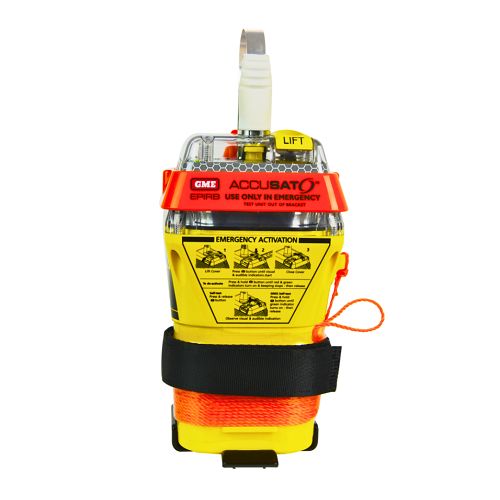
A 10‑year battery EPIRB with integrated GNSS (supports GPS and Galileo), infrared strobe and 121.5 MHz homing signal. Approved for worldwide COSPAS‑SARSAT operation.
Explore →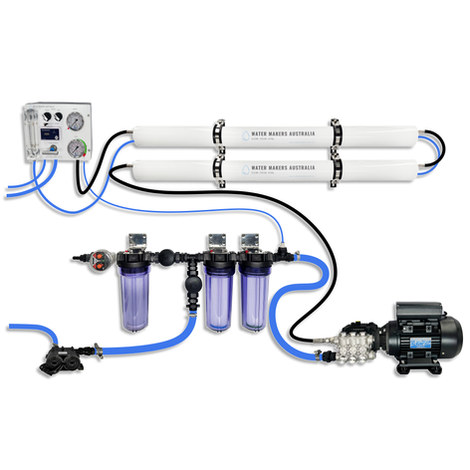
A two-membrane modular watermaker with 140 L/h nominal output, aimed at families and liveaboards that want more water per run.
Explore →