Loading this page…

Loading this page…
Sailing club
Lakeside club on the western shore of Lake Macquarie, based at "Lake Holme", the former home of Arnott's Biscuits founder William Arnott. Around 2,500 members, with sailing, dining and functions.
About
Lakeside club on the western shore of Lake Macquarie, based at "Lake Holme", the former home of Arnott's Biscuits founder William Arnott. Around 2,500 members, with sailing, dining and functions.
Service area: Toronto, NSW
Keep exploring
Few Australian clubs can claim a world speed record and six world sailing championships from the same waterfront, but the Royal Motor Yacht Club Toronto can. Housed at "Lake Holme", the former residence of Arnott's Biscuits founder William Arnott, on the western shore of Lake Macquarie, the club occupies one of the Hunter's most gracious boating addresses — a nineteenth-century waterfront home wrapped in modern club facilities, with what members happily describe as breathtaking views across the lake. Around 2,500 members belong today, and the club functions as much as a dining and functions venue — weddings, charity nights, reunions — as a sailing club.
Yet the sailing runs deep. An active sail boat committee races yachts twice a week, and the club's pedigree in the 505 dinghy class is extraordinary: RMYC Toronto crews won six 505 World Championships between 1983 and 2002, and the club says it has produced sailors who went on to become Olympians. Layered over that is the powerboating past — club member Ken Warby set the outright world water speed record of 511.11 km/h aboard Spirit of Australia in 1978, a mark that, per the club's history, still stands.
Ceremonial tradition is taken seriously: at inception the club enforced uniform dress on race days, and on formal occasions Flag Officers still turn out in Naval Summer Whites or Mess Uniform. Friendly rivalry comes via the R K Robertson Interclub Series against Lake Macquarie Yacht Club and Wangi Amateur Sailing Club. It is a club of contrasts — speedboat roar and dinghy finesse, heritage rooms and a hard-working race calendar.
The friendliest on-ramp here costs nothing at all. The club's Summer Friday twilight fun series is free to enter, carries no prizes and no handicaps, and is aimed squarely at beginners — a no-pressure evening sail where newcomers can learn the rhythm of a race course without any consequence beyond a good night on the water. It is a quietly clever piece of program design, funnelling the curious into a fleet that races twice a week through the season. Accredited dinghy instruction is not the club's game; on Lake Macquarie that role sits with the Discover Sailing Centre at neighbouring Lake Macquarie Yacht Club in Belmont, leaving RMYC Toronto to concentrate on its keelboat racing culture.
That culture is rich and year-round. Spring and summer bring Saturday pointscore racing in two divisions from 1.30pm, Wednesday twilight non-spinnaker racing on courses set in view of the clubhouse, and the Friday fun series; winter keeps Saturdays alive with pointscore racing alternating spinnaker scratch starts and non-spinnaker sweepstake handicaps, plus a Wednesday winter pointscore from 1.30pm.
Interclub competition thrives: the R K Robertson Series pits the club against Lake Macquarie Yacht Club and Wangi Amateur Sailing Club for the RKR Shield, while combined Windward-Leeward days and four Combined Long Course events each season are run cooperatively with those neighbours in three divisions. The headline fixtures give the calendar its shape — the 30 Mile Race down the lake past Pulbah Island, the Heaven Can Wait Charity Regatta each November with its one-lap dash, 12-hour and 24-hour races, the Police and Emergency Services Regatta, and the late-August Northshore and Adams Yachts regattas.
Lake Holme stands absolute waterfront at Toronto, on Lake Macquarie's western shore — a heritage residence turned clubhouse, with a marina berthing members' boats and race starts run between the RMYC club mark and the Toronto mark just offshore. The summer twilight courses are deliberately set in view of the clubhouse, so the evening fleet becomes part of the spectacle for those watching from the lawns with a drink in hand. The club opens at ten every morning except Christmas Day and Good Friday, closing between nine and midnight depending on the day, and it has long been a hub for the West Lakes business community as well as its sailors.
The sailing water itself is Lake Macquarie, the vast coastal lagoon whose scale regularly surprises visitors — the club's 30 Mile Race, open to all clubs around the lake, runs from the northern end as far south as Pulbah Island and Sunken Rock and still covers only part of the system. That expanse gives Toronto's race officers room for genuine long-course racing, and the combined series with Lake Macquarie Yacht Club and Wangi Amateur Sailing Club spreads fleets across the lake's full geography in three divisions.
Conditions on the lake suit twilight and weekend racing alike, with summer breezes settling into reliable afternoon patterns and the western shore enjoying the clubhouse-front stadium racing the club has made its own. For visiting boats, the combination of a member marina, a heritage clubhouse known for good food at reasonable prices, and a lake big enough to swallow a week of cruising makes Toronto one of the more complete club destinations in the Hunter.
The parent club was born on 6 July 1905, when a group of motorboat owners met at the Aaron's Exchange Hotel in Sydney to form The Motor Boat Club of New South Wales, promoting the new sport through racing and social events. In 1927 King George V granted the Royal prefix — the first such honour bestowed on a motorboat club beyond the United Kingdom — and that same year the club pushed north: on Saturday 1 November 1927 the Royal Motor Yacht Club Newcastle Branch opened at Lake Holme, Toronto, the former waterfront residence of William Arnott of Arnott's Biscuits fame.
The branch has traded there ever since, save for six wartime years when the RAAF took it over as a recreation centre for crews from the Rathmines Catalina flying boat base across the lake. In 2000 the branch was renamed Toronto, after the town it had served for seventy-three years.
The early club ran cruiser and powerboat racing with, its history records, "a very high degree of nautical ceremony and prestige", uniform dress mandatory on race days. The Queen's Birthday regattas became highlights of the Australian speedboat calendar, drawing boats from all over the country, and the club produced local, state, national and international speedboat champions — capped by Ken Warby's 511.11 km/h world water speed mark, set aboard Spirit of Australia in 1978.
Rising insurance costs and noise concerns eventually ended competitive speedboat racing on the lake, but the cruising section carried that tradition on. The sailing pedigree is just as gilt-edged: Toronto 505 crews won six World Championships — Terry Kyrwood and Reg Crick in Adelaide in 1983, Dean Blatchford and Tommy Woods in Germany in 1984, Gary Bruniges and Greg Gardiner in Japan in 1985, and Chris and Darren Nicholson in 1992, 1994 and 2002, from Santa Cruz to Durban to Fremantle.
A comprehensive cruising guide to Pittwater, the sheltered estuarine waterway north of Sydney framed by Ku-ring-gai Chase National Park and the Northern Beaches. The guide explains the waterway’s geography, seasonal wind and swell patterns, principal sailing zones, recommended anchorages, shore facilities, navigation and port interactions, local hazards and regulatory constraints, plus several practical day and weekend sailing experiences and the types of sailors and craft best suited to the area.

Expect very different seasonal systems across Western Australia: the south‑west (Perth to Albany) has a strong summer afternoon sea breeze (the “Fremantle Doctor”) and winter westerly fronts, while northern WA follows a wet/dry monsoonal cycle with strong seasonal onshore winds, thunderstorms and cyclone risk in the wet season. Local headlands, estuaries and tidal flows often change what you actually feel on the water, so learn the local timing and sheltered venues first.
Explore →
There are legal obligations in Western Australia for recreational boat owners and skippers covering vessel registration, carriage of safety equipment and general skipper responsibilities, but the exact requirements depend on vessel type, size, where you sail and whether the vessel is commercial or recreational. Check the Western Australian Department of Transport (DoT WA) and the national authority for the precise checklist that applies to your boat and voyage.
Explore →
Look for a friendly club with beginner-focused training, accessible facilities and boats, a supportive community, clear safety practices, and opportunities to progress at your own pace.
Explore →
Local rules, marine‑park zoning and permit needs vary by reserve around South Australia’s coast — check the relevant marine park zoning map and SA Department for Environment and Water (DEW) information for the exact area before you go.
Explore →A practical guide to the coastal weather systems that affect sailing along Western Australia's coast, focusing on the Fremantle Doctor, local sea breezes, and linked coastal phenomena. Explains how these systems form, when they tend to occur, how they influence boat handling and passage planning, common mistakes, and a
Explore →A practical guide for recreational sailors planning day sails or short cruises on Lake Macquarie. Covers the entrance, navigation considerations, popular anchorages, local weather and tide influences, mooring etiquette, safety checks and suggested itineraries around the lake.
Explore →
A practical, Australia-focused guide for planning and sailing around the Whitsunday Islands: weather and seasons, navigation and anchoring, moorings and parks, provisioning and charters, safety and common mistakes, plus checklists and next steps.
Explore →Practical guide for recreational sailors navigating the Swan River and coastal waters around Perth. Covers local weather patterns, tides and currents, river navigation, launching and berthing options, safety equipment, common hazards, and step-by-step pre-departure and on-water checklists tailored to Western Australian
Explore →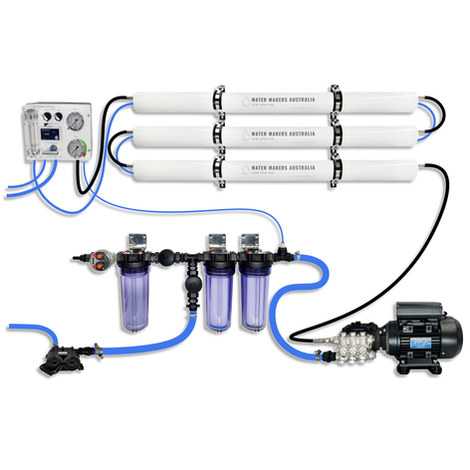
A three-membrane modular watermaker with 200 L/h nominal output and up to 240 L/h family-level marketing, for larger crews and heavy use.
Explore →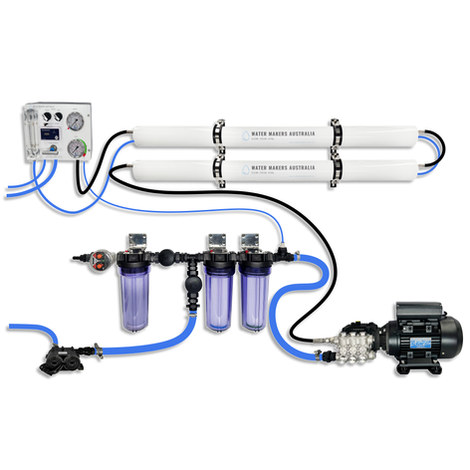
A two-membrane modular watermaker with 140 L/h nominal output, aimed at families and liveaboards that want more water per run.
Explore →Burke Yachtsman Gear Bag 40L - Shop Now Zip Pay | Tamar Marine Skip to content 59 – 63 Holbrook Street, Invermay Online Shop Open 24/7 Products search Contact us 1300 MARINE $ 0.00 0 Cart Burke Yachtsman Gear Bag 40L $ 79.90 Colour Choose an option Black Blue Black Blue Clear - Burke Yachtsman Gear Bag 40L quantity + Add to cart Enquire about this product SKU BAGB-Y24/BLACK* Category Bags - Sail & Gear A Burke classic and customer favourite, the Yachtsman’s Gear Bag is built tough to handle wet, salty conditions while keeping your gear dry and protected. Made from double coated waterproof…
Explore →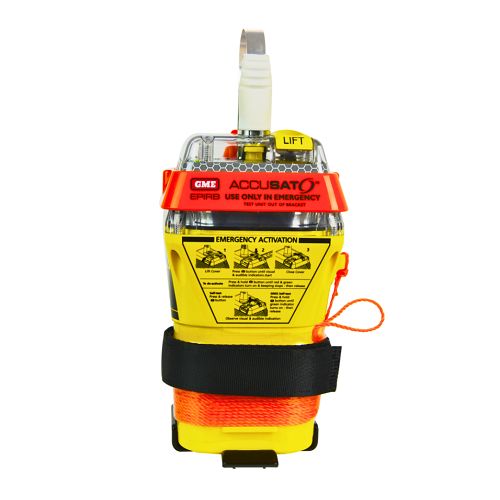
A 10‑year battery EPIRB with integrated GNSS (supports GPS and Galileo), infrared strobe and 121.5 MHz homing signal. Approved for worldwide COSPAS‑SARSAT operation.
Explore →