Loading this page…

Loading this page…
Sailing club
Royal Prince Alfred Yacht Club (RPAYC), known locally as “the Alfreds”, is a major yacht racing, training and marina club based at Green Point, Newport on Pittwater (Broken Bay), New South Wales. The club runs centreboard and keelboat programs, junior and youth development pathways, adult learn-to-sail and powerboat courses, regular estuary and offshore racing including long-distance passage events, and full marina, boatyard and storage services for members and visitors.
4.4 from 142 Google reviewsAbout
Royal Prince Alfred Yacht Club (RPAYC), known locally as “the Alfreds”, is a major yacht racing, training and marina club based at Green Point, Newport on Pittwater (Broken Bay), New South Wales. The club runs centreboard and keelboat programs, junior and youth development pathways, adult learn-to-sail and powerboat courses, regular estuary and offshore racing including long-distance passage events, and full marina, boatyard and storage services for members and visitors.
Service area: Newport (Pittwater), Northern Beaches, NSW
Keep exploring
The Youth Development Program is where the Alfreds' training reputation was made. Launched in the early 1990s — the club dates it to 1993 — it gave sailors aged 13 to 25 a structured bridge from dinghy sailing into keelboat competition, long before such pathways were standard. Two squads now operate: an intermediate group for 13-to-18-year-olds training from April to July, and a senior racing squad for 16-to-25-year-olds running May through September and into regatta season, all aboard the club's matched fleet of Elliott 7 keelboats.
Graduates have reached the Olympics, the America's Cup, the World Match Racing Tour and the Rolex Sydney Hobart, and seven of the ten sailors in Australia's squad for the 2026 New York Yacht Club Women's International Championship came through the program.
Underneath that elite layer sits the Alfreds Discover Sailing and Training Academy, delivering Australian Sailing-accredited courses for every stage. Weekend and school-holiday Tackers courses take children aged seven to twelve through their first seasons on Pittwater, while OutThere courses keep teenagers engaged. Adults can join learn-to-crew and learn-to-helm keelboat courses, twilight sailing experiences, women's development sessions under the SheSails banner, or powerboat and safety boat qualifications.
Centreboard squads feed sailors into club off-the-beach racing, and the season is punctuated by pathway regattas — the Harken International Youth Match Racing Regatta, the Hardy Cup, the Gingernut Cup and state and national youth match racing titles — so squads always have a competitive target. The most quietly remarkable offering is Alfreds Community Sailing, which takes emergency service workers, police from the Domestic Violence Unit and residents of the Northern Beaches Women's Shelter out on the water as part of mental-health support — work cited in the club's 2025 national awards recognition.
Green Point at Newport gives the club a rare combination: a protected estuary race track at the front door and the open Tasman Sea around the headland. Pittwater is a broad, deep drowned-valley estuary on Sydney's northern beaches, ringed by Ku-ring-gai Chase bushland and generally spared the ferry wash and commercial traffic of the harbour — the reason the club's committee started hunting for land up here back in 1919, judging the harbour too congested for racing. Sea breezes fill reliably through the afternoon, the surrounding ridges bend and soften them in places, and longer courses can run out past Barrenjoey Head and up the coast, as the annual race to Coffs Harbour demonstrates.
The physical plant at 16 Mitala Street has grown piece by piece since volunteers built the first Jubilee-class boatshed. Crystal Bay, immediately beside the club, carries moorings first laid in 1947, a launching ramp, hardstand and marina berthing, while Green Point itself has a service wharf and further hardstand space. Marina arms A, B, C and L handle day-to-day berthing and swell to accommodate championship fleets when events like the Hansa Worlds come to town.
Ashore there is the main clubhouse, a separate training centre, concessionaires' building, slipway and generous parking. Newport village, wedged between the Pacific surf and the estuary, supplies the post-race essentials, with The Newport hotel directly across the water. It is a genuine dual-water venue: sheltered enough for seven-year-olds in Tackers, exposed enough to prepare crews for offshore work.
Weekend pointscore racing stays inside the estuary, while the offshore program steps straight from the club's start lines into passage events along the coast.
The Alfreds trace their line further back than almost any Australian club: to the Mosquito Yacht Club of 1856, and from there to an October 1867 meeting at Punch and McGrath's Hotel in King Street, Sydney, where boatowners voted to establish the Prince Alfred Yacht Club, naming it for the Duke of Edinburgh ahead of his arrival in HMS Galatea. Richard Harnett became commodore in 1868, members paraded in blue double-breasted coats and straw hats, and King George V authorised the "Royal" prefix in August 1911, adding a crown to the burgee. For decades the club operated from city addresses — Moore Street, Castlereagh Street, then Rowe Street — while racing on the harbour.
The Pittwater chapter began with a £650 purchase of Green Point, opened officially by Governor Lord Wakehurst on 17 December 1938 with 22 Jubilee yachts contesting the first race. Post-war rebuilding was distinctly homespun: volunteers rebuilt the slipway in 1957, four sheep grazed the point as "mobile lawn mowers", and the neighbouring house "Moonbar" — nicknamed Buckingham Palace — became the clubhouse, complete with pool. Dredging and reclamation in 1962 created Marina A for roughly 52 vessels.
When Prince Philip laid the foundation stone of the present clubhouse on 15 May 1968, a 60-knot southerly forced him to do it "by remote control" from indoors. The club's proudest modern day came at Cowes in July 2003, when its two-boat team — Bob Oatley's Wild Oats and Colin O'Neil's Aftershock — won the Admiral's Cup for Australia by seven points, a victory celebrated afresh at its 20th anniversary. Sesquicentenary season 2016–17 brought Club of the Year honours, repeated on the state stage in 2025.
Customer perspective
★ 4.4 · 142 Google reviews
“Yatch club - Great atmosphere, view and food. Friendly staff.”
“Great spot on Pittwater. Friendly sailors after a Wednesday race 🍻”
Hi Matt, So pleased you enjoyed our location and the Wednesday race.
“Couldn’t recommend the RPAYC more highly. We stayed five nights in the marina and loved every minute. The showers were spotless and spacious, the coffee was excellent, and the club has a genuinely warm and welcoming atmosphere. The laundry facilities were also awesome, with a very new large LG washer and dryer — an absolute bonus for cruisers staying a few nights. Special thanks to Lara, who was so lovely and incredibly helpful throughout our stay. The businesses within the marina precinct are great too. The chandlery is very well stocked, and we even purchased our new electric motor from Andersen Marine Electrics thanks to their great service and advice. A beautifully run club with friendly staff, fantastic facilities, and a professional yet relaxed feel. We’ll definitely be back.”
Thanks for your 5 star review, glad you enjoyed your stay;))
“Couldn’t recommend this place enough, the kindest staff & a beautiful setting.”
Thank you Catherine
“A wonderful venue for a special occasion with family and friends.”
Thanks for the 5 star review Hugo.
Batemans Bay and the Clyde River form a classic NSW South Coast cruising region where a sheltered, tidal estuary meets a short, island‑dotted entrance to the Tasman Sea. It’s distinctive for easy access from Canberra, a mix of river and bay sailing, a compact marina and mooring network, and a river entrance (the Clyde River bar) that can change rapidly. The area suits day sails, weekend cruising, trailer‑boat exploration and sheltered coastal passages; offshore or long‑passage plans require careful timing and local knowledge. Preparation for tidal flow, variable southerly swells and shallow, s

Write a one‑page plan with the who/what/when/where/how of your trip, keep a copy on board and leave the main copy with a responsible person ashore (and optionally with your club, marina office or local volunteer rescue service).
Explore →
Pick a protected bay, estuary or river reach where you can rig, launch and arrive on calm water within a short, sheltered transit; choose a site with a good ramp or jetty, clear recovery options and a nearby sailing club, marina or commercial operator for local knowledge and help.
Explore →
Progress gradually by increasing exposure, practising specific skills, sailing with more experienced crew/skippers, and deliberately training for each new step—start in calm sheltered bays, then move to longer trips, busier waters, stronger winds and finally open coastal passages when you and your crew are consistently competent and comfortable.
Explore →
Before your first sail in South Australian waters check the weather and tide, make sure the boat and safety equipment are fit for the trip, confirm local rules and any area-specific hazards, and tell someone your plan.
Explore →A practical guide to preparing, planning and executing a recreational offshore passage along the New South Wales coast. Covers route selection, weather and tidal considerations, vessel and crew checks, safety equipment, communication, watchkeeping and common mistakes, with clear pre‑departure and underway checklists.
Explore →
A practical guide for new sailors on picking the right Australian sailing club: training, boat access, racing, social fit, costs and the key questions to ask before joining.
Explore →A practical guide for recreational sailors planning day sails or short cruises around Batemans Bay, Broulee and the Clyde River. Covers local conditions, safe approaches, anchorages, launching, tides, common hazards, and checklists for trip planning and on-water decisions.
Explore →A practical guide to selecting and using anchorages around New South Wales for cruising sailors. Covers sheltered bays, tidal considerations, holding, approach planning, and example anchorages with local conditions to check before you go.
Explore →Burke Yachtsman Gear Bag 40L - Shop Now Zip Pay | Tamar Marine Skip to content 59 – 63 Holbrook Street, Invermay Online Shop Open 24/7 Products search Contact us 1300 MARINE $ 0.00 0 Cart Burke Yachtsman Gear Bag 40L $ 79.90 Colour Choose an option Black Blue Black Blue Clear - Burke Yachtsman Gear Bag 40L quantity + Add to cart Enquire about this product SKU BAGB-Y24/BLACK* Category Bags - Sail & Gear A Burke classic and customer favourite, the Yachtsman’s Gear Bag is built tough to handle wet, salty conditions while keeping your gear dry and protected. Made from double coated waterproof…
Explore →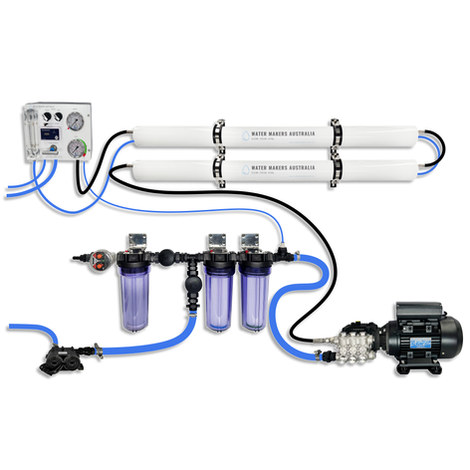
A two-membrane modular watermaker with 140 L/h nominal output, aimed at families and liveaboards that want more water per run.
Explore →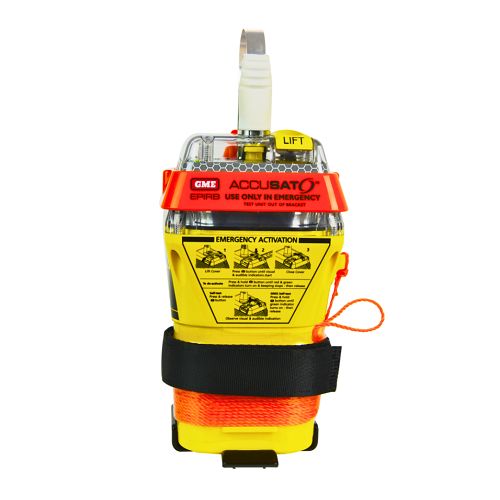
A 10‑year battery EPIRB with integrated GNSS (supports GPS and Galileo), infrared strobe and 121.5 MHz homing signal. Approved for worldwide COSPAS‑SARSAT operation.
Explore →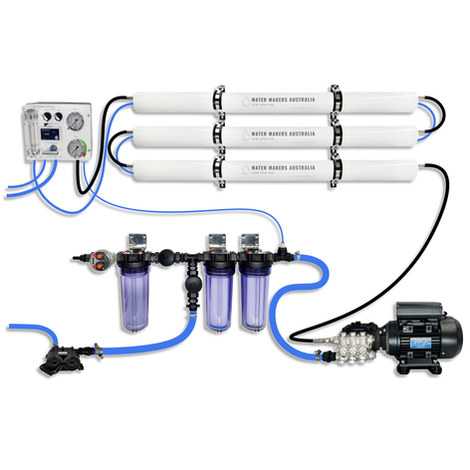
A three-membrane modular watermaker with 200 L/h nominal output and up to 240 L/h family-level marketing, for larger crews and heavy use.
Explore →On the water
2kn
Force 1 · Light air from the W
Not enough wind
Ripples, no foam crests