Loading this page…

Loading this page…
Sailing club
Community sailing club based at South Lake Macquarie (Sunshine, NSW) offering organised sailing programs and member activities for recreational sailors and local boating enthusiasts.
About
Community sailing club based at South Lake Macquarie (Sunshine, NSW) offering organised sailing programs and member activities for recreational sailors and local boating enthusiasts.
Service area: Sunshine, NSW
Keep exploring
Community sailing club based at South Lake Macquarie (Sunshine, NSW) offering organised sailing programs and member activities for recreational sailors and local boating enthusiasts.
Learn-to-sail at Sunshine is refreshingly straightforward: a dinghy program open to children from eight years old and to adults, running from early November through to the end of the season. You won't find the national program badges attached to it — no Tackers branding, and no Discover Sailing Centre accreditation on file — yet the aim is identical: getting local families onto the lake in small boats with a clear path into Sunday racing.
That pathway matters because the racing calendar is the club's real strength. Dinghy racing runs Sundays from early September until Easter, with sailing instructions and results published each season, and during daylight saving a Friday twilight series puts yachts on the water to finish the week. The fleets associated with the club over the years span Lasers and ILCAs, Contenders, Australian 125s — boats like Night Flight To Venus and Jynnantonnyx have raced out of Sunshine — and historically even the NSW 10-foot skiff championships were held here, tying the club to one of the oldest classes in Sydney-Hobart skiff culture.
What sets the club apart, though, is its role as a regatta venue, which functions as an informal development program of its own. When 131 Lasers or a full Contender nationals fleet shows up on your doorstep, junior and adult sailors alike get front-row exposure to genuine world-title-holding competition without leaving home water. Club volunteers run the races, work the rescue boats and feed the visitors, and in doing so keep race-management skills alive in the membership that smaller clubs often lose.
It is an unusual model: rather than building a coaching pyramid, Sunshine has built a reputation as a place where big fleets want to come and race, and lets its sailors grow up inside that environment.
Lake Macquarie is commonly described as Australia's largest coastal saltwater lake, and Sunshine sits at its southern end — the quiet end, as the club calls it, well away from the boat traffic around the lake's northern suburbs. The club's own assessment of its sailing water is confident: it calls Sunshine one of the country's best sailing locations, citing "little traffic, no currents" and a generally consistent north-easter through the summer months. Regatta reports back the picture up, recording typical racing breezes of seven to thirteen knots from the east-north-east and twelve to thirteen from the east.
Those are near-ideal dinghy conditions — enough pressure to plane, flat enough water to keep the racing tactical, and a reliable summer pattern that lets race committees set a course with confidence. It is no accident that class associations keep sending their masters and national championships here; big fleets need room and steady air, and Sunshine provides both without the tidal complications of a river or the swell of an open coast.
On shore the setup is simple and functional. The clubhouse carries a balcony overlooking the lake, the canteen operates on sailing days, and the hall is available for hire between events. The club maintains close ties with the Sunshine Progress Association and the Morisset-area business community, whose sponsorship keeps the books balanced. Sunshine itself is a lakeside locality in the Morisset district, a short drive from the M1 and the rail line, which makes the venue practical for visiting trailers — a detail that matters when a hundred Lasers are towing in for a weekend.
For local families, the appeal is even simpler: quiet water, a grassy foreshore, and a club that exists, by its own description, so members can get out and enjoy the lake.
By its own account the club has been operating since 1948; the exact founding date, and the names of the first office bearers, are details the public record has not preserved. What has survived is the story of one founding member who embodied the club's whole character. Peter Jacobson — known to everyone as Alfie — helped drive the building of the original SLMASC clubhouse, and he and his family stayed woven into the club's life for the remainder of his days, right up to his death in September 2021 at the age of ninety.
Jacobson was also a prodigious wooden boatbuilder, credited with completing more than seventy boats. Among them was a replica of Chum, the very first Vaucluse Junior, originally launched in August 1931 with registration 001 — a fitting project for a Sunshine man, given the club's later role in the VJ and VS skiff tradition and its hosting of NSW 10-footer championships. His career as a builder mirrors the era when clubs like this one were sustained by members who could knock together their own boats, their own clubhouses and their own race courses without outside help.
The modern chapter of the club's history is written largely in regatta results. Australian 125 dinghies have been based and raced at Sunshine for years. The Laser State Masters returned often enough that the class's reports read like a running diary of the venue — fleets of 131 and 107 boats, world masters champions on the start line, and warm words for the SLMASC race team and the volunteers behind the catering.
In January 2026 came the biggest recent marker: the 56th International Contender Australian National Championship, ten races completed over four days, won by reigning world champion Mark Bulka. Through it all the club has kept its amateur ethos — very reasonable membership rates, in its own words, set deliberately to encourage locals onto the water, and an annual rhythm that still closes with a presentation dinner and AGM each April, lately catered by the Rathmines butchers.
Seventy-odd years on, the club Alfie Jacobson helped build is still doing exactly what it was built to do.

Tidal streams and local wind patterns can change trip time, fuel use, helm balance and safety margins on short coastal runs — plan your departure and route to use favourable tidal flow, allow margin for wind-driven sea and gusts, and check up-to-date local tide and weather information before you go.
Explore →
Plan to transit Sydney Heads and northern NSW estuary entrances to take advantage of favourable tidal streams or slack water; account for local acceleration over shoals, eddies, wind-on-current effects and river discharge, and always check the latest local observations and tide/stream products before departure.
Explore →
Pick a protected bay, estuary or river reach where you can rig, launch and arrive on calm water within a short, sheltered transit; choose a site with a good ramp or jetty, clear recovery options and a nearby sailing club, marina or commercial operator for local knowledge and help.
Explore →
Expect the usual IALA-B lateral system (red and green), cardinal and isolated-danger marks, safe-water and special marks, plus harbour-specific fairway buoys, leading/transit marks and exclusion or speed‑limit buoys. Check local harbour charts and Notices to Mariners for exact positions and light characteristics before entry.
Explore →A practical guide for recreational sailors planning day sails or short cruises on Lake Macquarie. Covers the entrance, navigation considerations, popular anchorages, local weather and tide influences, mooring etiquette, safety checks and suggested itineraries around the lake.
Explore →Practical guidance for recreational sailors in New South Wales on navigating marine parks, using moorings and anchoring responsibly. Covers how to plan passages, approach moorings, set and retrieve an anchor, minimise environmental impact and follow local rules.
Explore →Practical guide for recreational sailors navigating the Swan River and coastal waters around Perth. Covers local weather patterns, tides and currents, river navigation, launching and berthing options, safety equipment, common hazards, and step-by-step pre-departure and on-water checklists tailored to Western Australian
Explore →A concise, practical guide for recreational sailors in New South Wales that explains southerly busters, sea breezes and east coast lows, how they form, how they affect coastal sailing, common signs to watch for, equipment and preparation, and clear next steps to plan safer outings.
Explore →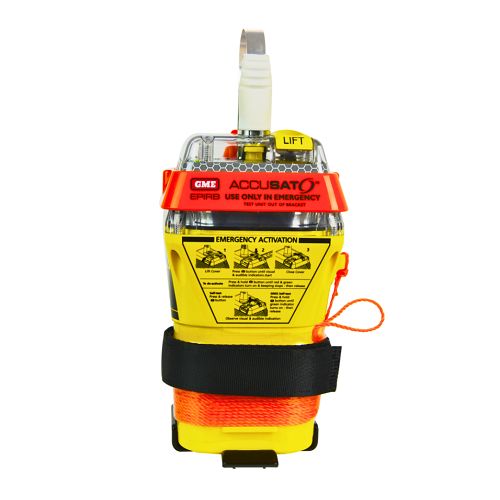
A 10‑year battery EPIRB with integrated GNSS (supports GPS and Galileo), infrared strobe and 121.5 MHz homing signal. Approved for worldwide COSPAS‑SARSAT operation.
Explore →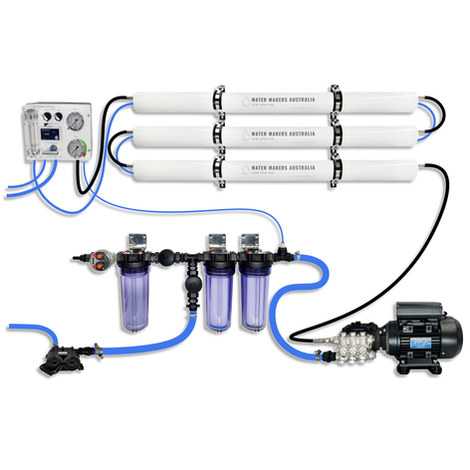
A three-membrane modular watermaker with 200 L/h nominal output and up to 240 L/h family-level marketing, for larger crews and heavy use.
Explore →
Self-contained, battery-powered plug‑and‑play autopilot designed for standard hydraulic steering systems.
Explore →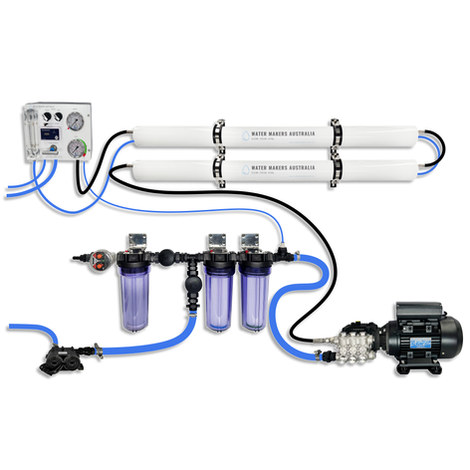
A two-membrane modular watermaker with 140 L/h nominal output, aimed at families and liveaboards that want more water per run.
Explore →