Loading this page…

Loading this page…
Sailing club
Southern Highlands Sailing Club is a small, volunteer-run dinghy and multihull club that sails on Fitzroy Falls Reservoir (Nowra Road, Fitzroy Falls, NSW). The club runs a mixed-fleet, yardstick-handicap Sunday racing programme each season (October–April) and welcomes dinghies, catamarans and trailer-sailers for day or season membership. There is no permanent clubhouse or accredited learn-to-sail school: racing, informal skills transfer and a family-friendly picnic-ground setting form the core of the club experience.
About
Southern Highlands Sailing Club is a small, volunteer-run dinghy and multihull club that sails on Fitzroy Falls Reservoir (Nowra Road, Fitzroy Falls, NSW). The club runs a mixed-fleet, yardstick-handicap Sunday racing programme each season (October–April) and welcomes dinghies, catamarans and trailer-sailers for day or season membership. There is no permanent clubhouse or accredited learn-to-sail school: racing, informal skills transfer and a family-friendly picnic-ground setting form the core of the club experience.
Service area: Fitzroy Falls / Southern Highlands (Nowra Road, Fitzroy Falls, NSW)
Keep exploring
High above the Shoalhaven lowlands, on a WaterNSW reservoir among the hills behind Nowra, sails a club that cheerfully calls itself the Sailing Club in the Clouds. Southern Highlands Sailing Club has been racing on Fitzroy Falls Reservoir since 1978, and it remains deliberately small: around forty members at last published count, roughly a dozen boats on the water of a Sunday, and an open invitation to families and new residents of the highlands to come and join in.
This is not a class-racing club and makes no apology for it. The fleet is mixed and proudly so — multihulls dominate, with Hobie 16s and 18s, Nacra 5.8s and 14-squares, Windrushes and Maricats the most numerous craft on the reservoir, while the Laser stands as the preferred monohull alongside Spirals and the occasional trailer-sailer. Everything races together on yardstick handicap, and the club highlights the close quarters battles between catamaran skippers and Laser sailors as part of the fun. Even rowing boats are welcome at the club area.
The atmosphere is casual country sailing in the best sense. The season runs from October to April, the club gathers every Sunday between half past ten and half past four, and a modest day or season membership fee is all that stands between a visitor and a start line. There is no learn-to-sail academy, no paid staff, and no permanent clubhouse — just a reservoir, a rescue boat, a barbecue and a group of highland families who have kept Sunday racing alive for more than four decades. For anyone who has moved to Bowral, Moss Vale or the villages around Fitzroy Falls and wondered where the sailors go, the answer is twenty kilometres south-east, up on the dam.
Honesty first: Southern Highlands Sailing Club runs no formal learn-to-sail program. There is no Tackers fleet, no Discover Sailing Centre accreditation, and no structured junior pathway on record — a common reality for small volunteer clubs on inland water, where the membership base is simply too thin to sustain accredited instruction. What the club offers instead is the oldest sailing education there is: turn up, rig your boat, and race against people who know the water.
That racing is the program. Mixed-fleet starts go away at one and three o'clock each Sunday in season, with the fleet chasing two perpetual trophies — a Commodore's Cup, plus a season-long Point Score — both settled on yardstick handicaps so that a Nacra and a Laser can fight for the same silverware. The format keeps the barrier to entry low: any dinghy, catamaran or trailer-sailer can join in, and the handicap system means a family arriving with an ageing Maricat is racing meaningfully from the first weekend rather than trailing a one-design fleet they cannot afford to join.
Safety on the water is handled by the club's rescue boat, and members holding a current boat licence are encouraged to take a turn keeping the aquatic environment safe — another way newcomers get folded into the life of the club. In practice, skills transfer here the way they always have in country clubs: rigging help in the car park, crewing spots on the bigger cats, and fifty Sundays a season of short, sharp handicap racing.
The multihull-heavy fleet is a genuine asset in that regard, because two-up catamarans are natural teaching platforms, with room for an experienced hand and a learner on the same trampoline. It is informal, unstructured and entirely dependent on volunteers — and it has worked, uninterrupted, since 1978.
Fitzroy Falls Reservoir sits on Yarrunga Creek, just upstream of the falls themselves, on the Nowra Road about twenty kilometres south-east of Bowral. It is a WaterNSW storage rather than a natural lake — part of the greater Sydney catchment — which shapes everything about how the club uses it. Access is shared with land-based anglers chasing trout and bass from designated stretches of the eastern foreshore, and the site is open around the clock with free entry.
WaterNSW maintains the reserve as a picnic and recreation area: barbecues, shelters and tables, toilets including disabled facilities, drinking water, parking, a playground for the kids and interpretive signage about the catchment. The club area itself adds its own barbecue facilities and sits near the playground, which suits the family character of the membership — kids have somewhere to be while boats are rigged and races are run. There is no permanent clubhouse and no dedicated boat storage on record; the reservoir's picnic-ground setting is the club's home in every sense.
The sailing water is typical of a highland storage: enclosed, sheltered from sea breezes, and fed by whatever wind makes its way across the ranges. The club publishes no claims about typical conditions, and anyone who has sailed inland waters will know to expect variability — light patches near the shorelines, shifts rolling over the tree line, and the occasional solid pressure line that rewards the sailor watching the water rather than the compass. That unpredictability suits handicap racing well, keeping outcomes open across the mixed fleet.
The setting compensates for any fickleness in the breeze: bush-clad shores, cool highland air, and a body of water that feels a long way from the coastal rat race despite sitting barely an hour from the Shoalhaven coast and within easy reach of the highlands towns.
The club's recorded story begins in 1978 at Fitzroy Falls, when a group of local sailors formed Southern Highlands Sailing Club and got their inaugural 1978–79 season away to what the surviving account calls a great success. Bryan Fryer was elected the first Commodore, with Robert Jones as first Secretary, and the founding-era fee structure tells its own story about the club's intentions: ten dollars for an individual membership, ten dollars to register a boat. From day one this was built to be affordable, informal and open.
The timing was no accident. The Southern Highlands was growing steadily through the late seventies as tree-changers and commuting families moved into the Bowral-Moss Vale district, and a reservoir twenty minutes away offered the only sizeable sailing water between the highlands and the coast. Fitzroy Falls Reservoir, managed then as now as part of the Sydney water supply system, was already open for low-impact recreation, and a mixed-fleet sailing club was a natural fit for a waterway where no single class could muster the numbers for one-design racing.
The multihull character of the fleet established itself early and never left. By the time of the club's 34th year, around 2012, Hobies, Nacras, Windrushes and Maricats were the dominant craft, with the Laser the monohull of choice, and membership sat at about forty with a dozen boats racing regularly. That year Commodore Greg Longhurst was leading a committee focused on growth, targeting new highland residents and young families — the same constituency the club courts today with its Sailing Club in the Clouds nickname and its open invitation to day members.
Milestones beyond the 34th anniversary are not publicly documented; the club communicates mainly through its Facebook presence and lets the Sunday racing speak for itself. What the record does show is continuity: same reservoir, same Sunday rhythm, same handicap fleet, and a founding formula — cheap, casual, family-first — that has never needed changing.
Batemans Bay and the Clyde River form a classic NSW South Coast cruising region where a sheltered, tidal estuary meets a short, island‑dotted entrance to the Tasman Sea. It’s distinctive for easy access from Canberra, a mix of river and bay sailing, a compact marina and mooring network, and a river entrance (the Clyde River bar) that can change rapidly. The area suits day sails, weekend cruising, trailer‑boat exploration and sheltered coastal passages; offshore or long‑passage plans require careful timing and local knowledge. Preparation for tidal flow, variable southerly swells and shallow, s

Maybe — it depends. In NSW you often need registration and a boat operator licence for motorised vessels, but many small trailerable sailing dinghies without engines don’t require boat registration or a licence. Check the specific rules for your craft, trailer and engine.
Explore →
Look for a friendly club with beginner-focused training, accessible facilities and boats, a supportive community, clear safety practices, and opportunities to progress at your own pace.
Explore →
Late spring to summer is usually the best time for beginners to start learning to sail in Tasmania because the weather is generally warmer, days are longer and conditions are often more settled. Expect lighter to moderate winds with regular afternoon sea breees in summer, while spring and autumn bring more changeable and sometimes stronger conditions; winter is colder, wetter and typically windier with more fronts and swell.
Explore →
Pick a stable, simple, forgiving dinghy with a single sail or basic sloop rig, affordable handling and easy maintenance—ideally one with a local class or school nearby so you can access coaching and spare parts.
Explore →
A practical guide for new sailors on picking the right Australian sailing club: training, boat access, racing, social fit, costs and the key questions to ask before joining.
Explore →A practical guide for recreational sailors planning visits to Albany and King George Sound. Covers the main anchorage areas, typical local weather patterns, tidal and current considerations, navigational hazards, on-the-water etiquette and a pre-departure checklist to help you plan a safe passage and enjoyable stopover
Explore →A practical guide to the coastal weather systems that affect sailing along Western Australia's coast, focusing on the Fremantle Doctor, local sea breezes, and linked coastal phenomena. Explains how these systems form, when they tend to occur, how they influence boat handling and passage planning, common mistakes, and a
Explore →
A practical, Australia-focused guide for planning and sailing around the Whitsunday Islands: weather and seasons, navigation and anchoring, moorings and parks, provisioning and charters, safety and common mistakes, plus checklists and next steps.
Explore →Burke Yachtsman Gear Bag 40L - Shop Now Zip Pay | Tamar Marine Skip to content 59 – 63 Holbrook Street, Invermay Online Shop Open 24/7 Products search Contact us 1300 MARINE $ 0.00 0 Cart Burke Yachtsman Gear Bag 40L $ 79.90 Colour Choose an option Black Blue Black Blue Clear - Burke Yachtsman Gear Bag 40L quantity + Add to cart Enquire about this product SKU BAGB-Y24/BLACK* Category Bags - Sail & Gear A Burke classic and customer favourite, the Yachtsman’s Gear Bag is built tough to handle wet, salty conditions while keeping your gear dry and protected. Made from double coated waterproof…
Explore →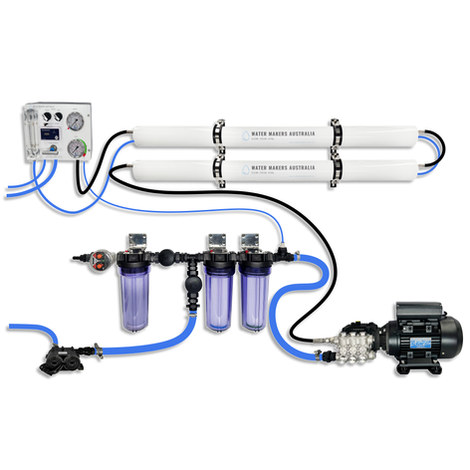
A two-membrane modular watermaker with 140 L/h nominal output, aimed at families and liveaboards that want more water per run.
Explore →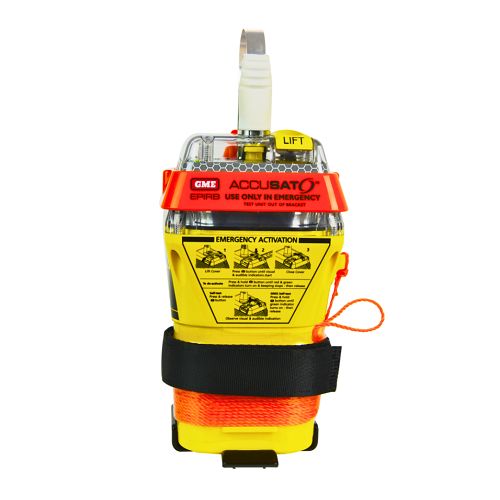
A 10‑year battery EPIRB with integrated GNSS (supports GPS and Galileo), infrared strobe and 121.5 MHz homing signal. Approved for worldwide COSPAS‑SARSAT operation.
Explore →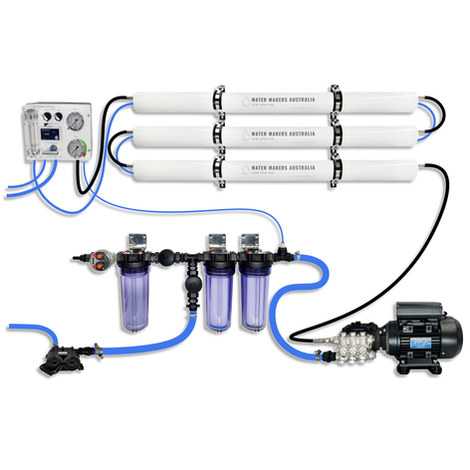
A three-membrane modular watermaker with 200 L/h nominal output and up to 240 L/h family-level marketing, for larger crews and heavy use.
Explore →