Loading this page…

Loading this page…
Sailing club
Founded in 1872 and based at Cremorne Point on Mosman Bay, the Sydney Amateur Sailing Club (SASC) is a member-run keelboat club on Sydney Harbour that combines competitive harbour racing with a strong volunteer and social culture. The club operates a fleet-focused racing programme (including Friday twilights and seasonal weekend series), offers club-serviced moorings and a tender service, and provides slipway and boatshed facilities that support maintenance of timber classics and modern racing yachts.
About
Founded in 1872 and based at Cremorne Point on Mosman Bay, the Sydney Amateur Sailing Club (SASC) is a member-run keelboat club on Sydney Harbour that combines competitive harbour racing with a strong volunteer and social culture. The club operates a fleet-focused racing programme (including Friday twilights and seasonal weekend series), offers club-serviced moorings and a tender service, and provides slipway and boatshed facilities that support maintenance of timber classics and modern racing yachts.
Service area: Mosman Bay / central Sydney Harbour
Keep exploring
Sydney Amateur Sailing Club (SASC) is a long‑established sailing club on Sydney Harbour, based at Cremorne Point / Mosman Bay. The club runs organised racing, regattas and member events, offers membership and crew opportunities (including SailPass and skippers briefings), and provides on‑site boating facilities such as a tender service, boatsheds with dinghy and locker storage, a Green Shed for working on yachts, a slipway with shipwright services and weekend slipping, and club moorings.
The doorway into the Sydney Amateur Sailing Club is not a learn-to-sail course — it is a crew spot on somebody's boat. The club operates a crew matching service that connects newcomers with skippers and yachts suited to their level of experience, backed by informal mentorship from long-standing members who know the harbour's moods intimately. For a keelboat club with no dinghy training arm, this is the engine of recruitment, and it has been deliberately widened in recent years.
The club created Crew and Sail Pass membership categories back in 2019 so that people without a boat of their own could join properly and race under Australian Sailing insurance cover; more than 60 Sail Pass sign-ups arrived in the first month alone, a strong early verdict on the idea.
Racing development happens on the water rather than in a classroom. A summer series runs regular weekend racing through spring and summer, and the club's famous Friday twilight races — finished with a barbecue and prize-giving on the deck — are where many crews learn their craft in the forgiving evening breeze before stepping up to the weekend divisions. The Water Women Committee adds a distinctly organised strand, running women's sailing rallies under the "Women's Rally For Fun" banner alongside lunches designed to bring more women into the sport in a supportive setting. It is the sort of program that quietly changes who shows up on start lines over time.
Learning at the Amateurs also has a cerebral side. Regular talks on sailing and maritime history draw on the club's extraordinary archive and the deep knowledge in its membership, so a newer sailor can pick up not just trim and tactics but the stories of the boats and people who shaped the harbour's racing scene. It suits the place: a club where developing as a sailor has always meant developing as a member.
The clubhouse stands at 1 Green Street, Cremorne Point, on the western edge of Mosman Bay — a site the club has held since 1962, on land the club acknowledges as the country of the Cammeraygal people, who knew Cremorne Point as Woolwarra-jeung. It is a waterside position in the truest sense: a historic clubhouse with a deck over the water, club-serviced moorings laid in the bay, and a tender service on weekends, Wednesdays and public holidays — plus Friday twilight evenings — to ferry crews between shore and boat.
Behind the social veneer sits serious working infrastructure. A professional slipway with expert shipwrights — the boatshed is managed by Rod Phillips — keeps timber classics and modern racers alike in survey, supported by boat storage options, a dinghy shed, the boatshed known as the "Green Shed" and several vessels of its own. A ten-year capital works program, funded in part by a tax-deductible development fund, is renewing pontoons and sheds, while solar panels, careful control of slipway runoff and sorted waste reflect a modern environmental conscience.
The sailing water itself is the main stage of Sydney Harbour, raced from the Mosman Bay base across the harbour's central reaches, sharing the broad playground with the Royal Sydney Yacht Squadron at Kirribilli and Middle Harbour Yacht Club at The Spit. It is demanding water in the best way. Breezes accelerate and bend around headlands and high foreshores, tidal currents run hard around the points, and ferries and commercial traffic keep every crew's head out of the boat.
In summer the prevailing nor'easter sets the terms for the twilight races, filling in through the afternoon; winter turns colder and more variable, rewarding crews who can read a shifting westerly off the high northern shore. Few club courses in Australia test boat handling against so many variables in a single afternoon.
The founding meeting took place at Tom Keary's Hotel on the first day of October 1872 — a Tuesday. Four boats and twelve members were the starting asset base. Their grievance was simple: their yachts, all under 22 feet, were deemed too small for the established clubs of the era, the Australian Yacht Club (later the Royal Sydney Yacht Squadron) and the Royal Prince Alfred Yacht Club. The snub proved productive. Within a year membership had grown from twelve to 120.
The early decades were nomadic and occasionally dramatic. The club met in public hotels before acquiring land in 1879 beside the Sydney Rowing Club's boathouse at Bennelong Point, facing Circular Quay — ground now occupied by the Sydney Opera House. That year's Opening Day saw 30 boats set off for Mosman's Bay and, when the breeze collapsed, paddle home with cask staves. Governor Lord Augustus Loftus accepted the club's patronage in December 1879, and by October 1880 there were 127 members and 43 registered boats racing in five classes.
Then came a setback in 1883: the government reclaimed the Bennelong Point shed, paying £650 against its £1,059/12/- cost and leaving the club some £200 in debt; the members rallied and were solvent again within twelve months, and the same year brought the defining "amateur" rule. A decade later the club even turned civic defender, objecting to a proposed coal mine at Cremorne Point in 1893.
The modern chapter opened in 1962 with the move to the present Cremorne Point clubhouse. The club's roll of famous boats includes Maluka, the 1933 classic of Lord Howe Island voyage fame, and Anitra V, which took handicap honours in the 1957 Sydney to Hobart. A centenary history, "The Amateurs", appeared in 1972, and a digitised archives project now preserves the records. In September 2022 the club celebrated 150 years with a party and family fair, plus a regatta that started and finished in Athol Bay — a century and a half on, still amateur in name and proud of it.
Apollo Bay is a small working harbour on Victoria’s Great Ocean Road where sheltered inshore sailing meets the Southern Ocean. The character is a mix of protected harbour berths and an exposed open coast: pleasant day-sails and sheltered weekend cruising inside the bay, with demanding coastal passages immediately offshore where south‑westerly swell and strong winds from the Southern Ocean dominate. It suits coastal cruisers, trailer sailors who launch at the ramp, and experienced coastal sailors who understand bar and swell behaviour; it is not a casual open‑ocean anchorage for unprepared or

Look for a friendly club with beginner-focused training, accessible facilities and boats, a supportive community, clear safety practices, and opportunities to progress at your own pace.
Explore →
Plan to use tide and local knowledge, slow and steerable power, and deliberate positioning to work with—rather than fight—strong streams and eddies when entering or leaving Tasmanian harbours.
Explore →
Late spring to summer is usually the best time for beginners to start learning to sail in Tasmania because the weather is generally warmer, days are longer and conditions are often more settled. Expect lighter to moderate winds with regular afternoon sea breees in summer, while spring and autumn bring more changeable and sometimes stronger conditions; winter is colder, wetter and typically windier with more fronts and swell.
Explore →
Expect very different seasonal systems across Western Australia: the south‑west (Perth to Albany) has a strong summer afternoon sea breeze (the “Fremantle Doctor”) and winter westerly fronts, while northern WA follows a wet/dry monsoonal cycle with strong seasonal onshore winds, thunderstorms and cyclone risk in the wet season. Local headlands, estuaries and tidal flows often change what you actually feel on the water, so learn the local timing and sheltered venues first.
Explore →
A practical guide for new sailors on picking the right Australian sailing club: training, boat access, racing, social fit, costs and the key questions to ask before joining.
Explore →A practical guide for recreational sailors planning visits to Albany and King George Sound. Covers the main anchorage areas, typical local weather patterns, tidal and current considerations, navigational hazards, on-the-water etiquette and a pre-departure checklist to help you plan a safe passage and enjoyable stopover
Explore →A practical guide to the coastal weather systems that affect sailing along Western Australia's coast, focusing on the Fremantle Doctor, local sea breezes, and linked coastal phenomena. Explains how these systems form, when they tend to occur, how they influence boat handling and passage planning, common mistakes, and a
Explore →A practical guide for recreational sailors planning day sails or short cruises around Batemans Bay, Broulee and the Clyde River. Covers local conditions, safe approaches, anchorages, launching, tides, common hazards, and checklists for trip planning and on-water decisions.
Explore →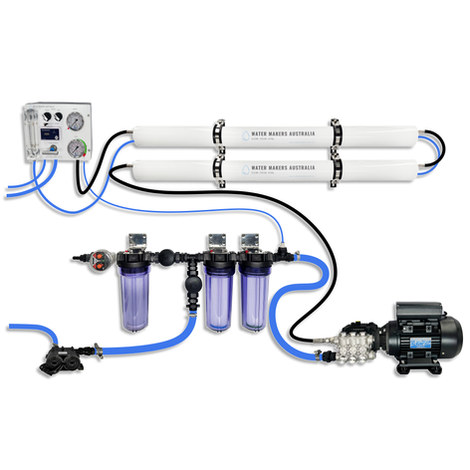
A two-membrane modular watermaker with 140 L/h nominal output, aimed at families and liveaboards that want more water per run.
Explore →Burke Yachtsman Gear Bag 40L - Shop Now Zip Pay | Tamar Marine Skip to content 59 – 63 Holbrook Street, Invermay Online Shop Open 24/7 Products search Contact us 1300 MARINE $ 0.00 0 Cart Burke Yachtsman Gear Bag 40L $ 79.90 Colour Choose an option Black Blue Black Blue Clear - Burke Yachtsman Gear Bag 40L quantity + Add to cart Enquire about this product SKU BAGB-Y24/BLACK* Category Bags - Sail & Gear A Burke classic and customer favourite, the Yachtsman’s Gear Bag is built tough to handle wet, salty conditions while keeping your gear dry and protected. Made from double coated waterproof…
Explore →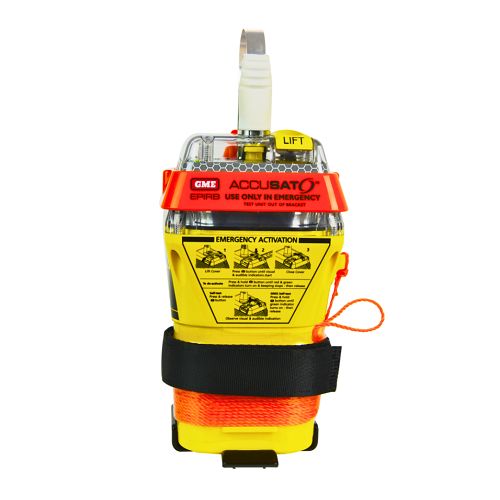
A 10‑year battery EPIRB with integrated GNSS (supports GPS and Galileo), infrared strobe and 121.5 MHz homing signal. Approved for worldwide COSPAS‑SARSAT operation.
Explore →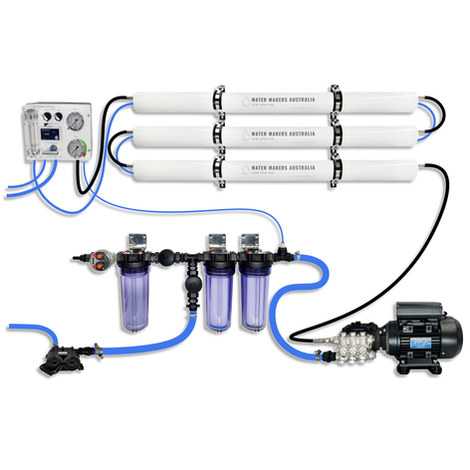
A three-membrane modular watermaker with 200 L/h nominal output and up to 240 L/h family-level marketing, for larger crews and heavy use.
Explore →