Loading this page…

Loading this page…
Sailing club
The Sydney Boys High School Sailing Association (incorporated as The Sydney High School Sailing Association Inc.) runs a competitive sailing programme for current students, Old Boys and friends of the school. Based in Moore Park, NSW, the club trains on Sydney Harbour – principally at Woollahra Sailing Club in Rose Bay and previously at Double Bay Sailing Club – using a fleet of ten Pacer dinghies. The focus is on fleet and match racing, with a pathway from beginner to First Grade school teams that compete in the NSW State Championships and national secondary school events. Membership fees are kept low, with the school covering Australian Sailing fees for students, and the Association also provides eligibility and support for adult members.
About
The Sydney Boys High School Sailing Association (incorporated as The Sydney High School Sailing Association Inc.) runs a competitive sailing programme for current students, Old Boys and friends of the school. Based in Moore Park, NSW, the club trains on Sydney Harbour – principally at Woollahra Sailing Club in Rose Bay and previously at Double Bay Sailing Club – using a fleet of ten Pacer dinghies. The focus is on fleet and match racing, with a pathway from beginner to First Grade school teams that compete in the NSW State Championships and national secondary school events. Membership fees are kept low, with the school covering Australian Sailing fees for students, and the Association also provides eligibility and support for adult members.
Service area: Sydney, NSW, Australia
Keep exploring
Sydney High School Sailing Association (SHSSA) is an incorporated school-affiliated sailing association that promotes yachting and sailing for students, alumni (Old Boys) and friends of Sydney Boys High School. The association organises and conducts sailing and racing activities, provides a vehicle for facility-use agreements on behalf of the school, and manages membership arrangements (the school pays fees for current students). Contact is via the school sailing MIC or the school phone number listed on the site.
The heartbeat of the program is fleet racing and match racing in Pacer dinghies, the two-person trainers in which High sailors learn to handle a boat with what the school describes as precision and speed. A fleet of ten Pacers — built up through fundraising and a grant from The High Club — means at least twenty boys can be on the water at once, and from 2013 that depth of equipment underwrote a dedicated match racing season, a format that sharpens boat handling and tactical thinking far faster than fleet racing alone. The emphasis is competitive: this program exists to race, not simply to introduce the sport, and beginners are brought along within a structure that aims at the First Grade team.
Saturday inter-school racing through the summer season is the weekly rhythm, contested against eastern suburbs private schools on Sydney Harbour, and the calendar climaxes with the regattas that close the season — the Sydney open schools event held at Rose Bay among them. A step-up pathway also exists through the busy Saturday-afternoon Laser racing program at Double Bay Sailing Club, which High sailors can access as their skills and ambitions grow beyond the school Pacers. Because racing requires Australian Sailing membership, the Association arranges eligibility for current students — with the school paying those fees — and for Old Boys and friends alike.
The Association's role for adults is equally practical. Old Boys and friends of High may sail on Sundays in boats the school provides, and are introduced to racing as members of the Association rather than left to find their own way into the sport. The body also acts as the school's vehicle for agreements with third parties — negotiating occupancy and facility arrangements with partner clubs — which is the unglamorous machinery that keeps a school program afloat on someone else's waterfront.
Administration runs through Sydney Boys High School at 556 Cleveland Street, Moore Park — inland, beside the stadiums and parklands of the city's sporting precinct. Everything on the water, however, happens on Sydney Harbour, and the program has always been a guest of the harbour's clubs. Woollahra Sailing Club on Rose Bay is the usual training and racing venue in recent years; before that, the program made its base at Double Bay Sailing Club, where it had established itself by 2011 under a negotiated medium-term occupancy agreement. Boats come from the school's own ten-boat Pacer fleet, stored and accessed through these partner arrangements.
Rose Bay is generous water for school sailing. It is one of the broadest open bays on the harbour, giving race officers room to set proper windward-leeward courses well clear of moored boats, and its position inside the main harbour means it picks up the true sea breeze without the confused chop of the more exposed reaches. Conditions recorded during the schools competition give a flavour: 12-knot south-south-westerly sea breezes on some afternoons, and on others a fresh nor'easter building to around 15 knots and swinging east as the afternoon matures — enough to test crews in Pacers without overwhelming them.
There is a quiet logic to the geography. Double Bay and Rose Bay sit on the harbour's eastern side, a straightforward trip from Moore Park by road, and they place the boys in the heart of Sydney's densest concentration of sailing clubs. The Saturday schools competition on Rose Bay puts High sailors on the same water as their rivals from Scots and Cranbrook, in full view of one of the great natural amphitheatres of Australian dinghy racing. Few school sports programs anywhere get to train and compete in a venue of that calibre, and the Association's arrangements with the partner clubs are what make it possible season after season.
The Association's own founding year is not recorded in the public record; what is clear is that by 2011 the sailing program had, in the school's words, established itself at Double Bay Sailing Club, with the Association negotiating a medium-term occupancy agreement there. The school counts the body among its key partner organisations, in company with the P&C, the Foundation, the Old Boys Union and others — formal standing for what had become a permanent fixture of school life.
The parent school provides the deeper roots. Sydney Boys High School, founded in 1883, was the first government high school in New South Wales; it has belonged to the Athletic Association of the Great Public Schools since 1906 and was among the founding members of the CHS Sports Association in 1913. Sailing arrived much later and never joined the GPS roster, but it carved out its own niche.
Through the early 2010s the program professionalised steadily: fundraising and a High Club grant delivered two new Pacers in 2013, lifting the fleet to ten boats and enabling a new match racing season that same year. Leadership passed through a succession of committed figures — Mrs Collignon as MIC Sailing to 2011, then Mr Moody; long-serving coach and Old Boy Adam South; the Sailing Committee chaired by Richard James until 2013; and more recently coaches Hugo Leeming and Sam Steinberg, Sailing Captain Zhitian Mai in 2023 and current Sailing MIC Mr M Cotton.
The competitive high point of the modern era came in 2022, when the First Grade team finished fifth in a 24-team field at the NSW State Championships — the school's best recent season — and and with it qualification for the Australian Secondary Schools Teams Racing Championships, held at Georges River Sailing Club. For a program staffed by volunteers, coached by Old Boys and hosted entirely on borrowed waterfronts, it was a result that spoke to decades of quiet institutional building: a sailing association that has made itself, in the school's own framing, an essential partner in the life of one of Australia's oldest public schools.
Batemans Bay and the Clyde River form a classic NSW South Coast cruising region where a sheltered, tidal estuary meets a short, island‑dotted entrance to the Tasman Sea. It’s distinctive for easy access from Canberra, a mix of river and bay sailing, a compact marina and mooring network, and a river entrance (the Clyde River bar) that can change rapidly. The area suits day sails, weekend cruising, trailer‑boat exploration and sheltered coastal passages; offshore or long‑passage plans require careful timing and local knowledge. Preparation for tidal flow, variable southerly swells and shallow, s

Plan to transit Sydney Heads and northern NSW estuary entrances to take advantage of favourable tidal streams or slack water; account for local acceleration over shoals, eddies, wind-on-current effects and river discharge, and always check the latest local observations and tide/stream products before departure.
Explore →
Choose an anchor type and size matched to your boat, seabed and expected conditions; set it by lowering steadily, backing down under power to bury the fluke or hook, and scope the rode to suit tidal range and wind/sea state. Regularly inspect your set and use trip lines or secondary anchors where risk of wind or current change is high.
Explore →
Plan the crossing as a deliberate offshore passage with a chosen route that reduces exposure, a weather window that keeps wind, swell and fronts well offshore, and firm alternates and abort points — using up-to-date synoptic and high‑resolution marine forecasts plus local observations to time departure and arrival.
Explore →
Pick a stable, simple, forgiving dinghy with a single sail or basic sloop rig, affordable handling and easy maintenance—ideally one with a local class or school nearby so you can access coaching and spare parts.
Explore →Practical guide for recreational sailors planning a coastal cruise from Sydney north to the Queensland border. Covers route options, weather and tidal considerations, planning checklists, common hazards, anchorages and practical examples for a safe, enjoyable trip.
Explore →
A practical, Australia-focused guide for planning and sailing around the Whitsunday Islands: weather and seasons, navigation and anchoring, moorings and parks, provisioning and charters, safety and common mistakes, plus checklists and next steps.
Explore →A practical guide for recreational sailors planning visits to Albany and King George Sound. Covers the main anchorage areas, typical local weather patterns, tidal and current considerations, navigational hazards, on-the-water etiquette and a pre-departure checklist to help you plan a safe passage and enjoyable stopover
Explore →A concise, practical introduction to the essential parts of a recreational sailing boat for beginners in Australia. Covers hull, deck, rigging, sails, steering, below-decks spaces and safety equipment, with simple explanations, common mistakes and a pre-decast checklist to help new sailors communicate and get underway.
Explore →Burke Yachtsman Gear Bag 40L - Shop Now Zip Pay | Tamar Marine Skip to content 59 – 63 Holbrook Street, Invermay Online Shop Open 24/7 Products search Contact us 1300 MARINE $ 0.00 0 Cart Burke Yachtsman Gear Bag 40L $ 79.90 Colour Choose an option Black Blue Black Blue Clear - Burke Yachtsman Gear Bag 40L quantity + Add to cart Enquire about this product SKU BAGB-Y24/BLACK* Category Bags - Sail & Gear A Burke classic and customer favourite, the Yachtsman’s Gear Bag is built tough to handle wet, salty conditions while keeping your gear dry and protected. Made from double coated waterproof…
Explore →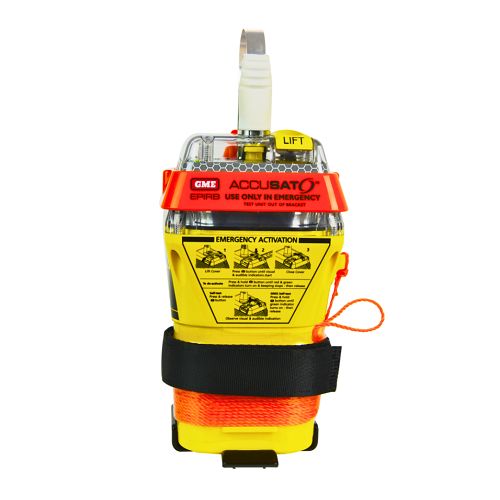
A 10‑year battery EPIRB with integrated GNSS (supports GPS and Galileo), infrared strobe and 121.5 MHz homing signal. Approved for worldwide COSPAS‑SARSAT operation.
Explore →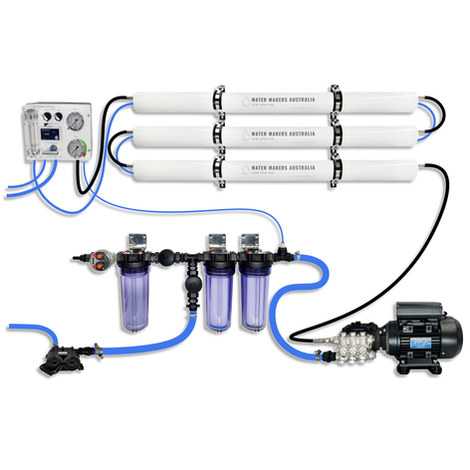
A three-membrane modular watermaker with 200 L/h nominal output and up to 240 L/h family-level marketing, for larger crews and heavy use.
Explore →
Self-contained, battery-powered plug‑and‑play autopilot designed for standard hydraulic steering systems.
Explore →