Loading this page…

Loading this page…
Sailing club
Sydney Flying Squadron (SFS) is Australia’s oldest open-boat sailing club, based at Careening Cove, Kirribilli on Sydney Harbour. The club is best known for running the Historical 18-footers — large‑rigged replica skiffs that race as a living piece of harbour history — alongside a smaller 12‑footer fleet. Racing is run publicly on Saturdays through the spring–summer season and the venue combines a small volunteer-led sailing community with a prominent waterfront hospitality operation.
About
Sydney Flying Squadron (SFS) is Australia’s oldest open-boat sailing club, based at Careening Cove, Kirribilli on Sydney Harbour. The club is best known for running the Historical 18-footers — large‑rigged replica skiffs that race as a living piece of harbour history — alongside a smaller 12‑footer fleet. Racing is run publicly on Saturdays through the spring–summer season and the venue combines a small volunteer-led sailing community with a prominent waterfront hospitality operation.
Service area: Careening Cove / Sydney Harbour (Kirribilli), New South Wales
Keep exploring
Sydney Flying Squadron is a long-established sailing club based in Kirribilli, NSW, that organises open-boat and skiff racing on Sydney Harbour (notably 18‑footer and 12‑footer events). The club website also references sailing courses and information for sailors, race results and calendars, plus on-site hospitality facilities (a restaurant and a café) and event/function hire.
The Sydney Flying Squadron runs no learn-to-sail school, no Tackers fleet and no formal syllabus — and it would argue it needs none. Its pathway into the sport is a standing invitation to step aboard a Historical 18-footer and learn by doing. Sailing experience is not essential, though the ability to swim is; newcomers are paired with an experienced hand who shows them what they need to know, and may sail three times before being asked to join.
The current crews span teenagers through to an octogenarian, which says everything about how accessible the club makes a boat type that looks terrifying from the shore. Those not yet ready to commit can first watch the racing from the spectator ferry that follows the fleet — a try-before-you-buy arrangement unique in Australian sailing.
Racing is run under the club's own handicap and point score systems, with scratch-start signal flags and staggered starts that are a living continuation of Foy's original innovation: the slower boats start first, the flyers chase, and if the handicapper has it right the fleet converges at the finish. It is a system that rewards crews of every standard and gives newcomers meaningful racing from their first afternoon. Volunteers fill the rest of the ecosystem — rescues, race control, the barbecue and raffles afterwards — and the club is explicit that this roster is part of membership, not an optional extra.
The honest footnote is that an 18-footer demands respect. Capsizes come perhaps once or twice a season, and a capsized 18 cannot be righted; the boat is towed to the closest beach, stripped of its rig and hauled home. New sailors learn quickly that these are unrestricted designs carrying bowsprits and spinnakers that dwarf an 18-foot hull, and that the thrill is precisely the point.
The clubhouse sits at 76 McDougall Street, Kirribilli, on the waterfront of Careening Cove at Milsons Point — one of the closest sailing addresses to the Sydney CBD, a short walk from Milsons Point station and the Kirribilli ferry wharves, in the shadow of the Harbour Bridge's northern approaches. The building operates as a genuine hospitality venue: Foys Kirribilli restaurant upstairs, the Flying Squadron Bar, and the Flying Bear Café trading seven mornings a week, all opening onto a waterfront deck, with the Heritage Room available for functions. It is an unusual arrangement that lets a small sailing club punch well above its financial weight.
From that base the Historical 18s race every Saturday through the summer months, the season running roughly from October until Easter, over traditional harbour courses with turning marks at places like Chowder Bay and Shark Island, as they have for generations. The racing water is the central harbour — deep, tide-swept and framed by headlands that bend and accelerate the summer sea breeze, with ferry lanes and weekend traffic adding a further layer of vigilance. For boats carrying such enormous sail plans on hulls under five and a half metres, those conditions produce sailing of genuine drama, which is exactly what the spectator ferry is there to witness.
The venue's harbour position also makes the club a natural host for the class's biggest occasion. Each Australia Day long weekend the Historical 18 Footers Australian Championship is sailed from Kirribilli, drawing the replica fleet — boats such as Yendys, Myra Too, Aberdare, Alruth, Australia IV, Britannia, The Mistake, Top Weight, Scot and Tangalooma — onto the same water where their 1900s namesakes raced before crowds in the thousands. Between the weekly racing, the championship and the waterfront hospitality, Careening Cove functions as both a working boatshed precinct and one of the harbour's most distinctive front-row seats.
In 1891 the Sydney draper and businessman Mark Foy called a meeting at Rainsford's Cambridge Club Hotel to found a new kind of sailing club. His Sydney Flying Squadron introduced sail emblems in bright colours, handicapping imposed at the start so that finishes were close, and a triangular course — ideas aimed squarely at spectacle. The yachting establishment recoiled, excluding Squadron boats from the 1892 National Regatta on the grounds that the emblems encouraged gambling; Foy simply financed his own rival regatta, open to all comers, with bands, chartered spectator steamers and a grandstand crowd on Clark Island.
The original club folded during Foy's overseas travels of 1892–93, but he revived it on his return, and the resuscitated club's first race, on 13 October 1894, went to the 18-footer Olinda.
Skiff racing quickly became a working-class institution: at the peak more than thirty 18-footers raced weekly, trailed by chartered ferries and illegal bookmakers. A 1935 breakaway formed today's Australian 18 Footers League, whose secretary James Joseph Giltinan launched the JJ Giltinan world championship, first sailed in 1938. Foy himself had taken his 22-footer Irex to England in 1898 as Australia's first entrant in an international sailing contest, and his interstate Mark Foy Challenge Cup of 1911–12 — decided by five seconds in Perth before an estimated crowd of 10,000 — is now recorded as the first Australian Championship.
He died in November 1950, the fleet flying black mourning ribbons; in October 2019 he entered the Australian Sailing Hall of Fame.
The modern club sails history rather than merely remembering it. The Australian Historical Sailing Skiff Association, established in 1990 by boatbuilder Robert Tearne and fellow enthusiasts, recreated the class as replicas spanning design eras from around 1900 to 1950, and that fleet now races weekly from Kirribilli. The Australia Day championship's trophies carry deep meaning: the Galloping Ghost Trophy, for authenticity, was cast from silver of the original Mark Foy Cup that melted in a 1958 fire, while the Raw Meat Trophy decides handicap honours.
Champions of the modern 18-footer scene — John Winning, Rob Brown, David Witt, Irishman Harold Cudmore — have all taken the helm in recent years.
Apollo Bay is a small working harbour on Victoria’s Great Ocean Road where sheltered inshore sailing meets the Southern Ocean. The character is a mix of protected harbour berths and an exposed open coast: pleasant day-sails and sheltered weekend cruising inside the bay, with demanding coastal passages immediately offshore where south‑westerly swell and strong winds from the Southern Ocean dominate. It suits coastal cruisers, trailer sailors who launch at the ramp, and experienced coastal sailors who understand bar and swell behaviour; it is not a casual open‑ocean anchorage for unprepared or

Look for a friendly club with beginner-focused training, accessible facilities and boats, a supportive community, clear safety practices, and opportunities to progress at your own pace.
Explore →
Legal safety equipment for recreational boats in South Australia depends on the type, size and where you operate; you must check the current SA government requirements for your vessel. Independently of legal minimums, carry a sensible set of recommended items (lifejackets, means of communication, signaling, fire protection, anchor and basic tools) and make them usable and maintained.
Explore →
Do a seasonal inspection and servicing routine that focuses on hull and antifouling, through-hulls and seacocks, rigging and sails, engine and fuel systems, electricals and batteries, safety gear and bilge systems. Tailor exact tasks to your boat type, age and where you sail in South Australia, and follow manufacturer and marine service advice for anything technical.
Explore →
Plan to use tide and local knowledge, slow and steerable power, and deliberate positioning to work with—rather than fight—strong streams and eddies when entering or leaving Tasmanian harbours.
Explore →
A practical guide for new sailors on picking the right Australian sailing club: training, boat access, racing, social fit, costs and the key questions to ask before joining.
Explore →A practical, step‑by‑step guide for recreational sailors on Sydney Harbour covering navigation, local weather and tides, safe anchoring, berthing, common routes, rules of the road, and useful checklists tailored to Australian conditions.
Explore →A practical guide to the coastal weather systems that affect sailing along Western Australia's coast, focusing on the Fremantle Doctor, local sea breezes, and linked coastal phenomena. Explains how these systems form, when they tend to occur, how they influence boat handling and passage planning, common mistakes, and a
Explore →
A practical, Australia‑focused introduction to sailing: key terms, common boat types, basic manoeuvres, where to learn, licence and club options, and planning your first trips with safety and local conditions in mind.
Explore →Burke Yachtsman Gear Bag 40L - Shop Now Zip Pay | Tamar Marine Skip to content 59 – 63 Holbrook Street, Invermay Online Shop Open 24/7 Products search Contact us 1300 MARINE $ 0.00 0 Cart Burke Yachtsman Gear Bag 40L $ 79.90 Colour Choose an option Black Blue Black Blue Clear - Burke Yachtsman Gear Bag 40L quantity + Add to cart Enquire about this product SKU BAGB-Y24/BLACK* Category Bags - Sail & Gear A Burke classic and customer favourite, the Yachtsman’s Gear Bag is built tough to handle wet, salty conditions while keeping your gear dry and protected. Made from double coated waterproof…
Explore →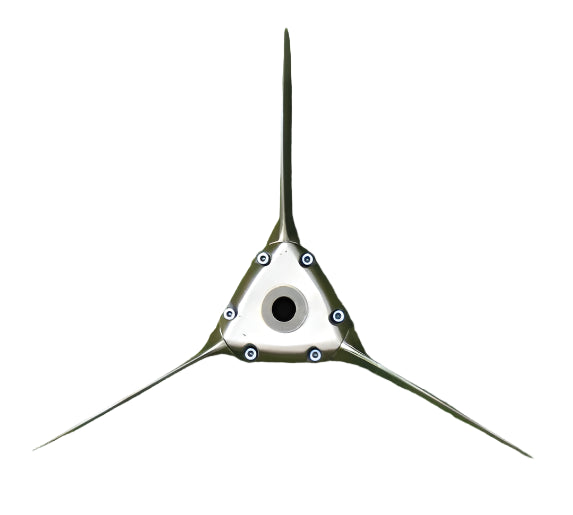
Feathering propeller designed for larger cruising yachts. Diameter range 18"–25"; shaft range 1¼"–1¾"; hub lengths 120mm or 165mm (with anode). Sail drive option available.
Explore →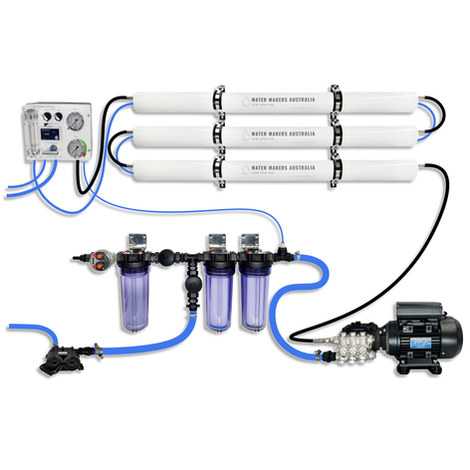
A three-membrane modular watermaker with 200 L/h nominal output and up to 240 L/h family-level marketing, for larger crews and heavy use.
Explore →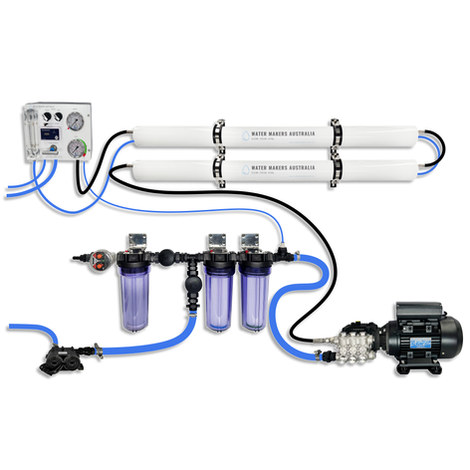
A two-membrane modular watermaker with 140 L/h nominal output, aimed at families and liveaboards that want more water per run.
Explore →