Loading this page…

Loading this page…
Sailing club
Tanilba Bay Sailing Club is a family-oriented sailing club on the shores of Port Stephens at Tanilba Bay, NSW. The club runs organised racing (Sunday race days during the season), hosts events (eg the 2026 Big Boat Regatta), and offers junior sailing skills sessions during the racing season. Facilities described include a clubhouse, toilets/showers, a lawn rigging/camping area and concrete ramps for launching craft.
About
Tanilba Bay Sailing Club is a family-oriented sailing club on the shores of Port Stephens at Tanilba Bay, NSW. The club runs organised racing (Sunday race days during the season), hosts events (eg the 2026 Big Boat Regatta), and offers junior sailing skills sessions during the racing season. Facilities described include a clubhouse, toilets/showers, a lawn rigging/camping area and concrete ramps for launching craft.
Service area: Tanilba Bay, NSW
Keep exploring
Tanilba Bay Sailing Club is a family-oriented sailing club on the shores of Port Stephens at Tanilba Bay, NSW. The club runs organised racing (Sunday race days during the season), hosts events (eg the 2026 Big Boat Regatta), and offers junior sailing skills sessions during the racing season. Facilities described include a clubhouse, toilets/showers, a lawn rigging/camping area and concrete ramps for launching craft.
Junior development at Tanilba Bay is built around the club's own hardware: a fleet of five Bic training craft — the sturdy, self-draining O'pen Bic style of dinghy that has become the modern standard for teaching kids — used in dedicated Junior Sailing Skills sessions that run from 11am to midday on Sundays through the racing season. The timing is deliberate.
Young sailors get their hour of coaching on the protected water off the clubhouse before the senior fleet rigs and launches, so training feeds naturally into the rhythm of a club race day rather than existing as a separate program. There is no Tackers accreditation or adult learn-to-sail school here; the pathway is simpler and more personal, with juniors graduating from the Bics into the club's catamaran fleet as their confidence grows.
That fleet offers an unusually clear progression for a small club. A junior who starts in an O'pen Bic can step onto a Maricat or Hobie as crew, move up through the Taipans and Nacras, and aim at the F18 and F16 classes that sit at the sharp end of Australian beach cat racing. The club's affiliation with Australian Sailing and its seats on the Taipan and Maricat national association boards mean its sailors are plugged into class networks and state and national titles beyond the bay — the Van Kerckhof brothers' F18 career being the highest-profile product of that pipeline.
Racing itself is the weekly teacher. Sunday club racing across the season from Father's Day to Mother's Day keeps skills current, and the annual Big Boat Regatta each February functions as a masterclass, with divisions for Mixed Cats, Mixed Spinnaker and F18s giving developing crews a taste of multi-class regatta competition on home water. Volunteers run the weekend from the rigging area, and families who camp over for the regatta get a two-day immersion that no weekly session can match.
The clubhouse and launching area sit at 76 Peace Parade, Tanilba Bay, with vehicle entry off King Albert Avenue opposite the public school, adjoining the Tilligerry Habitat grounds. The set-up is made for beach cats: concrete ramps run to sand and water, a broad lawn serves as the rigging area shaded by trees — where camping is permitted — and the start and finish line lies just off the ramp, so the whole operation happens within a few hundred metres of shore. Facilities include the clubhouse with toilets and showers, and a chandlery at Lemon Tree Passage, seven minutes away, covers breakdowns and spare parts.
Tanilba Bay's main beach runs east to west and is sheltered from southerly winds, which is why the strip has long been popular for water sports of every kind. At very low tide the sandy flats of the bay are exposed, so timing a launch around the tide becomes part of local knowledge. The name Tanilba is said to translate as "place of the white flowers" in the local Indigenous tongue, and the setting — casuarina-fringed, quiet, facing north across the port — lives up to it.
Beyond the bay lies the racing ground proper: Port Stephens, a drowned river valley roughly twice the size of Sydney Harbour and widely regarded as one of the finest sailboat racing tracks in the country. The port offers open, deep water with room for long beats and true runs, ringed by headlands that shape the breeze without the shipping traffic of a working harbour. Summer afternoons typically bring a north-easterly to east-north-easterly sea breeze, while the February Big Boat Regatta has been sailed in steady and at times light southerlies.
For catamarans that thrive on clean wind and moderate water, it is close to ideal. Add the broader Port Stephens sailing calendar on the doorstep and the location explains how a small club sustains such an ambitious program.
Tanilba Bay Sailing Club was founded in 1978, racing initially from an earlier site before moving to its current Peace Parade premises in 1982 — the waterfront home it has occupied ever since. The names of its founders and the story of those first four seasons are not recorded in the club's published material, which instead points to what the young club quickly became: an incorporated association, affiliated with Australian Sailing, and so thoroughly committed to catamaran sailing that it earned representation on the national boards of both the Taipan and Maricat classes.
The club's signature institution, the Big Boat Regatta, grew into a fixture of the regional calendar each February. The 2020 edition gives the measure of the event: 30 boats and seven races across two days, with crews towing in from Canberra, Sydney Harbour, Palm Beach, Kurnell, Toukley, Wallerawang, Queens Lake and Mannering Park, and sponsorship from Harken Australia and a local real estate firm.
The entry list read like a directory of Australian beach cat classes — A Class cats, Tornadoes, Taipans, Maricats, Nacras, Hobies, F16s and F18s — split into Mixed Cats, Mixed Spinnaker and F18 divisions. For a volunteer-run club at the quiet end of the Tilligerry Peninsula, drawing that quality and breadth of fleet to home water was a statement.
The 2021 season brought the club's proudest competitive moment. Siblings Daniel and Nathan Van Kerckhof, racing as "Send It Marine", claimed the "Cock of the Harbour" at SailFest Newcastle aboard a newly launched Goodall Akurra F18 — one of just two then in existence — taking a trophy counted among the oldest in the country and linking Tanilba Bay to the cutting edge of Australian catamaran design through builder Brett Goodall. The Big Boat Regatta continues as the club's annual showcase, and the pattern set across four decades holds: a small, family-centred catamaran club that keeps producing sailors and events well beyond what its size would predict.
Apollo Bay is a small working harbour on Victoria’s Great Ocean Road where sheltered inshore sailing meets the Southern Ocean. The character is a mix of protected harbour berths and an exposed open coast: pleasant day-sails and sheltered weekend cruising inside the bay, with demanding coastal passages immediately offshore where south‑westerly swell and strong winds from the Southern Ocean dominate. It suits coastal cruisers, trailer sailors who launch at the ramp, and experienced coastal sailors who understand bar and swell behaviour; it is not a casual open‑ocean anchorage for unprepared or

Maybe — it depends. In NSW you often need registration and a boat operator licence for motorised vessels, but many small trailerable sailing dinghies without engines don’t require boat registration or a licence. Check the specific rules for your craft, trailer and engine.
Explore →
Before the season: confirm seaworthiness — hull, rig, engine, electrics, sails and safety gear — and replace or service wearable items. After the season: wash, dry and protect gear, service consumables and record what you did so the boat’s ready and reliable next season.
Explore →
Look for a friendly club with beginner-focused training, accessible facilities and boats, a supportive community, clear safety practices, and opportunities to progress at your own pace.
Explore →
Do a seasonal inspection and servicing routine that focuses on hull and antifouling, through-hulls and seacocks, rigging and sails, engine and fuel systems, electricals and batteries, safety gear and bilge systems. Tailor exact tasks to your boat type, age and where you sail in South Australia, and follow manufacturer and marine service advice for anything technical.
Explore →
A practical guide for new sailors on picking the right Australian sailing club: training, boat access, racing, social fit, costs and the key questions to ask before joining.
Explore →
Buying a Sailing Boat
Explore →A concise, practical introduction to the essential parts of a recreational sailing boat for beginners in Australia. Covers hull, deck, rigging, sails, steering, below-decks spaces and safety equipment, with simple explanations, common mistakes and a pre-decast checklist to help new sailors communicate and get underway.
Explore →A practical guide for recreational sailors planning short trips or multi-day cruises around Port Stephens, the Myall Coast and nearby offshore waters. Covers local geography, common conditions, navigation considerations, anchoring and mooring tips, and safety checklists tailored to Australian conditions.
Explore →Burke Yachtsman Gear Bag 40L - Shop Now Zip Pay | Tamar Marine Skip to content 59 – 63 Holbrook Street, Invermay Online Shop Open 24/7 Products search Contact us 1300 MARINE $ 0.00 0 Cart Burke Yachtsman Gear Bag 40L $ 79.90 Colour Choose an option Black Blue Black Blue Clear - Burke Yachtsman Gear Bag 40L quantity + Add to cart Enquire about this product SKU BAGB-Y24/BLACK* Category Bags - Sail & Gear A Burke classic and customer favourite, the Yachtsman’s Gear Bag is built tough to handle wet, salty conditions while keeping your gear dry and protected. Made from double coated waterproof…
Explore →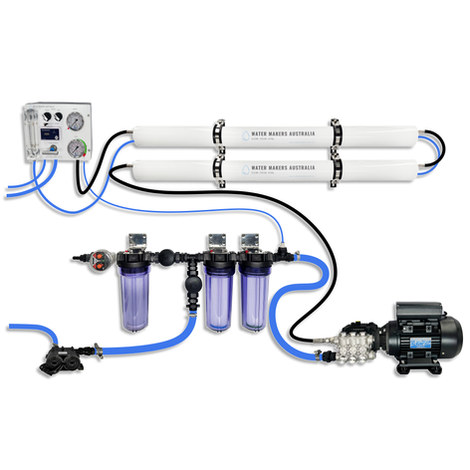
A two-membrane modular watermaker with 140 L/h nominal output, aimed at families and liveaboards that want more water per run.
Explore →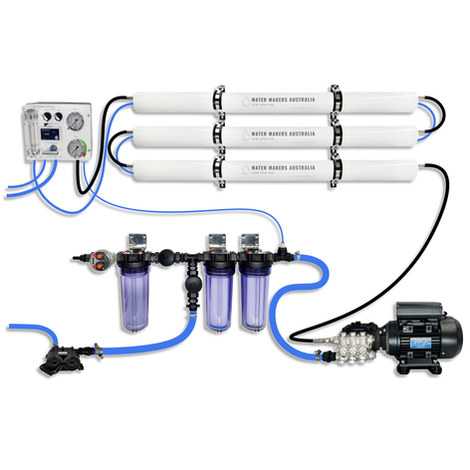
A three-membrane modular watermaker with 200 L/h nominal output and up to 240 L/h family-level marketing, for larger crews and heavy use.
Explore →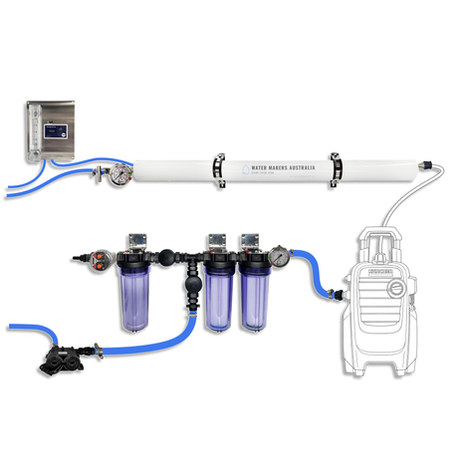
A one-membrane modular marine watermaker with 80 L/h nominal output, remote stainless control panel, standard consumables and direct Australian support.
Explore →