Loading this page…

Loading this page…
Sailing club
Teralba Amateur Sailing Club is a small, family-friendly dinghy club based at Booragul on the northern shore of Lake Macquarie, NSW. The club runs Saturday racing through the season, supports a range of junior and adult dinghy classes and is known within class circles for leading the modern revival of the VJ (Vaucluse Junior) dinghy.
About
Teralba Amateur Sailing Club is a small, family-friendly dinghy club based at Booragul on the northern shore of Lake Macquarie, NSW. The club runs Saturday racing through the season, supports a range of junior and adult dinghy classes and is known within class circles for leading the modern revival of the VJ (Vaucluse Junior) dinghy.
Service area: Booragul, Lake Macquarie, NSW
Keep exploring
Teralba Amateur Sailing Club (TASC) is an amateur, family-friendly sailing club based at the northern end of Lake Macquarie. The club runs organised racing (typically Saturdays from September until Easter, with a break over Christmas/New Year), hosts regattas and events, and supports a range of dinghy classes (examples listed include Vee Ess, Vee Jay, NS14, Impulse, Contender, Sabot and O'pen Skiff). The club website also references Learn to Sail & Training and venue hire information.
The club holds Australian Sailing Discover Sailing Centre accreditation, and its training arm is built to match its racing ambitions. The headline pathway is the full Tackers program for children aged seven to twelve, taught by qualified Australian Sailing instructors in the club's OziOpti Tacker fleet. The ladder runs from Tackers 1, "Having Fun", sailed in pairs, through Tackers 2, "Tricks & Techniques", sailed solo, to Tackers 3, each level about 20 hours. Around that standard junior ladder, though, the club offers coaching pathways it says are shaped for beginners, intermediate sailors and serious racers alike — three distinct streams rather than a single production line.
What gives the development pathway its local flavour is the modernised VJ. The class association promotes the boat explicitly as an excellent trainer for youngsters heading toward the skiff classes, and at Teralba that is not a slogan but the club's own hardware: the VJ12 was developed here, so junior sailors graduate from OziOptis into a boat designed and refined on their own waterfront. Add the O'pen Skiff fleet, the Sabots and the two-handed NS14s, and a young sailor can move from first tack to national-level regatta racing without leaving the club.
The racing program completes the loop. Saturday club racing through the season gives every graduate of the training fleet immediate competition, and the club's regatta calendar — the Sabot nationals in 2022, Youth Sail NSW in 2024, the 10ft Skiff Regatta — means ambitious juniors regularly race against the best in their age groups on home water. For families, the practical point is that instruction, club racing and championship events all happen in the same place, in sight of the clubhouse, at a club small enough that the coaches know every sailor by name.
The club stands on First Street, Booragul, at the northern end of Lake Macquarie, in the Cockle Bay area. Racing takes place on the northern lake within sight of the clubhouse, so parents and spectators can follow proceedings from the rigging area, which doubles as a natural grandstand on race days. The same foreshore is shared with Speers Point Amateur Sailing Club and the Lake Macquarie Rowing Club, whose boatshed was built alongside Teralba at Booragul in 1998, making this pocket of the lake a genuine small-craft sporting precinct.
Lake Macquarie needs little introduction to Australian sailors. At roughly 110 square kilometres — twice the size of Sydney Harbour — it is the country's largest coastal saltwater lake, a vast, mostly enclosed sheet of water connected to the sea at Swansea Channel. The northern end where Teralba sits offers wide, open racing water without ocean swell, deep enough for unrestricted course setting and fringed by low foreshores that let the breeze arrive relatively clean.
Summer racing typically works to an east-south-easterly to north-easterly afternoon sea breeze, the pattern observed across seasons of VJ events at the club, with lighter mornings giving way to a reliable fill-in that suits both training sessions and full course racing.
For a training-focused club the combination is near perfect: sheltered, shallow-to-moderate water close to shore for beginners, open lake beyond for the racing fleets, and a prevailing summer breeze that arrives like clockwork. Add the lake's network of around ten sailing clubs within a short tow — Belmont, Wangi, Toronto, Speers Point and the rest — and Teralba's sailors enjoy both a home track of genuine quality and an inter-club circuit that keeps competition fresh all season.
The club's own records place its origins in the late 1940s: its website described the club as being in its 77th year of operation in 2024, and elsewhere marked its 76th season on the water, pointing to a first season around 1948–49. The names of the founders and the precise circumstances of the founding are not recorded in the club's published material, but Teralba appears in the Lake Macquarie City history collection among the lake's long-established regatta clubs — a fixture of the northern foreshore for the better part of eight decades.
The chapter that made the club nationally known began in October 2010. The VJ — the Vaucluse Junior, a 1931 Charles Sparrow and Sil Rohu design that had once been Australia's most numerous dinghy — had died out as a racing class everywhere, its last stronghold at Belmont 16s dropping it in 2007. At Teralba, four men — Greg Fryer, George Probert, Graeme Talbot and Don Cross — organised the class's regrouping and resumed VJ racing on the lake.
Starting in February 2011, the VJ Association set about modernising the classic design at the club, a development program that ran for a decade and produced the new VJ12 dinghy. The class has since held a commemorative reunion night at the club, cementing Teralba's status as the spiritual home of the revived VJ.
The modern era has been marked by major events. Teralba hosted the Sabot Australian Championship in 2022, showcasing the club and its course area in a club-produced video, and in October 2024 it ran the NSW Zhik Youth Sail regatta, one of the state's biggest junior events. A 10ft Skiff Regatta now features on the club's own calendar. From a post-war foundation through decades of steady lake racing to an unlikely second life as the cradle of a national class revival, Teralba's story is proof that small amateur clubs often end up carrying the sport's most valuable cargo.
Apollo Bay is a small working harbour on Victoria’s Great Ocean Road where sheltered inshore sailing meets the Southern Ocean. The character is a mix of protected harbour berths and an exposed open coast: pleasant day-sails and sheltered weekend cruising inside the bay, with demanding coastal passages immediately offshore where south‑westerly swell and strong winds from the Southern Ocean dominate. It suits coastal cruisers, trailer sailors who launch at the ramp, and experienced coastal sailors who understand bar and swell behaviour; it is not a casual open‑ocean anchorage for unprepared or

Plan to transit Sydney Heads and northern NSW estuary entrances to take advantage of favourable tidal streams or slack water; account for local acceleration over shoals, eddies, wind-on-current effects and river discharge, and always check the latest local observations and tide/stream products before departure.
Explore →
Maybe — it depends. In NSW you often need registration and a boat operator licence for motorised vessels, but many small trailerable sailing dinghies without engines don’t require boat registration or a licence. Check the specific rules for your craft, trailer and engine.
Explore →
Before the season: confirm seaworthiness — hull, rig, engine, electrics, sails and safety gear — and replace or service wearable items. After the season: wash, dry and protect gear, service consumables and record what you did so the boat’s ready and reliable next season.
Explore →
Legal requirements can change — check Transport for NSW for the current rules. As a practical baseline for coastal day sailing from NSW shores: keep the right number and type of lifejackets for everyone, have a means of calling for help, show navigation lights if you’ll be out after dusk, and carry basic items to manage a man‑overboard or abandon‑ship situation. Add anchor, bilge/bailer, sun/protection and basic repair kit as recommended items.
Explore →
A practical guide for new sailors on picking the right Australian sailing club: training, boat access, racing, social fit, costs and the key questions to ask before joining.
Explore →A practical guide for recreational sailors planning day sails or short cruises on Lake Macquarie. Covers the entrance, navigation considerations, popular anchorages, local weather and tide influences, mooring etiquette, safety checks and suggested itineraries around the lake.
Explore →A concise, practical introduction to the essential parts of a recreational sailing boat for beginners in Australia. Covers hull, deck, rigging, sails, steering, below-decks spaces and safety equipment, with simple explanations, common mistakes and a pre-decast checklist to help new sailors communicate and get underway.
Explore →
Buying a Sailing Boat
Explore →Burke Yachtsman Gear Bag 40L - Shop Now Zip Pay | Tamar Marine Skip to content 59 – 63 Holbrook Street, Invermay Online Shop Open 24/7 Products search Contact us 1300 MARINE $ 0.00 0 Cart Burke Yachtsman Gear Bag 40L $ 79.90 Colour Choose an option Black Blue Black Blue Clear - Burke Yachtsman Gear Bag 40L quantity + Add to cart Enquire about this product SKU BAGB-Y24/BLACK* Category Bags - Sail & Gear A Burke classic and customer favourite, the Yachtsman’s Gear Bag is built tough to handle wet, salty conditions while keeping your gear dry and protected. Made from double coated waterproof…
Explore →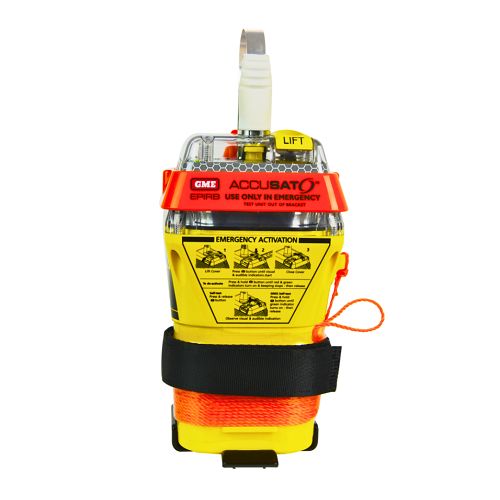
A 10‑year battery EPIRB with integrated GNSS (supports GPS and Galileo), infrared strobe and 121.5 MHz homing signal. Approved for worldwide COSPAS‑SARSAT operation.
Explore →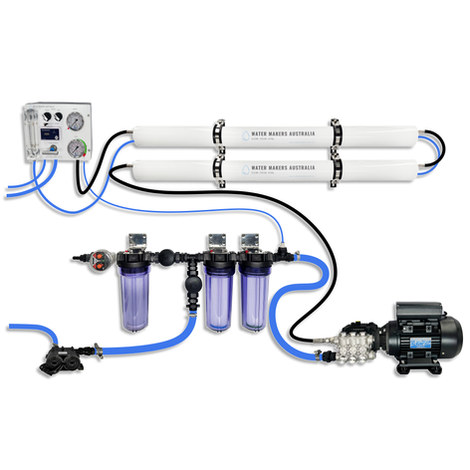
A two-membrane modular watermaker with 140 L/h nominal output, aimed at families and liveaboards that want more water per run.
Explore →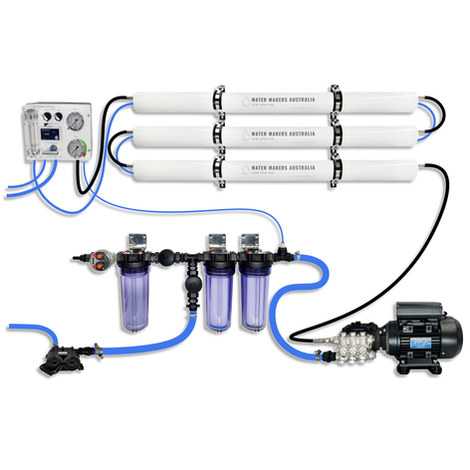
A three-membrane modular watermaker with 200 L/h nominal output and up to 240 L/h family-level marketing, for larger crews and heavy use.
Explore →