Loading this page…

Loading this page…
Sailing club
Toronto Amateur Sailing Club (TASC) is a volunteer-run dinghy club on the western shore of Lake Macquarie, based at Regatta Park, Victory Parade, Toronto (NSW). The club runs an open-fleet program that welcomes centreboard classes of all kinds, offers structured junior and adult Learn to Sail pathways (including a race-focused Sabot program), operates an active Sailability program, and regularly hosts state and national dinghy and youth regattas.
About
Toronto Amateur Sailing Club (TASC) is a volunteer-run dinghy club on the western shore of Lake Macquarie, based at Regatta Park, Victory Parade, Toronto (NSW). The club runs an open-fleet program that welcomes centreboard classes of all kinds, offers structured junior and adult Learn to Sail pathways (including a race-focused Sabot program), operates an active Sailability program, and regularly hosts state and national dinghy and youth regattas.
Service area: Regatta Park, Toronto; western shore of Lake Macquarie
Keep exploring
Toronto Amateur Sailing Club is a community sailing club based on the western side of Lake Macquarie at Regatta Park, Toronto (NSW). The club runs organised sailing programs and events, sails most Sundays and some Saturdays from about September through April, and operates fleets including Sabot, Heron, Tasar, Skate, Laser, Windsurfer and Moth. The club also runs Learn to Sail programs for juniors and adults, twilight sailing and community events such as regattas and working bees; it lists a Sailability program and volunteer/support-boat opportunities for larger events.
The jewel in Toronto's training crown is the Sabot Squad — a race-focused development program, offered in spring and full-season formats, that bridges the gap for juniors moving from recreational sailing into genuine competition. It sits at the top of a structured pathway that begins with beginner courses the club advises booking early (registrations open around June–July and November–December and the courses fill fast), progresses through an intermediate class, and feeds sailors into afternoon club racing. Junior Learn to Sail and combined Youth & Adult Learn to Sail programs cover the entry levels, and club boats can be supplied to beginners short-term, though the club encourages members toward owning their own boat as they advance.
Toronto's other distinctive arm is inclusion. The club is the base for Toronto Sailability, offering sailing and instruction for community members unable to use conventional dinghies, with sessions running several times a week through summer. It is one of the more active Sailability operations on the lake, and it reflects the same everyone-welcome philosophy as the open class policy on the racing side.
Racing itself is the final stage of the pathway, and here Toronto's breadth becomes its strength. Because any class with three starters races as a division, developing sailors compete within their own boat type from early on, while the mixed-yardstick division keeps the oddballs and one-offs in the game. The club's event-hosting record — Optimist and Sabot state championships, Moth state and national titles, the Tasar nationals, the Windsurfer Class Australian Championship in 2025 and Youth Sail NSW in October 2025 — means its juniors and club racers regularly share their own water with national-class competition.
Watching a national championship fleet from your home rigging area is a coaching tool no video session can replicate.
Toronto Amateur Sailing Club occupies a foreshore site in Regatta Park, off Victory Parade at Toronto, on the western side of Lake Macquarie, adjacent to Edward Gain Park. Beach launching and a rigging area in the park make for a simple, family-friendly operation, and the position is a storied one: the historic Royal Motor Yacht Club Toronto, established as The Motor Boat Club of NSW back in 1905 and granted Royal patronage by King George V in 1927, stands nearby, and the club's own original site lay on the foreshore roughly halfway between today's clubhouse and its motor-yachting neighbour.
The sailing water is the western basin of Lake Macquarie — at around 110 square kilometres the southern hemisphere's largest coastal saltwater lake, twice the size of Sydney Harbour. For dinghy racing the lake is close to purpose-built: vast open reaches with room for full-length championship courses, no ocean swell, and low surrounding terrain that lets the summer sea breeze establish cleanly. The lake's scale is what allows clubs like Toronto to host national championships for classes as demanding as the Moth and the Tasar without ever leaving home water, and its enclosed character keeps conditions manageable for Sabots and Optimists on the same weekend.
The western shore setting has practical virtues too. Regatta Park gives the club green space for large regatta fleets and camping-style events, the township of Toronto supplies accommodation and services within walking distance, and the broader lake network — around ten sailing clubs within a short sail or tow — underpins the co-hosting model the commodore credits for the club's success. Sailors who know the lake speak of it as one of the great underrated racing venues in the country; the parade of national titles heading to Toronto's start line suggests the secret is getting out.
The club's exact founding year is not recorded in its published material, though it clearly predates its present home. What is documented is the move: in the mid-1970s the club swapped its original clubhouse and land — on the foreshore partway between the current site and the Royal Motor Yacht Club — for a 25-year lease on the present Regatta Park site, which had been partly reclaimed from the lake.
Volunteers then built the new clubhouse using materials local people supplied or donated, among them old railway rails left over from the switch yard that had served the line running from the former Toronto station to what is now the park's southern boundary. The building literally carries the town's railway heritage in its frame.
The later 1970s brought Toronto a place in Australian class history. Member Tony Bytheway drove the establishment of the Australian Sailfish class at the club, and Toronto hosted two Sailfish National Championships, in 1980–81 and 1982–83, producing a back-to-back Open National Champion in Graeme Remington. The class's own history remembers Toronto as a superb sailing venue that has hosted numerous state and national titles — a reputation the club has spent the decades since confirming. A reunion of the Skate class's NSW Northern Region in November 2006 and, much later, the 48th Australian Tasar Nationals over the 2022–23 New Year kept the tradition alive.
The 2020s have been the club's most decorated era. It hosted the Moth Australian Championship in 2024, the Windsurfer Class Australian Championship in 2025 and Youth Sail NSW — one of the country's largest youth events — in October 2025, alongside Optimist and Sabot state titles. Then came the 2024 Australian Sailing Club of the Year award in Category B, won at state level and again nationally, with Commodore Evan McHugh deflecting the credit onto the club's network of neighbouring lake clubs.
With backing from Lake Macquarie City Council and the Toronto Diggers club, and posting proactive membership growth across recent seasons, a club built from salvaged railway iron has become one of the country's benchmark dinghy venues.
American River (Kangaroo Island, SA) is a small, sheltered inlet and township on the north‑eastern side of Kangaroo Island that acts as a calm staging point for cruising the eastern part of the island and for short hops through Backstairs Passage. It’s distinctive for its protected anchorage inside Eastern Cove and the adjacency of Pelican Lagoon — a shallow, ecologically important lagoon with sanctuary zoning — which shapes how and where boats can move. The area suits sheltered day sailing, weekend cruising and short coastal passages; it’s appropriate for trailer sailors, small cruisers and a

Look for a friendly club with beginner-focused training, accessible facilities and boats, a supportive community, clear safety practices, and opportunities to progress at your own pace.
Explore →
Legal requirements can change — check Transport for NSW for the current rules. As a practical baseline for coastal day sailing from NSW shores: keep the right number and type of lifejackets for everyone, have a means of calling for help, show navigation lights if you’ll be out after dusk, and carry basic items to manage a man‑overboard or abandon‑ship situation. Add anchor, bilge/bailer, sun/protection and basic repair kit as recommended items.
Explore →
Pick a protected bay, estuary or river reach where you can rig, launch and arrive on calm water within a short, sheltered transit; choose a site with a good ramp or jetty, clear recovery options and a nearby sailing club, marina or commercial operator for local knowledge and help.
Explore →
Late spring to summer is usually the best time for beginners to start learning to sail in Tasmania because the weather is generally warmer, days are longer and conditions are often more settled. Expect lighter to moderate winds with regular afternoon sea breees in summer, while spring and autumn bring more changeable and sometimes stronger conditions; winter is colder, wetter and typically windier with more fronts and swell.
Explore →A practical guide to the coastal weather systems that affect sailing along Western Australia's coast, focusing on the Fremantle Doctor, local sea breezes, and linked coastal phenomena. Explains how these systems form, when they tend to occur, how they influence boat handling and passage planning, common mistakes, and a
Explore →
A practical guide for new sailors on picking the right Australian sailing club: training, boat access, racing, social fit, costs and the key questions to ask before joining.
Explore →A practical guide for recreational sailors planning day sails or short cruises on Lake Macquarie. Covers the entrance, navigation considerations, popular anchorages, local weather and tide influences, mooring etiquette, safety checks and suggested itineraries around the lake.
Explore →A concise, practical introduction to the essential parts of a recreational sailing boat for beginners in Australia. Covers hull, deck, rigging, sails, steering, below-decks spaces and safety equipment, with simple explanations, common mistakes and a pre-decast checklist to help new sailors communicate and get underway.
Explore →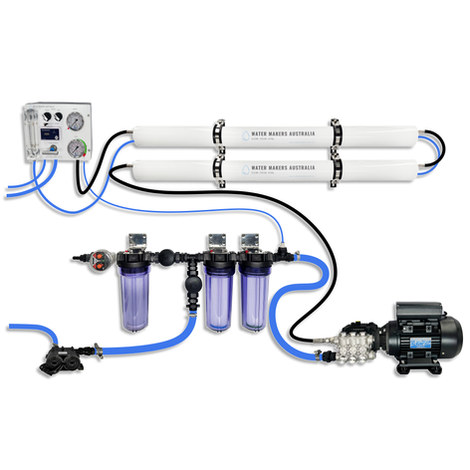
A two-membrane modular watermaker with 140 L/h nominal output, aimed at families and liveaboards that want more water per run.
Explore →Burke Yachtsman Gear Bag 40L - Shop Now Zip Pay | Tamar Marine Skip to content 59 – 63 Holbrook Street, Invermay Online Shop Open 24/7 Products search Contact us 1300 MARINE $ 0.00 0 Cart Burke Yachtsman Gear Bag 40L $ 79.90 Colour Choose an option Black Blue Black Blue Clear - Burke Yachtsman Gear Bag 40L quantity + Add to cart Enquire about this product SKU BAGB-Y24/BLACK* Category Bags - Sail & Gear A Burke classic and customer favourite, the Yachtsman’s Gear Bag is built tough to handle wet, salty conditions while keeping your gear dry and protected. Made from double coated waterproof…
Explore →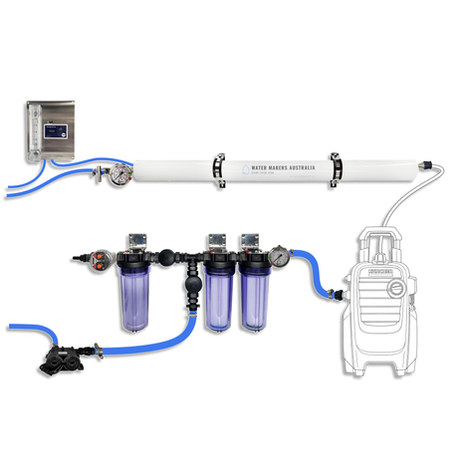
A one-membrane modular marine watermaker with 80 L/h nominal output, remote stainless control panel, standard consumables and direct Australian support.
Explore →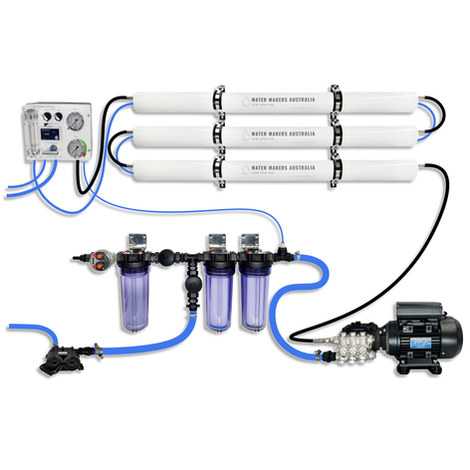
A three-membrane modular watermaker with 200 L/h nominal output and up to 240 L/h family-level marketing, for larger crews and heavy use.
Explore →