Loading this page…

Loading this page…
Sailing club
Twofold Bay Yacht Club is a small, family-oriented sailing club based at Quarantine Bay, about three kilometres south of Eden, NSW. The club hosts an active program of dinghy and trailer-boat racing, an annual regatta that attracts skiffs, cats and keelboats, and a regular learn-to-sail pathway for all ages.
About
Twofold Bay Yacht Club is a small, family-oriented sailing club based at Quarantine Bay, about three kilometres south of Eden, NSW. The club hosts an active program of dinghy and trailer-boat racing, an annual regatta that attracts skiffs, cats and keelboats, and a regular learn-to-sail pathway for all ages.
Service area: Quarantine Bay, Eden (Sapphire Coast), New South Wales
Keep exploring
Twofold Bay Yacht Club is a community sailing club based at Quarantine Bay, Eden (NSW). The club runs a seasonally varied sailing program (September–April) with keelboat and off‑the‑beach racing, cruising, regattas and social sailing days (club sails often every second Sunday). They promote sail training and 'learn to sail' / try sailing activities for juniors and seniors, provide dinghies for use, and offer clubhouse and BBQ facilities. The club has run state and national titles, annual regattas (including a noted 50th Annual Regatta) and has supported visiting yachts using Twofold Bay as a stopover.
Tuesday afternoons at Quarantine Bay are when the club teaches. The learn-to-sail program runs on the water weekly, and its alumni have ranged in age from four to sixty-five, which gives a fair sense of the tone: no one is too young to start or too old to begin. In 2016 the club bought two X3 training boats, stable little craft that carry two or three people, funded through a Bendigo Bank community grant, and these boats underpin the teaching fleet.
Rather than a rigid academy structure, the club blends instruction with participation: an introductory racing series for new sailors runs in conjunction with the Annual Regatta, so learners get a taste of start-line nerves in a forgiving setting.
The proof of the pathway sits in the Oliver family. Junior members Jemma and Reif Oliver first touched sailing at a regatta come-and-try event, and within a short time had middle-of-fleet finishes at the 2015 Open Bic World Titles and three state titles behind them over the following twelve months. That trajectory, from first sail to international fleet in a regional club, is exactly what grassroots programs are supposed to produce.
Social sailing fills the gaps between race days, operating every second Sunday of the month from ten until four, with club dinghies available, a barbecue running and the clubhouse open. No Tackers program or Discover Sailing Centre accreditation appears in the club's record, but with club-owned trainers, weekly water time, a novice racing series and a welcoming monthly social format, the practical ingredients of a learn-to-sail pathway are all in place for Sapphire Coast residents of any age.
Quarantine Bay takes its name from a grim episode: in the 1800s a sailing ship with smallpox raging aboard took refuge in the anchorage. Today the bay is better known to sailors as one of the friendliest regatta venues on the south coast. The clubhouse sits at 15 Quarantine Bay Road, about three kilometres south of Eden along the Princes Highway, overlooking the water it sails on.
Quarantine Beach offers hard-sand launching, boats move just a few metres from their park to the water and may be left overnight on the grass behind the beach; a breakwater shelters the shore, and the racecourse lies only a quick sail offshore. For visiting crews, Quarantine Bay Cottages sits right next door and a holiday park is a short drive.
The conditions are well documented through regatta guides. Summer mornings tend to be lighter, then the prevailing north-easterly sea breeze fills in at ten to twenty knots through the afternoon, which is why the Annual Regatta schedules sessions at eleven and two on Saturday and a final start at ten on Sunday. Twofold Bay's depth, unusual among Australian natural harbours, means keelboats and trailer sailors race comfortably alongside skiffs and cats, and the enclosed water keeps the sea state manageable even when the breeze is up.
The clubhouse itself is roomy, well supplied with seating, and has a beer garden out the back, and regatta dinners feature fresh local produce cooked by club volunteers. The venue doubles as a community asset: during Eden's Whale Festival it has hosted model-boat displays, knitting the club into the town's calendar beyond sailing.
Count the regattas and you can reconstruct the club. The Annual Regatta reached its thirty-fourth edition in February 2008, its forty-second in 2016 and its fiftieth in February 2026, which points to continuous operation since the mid-1970s, with the first regatta held around 1975. The club does not publish a precise founding year, but half a century of unbroken February regattas is its own kind of foundation document. Club spokesman Ted Dexter, reflecting in 2016, described the regatta as the club's pinnacle event each year, one that pulls sailors from the local coast and from Canberra, Sydney and Melbourne alike.
The championship résumé accumulated steadily. Twofold Bay became a popular venue for national title events, with the club running national championships for the Sabre, Flying 11, Hobie and Paper Tiger in recent times. February 2022 brought something new: the first Eden Cup, a Finn-class event taken out by Bermudian international Rockal Evans, who won three of the four races with Australian Anthony Nossiter runner-up in the fourteen-boat fleet. That a small far-south club could attract an Olympian-level field speaks to both the venue and the volunteers.
Milestones off the water matter too. In 2016 a Bendigo Bank grant bought the two X3 training boats that still serve the Tuesday learn-to-sail program. Directory listings have recorded Robin Arthur as commodore and Anne Strickland as secretary. And the clubhouse has woven itself into Eden's civic life, hosting community events including model-boat displays during the Whale Festival. Fifty regattas on, the club remains what it has always been: a family-oriented volunteer outfit that happens to sit on some of the best deep-water sailing in the country.
Adelaide’s metropolitan coast fronts the eastern side of Gulf St Vincent and mixes short, sheltered bay sailing around Holdfast Bay and the Patawalonga with more exposed, open-water sailing north toward Outer Harbour and along the Le Fevre Peninsula. The area suits a wide range of activity — sheltered day sails, club and trailer-sailer racing, short coastal cruising into the Fleurieu and Yorke Peninsula, and launch-and-home-port racing — but demands local knowledge about shipping channels, tidal flows in the Port River/Outer Harbour approaches, and seasonal wind patterns.

Maybe — it depends. In NSW you often need registration and a boat operator licence for motorised vessels, but many small trailerable sailing dinghies without engines don’t require boat registration or a licence. Check the specific rules for your craft, trailer and engine.
Explore →
Legal safety equipment for recreational boats in South Australia depends on the type, size and where you operate; you must check the current SA government requirements for your vessel. Independently of legal minimums, carry a sensible set of recommended items (lifejackets, means of communication, signaling, fire protection, anchor and basic tools) and make them usable and maintained.
Explore →
A regular, layered maintenance routine combining hull cleaning, targeted anti-fouling management, cathodic protection and systems checks will substantially reduce marine growth and corrosion for boats kept year‑round in South Australian waters. Focus on preventing attachment and electrochemical attack, then inspect and act more often if you’re in warm, nutrient-rich or high‑traffic sheltered waters.
Explore →
Do a seasonal inspection and servicing routine that focuses on hull and antifouling, through-hulls and seacocks, rigging and sails, engine and fuel systems, electricals and batteries, safety gear and bilge systems. Tailor exact tasks to your boat type, age and where you sail in South Australia, and follow manufacturer and marine service advice for anything technical.
Explore →A practical guide for recreational sailors planning passages to, from or around Eden and Twofold Bay. Covers sheltered anchorages, shore facilities, local weather and tidal considerations, preparing for Bass Strait conditions and a focused equipment and safety checklist.
Explore →
Buying a Sailing Boat
Explore →A concise, practical introduction to the essential parts of a recreational sailing boat for beginners in Australia. Covers hull, deck, rigging, sails, steering, below-decks spaces and safety equipment, with simple explanations, common mistakes and a pre-decast checklist to help new sailors communicate and get underway.
Explore →
A practical guide for new sailors on picking the right Australian sailing club: training, boat access, racing, social fit, costs and the key questions to ask before joining.
Explore →Burke Yachtsman Gear Bag 40L - Shop Now Zip Pay | Tamar Marine Skip to content 59 – 63 Holbrook Street, Invermay Online Shop Open 24/7 Products search Contact us 1300 MARINE $ 0.00 0 Cart Burke Yachtsman Gear Bag 40L $ 79.90 Colour Choose an option Black Blue Black Blue Clear - Burke Yachtsman Gear Bag 40L quantity + Add to cart Enquire about this product SKU BAGB-Y24/BLACK* Category Bags - Sail & Gear A Burke classic and customer favourite, the Yachtsman’s Gear Bag is built tough to handle wet, salty conditions while keeping your gear dry and protected. Made from double coated waterproof…
Explore →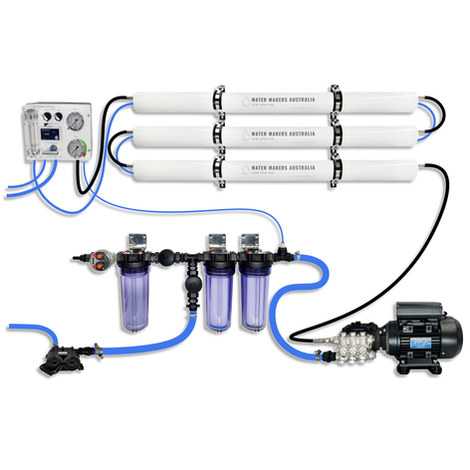
A three-membrane modular watermaker with 200 L/h nominal output and up to 240 L/h family-level marketing, for larger crews and heavy use.
Explore →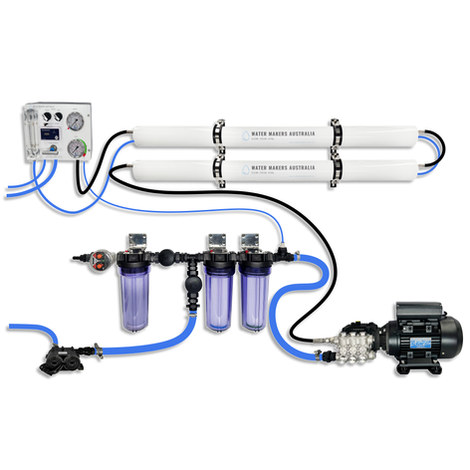
A two-membrane modular watermaker with 140 L/h nominal output, aimed at families and liveaboards that want more water per run.
Explore →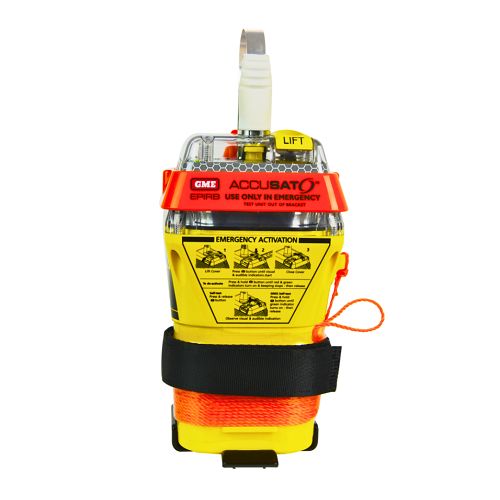
A 10‑year battery EPIRB with integrated GNSS (supports GPS and Galileo), infrared strobe and 121.5 MHz homing signal. Approved for worldwide COSPAS‑SARSAT operation.
Explore →