Loading this page…

Loading this page…
Sailing club
Urunga Sail Training Club is a volunteer-run, not-for-profit dinghy sailing school on the NSW North Coast that teaches Australian Sailing Start Sailing and Better Sailing courses on the calm estuarine reaches where the Bellinger and Kalang rivers meet the sea. Family-oriented and deliberately low-pressure, the club maintains a training fleet so members and students can learn without owning a boat, runs regular community sailing activities such as a Sunday “Coffee Run” to Mylestom, and works closely with Sailability Urunga and local community groups.
About
Urunga Sail Training Club is a volunteer-run, not-for-profit dinghy sailing school on the NSW North Coast that teaches Australian Sailing Start Sailing and Better Sailing courses on the calm estuarine reaches where the Bellinger and Kalang rivers meet the sea. Family-oriented and deliberately low-pressure, the club maintains a training fleet so members and students can learn without owning a boat, runs regular community sailing activities such as a Sunday “Coffee Run” to Mylestom, and works closely with Sailability Urunga and local community groups.
Service area: Urunga and the lower Bellinger and Kalang rivers (Mid North Coast, NSW).
Keep exploring
Urunga Sail Training Club is a not‑for‑profit sailing club and Australian Sailing–accredited small boat sailing school in Urunga, NSW. The club runs learn-to-sail courses (AS Start Sailing 1 & 2) on the Kalang and Bellinger Rivers, maintains a training fleet of small dinghies and accessible boats, and offers membership, volunteering opportunities and community sailing programs. Contact details and course dates are published on the club website.
The program that best captures Urunga's character is Women on the Water. Run mid-week from 9:30 in the morning, it gives women and girls their own time on the river, and it has been quietly building the club's future: some graduates have gone on to become assistant instructors, and a $9,800 NSW Local Sport Grant in 2022-23 subsidised Assistant Instructor training for eight girls through the program. In a sport working hard to balance its gender ledger, Urunga has built a genuine pipeline from participant to teacher.
The core teaching calendar runs three times a year — February, May and October — with Australian Sailing Start Sailing 1 and 2 and Better Sailing courses delivered across five Saturday mornings. Children ten and under have their own Start 1 stream, while eleven-and-overs progress through Start 1 and 2 together; tides and weather-reading are woven into the course content, as they must be on estuarine water.
The club operates as an accredited Australian Sailing Discover Sailing Training Centre, number 516696, with senior dinghy instructors in key committee roles, and it has hosted a national Dinghy Instructor course for the region. NSW Active Kids vouchers are accepted, school holiday sessions fill the gaps between courses, and two-to-three-hour Discover Sailing Experiences give visitors and organised groups a skippered taste of the river.
An Armidale branch, with its own Vice Principal of the Sailing School, extends the club's teaching reach inland to the Tablelands. What you will not find is racing — no fleets, no regattas, no results sheets. Graduates who catch the competitive bug head to other clubs; Urunga's job, as it sees it, is to get people sailing confidently and safely, then send them out into the wider sport.
Urunga sits at the meeting point of two rivers, the Bellinger and the Kalang, about twenty kilometres south of Coffs Harbour, and it is on those rivers — not the open ocean — that the club teaches. The estuarine water near the river mouth is calm and protected, ideal territory for beginners: flat enough to build confidence, tidal enough to teach real seamanship. The town itself was known as Bellinger Heads until 1909 and grew as a cedar port with a pilot station from 1868; the river bar here has a historically treacherous reputation among coastal mariners, which is precisely why the club keeps its sailing inside the bar, launching from the town boat ramp and the beach at Atherton Drive.
The signature piece of local water is the run downriver to Mylestom, the village near the mouth, and the Coffee Run that sails it on Sundays turns the river into the club's social course. A related local operator markets a three-hour Discover Sailing Adventure over the same Urunga-to-Mylestom reach for tourists, underlining how naturally this stretch of water lends itself to relaxed skippered sailing.
The clubhouse stands at 9 Bellingen Street, and it is built to be used: fully accessible with an access ramp, off-street parking, accessible toilets and a shower, changing facilities, a kitchen, a projector and a hall seating sixty. It is available for community hire and hosts everything from weekly craft workshops to school history sessions, making it as much a town amenity as a sailing base. For a teaching club, the combination is well judged — safe estuarine water metres from a hard stand, and a hall that can hold a course theory session, an AGM or a neighbourhood gathering with equal ease.
Urunga Sail Training Club is a young organisation reviving an old local habit. Local press in February 2025 put the club at fourteen years of teaching on the Mid North Coast, while the club's own site has more recently said fifteen — either way, the founding sits around 2010-11, with the exact date and the founders' names not publicly recorded. The club frames its mission with a photograph on its homepage: a circa-1890 scene of picnickers and sail craft on Urunga's North Beach, evidence that sails were common furniture on these rivers more than a century before the training club existed.
Local heritage material mentions an earlier Urunga sailing club near Atherton Drive, though any link between that incarnation and today's club remains unverified.
What the club has built since its founding is well documented in grants and outcomes rather than trophies. The 2022-23 Women on Water grant funded subsidised instructor training for eight girls, formalising the club's grow-your-own approach to coaching. A Bellingen Shire Council grant supported Weave the Story of Bindarry Yurruun (Long River), a cross-cultural place-making project completed with the Gumbaynggirr Wenonah Head Aboriginal Corporation, whose woven sail now hangs in the clubhouse — a statement that the river's story is older than any club and belongs to everyone.
The committee structure reflects the club's dual identity, listing a Patron, a Principal of the Sailing School alongside the Commodore — both senior instructors — and a Vice Principal for the Armidale branch. The committee meets five or six times a year, the AGM returns each September, and the clubhouse's role as a community hall has deepened with every year. A club founded to teach a town to sail has ended up weaving itself into the town's fabric.

Legal requirements can change — check Transport for NSW for the current rules. As a practical baseline for coastal day sailing from NSW shores: keep the right number and type of lifejackets for everyone, have a means of calling for help, show navigation lights if you’ll be out after dusk, and carry basic items to manage a man‑overboard or abandon‑ship situation. Add anchor, bilge/bailer, sun/protection and basic repair kit as recommended items.
Explore →
Before the season: confirm seaworthiness — hull, rig, engine, electrics, sails and safety gear — and replace or service wearable items. After the season: wash, dry and protect gear, service consumables and record what you did so the boat’s ready and reliable next season.
Explore →
Plan as a chain of conservative daily legs tied to your boat’s real-world fuel and speed in the expected sea state, with confirmed primary and alternate anchorages/berths, fuel legs and back-up fuel options, and a documented emergency/diversion plan (comms, tow and med-evac). Build tidal and weather gates into each leg and carry chart and comms redundancy.
Explore →
Usually not for a small sailing dinghy. In NSW a boat driving licence is needed only to drive at 10 knots or more, or to drive a personal watercraft, and a vessel must be registered if it has an engine of 4 kW or more, is 5.5 m or longer, or needs a mooring licence or marina berth. A trailer towed on public roads needs its own registration.
Explore →
A practical guide for new sailors on picking the right Australian sailing club: training, boat access, racing, social fit, costs and the key questions to ask before joining.
Explore →Practical guide for recreational sailors planning a coastal cruise from Sydney north to the Queensland border. Covers route options, weather and tidal considerations, planning checklists, common hazards, anchorages and practical examples for a safe, enjoyable trip.
Explore →
A practical guide for recreational sailors planning trips around the Capricorn Coast and Keppel Islands, covering seasonal considerations, common routes, anchorages, hazards, provisioning and sensible safety planning for Australian conditions.
Explore →A practical guide to the coastal weather systems that affect sailing along Western Australia's coast, focusing on the Fremantle Doctor, local sea breezes, and linked coastal phenomena. Explains how these systems form, when they tend to occur, how they influence boat handling and passage planning, common mistakes, and a
Explore →
Push-to-talk radio that uses 4G mobile networks where there is coverage and a built-in 16-channel analog radio where there is none, with GPS and SOS. Sold as a two-pack.
Explore →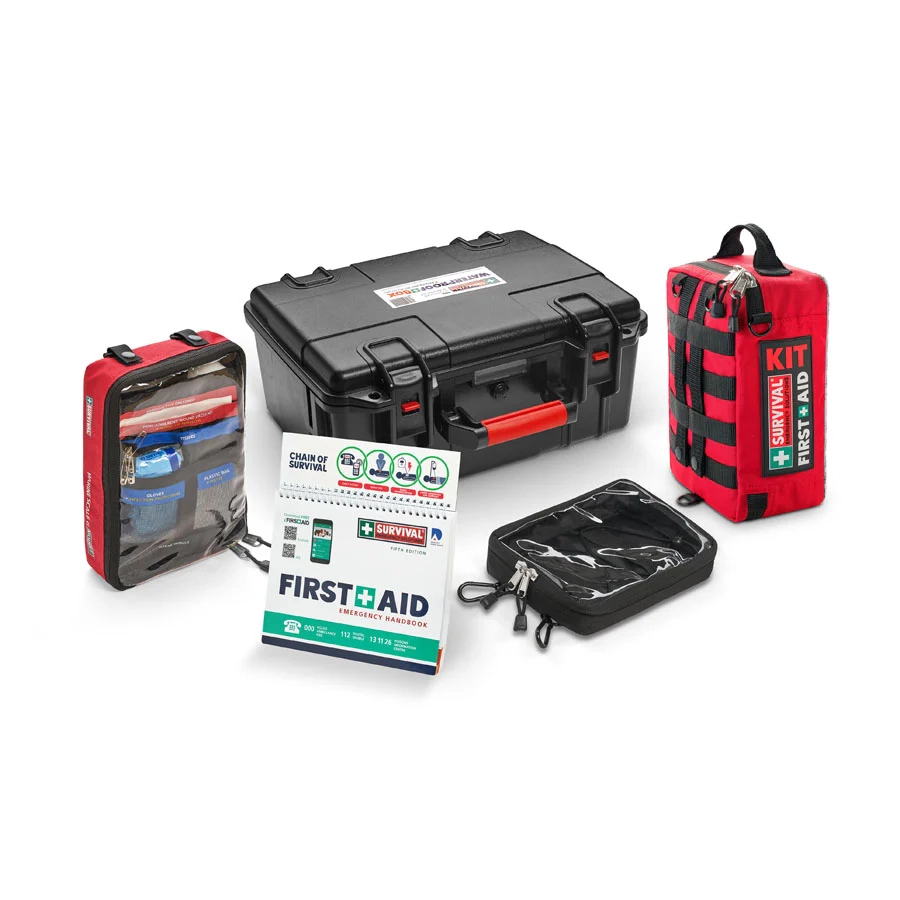
A 142-item marine first aid kit built around the Australian Scale G requirement, with a workplace kit, a Scale G module and a handbook packed in a large waterproof box.
Explore →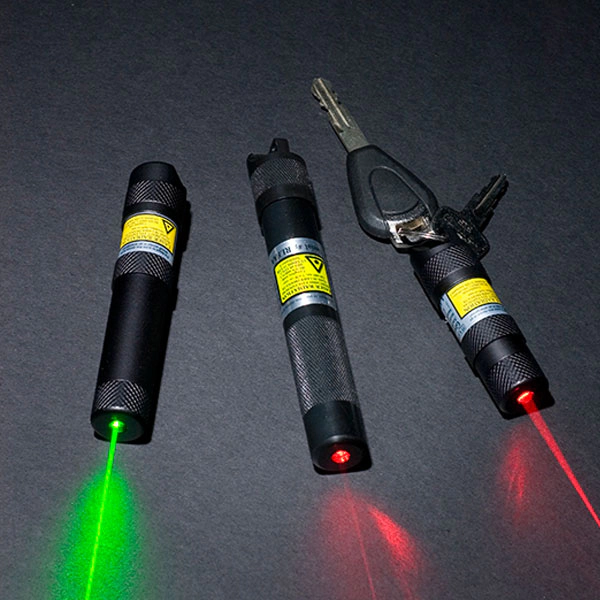
Hand-held, non-flammable laser signalling devices for day and night use, in red, green and Magnum versions, waterproof to 24 m and running for 5 to 72 hours on a battery.
Explore →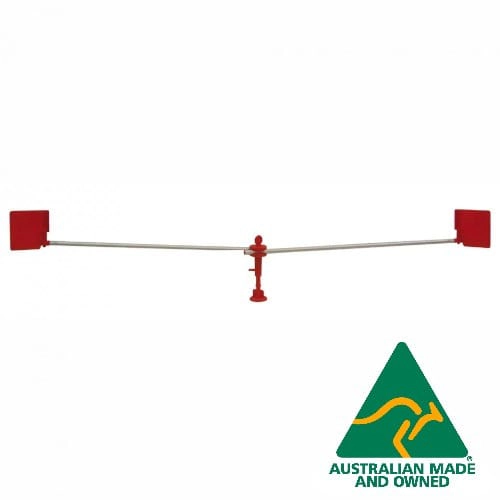
Wind-driven bird repeller with 2 metre rotating arms that keeps birds from roosting on hardtops, biminis, booms and decks. UV stabilised, with a bayonet base and a 12 month warranty.
Explore →