Loading this page…

Loading this page…
Sailing club
Vaucluse Amateur 12ft Sailing Club is a volunteer-run dinghy club based at the end of Wharf Road, Vaucluse (Kutti Beach), on Sydney Harbour. The club focuses on junior sailing and youth development, running a sailing school, holiday camps and Sunday fleet racing during the official season. Fleet classes include Sabots, Flying 11s and Cherubs, with club boats (Pacers and Pittwater Juniors) used for beginner instruction.
About
Vaucluse Amateur 12ft Sailing Club is a volunteer-run dinghy club based at the end of Wharf Road, Vaucluse (Kutti Beach), on Sydney Harbour. The club focuses on junior sailing and youth development, running a sailing school, holiday camps and Sunday fleet racing during the official season. Fleet classes include Sabots, Flying 11s and Cherubs, with club boats (Pacers and Pittwater Juniors) used for beginner instruction.
Service area: Kutti Beach / Watsons Bay area, Sydney Harbour
Keep exploring
Community sailing club in Vaucluse (Kutti Beach) running a junior-focused sailing program, weekend club racing and a sailing school. The club offers Learn-to-Sail courses for kids and adults (term-based weekends), holiday watersports/sailing camps, regular Sunday fleet racing (Sabots, Flying 11s and Cherubs) during the October–April season, seasonal dinghy hire and boat storage options. The club is volunteer-run and promotes youth development and competitive training opportunities.
A sailing school built around the school year defines the club's teaching life. Programs run for schools themselves, plus Saturday and Sunday sessions through Terms 1 and 4, and holiday camps fill the October, December and April breaks. Learn-to-sail instruction uses Puffin Pacers and Pittwater Juniors, after which the standard Australian Sailing pathway channels young sailors into the club's racing classes: one-up and two-up Sabots, then Flying 11s and Cherubs as skills sharpen. Children from the club compete at state and national level, and attendance at away regattas is actively encouraged rather than left to chance.
What happens after a junior ages out is where the club thinks further ahead than most. Young sailors are encouraged to stay involved by volunteering and by gaining Australian Sailing coach qualifications, converting each generation of graduates into the next generation of instructors. The program list reflects that closed loop: advanced coaching, coach development, volunteer training, learn-to-sail instruction and regatta operations and participation all run as formal streams.
It is a deliberately self-replenishing system, and it explains how a small single-beach club sustains an official season stretching from October to April, Sunday fleet racing included, run with its own start boat and RIBs handling race management, rescue and coaching.
The volunteer spine runs deep here. A Social Committee has operated continuously since 1955, raising money through catering and the canteen to buy club equipment, and its early functions, from card evenings to launch trips, set a template of barbecue lunches and fundraising events that continues today. Sailing may be the product, but the engine room is unpaid and proud of it.
At the end of Wharf Road, on the point at the northern end of Kutti Beach, the clubhouse occupies one of the quieter corners of Sydney Harbour. Kutti Beach itself is a pocket-sized strip of sand in Vaucluse, tucked between Watsons Bay and the harbourside mansions, and the club's position on the point gives it immediate access to open harbour water while keeping a sheltered landing for small training boats. In the club's earliest days races were started from a dinghy anchored out in Watsons Bay; today a dedicated start boat and RIBs handle the job, which says everything about how the operation has professionalised without moving an inch.
Racing happens on Sydney Harbour proper, one of the most tested pieces of sailing water in the country. The harbour's summer pattern of building north-easterly sea breezes rewards sailors who learn to read pressure coming down the reaches, while southerly changes can turn an afternoon race into a survival exercise in minutes, an education no textbook delivers. Ferry lanes, moored fleets and shifting wind shadows off the headlands make harbour sailing a constant tactical puzzle, and juniors who learn their craft here carry those habits into any fleet they join later.
The official season runs October through April with racing every Sunday, and members involved in club management can use the facility outside the season as well. The site has absorbed over a century of adaptation: a second storey added in 1934, an eastern extension in 1960 to house Sabots below and a kitchen and ladies' change room above, and a major rebuild in 2010 that kept the original style. The wharf structures and pylons, last substantially renewed more than twenty years ago, are now the focus of a capital appeal.
December 1926 is where it begins: the club founded that month, and racing in 12-foot skiffs commenced immediately, with Phillip Estens sailing Why Not to the first club championship of 1926-27. Early races were started from an anchored dinghy out in Watsons Bay. The original single-storey clubhouse went up on the current site and was formally opened by the mayor of Vaucluse on 29 November 1930; a second storey followed in 1934. During the Second World War a long naval wharf was built beside the clubhouse to berth warships of the British Pacific Fleet.
The club's gift to Australian sailing arrived in 1931. Founding member Sylvester "Sil" Rohu, a Sydney gunsmith and sports store owner, conceived a cheap junior trainer and commissioned naval draftsman Charles Sparrow to design it; the prototype Splinter was built in the clubhouse and launched on 1 May 1931, followed by the definitive Chum that August, a boat now held by the Powerhouse Museum. Frank Sargent and R. Banks helped build those first hulls, with Rohu funding the project himself.
In 1958 the first five Sabots in Australia were built in the same clubhouse, and Australia's first Sabot race was sailed at Vaucluse on 5 November that year. Flying 11s joined the roster on 17 September 1967 and have never left.
Twelve-foot skiffs remained the senior class until 1985, with club members instrumental in creating the Interdominion 12ft Skiff Championship series, a trans-Tasman contest with New Zealand first sailed in 1957. Vee Esses served as the senior class from 1987 to 1995; single-handed Sabots arrived in 1992. The club hosted the national Flying 11 titles in 2000 and the Sabot nationals over December 2007 and January 2008, and a major fundraising drive saw the clubhouse extensively rebuilt in 2010. Historian Tom Martin has chronicled it all across two volumes, taking the story from 1926 to 2001, with the centenary now in sight.
Adelaide’s metropolitan coast fronts the eastern side of Gulf St Vincent and mixes short, sheltered bay sailing around Holdfast Bay and the Patawalonga with more exposed, open-water sailing north toward Outer Harbour and along the Le Fevre Peninsula. The area suits a wide range of activity — sheltered day sails, club and trailer-sailer racing, short coastal cruising into the Fleurieu and Yorke Peninsula, and launch-and-home-port racing — but demands local knowledge about shipping channels, tidal flows in the Port River/Outer Harbour approaches, and seasonal wind patterns.

Look for a friendly club with beginner-focused training, accessible facilities and boats, a supportive community, clear safety practices, and opportunities to progress at your own pace.
Explore →
Late spring to summer is usually the best time for beginners to start learning to sail in Tasmania because the weather is generally warmer, days are longer and conditions are often more settled. Expect lighter to moderate winds with regular afternoon sea breees in summer, while spring and autumn bring more changeable and sometimes stronger conditions; winter is colder, wetter and typically windier with more fronts and swell.
Explore →
Pick a protected bay, estuary or river reach where you can rig, launch and arrive on calm water within a short, sheltered transit; choose a site with a good ramp or jetty, clear recovery options and a nearby sailing club, marina or commercial operator for local knowledge and help.
Explore →
Rig and de-rig a small dinghy by following a consistent, step-by-step sequence: prepare the boat on shore, fit spars and foils in a stable order, control sails and running rigging so lines don’t tangle, check fittings and safety gear, and reverse the process when coming ashore—always working with a partner when possible and staying aware of wind and tide.
Explore →A practical, step‑by‑step guide for recreational sailors on Sydney Harbour covering navigation, local weather and tides, safe anchoring, berthing, common routes, rules of the road, and useful checklists tailored to Australian conditions.
Explore →
A practical guide for new sailors on picking the right Australian sailing club: training, boat access, racing, social fit, costs and the key questions to ask before joining.
Explore →A practical guide for recreational sailors planning visits to Albany and King George Sound. Covers the main anchorage areas, typical local weather patterns, tidal and current considerations, navigational hazards, on-the-water etiquette and a pre-departure checklist to help you plan a safe passage and enjoyable stopover
Explore →A concise, practical introduction to the essential parts of a recreational sailing boat for beginners in Australia. Covers hull, deck, rigging, sails, steering, below-decks spaces and safety equipment, with simple explanations, common mistakes and a pre-decast checklist to help new sailors communicate and get underway.
Explore →Burke Yachtsman Gear Bag 40L - Shop Now Zip Pay | Tamar Marine Skip to content 59 – 63 Holbrook Street, Invermay Online Shop Open 24/7 Products search Contact us 1300 MARINE $ 0.00 0 Cart Burke Yachtsman Gear Bag 40L $ 79.90 Colour Choose an option Black Blue Black Blue Clear - Burke Yachtsman Gear Bag 40L quantity + Add to cart Enquire about this product SKU BAGB-Y24/BLACK* Category Bags - Sail & Gear A Burke classic and customer favourite, the Yachtsman’s Gear Bag is built tough to handle wet, salty conditions while keeping your gear dry and protected. Made from double coated waterproof…
Explore →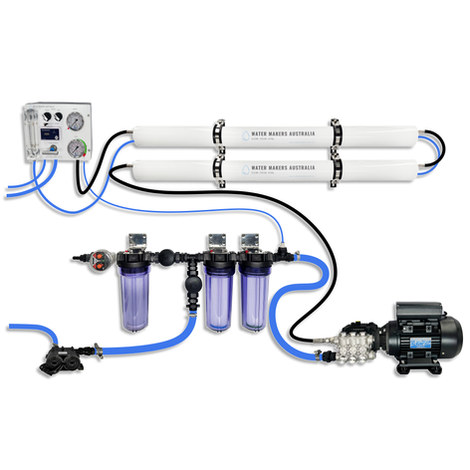
A two-membrane modular watermaker with 140 L/h nominal output, aimed at families and liveaboards that want more water per run.
Explore →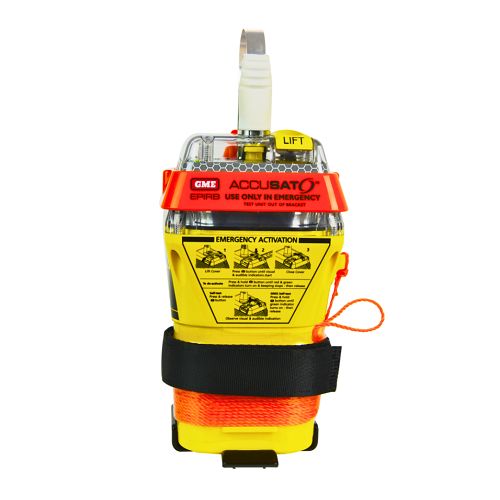
A 10‑year battery EPIRB with integrated GNSS (supports GPS and Galileo), infrared strobe and 121.5 MHz homing signal. Approved for worldwide COSPAS‑SARSAT operation.
Explore →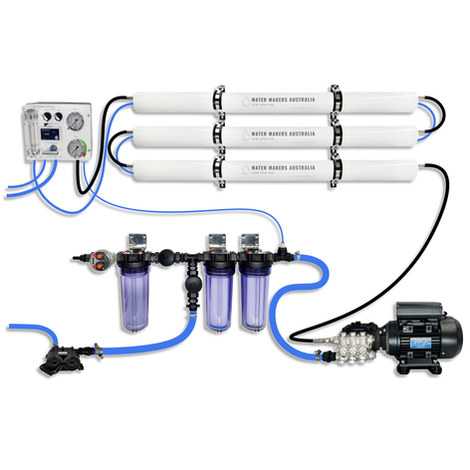
A three-membrane modular watermaker with 200 L/h nominal output and up to 240 L/h family-level marketing, for larger crews and heavy use.
Explore →