Loading this page…

Loading this page…
Sailing club
Vaucluse Yacht Club is a small, historic harbour club on Marine Parade at Watsons Bay, Sydney. Centred on competitive Laser and keelboat racing, the club hosts a regular Saturday racing programme, state and national regattas and preserves a notable local design legacy through the Vaucluse Junior (VJ) and Vaucluse Senior (Vee‑Ess) classes.
About
Vaucluse Yacht Club is a small, historic harbour club on Marine Parade at Watsons Bay, Sydney. Centred on competitive Laser and keelboat racing, the club hosts a regular Saturday racing programme, state and national regattas and preserves a notable local design legacy through the Vaucluse Junior (VJ) and Vaucluse Senior (Vee‑Ess) classes.
Service area: Watsons Bay / Sydney Harbour
Keep exploring
Vaucluse Yacht Club is a community sailing club on the eastern shore of Watsons Bay (corner Marine Parade & Robertson Place) offering competitive yacht and Laser racing on Sydney Harbour, regular training (including a Learn To Race Lasers course), Saturday racing season activities, and on‑site boat storage racks. The club also hosts state, national and international regattas, offers venue hire for functions, and provides clubhouse facilities (clubroom, verandah, kitchen/bar, change rooms and deck) with direct boat access for race days.
Racing is the engine of this club's program rather than formal coursework. The club states that it offers a full racing program alongside training and club hire, and its competitive calendar centres on Lasers and yachts, with regular state, national and international regattas hosted across a range of visiting classes. For sailors who develop best by measuring themselves against strong fleets, that density of quality racing is the development pathway: club racing through the season, then championship events on home water against interstate and overseas competition.
No Tackers courses, adult learn-to-sail syllabus or Discover Sailing Centre accreditation appear in the club's published material, and the club is candid in its focus: this is a racing club first. Historically, though, teaching was embedded in the club's DNA through the boats themselves. The VJ was designed to a three-part brief from Sil Rohu: it had to suit two youngsters learning to sail and race, it had to be unsinkable and easily righted after a capsize, and a father and son had to be able to knock it together at home for Depression-era money.
Learning by doing, in a forgiving boat, in a racing fleet, was the original Vaucluse curriculum, and for four decades the class remained the club's active racing trainer until 1972. The Vee-Ess extended the same logic to a father-and-son crew of three.
Today's sailors arrive mostly with skills already formed, sharpening them against the Laser fleet and the yacht divisions, while the regatta hosting calendar exposes the membership to championship standards of race management as well as competition. The clubhouse is also available for function hire, which helps keep a small volunteer club financially afloat.
Marine Parade in Vaucluse runs along the harbour's edge near Watsons Bay, and the club's two-storey clubhouse, dating to 1939, looks straight onto the sailing water that made it. The Kutti Beach area, where the club's predecessor associations stored and sailed their boats, sits at one of Sydney Harbour's most storied junctions: close enough to the Heads to feel the ocean's influence, sheltered enough for junior trainers to have been launched here by the hundred through the 1930s. The neighbouring Vaucluse Amateur 12ft Sailing Club occupies the north end of Kutti Beach, making this short stretch of foreshore home to two clubs that between them produced three nationally significant classes.
Racing takes place on Sydney Harbour, with all the tactical texture that implies. The summer north-easterly builds through the afternoon and bends around headlands, southerly changes arrive hard and fast, and the working harbour, with its ferries and shipping, keeps every crew's head out of the boat. Laser sailors in particular get an honest test here: the shifts off the points and the wash and wind shadows of a busy waterway punish lazy sailing and reward anticipation. It is water that has produced elite sailors for over a century, and the Vaucluse shoreline is one of the reasons why.
The club keeps a Rose Bay postal address and rents the clubhouse for functions and special occasions, a common arrangement among the smaller harbour clubs that turns a prime foreshore asset into operating revenue. For visiting crews coming for a regatta, the setting needs no embellishment: a historic clubhouse, a grassed rigging area by the sand, and one of the world's great natural harbours stretching away to the Heads.
The story starts in 1930, when Sil Rohu, Sydney's leading gunsmith and a sporting goods retailer, proposed to naval draftsman Charles Sparrow that he design a junior trainer for two boys under seventeen. Sparrow drew the first VJ plans in seven days and donated his fee to the cause; with help from F. Sargent and R. Banks, the prototype Splinter was built by members in the 12ft skiff club's clubhouse and launched on 1 May 1931. She proved tippy, so the chines were widened an inch each side, and the final prototype Chum followed in August 1931.
Every subsequent VJ was built to Chum's lines, and Chum herself now rests in the Powerhouse Museum. In Depression-era Australia the pricing was the point: a VJ cost five pounds seven and six, sails three pounds five, plans ten and six, and Rohu's brief demanded a boat a boy and his dad could build at home.
The Vaucluse Amateur Sailing Association formed in 1932, the year the Harbour Bridge opened, meeting first in the boatshed at Rohu's house at The Crescent before housing members' boats in McKlellans boatshed at Kutti Beach's southern end. When the 12ft skiff club declined to adopt the new classes, the association built its own clubhouse on Marine Parade, funded substantially by Norman Nock of the Nock and Kirby hardware empire and opened in October 1939 by Postmaster-General Eric Harrison.
Sparrow's Vee-Ess had arrived in 1936, three and a half feet longer than the VJ and crewed by three adults, and by 1940 the club fielded thirty VJs and fourteen Vee-Esses with over a hundred active members. After the war, Sydney builders turned out one hundred Vee-Esses for shipment to Japan, where they served the Australian Occupation Forces.
The VJ raced at the club for forty years, until 1972; the present name, Vaucluse Yacht Club, came later. In December 2021 Commodore Byron Georgouras and the committee hosted the VJ's ninetieth anniversary, closing a circle that opened with Splinter's launch ninety years before.
Bathurst Harbour (Port Davey system), in south‑west Tasmania, is a vast, almost land‑locked estuarine harbour inside the Southwest National Park and World Heritage Area. It offers a remote, sheltered anchoring environment protected from the Roaring Forties, but demands careful planning, an awareness of marine‑reserve rules, and a willingness to operate in shallow, tannin‑stained waters. Best suited to experienced coastal cruisers and small expedition yachts prepared for self‑sufficiency, Bathurst Harbour is more a place to linger and explore on foot and by tender than a port of call for busy,

Tasmania has a mix of state marine parks, local harbour bylaws and environmental protections that affect where and how you anchor—so check the specific area’s rules before you go, aim to use designated anchorages or soft seabeds, and follow standard anchoring and biosecurity good practice.
Explore →
Use ramps and beaches with respect for local conditions: check ramp layout, tide and swell, wind direction, vehicle access and crowding; prepare boat and crew before you launch or retrieve; and follow local signage, courtesy and safety practices. Specifics vary by ramp and beach, so confirm details for the exact site before you go.
Explore →
Expect very different seasonal systems across Western Australia: the south‑west (Perth to Albany) has a strong summer afternoon sea breeze (the “Fremantle Doctor”) and winter westerly fronts, while northern WA follows a wet/dry monsoonal cycle with strong seasonal onshore winds, thunderstorms and cyclone risk in the wet season. Local headlands, estuaries and tidal flows often change what you actually feel on the water, so learn the local timing and sheltered venues first.
Explore →
Plan the trip by setting a clear route and timeline, checking tides and currents for your passage times, identifying safe anchorages/harbours as escape options, and building a conservative margin for delays and weather changes.
Explore →
A practical guide for new sailors on picking the right Australian sailing club: training, boat access, racing, social fit, costs and the key questions to ask before joining.
Explore →A practical guide for recreational sailors planning visits to Albany and King George Sound. Covers the main anchorage areas, typical local weather patterns, tidal and current considerations, navigational hazards, on-the-water etiquette and a pre-departure checklist to help you plan a safe passage and enjoyable stopover
Explore →A practical, step‑by‑step guide for recreational sailors on Sydney Harbour covering navigation, local weather and tides, safe anchoring, berthing, common routes, rules of the road, and useful checklists tailored to Australian conditions.
Explore →A practical guide for recreational sailors planning day sails or short cruises around Batemans Bay, Broulee and the Clyde River. Covers local conditions, safe approaches, anchorages, launching, tides, common hazards, and checklists for trip planning and on-water decisions.
Explore →Burke Yachtsman Gear Bag 40L - Shop Now Zip Pay | Tamar Marine Skip to content 59 – 63 Holbrook Street, Invermay Online Shop Open 24/7 Products search Contact us 1300 MARINE $ 0.00 0 Cart Burke Yachtsman Gear Bag 40L $ 79.90 Colour Choose an option Black Blue Black Blue Clear - Burke Yachtsman Gear Bag 40L quantity + Add to cart Enquire about this product SKU BAGB-Y24/BLACK* Category Bags - Sail & Gear A Burke classic and customer favourite, the Yachtsman’s Gear Bag is built tough to handle wet, salty conditions while keeping your gear dry and protected. Made from double coated waterproof…
Explore →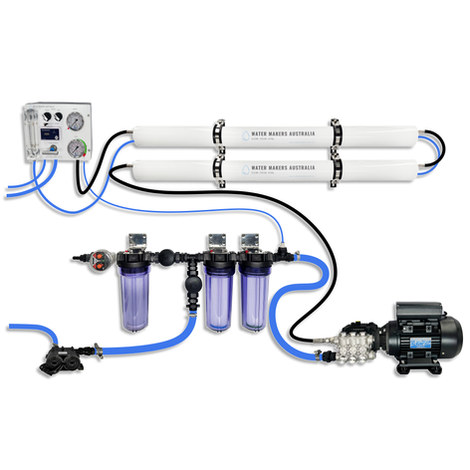
A two-membrane modular watermaker with 140 L/h nominal output, aimed at families and liveaboards that want more water per run.
Explore →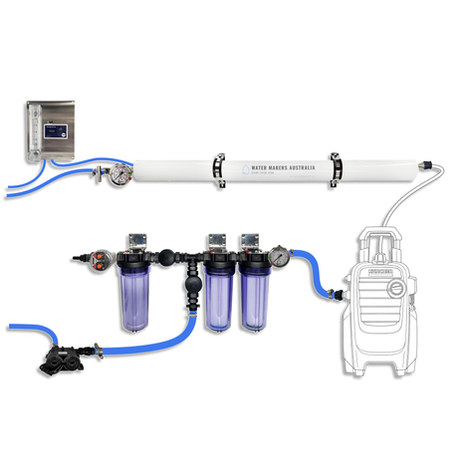
A one-membrane modular marine watermaker with 80 L/h nominal output, remote stainless control panel, standard consumables and direct Australian support.
Explore →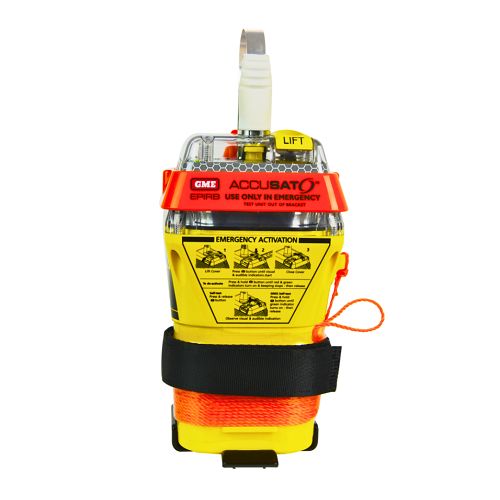
A 10‑year battery EPIRB with integrated GNSS (supports GPS and Galileo), infrared strobe and 121.5 MHz homing signal. Approved for worldwide COSPAS‑SARSAT operation.
Explore →