Loading this page…

Loading this page…
Sailing club
Vincentia Sailing Club is a volunteer-run off-the-beach sailing club based at Plantation Point on the western shore of Jervis Bay, New South Wales. Predominantly catamaran-focused, the club regularly hosts Hobie Cats, F18s, Nacras, A-Class and Taipan cats while welcoming all off-the-beach dinghies. VSC runs weekly racing (September–April), major regattas — most notably the annual Jervis Bay Classic held on the ANZAC long weekend — and larger national-class events. The club emphasises youth development and event volunteering alongside a busy regatta calendar.
About
Vincentia Sailing Club is a volunteer-run off-the-beach sailing club based at Plantation Point on the western shore of Jervis Bay, New South Wales. Predominantly catamaran-focused, the club regularly hosts Hobie Cats, F18s, Nacras, A-Class and Taipan cats while welcoming all off-the-beach dinghies. VSC runs weekly racing (September–April), major regattas — most notably the annual Jervis Bay Classic held on the ANZAC long weekend — and larger national-class events. The club emphasises youth development and event volunteering alongside a busy regatta calendar.
Service area: Plantation Point / Jervis Bay
Keep exploring
Vincentia Sailing Club is a community sailing club located at Plantation Point, Vincentia on the western shore of Jervis Bay (NSW). The club runs organised racing (regular Sunday racing, seasonal series and regattas such as the Jervis Bay Classic and Hobie Cat events), member activities, a youth development program and lists sailing lessons and temporary 'SailPass' membership options. The club website includes event calendars, news, results and contact details for committee officers.
Youth development has its own dedicated sub-committee inside the club's governance structure, sitting alongside the sailing, clubhouse development and regatta committees, which shows a club that treats junior growth as an ongoing program rather than an annual afterthought. The Australian Sailing club directory lists kids' learn-to-sail among the club's offerings, and the venue itself does half the coaching: the surrounding headlands block the ocean swell, producing sheltered conditions that tourism and club sources alike describe as well suited to training and recreational sailing through the year. Detailed course structures, Tackers branding and Discover Sailing Centre accreditation are not published, but the ingredients are on the record: protected water, a teaching-friendly beach, and a membership structure with family, adult, youth and even non-sailing social categories to hold newcomers once they arrive.
Weekly club racing is the backbone for everyone past the beginner stage. Spring, Summer and Autumn handicap series and club championship series keep the fleet sharpening itself for most of the year, and because the regular fleet spans Hobie Cats, F18s, Nacras, A-Class cats and Taipans, a developing sailor can watch genuinely quick boats up close every weekend. The regatta calendar compounds the effect: sailors who learn their craft in club races find themselves sharing start lines with national-title fields each April at the Jervis Bay Classic, an apprenticeship most clubs cannot offer.
Event volunteering functions as an unofficial training stream too. With a regatta coordinator, race officer and sailing committee coordinator among the office bearers, and major events requiring rescue crews, mark layers and starters, members gain race-management experience that feeds back into the quality of the weekly series.
Plantation Point juts into the western side of Jervis Bay, and the club's base at 44 Plantation Point Parade occupies one of the prettiest launching spots on the whole bay. Rigging takes place on the grassed reserve above the beach, and boats launch across a short stretch of sand, wading out through shallow water over a sandy bottom into clear, sheltered sailing water. The elevated grass near the Barfleur Beach side of the point is the pick of the spectator spots, and short-course racing directly off Huskisson, one town around the bay, delivers what regatta reports call a full-on spectator experience.
The bay itself is the drawcard. The club describes its waterway as unpolluted and uncrowded, shared with sea eagles, dolphins and whales, and the facts support the colour: Jervis Bay Marine Park wraps the area, bottlenose dolphins are regulars, and migrating humpbacks pass offshore in season. The club's sailing directions even carry the Dhurga names for the local winds, acknowledging the Wodi-Wandandian of the Yuin Nation: Baliya, the summer north-easterly sea breeze that is the bay's bread and butter, and Miringama, the refreshing south-easterly that often heralds the cool change.
Afternoon breezes frequently strengthen after midday in the warmer months, and strong southerly changes can rough the bay up quickly, a combination that keeps race officers honest.
Racing areas span the water locals call Moona Moona, with courses set off Plantation Point, Huskisson, Long Beach and Callala; in a nor'easter the Callala Run course comes out. The club sits roughly two and a half to three hours from Sydney and about three from Canberra, with Huskisson's cafes and the Jervis Bay Brewing Co close enough to serve as the unofficial post-race debrief rooms.
For a club whose founding year remains unpublished, Vincentia has written a striking amount of history in a short time. Its constitution dates from September 2021, and the record since then is essentially a highlight reel of big-event hosting. The Jervis Bay Classic, run on the ANZAC long weekend, reached its third edition in 2026 with seventy-one boats of all shapes and sizes closing out the season.
That running carried extra weight: the F16 class chose it for its Australian Championship, eleven boats strong, and the NSW Hobie Cat Association made it the finale of its 2025-26 Traveller Series. The Classic gets underway each ANZAC Day via the Round the Bay Rally, a passage-style race of genuine distance around the cardinal marks of the bay, a format that mixes festival sailing with real navigation.
Between Classics, the club hosted the 54th Hobie Cat Nationals from late December 2026 into January 2027, drawing on rescue boat support from Jervis Bay Sailing Club and Canberra Yacht Club, and ran the Hobie WaveGP Championships as the September opener of the state Traveller Series. For a club of this vintage to hold a fifty-fourth running of a national class title is a measure of how quickly its organisational reputation has grown.
The people tell the story as much as the events. The Butler family threads through the club's racing life: Mick Butler as regatta coordinator and chief race officer, Jimmy "Six Guns" Butler flying the flag in the Viper fleet, and Paddy Butler leading the national Hobie association's publicity. The current committee, led by Commodore Jake de Rooy with Vice-Commodore Howard Woolley, Secretary Jocelyn Hood and Treasurer Marc Hooper, governs through five sub-committees covering racing, youth development, clubhouse development and regattas. A clubhouse development sub-committee, notably, hints that the next chapter is ashore: facilities to match the on-water ambitions.
A detailed sailing guide to the Tollgate Islands area on the NSW south coast, focused on Batemans Bay, the Clyde River entrance and nearby sheltered waters. The guide explains geography, typical conditions, principal sailing zones, anchorages and moorings, facilities ashore and practical arrival notes. It highlights local hazards — exposed heads, shifting sand, bird-protection restrictions and commercial traffic — and outlines local rules and responsible-access requirements. Several suggested sailing experiences are provided for day sailors, weekend cruisers and passagemakers, with clear notes

Use ramps and beaches with respect for local conditions: check ramp layout, tide and swell, wind direction, vehicle access and crowding; prepare boat and crew before you launch or retrieve; and follow local signage, courtesy and safety practices. Specifics vary by ramp and beach, so confirm details for the exact site before you go.
Explore →
Look for a friendly club with beginner-focused training, accessible facilities and boats, a supportive community, clear safety practices, and opportunities to progress at your own pace.
Explore →
Rig and de-rig a small dinghy by following a consistent, step-by-step sequence: prepare the boat on shore, fit spars and foils in a stable order, control sails and running rigging so lines don’t tangle, check fittings and safety gear, and reverse the process when coming ashore—always working with a partner when possible and staying aware of wind and tide.
Explore →
Expect very different seasonal systems across Western Australia: the south‑west (Perth to Albany) has a strong summer afternoon sea breeze (the “Fremantle Doctor”) and winter westerly fronts, while northern WA follows a wet/dry monsoonal cycle with strong seasonal onshore winds, thunderstorms and cyclone risk in the wet season. Local headlands, estuaries and tidal flows often change what you actually feel on the water, so learn the local timing and sheltered venues first.
Explore →
A practical guide for new sailors on picking the right Australian sailing club: training, boat access, racing, social fit, costs and the key questions to ask before joining.
Explore →A practical guide to preparing, planning and executing a recreational offshore passage along the New South Wales coast. Covers route selection, weather and tidal considerations, vessel and crew checks, safety equipment, communication, watchkeeping and common mistakes, with clear pre‑departure and underway checklists.
Explore →A practical guide to selecting and using anchorages around New South Wales for cruising sailors. Covers sheltered bays, tidal considerations, holding, approach planning, and example anchorages with local conditions to check before you go.
Explore →A practical guide for recreational sailors planning passages to, from or around Eden and Twofold Bay. Covers sheltered anchorages, shore facilities, local weather and tidal considerations, preparing for Bass Strait conditions and a focused equipment and safety checklist.
Explore →Burke Yachtsman Gear Bag 40L - Shop Now Zip Pay | Tamar Marine Skip to content 59 – 63 Holbrook Street, Invermay Online Shop Open 24/7 Products search Contact us 1300 MARINE $ 0.00 0 Cart Burke Yachtsman Gear Bag 40L $ 79.90 Colour Choose an option Black Blue Black Blue Clear - Burke Yachtsman Gear Bag 40L quantity + Add to cart Enquire about this product SKU BAGB-Y24/BLACK* Category Bags - Sail & Gear A Burke classic and customer favourite, the Yachtsman’s Gear Bag is built tough to handle wet, salty conditions while keeping your gear dry and protected. Made from double coated waterproof…
Explore →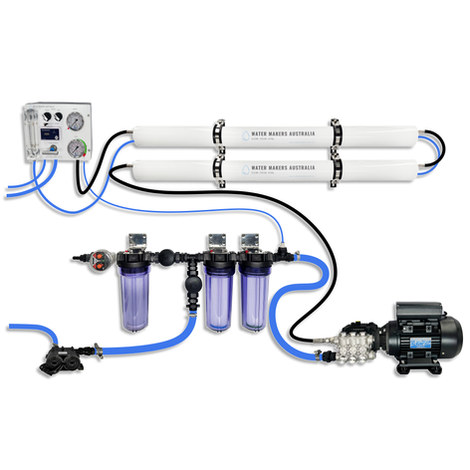
A two-membrane modular watermaker with 140 L/h nominal output, aimed at families and liveaboards that want more water per run.
Explore →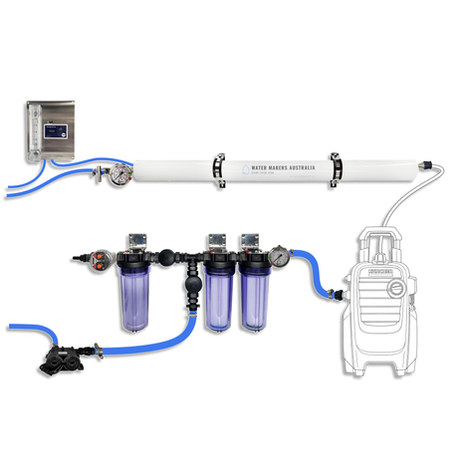
A one-membrane modular marine watermaker with 80 L/h nominal output, remote stainless control panel, standard consumables and direct Australian support.
Explore →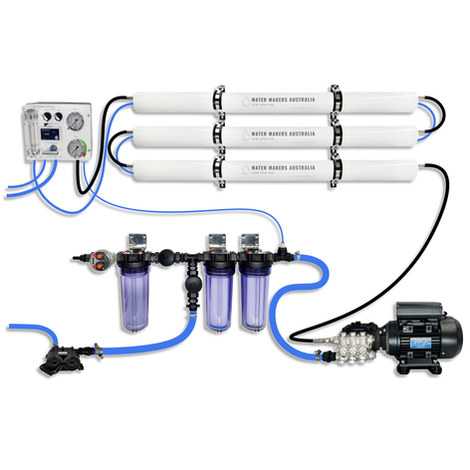
A three-membrane modular watermaker with 200 L/h nominal output and up to 240 L/h family-level marketing, for larger crews and heavy use.
Explore →